More from Arts

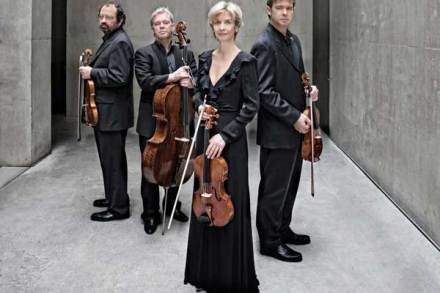
The Hagen Quartet: Bracing Beethoven

Established 32 years ago in Salzburg, the Hagen Quartet can fairly be described as venerable. It may be said equally fairly that brothers Lukas and Clemens Hagen, their sister Veronika, and Rainer Schmidt, are playing better than ever. The opening pair of concerts in their Beethoven cycle at Wigmore Hall in January were remarkable for the freshness as well as the beauty of their playing, and their return next week (19 and 20 April) to the world’s greatest hall for chamber music should not be missed. Now that the Alban Berg Quartet is no more, the Hagen, along with the Takács, are the supreme performers of Beethoven. There is a high-born, almost patrician quality to their music-making, which has sometimes been mistaken for emotional detachment.

Weeknd’s world

There was something vaguely disappointing about seeing Abel Tesfaye appear on stage at London’s Electric Ballroom. A wide-eyed, puffa-jacket-clad figure isn’t what you expect from his enigmatic alter-ego ‘The Weeknd’ — it seemed incongruous that we should watch this self-styled introvert performing to an audience. At 23 years old, Tesfaye (aka The Weeknd) has released three mixtapes, achieved eight million downloads and, this year, completely sold out his British shows. His reputation is growing as people are drawn in by his distinctive, falsetto tones. The Weeknd’s first online mixtape ‘House of Balloons’ and subsequent albums took the internet by storm.

Caitlin Rose’s The Stand-In: a fantastic album from a fantastic girl

Caitlin Rose, Caitlin Rose, Caitlin Rose. I’d feel awkward admitting that I’m rather obsessed with this Nashville chanteuse, were it not for a mitigating truth: you should be, too. Her debut album Own Side Now, released in 2010, was proof enough of her sweltering talent. And now we have a follow-up, The Stand-In, that’s superior in many regards. Her voice, already aspiring to the heights of Cline and Lynn, has become rounder, more chocolate-y. Her songs, already a stunning catalogue of broken love, sound even more heartfelt. Her… … Oh, I don’t want to embarrass myself, so let’s get down to cold, musical facts. Perhaps the main difference between this album and its predecessor is the texture.

Sculpture trail

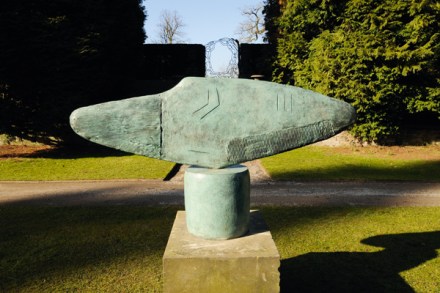
William Turnbull died last year. And if his name is not as familiar as those of his friends Giacometti and Paolozzi, it should be: an exhibition at Chatsworth in Derbyshire may help put this right. Turnbull was born in Dundee in 1922; he left school at 15, and went to work as an illustrator for the comic-book publishers D.C. Thomson, before enlisting in the RAF in 1941. It was his experience when serving in the Far East that gave him a lifelong interest not only in Asian artefacts but also in space and spatial perspective: a pilot’s view of the landscape beneath. Turnbull was both a painter and a sculptor, but it is for his sculptures that he is best known.

Hayward Gallery’s Light Show is intoxicating, disorientating, panic-inducing and hypnotic

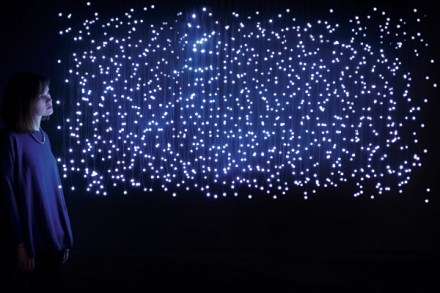
A room filled with glowing fog; shadowy figures among glittering LEDs and warm ‘breathing’ columns of light. Welcome to the trip that is Light Show (until 28 April), the Hayward Gallery’s latest exhibition exploring how artists have used the medium of artificial light over the past five decades. With side effects of disorientation, slight panic and hallucinatory visions, this exhibition is an intoxicating sensory cocktail, plunging visitors into a world that is recognisable and unfathomable at the same time. With sculptures and installations that visitors can step into, Light Show is a fitting title for something that is, in many ways, more spectacle than ‘exhibition’.

The man behind Eric and Ernie

It takes a special sort of talent to turn a good act into a great one, and without John Ammonds, who died last month, aged 88, it’s quite possible that today’s couch potatoes never would have heard of Morecambe & Wise. As their BBC producer, he transformed them from jobbing comics into a national institution. The seven series he made with them still stand as the acme of Light Entertainment television. When Ammonds teamed up with Eric and Ernie, their double act was two-dimensional. Viewers liked them but they didn’t warm to them. Ammonds reconnected them with their theatrical roots, filming them on a raised stage with wings and curtain.

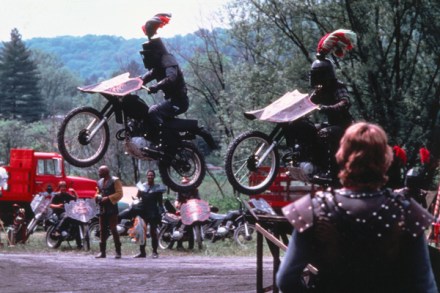
First Life of Pi, now Cloud Atlas. Why keep trying to film the unfilmable?

Whenever the possibility of a film version of a difficult or complex book is mooted, speculation mounts about how it will be done. Usually at this point some dull spark will pipe up that some novels are simply ‘unfilmable’ (though such reservations are sometimes shared by the authors of the novels in question: David Mitchell himself never believed that his novel Cloud Atlas could be turned into a movie: ‘My only film-related thought when I was writing the book was what a shame that no one would ever, ever film this,’ he said. ‘I was quite convinced it would never happen’).

The new Design Museum: Prince Charles will prefer it. But should we?

Twenty-five years ago I went to St James’s Palace to ask the Prince of Wales if he would open the new Design Museum. Before us was the model of the building, an elegant, austere, uncompromised white box that was very much along Bauhaus lines. We knew that ‘modern’ no longer meant ‘of-the-moment’ but had become a period style label. Even at the time we acknowledged the layers of irony in this historicist gesture. The Prince, sounding pained, I recall, asked, ‘Mr Bayley, why has it got a flat roof?’ And that was the end of that. Next time it will be different. The Design Museum is moving from a creatively reused banana warehouse near Tower Bridge to a creatively reused Commonwealth Institute on the edge of Holland Park.

The cult horror of The Room

The Room is an awful film. Plot lines are picked up and forgotten in seconds, stock footage is repeated continuously, actors and names change without explanation, doors are never closed and every photo frame contains a picture of a spoon. Even the second (absurd) sex scene is just a repeat with different music. But that is exactly its appeal — a film so bad it’s good. Scratch that, it’s so execrable that, to weirdos like me, it’s genius. I’m not alone: The Room has gathered a vast cult following. The Prince Charles cinema in Leicester Square has cottoned on and has frequent showings. They sell out every time. Earlier this month producer, director and star Tommy Wiseau came to entertain his nerdish legions.

Mixed blessings | 21 February 2013

Last week, Sergei Polunin’s powerful entrance in Marguerite and Armand was saluted with a wave of electrically charged silence: not a cough, not a sound, all eyes glued to the stage. Whether viewers held their breath because they were waiting to see if the star who stormed out of the Royal Ballet still had it, or because they were genuinely impressed, is difficult to say. Personally, I was struck by that first appearance, as it confirmed that since leaving the company amid accusations, allegations and gossip Polunin has refined his already exceptional interpretative and technical skills. His charismatic Armand is the perfect reading of the role for today.

Kraftwerk at Tate Modern

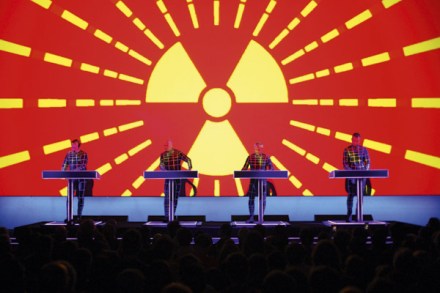
Quite what it was that was so spellbinding about a quartet of middle-aged German blokes in skintight bodysuits standing at neon-lit consoles is difficult to articulate. They didn’t even seem to be doing very much up there on stage. But the audience of 1,000 for round two of Kraftwerk’s eight-night retrospective in Tate Modern’s Turbine Hall were mesmerised for two hours solid. The high priests of electronica, whose bittersweet retro-futurism sowed so many of the seeds of modern pop music, performed their 1975 album Radio-Activity against a backdrop of 3D visuals (specs provided) that were always engaging and occasionally jaw-dropping.

Hall of mirrors

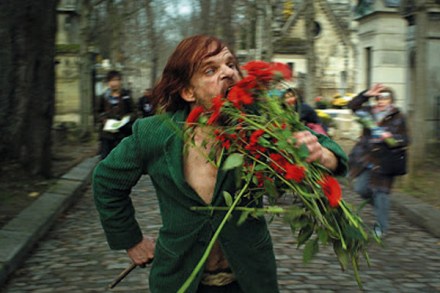
At first glance, Holy Motors is all about one astonishing performance — or several, depending on how you look at it. The performance in question is by Denis Lavant, who plays M. Oscar, a blank page of a man who scribbles over himself with make-up and wigs to portray a succession of different characters. At the film’s outset he is a Parisian businessman, leaving his home in a limousine to do battle with the markets. Soon after, he is an old beggar woman, a sex robot sheathed in rubber, a gangster, a father and more. We never really know why he does this beyond — in his own words — ‘the beauty of the act’. But then, look closer, and there’s more going on. Is it any coincidence that M.

From Russia with love | 7 February 2013

If you want to know what’s so great about John Cranko’s choreography, look at the opening phrase of the final duet in Onegin (1965). The male dancer encircles the ballerina in an embrace that is not reciprocated, and then falls at her feet; she lunges forward to walk away from him, but her motion is counteracted by the downward and backward pull he performs while crouching on the stage behind her. It is sheer simplicity and sheer genius. The basic game of opposition and the use of gravity — at odds with ballet’s traditional aerial nature — encompass a unique range of emotions.

Time Travel

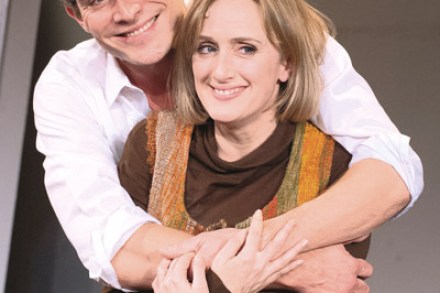
Merrily We Roll Along (Menier Chocolate Factory, until 9 March) lets you escape the winter cold to a showbiz party in a Bel Air beach house. Still, despite its summery setting, Stephen Sondheim’s musical has a stock-taking feel that suits it to a run at the changing of the years. ‘How did you get to be here?’ the opening chorus asks Hollywood mega-success Franklin Shepard (played with charisma by Mark Umbers), who has alienated his friends and lost the will to live. George Furth’s book answers with a stepwise journey back in time from 1976, putting meticulous reverse engineering to touching effect. A wistful tune Franklin picks out on the piano turns out to be from his first hit — before he sold out.

Mauvais goût

It was dinner at a prize-winning hotel in Burgundy. I looked, stupefied, at an awkward arrangement of trapezoidal plates, unaccommodating to food and unergonomic to both eater and plongeur. There was a water glass of triangular section and silly cutlery that would bring even Philippe Starck’s most empurpled morphological fantasies into the arena of commonsense. I thought wistfully about the simple charm of the old Duralex glass. The timelessly perfect round-shouldered Burgundy bottle’s unaffected handsomeness only served to make its table-top companions look all the more ridiculous. Modern France is in a terrible state as far as design is concerned. Renault’s peerless record of ingenuity is gone: it has not produced a worthwhile innovation for nearly 20 years.

The shock of the old

New Yorker music critic Alex Ross published The Rest Is Noise: Listening to the Twentieth Century five years ago, earning himself the Guardian First Book Award and a finalist citation for the Pulitzer Prize. Now London’s Southbank Centre is turning the book into a year of concerts, talks, film screenings, exhibitions and even a three-part BBC4 documentary series in celebration of 20th-century classical music. The festival marks the centenary of Stravinsky’s Rite of Spring, though Ross plays down the significance of the work’s riotous première in his book: it seems Paris audiences would faire la révolte for just about anything in those days.

The making of a myth

When John Kelly was transported from Tipperary to Tasmania in 1841, for stealing pigs, he couldn’t have imagined that 170 years later there’d be an exhibition of paintings of one of his offspring at Dublin’s plush Museum of Modern Art (until 27 January). Yet here he is, Ned, the 19th-century Oz-born bushranger and cop-killer, as imagined by the Australian painter Sidney Nolan (1917–1992). Painted in the 1940s, Nolan’s Ned Kelly series deploys a childlike style to capture the criminal Kelly Gang’s 1880 shoot-out with police. In each painting Kelly wears his mysterious mask and hovers over the bloody action, more motif than man, as if observing his own canonisation into Oz legend.

Why Rubens should go

The Blow family has had its disasters. There has been madness, murder and suicides. But before those mishaps there was a good man, my grandfather Detmar Blow. In the 1900s he was at his height as a young architect. His practice was large. Larger, I was told by Sir Edwin Lutyens’s daughter, Mary, than that of her father. Blow designed for the aristocracy and the newly enriched tycoon. But early on he was a travelling architect doing repair work for the Society for the Protection of Ancient Buildings — vide his repairs to the ancient manor house in Tintagel, Cornwall, known as The Old Post Office. His mentors had been John Ruskin and William Morris. He had driven and decorated with vine leaves the funeral cart that took Morris to his last resting place at Kelmscott.

Insomniac’s heaven

If I wake up at too rude an hour to get up — before four o’clock, let’s say — Through the Night is my reward: I switch on the radio and find it to be inhabited not by humans but by music. This six-hour programme, which runs every night on Radio 3 from half-past 12 (on weeknights) or one o’clock (at weekends), is scarcely interrupted by the spoken word. Each piece is introduced with friendly brevity, and then left to speak for itself. No one tries to wake me up, divert or entertain me. My attention must be — and invariably is — engaged by the music alone. At this raw hour, the repertoire can be vivid and entrancing.

Magical mystery tour | 3 January 2013

Pontius Pilate is deciding the fate of Ha-Notsri (aka Jesus) in Herod’s palace. In Stalin’s Moscow, meanwhile, the Devil (aka Woland) stalks the streets. One man, the Master (aka Mikhail Bulgakov), can reconcile these opposing cosmic forces. But he is languishing in a mental asylum. Bulgakov’s Manichaean acid trip avant la lettre, The Master and Margarita, has been brought to life by Complicite at the Barbican (until 19 January). With spectacular video projections, and making clever use of satellite maps, Simon McBurney’s production whisks us from Moscow to Yalta, back to 1 AD, into the epicentre of the Procurator’s headache, and over into the fifth dimension.