More from Arts

Personal touch

In 2004 Jérôme Bel, one of the most provocative performance makers of our time, created Véronique Doisneau, a solo for a Paris Opera Ballet artist who was about to retire. On the immense empty stage of Palais Garnier in Paris, Doisneau, in practice clothes, shared with the public reflections on her career, her favourite ballet moments and her thwarted dreams. The performance ended with a stroke of theatrical genius, when Doisneau highlighted the drabness of the corps de ballet’s lot by engaging, alone, in what the 32 swans do while framing the two principals in Swan Lake’s first duet. The solo, available on video and on YouTube, provided the blueprint for similar works, such as the more recent Cédric Andrieux (2009).

House rules | 8 October 2011

Britain needs more houses, and the government’s highly unpopular draft National Planning Policy Framework (NPPF) at least asks how to get them — the right question even if it gives the wrong answer. Anyone who deals with the planning system knows how overblown it has become, and that the cost and effort can exhaust a developer, to the extent that the good intentions of a scheme drain away at the crucial moment of building. The existing planning system may be imperfect but, if it is to be simplified, it needs to be better at eliminating bad designs, not the reverse. Prodigious amounts of brain power and energy have been devoted to making the well-intentioned suet pudding that is the planning system of today.

Triple triumph

There is no better way to kick off a new ballet season than with a choreographic triple whammy. Which is what the Royal Ballet did last week, reopening with a sparkling performance of Jewels, Balanchine’s triptych. The last time I saw the company engage with the same three-part work, I lamented its far too poised and somewhat lacking-in-drive approach to Balanchine’s choreography. Things seem to have improved, though, as last week the dancing stood out for its vibrant attack and attention to detail — paramount qualities for the rendition of a work made up of three choreographically and musically different compositions.

Danger zone

If you ever experienced the adrenalin of a Quasar or Alien War birthday party as a child, part of you is going to love Our Days of Rage, a play by the winners of the Write to Shine competition, at the Old Vic Tunnels (until 15 September). ‘Security guards’ hustle us in, then lead us from cavern to cavern, past hanged prisoners and corpses in bathtubs. One moment we’re in Tripoli, guiltily leaving the scene as a dissident journalist is dragged away kicking and screaming. The next we’re in London, pinned between pro- and anti-Gaddafi protestors, riot police blocking our escape. This is brilliantly done: all the thrill of danger — without the danger. The pretext for our adventure is less inspired.

Sheer magic | 20 August 2011

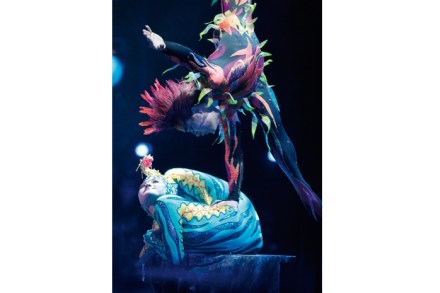
The term ‘circus’ is used in the ballet world with disparaging intentions to criticise any excessive display of technical bravura. The term ‘circus’ is used in the ballet world with disparaging intentions to criticise any excessive display of technical bravura. Yet in the appropriate context, dazzling acrobatics can be high art, as the Guangdong Acrobatic Troupe of China demonstrated last week. I would never have thought that I would have raved about a version of the immortal Swan Lake in which the ballerina swivels on point while balancing either on her partner’s bicep or on his head. But there I was, gasping with surprise like a six-year-old.

Imogen Heap

Imogen Heap, the English songwriter whose gloves let her control her music with hand gestures, has perfected the art of delegation. While most musicians leave it to their labels to sort out a press biography, she forged hers from 1,500 contributions from her Twitter followers; where others endlessly pore over potential concert setlists, she lets visitors to her website choose hers. It’s what the 21st century has termed ‘crowdsourcing’, and Heap is now taking it one step further: she’s co-writing her fourth album with her fans. She’s brought out two songs from the album so far, and both have involved asking the public to contribute ideas: from musical snippets to recollections of slightly embarrassing personal experiences.

Mariinsky Ballet | 13 August 2011

It’s somewhat surprising that there are many people who are still amazed by the Mariinsky Ballet’s sparkling response to the choreography of George Balanchine. After all, it is well known that the father of modern American ballet, born Georgi Melitonovic Balanchivadze, had been trained at the Imperial Ballet School, from which developed the artistic principles that have long informed the Mariinsky Ballet’s tradition. It is true that once in the United States Balanchine reworked those principles with movement ideas that were typical of the Americana he felt so attracted by. Yet all his creations remained unmistakably rooted in the old Russian school.

Mariinsky Ballet

It is 50 years since what was formerly known as the Kirov Ballet — now Mariinsky Ballet — paid its first, legendary visit to London. Thanks to the commendable efforts of Viktor Hochhauser, the impresario who made that first visit possible, the company has become a familiar focal point of the London summer dance season. This year is no exception, with a rich programme of both classical and modern ballets. For its opening last week, the celebrated Russian company chose the work it is traditionally associated with: Swan Lake. Konstantin Sergeyev’s 1950 production might not be everyone’s cup of tea, but it remains a classic in the ballet’s performance history.

St Oscar of Oxford

It was in his room in Magdalen College, Oxford, in 1875 that Oscar Wilde said, ‘I find it harder and harder every day to live up to my blue china.’ Now, more than 130 years after he left Magdalen, with a double first in classics, the room has been decorated in his memory by Robert Douglas-Fairhurst, a Magdalen Fellow. It was in his room in Magdalen College, Oxford, in 1875 that Oscar Wilde said, ‘I find it harder and harder every day to live up to my blue china.’ Now, more than 130 years after he left Magdalen, with a double first in classics, the room has been decorated in his memory by Robert Douglas-Fairhurst, a Magdalen Fellow.

Past the postmodernist

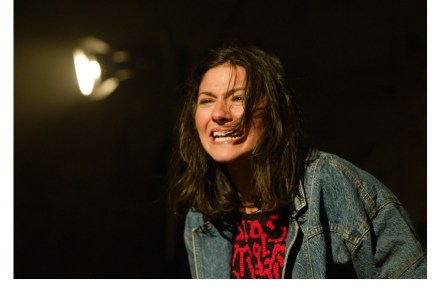
According to a superstition shared by several Mediterranean countries, the frantic buzz of a fly trapped in a room spells the arrival of unpleasant news. I wonder whether the controversial and multitalented Catalan artist Sol Picó knows that, for in her 2009 El Llac de les Mosques (The Lake of the Flies) the annoying sound is used like a mini-overture. Yet it would not be fair to dismiss as ‘bad news’ this one-hour-long mix of extreme physicality, live music and funny, cheesy theatrical stunts. After all, many in the audience seemed to enjoy the deafening blasts of guitar, percussion and sax, as well as the apparently inconsequential series of puzzling, amusing and even touching images.

The art of architecture

Leighton House, studio-home of Frederic, Lord Leighton (1830–96), is one of my favourite museums, and always a treat to visit. Leighton House, studio-home of Frederic, Lord Leighton (1830–96), is one of my favourite museums, and always a treat to visit. This small but informative exhibition about the architect George Aitchison (1825–1910) who built it is a well-timed adjunct to the V&A’s great survey of the Aesthetic Movement, in which he is also included. Leighton House is Aitchison’s monument, for there are few other buildings to his name, apart from imposing warehouses; certainly no churches or country houses.

Shock and awe | 18 June 2011

Two weeks ago, the unsettling proximity of a perfectly sculpted naked male butt with my nose made me think again about the critic/artist relationship. I am talking, of course, about Dave St Pierre’s much talked about performance of Un peu de tendresse bordel de merde! at Sadler’s Wells, the raunchiness of which attracted and dominated the interest of various media for a few days. Chastely translated into ‘a little tenderness, for crying out loud’ — although a more appropriate translation would be ‘a little tenderness, for fuck’s sake!’ — the 2006 work, like many other examples of modern day dance- theatre, relies considerably on shock values, although it also includes some excellent choreography.

Triple thrill

After a few thematically uneven mixed programmes, the Royal Ballet takes its summer leave from the Royal Opera House with a nearly ideal triptych of works. Central to it are stunning examples of 20th-century choreography, which highlight the role that British ballet played in both making and consolidating the Western modern ballet tradition. As such, this triple bill comes across as more connoisseur-oriented than a flashy crowd pleaser. Balletomanes still get their fair share of starry dancing, though, for each work provides the principals with plenty of chances to shine. At the first performance, Lauren Cuthbertson and Sergei Polunin thrilled in Frederick Ashton’s Scènes de Ballet.

Incomparable Verdi

Call me biased, but I believe that my illustrious compatriot Giuseppe Verdi composed ballet music like no one else. It is a pity he never felt like penning a full ballet score, and limited himself to composing balletic interludes for his glorious operas. As demonstrated by the work of eminent scholars, he possessed the unique ability to mentally choreograph a ballet. His approach to ballet music thus started with a detailed visualisation of the action, which fed into the unique innovative fluidity of his balletic compositions. Take, for instance, the complex Peregrina ballet, composed for the Paris Opéra staging of Don Carlos. The demands of creating a work that would suit the hierarchy of the corps de ballet — i.e.

Me and my spoon

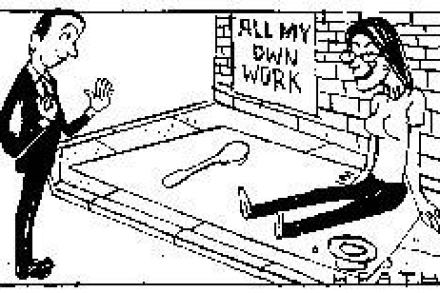
‘We have a spare place at a silver spoon-making workshop. Would you be interested?’ asked the Goldsmiths’ Company. I most certainly was, which was why I turned up (with my pinnie) at the Camberwell workshop of silversmiths Howard Fenn and Steve Wager. ‘We have a spare place at a silver spoon-making workshop. Would you be interested?’ asked the Goldsmiths’ Company. I most certainly was, which was why I turned up (with my pinnie) at the Camberwell workshop of silversmiths Howard Fenn and Steve Wager. Howard and Steve are both Freemen of the Worshipful Company of Goldsmiths with work in private, public and royal collections, yet these master craftsmen were prepared to spend an evening teaching a ragbag of absolute beginners (inc. me) to make a spoon.

Royal treasures

Some schoolboys used to know about Alexander the Great (356–323BC), how he extended the Macedonian Empire from Greece to India, cut the Gordian knot, and wept when there were no more worlds to conquer. Fewer schoolboys — or grown-ups — will know how skilled, and moving, the art of the Macedonian court was. Now they can, thanks to an exhibition at the Ashmolean, Heracles to Alexander the Great (until 29 August). Some schoolboys used to know about Alexander the Great (356–323BC), how he extended the Macedonian Empire from Greece to India, cut the Gordian knot, and wept when there were no more worlds to conquer. Fewer schoolboys — or grown-ups — will know how skilled, and moving, the art of the Macedonian court was.

Underneath the arches | 9 April 2011

The Elephant and Castle shopping centre is more of an oddity than an eyesore. It lies like a stricken container ship opposite the dignified columns of the Metropolitan Tabernacle and the sweep of porticos leading to Kennington on the other side of the gyratory system. It was to be demolished as part of a redevelopment plan, but the recession has given it a stay of execution. Retailers have stayed away, which has created an opportunity for Corsica Studios, an organisation that uses dilapidated buildings and dead urban space to host art exhibitions, live album launches and club nights. Corsica Studios adapted some former loading bays behind the shopping centre and two arches beneath the adjacent railway to create a flexible stage for performance or entertainment.

Turning point

One of the intriguing components of The Most Incredible Thing, Javier De Frutos’s latest creation, is its structure. One of the intriguing components of The Most Incredible Thing, Javier De Frutos’s latest creation, is its structure. Intentionally steering away from the aesthetic developments that informed theatre dance for more than a century, De Frutos has opted instead to revive and revisit the compositional formulae of the late 19th-century three-act ballet. Bold and risky as that sounds, such a decision fits perfectly with the kaleidoscopic score which the Pet Shop Boys’ Neil Tennant and Chris Lowe have been working on since 2008 and the storyline, derived from the tale by Hans Christian Andersen.

Three’s a crowd

According to some sources, the legendary impresario Sergei Diaghilev invented the mixed-bill formula for ballet. Whether or not this is true, there are times when one wishes he hadn’t. One century later, they increasingly come across as hurriedly and/or inharmoniously put together. Take, for instance, the most recent Royal Ballet triple bill. Frederick Ashton’s 1980 Rhapsody was created for the Queen Mother’s 80th birthday and as a vehicle for the megastar Mikhail Baryshnikov. Although the work has many subtle layers, it retains much of its original ‘party piece’ essence, which calls for grandeur and sparkle. Alas, the redesigned sets and costumes do not provide either, nor did the corps de ballet’s dancing on the opening night.

More 4

Big changes are happening to the airwaves, part of the frenetic technological revolution that’s been unleashed by the development of a digital language. Big changes are happening to the airwaves, part of the frenetic technological revolution that’s been unleashed by the development of a digital language. Radio, against expectations, is proving itself a vital force in these fast-moving times, because it’s flexible, adaptable and still compelling. The human voice, the imagination of sound, will endure when perhaps TV will fade out, evolving into another kind of internet exchange.