More from Arts

Culture notes: Our island story

There’s one exception to the sometimes trivial and artificial events of the Cultural Olympiad: Writing Britain: Wastelands to Wonderlands at the British Library (until 25 September). Where other shows emphasise London’s separateness, Writing Britain subordinates the capital to the geography, peoples and history of the British Isles as a whole. Writers have recorded Britain’s development over a millennium, from the Arthurian myths to the dark satanic mills, from polite society to the urban underworld, from the wild moors to the simple delights of home.

Tales of the city | 16 June 2012

Last Wednesday two of the three live pooches that appeared in Pina Bausch’s Viktor did onstage what most dogs do when in a state of arousal. The incident, which elicited a great deal of audience laughter and repressed giggles on stage, would have amused the late Bausch. First seen in 1986, Viktor was the first of the many city-specific works that Bausch created and on which the current World Cities 2012 retrospective (at Sadler’s Wells and the Barbican) focuses. Viktor’s rhapsodic and episodic narrative comes from the theatricalisation of memories each member of the Tanztheater Wuppertal had of their experiences in a particular location. Viktor is about Rome, though not the Rome one sees in travel books, postcards or holiday snaps.

Culture notes: Pest control

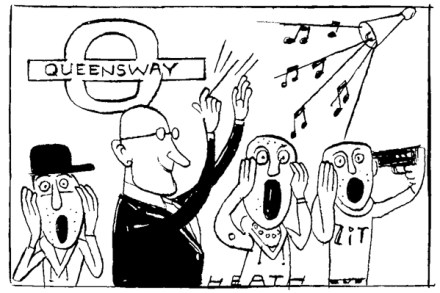
As an occasional user of Queensway Tube station, I have noticed that on exiting the lift I am met with the extraordinary and beguiling sounds of Mozart symphonies and piano concerti — well-chosen, beautifully played and blasted over the Tannoy system. There is something transporting about this post-underground experience, something I don’t expect after the humdrum of a packed commute. The other day, a TfL official was standing around and I had a few minutes to kill while waiting for the lift, so I asked her about this bizarre but welcome phenomenon. She explained that this was part of a controlled experiment in crowd management.

New build

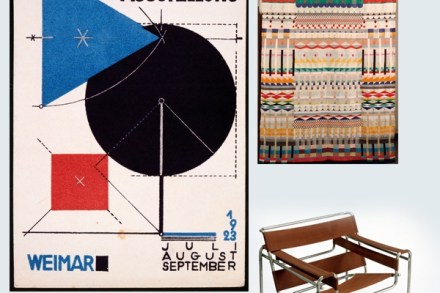
The Bauhaus was a sort of university of design, whose progressive ideas eventually fell foul of the Nazis. But as the exhibition Bauhaus: Art as Life is keen to impress, it was also a lifestyle, a modernist utopia, where staff and students were encouraged to mix freely, which they did with gusto. This, just as much as its reputation as a nerve centre for a new aesthetic, made it a magnet for the central European avant-garde. Among its teachers were some of the greatest artists and designers of the 20th century: Wassily Kandinsky and Paul Klee taught art; Marcel Breuer was responsible for furniture; Laszlo Moholy-Nagy for product design; Oskar Schlemmer for performance; and Walter Gropius, the school’s founder, lectured on architecture.

Unconditional love

Not many dance-makers have had their art celebrated in major, award-winning feature films. Pina Bausch has. Wim Wenders’s 2011 Pina and Rainer Hoffmann’s/Anna Linsel’s 2010 Dancing Dreams offered unique insights into her creative genius, facilitating the posthumous popularisation of a dance-specific phenomenon. Yet no film, no documentary and certainly none of the countless writings that popped up after the choreographer’s untimely death has managed to draw an exhaustive picture of Bausch or dispel the vagueness that surrounds what her Tanztheater was and still is about. Three years after her demise, Bausch and her work remain shrouded in mystery, resisting and eluding scholarly labelling or convenient pigeonholing.

Me and my shadows

Shadows and reflections have always triggered all sorts of fantasies. Theatre itself, in the words of many playwrights and theorists, is nothing but a game of shadows. Today, filmic and computer-generated or manipulated projections have taken the place of what was once cleverly done with candles and mirrors. Indeed, projections seem to have become a distinctive and annoyingly trendy trademark of contemporary theatre, for they seem to pop up everywhere, more or less appropriately. Tired of images that detract and distract from both the music and the meaningful or expressive physicality of dance performances, I, like many, believe that using projections to add an aura of pseudo-cultural gravitas to a piece is the main indicator of poor creativity.

The first lady of song

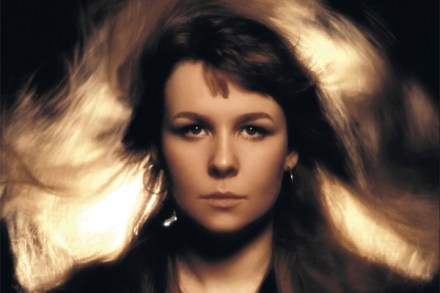
Folk legend Sandy Denny’s eminently coverable songs, direct of melody and opaque of lyric, have scarcely declined in popularity since the singer’s death in 1978 at the age of 31. A tribute concert at the Queen Elizabeth Hall in 2008 was such a hit that a similar event is being staged at the Barbican this month. Once again, a variety of vocalists will front a house band including members of contemporary folk stars Bellowhead and share the stage with Denny’s former Fairport Convention bandmates Jerry Donahue and Dave Swarbrick. Insecure but blessed with a versatile voice free of phony mid-Atlantic inflections, Denny’s infusion of traditional material transformed Fairport from blokey college circuit regulars into the definitive English folk-rock band.

Celebrating identity

Last year, when I reviewed The Sum of Parts, the community-oriented piece produced by Connect, Sadler’s Wells Creative Learning department, I thought it wouldn’t be possible to do any better. Well, I was wrong, as this year’s Compass was an even more breathtaking experience. The new project, which involves more than 100 non-professional performers and a unique roster of artists, has been conceived at a time when World Cities 2012, Pina Bausch’s retrospective of works devoted to cities and cultures from around the world, is imminent. Compass, however, focuses only on London, which is a vibrant melting pot of diverse and complementary cultures.

Magic chemistry

Artifact was the first work that the groundbreaking dance-maker William Forsythe created in 1984 for the legendary Ballet Frankfurt. It is, therefore, pure ‘vintage’ Forsythe, even though it is as aggressively and engagingly provocative today as it was 28 years ago. It therefore comes across as a theatrically vibrant reminder of where it all started. Central are the quirky postmodern challenges that Forsythe first laid down to both the ballet canons and the set rules of traditional theatre-going. Hence the curtain coming down and going up more or less unexpectedly and/or arbitrarily, an idea aimed at questioning the way audiences used to watch — and still do — a ballet, which was to become Steptext’s main feature one year later, in 1985.

From street to stage

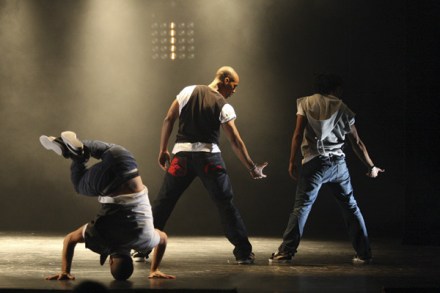
Breakin’ Convention, now in its ninth year at Sadler’s Wells, offers a feast of hip hop for all-comers, be they newbies or hip hop heads. Hip hop developed in the Bronx in the late 1970s from a mix of Bboying (breakdance), graffiti art, MC-ing and DJ-ing. From street-corner hobby of young Afro and Latin American ghetto teenagers, it exploded into a worldwide phenomenon. The transition from street to stage has been turbulent, provoking fierce debate on the direction of hip hop culture. Only Bboying seems to have maintained its integrity. Bboying’s significant theatre presence is down to strong-minded individuals who understand that the dance form does not have to remain a competitive street art.

Triple triumph | 24 March 2012

Not many ballet companies convey young love as credibly as Birmingham Royal Ballet. And I am not talking about select soloists, but the company as a whole, for youth, freshness and vibrancy are its most distinctive traits. Add to that a slick sense of style, impeccable technique and co-ordination and you have the perfect ballet experience. Which is what I had last week with each of the three titles presented at the London Coliseum: Daphnis et Chloë, The Two Pigeons and Coppélia. Created in 1961, The Two Pigeons is Frederick Ashton’s own take on one of those late 19th-century works that belong to what is commonly considered to be a period of decline in the history of French ballet.

Succulent pleasures

It was about time a dance-maker exacted revenge on dance academics. In Alexander Ekman’s 2010 Cacti, a voiceover explains the alleged semantics of the choreography by resorting to theoretical clichés and the known modes of that mental self-pleasuring that many academics indulge in. As the vacuously pompous words bear little or no relation to the quirky actions, the contrast between the taped voice and the dancing becomes explosively comic. Later on, recorded voices are also used to let viewers peep into the minds of two dancers performing a duet, humorously highlighting the kind of artistically detached thinking performers frequently engage in while dancing.

On the ropes

‘Aerial’ ballets were all the rage in late-Victorian London. It mattered little that they were more circus acts than actual ballets; their female stars, swinging from either a trapeze or sturdy ropes, were worshipped on a par with the greatest ballerinas — as in Angela Carter’s novel Nights at the Circus. I often wonder what those people would think of their postmodern successors, as performing with ropes seems to be a growing trend within contemporary dance-making. Take Ilona’s Jäntti’s Handspun, which opened the Exposure: Dance programme at the Linbury Studio Theatre last week.

Star turn

At first sight, the new Royal Ballet double bill might come across as an odd coupling: Ashton’s sparkling The Dream on one side, MacMillan’s metaphorically sombre Song of the Earth on the other. Yet the two works are complementary in that they show two distinctive and historically significant facets of 20th-century British dance-making. On the opening night, an impressive roster of stars appeared in MacMillan’s reading of Mahler’s Das Lied von der Erde. The refined artistry of Tamara Rojo, Sarah Lamb, Lauren Cuthbertson, Carlos Acosta and Rupert Pennefather turned the performance into one of the best I have seen. Stars populated The Dream, too.

Room with a view

Living Architecture is a new social enterprise that adds a touch of glamour to the traditional British holiday. Instead of a cute cottage, cramped caravan or crumbling castle, Living Architecture provides bespoke, mod-con accommodation designed by the most distinguished architects and artists for as little as £20 per person, per night. Though current locations are limited to the south of England, they have been selected for their remote beauty, and include The Balancing Barn in Suffolk and the intriguing Secular Retreat in Devon, which is designed by Peter Zumthor and scheduled for completion by the end of 2012. A Room For London (above) was designed by David Kohn Architects and artist Fiona Banner.

Saved by the Bel

Anne Teresa De Keersmaeker’s and Jérôme Bel’s 3Abschied is the latest addition to a long and historically well-established series of choreographic works set to music by Gustav Mahler. There are still those, however, who cringe at the idea of dancing to the notes of this revered composer — as Keersmaeker points out in her initial monologue where she recounts her encounter with the conductor supremo Daniel Barenboim. Barenboim’s words linger menacingly through most of the performance. When Keersmaeker first dances to the ‘Abschied’, from Das Lied von der Erde (in a Schoenberg transcription), played live on stage by the superb Ictus ensemble, one can hear the words ‘I told you so’ ringing eerily in the dark.

Original sin

Nothing beats the buzz that precedes the debut of a rising star in a big, known role. Double it and you’ll get an idea of what last Tuesday felt like, as not one but two Royal Ballet principals, Lauren Cuthbertson and Sergei Polunin, took the main roles in Kenneth MacMillan’s 1974 Manon for the first time. As an artist, Cuthberston frequently makes bold choices when approaching big parts. Her Manon is no exception, as there is no trace of corrupted innocence at the beginning of her disastrously rapid and morally debatable ascent through Parisian society. The much romanticised image of the hapless lamb is thus replaced with that of a youthful minx who has decided to sleep her way up the social ladder.

High hopes

For more than 40 years, Scottish Ballet has been one of the most vibrant and interesting companies on the UK dance scene. It is a ballet company born of a well considered vision and the desire to prove that there can be good ballet without grandiose spectacle. Indeed, for many years it has been notable for its almost ‘chamber’-like choreographic repertoire, which has included intelligent adaptations of the great classics. Now a new chapter is about to start, as Christopher Hampson takes over the company’s artistic directorship, succeeding Ashley Page and an impressively illustrious roster of equally enlightened directors.

Mixing it

The term ‘fusion’ is a trendy one, which hints at the interaction of ingredients from different backgrounds in many areas of today’s culture. In dance, it often refers to the pairing of different genres, such as modern dance or hip-hop and ballet, or to the coupling of a distinctively western choreographic idiom with an equally distinctive non-western one. In Rian, the award-winning choreographer and performance-maker Michael Keegan-Dolan has opted for a more intricate game of combinations by weaving together Liam Ó Maonlaí’s splendid music — itself a powerful mix of influences and quotations — with dancing that draws upon a diversity of backgrounds and styles.

The Royal Ballet

In its latest triple bill, the Royal Ballet pays tribute to three dance-makers who have marked distinctive epochs in its performance history. Its centrepiece is Frederick Ashton’s 1963 Marguerite and Armand. Created as a showcase for the now legendary partnership of Fonteyn/Nureyev, this one-acter highlights his unique talent for succinct storytelling, as Alexandre Dumas’ Lady of the Camellias is narrated through a rapid series of salient episodes. Ashton’s dance drama has none of the grandeur traditionally associated with either Verdi’s La traviata, or the cinematic works based on by the same text, such as Garbo’s memorable Camille. Here the story is treated as an intimate drama relived in the memory of dying Marguerite.