Lead book review

Fast or feast

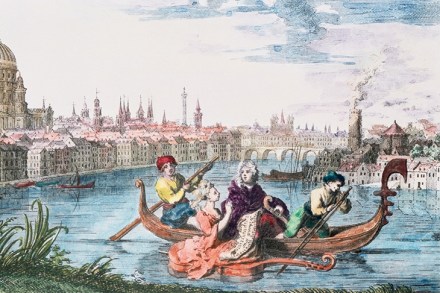
‘Tell me what you eat and I shall tell you what you are.’ The best known adage in food literature, penned by the French politician and gastronome Jean Anthelme Brillat-Savarin, divides all of us generally: the gourmands from the picky, the greedy from the careful, one nation from another, one culture from the next. Laura

The greatest journeys ever made

Many believed in Australia for 1,000 years before its discovery. There had to be a commensurate weight — somewhere Down Under — to counter the northern land mass; an ‘unknown Southland’ which was crucial to maintaining the balance of the world. To confuse matters, this theoretical continent was dubbed for a while Austrialia del Espiritu

The final frontier

In 1932, the Daily Plainsman of Huron, South Dakota, ran a feature about a local woman convalescing in hospital. Grace Dow had been visited by her sister, Carrie Swanzey, who read a children’s book to her. What made this mundane story newsworthy was that the book was called Little House in the Big Woods, and

Man of the hour

Last year, more than 6,000,000 people visited the Lincoln Memorial in Washington DC. By contrast, barely 80,000 went to General Ulysses S. Grant’s tomb in New York City. Some would argue that the neglect is no better than Grant deserves. But others, notably Ron Chernow, believe it’s time for a rehabilitation. Why do Americans pay

Cold comfort | 7 December 2017

Mrs Thatcher once explained that she adored cleaning the fridge because, in a complicated life, it was one of the few tasks she could begin and end to total satisfaction. In this way are refrigerators evidence of our struggles, our hopes and our fears. Moreover, if you accept that the selection and preparation of food

A whistle-stop tour of the East

For many of us, life has become global. Areas which were previously tranquil backwaters are now hives of international activity. Leisure travel has given us the possibility of first-hand exposure to once very remote places. You don’t have to be particularly privileged or adventurous to go on holiday in January to south-east Asia: two weeks

Satire and self-deprecation

If you’re Jewish, or Jew-ish, or merely subscribe to the view that Jews should be trusted to recognise anti-Semitism rather than be accused of making false allegations to further their own malign agenda, the chances are you could do with a laugh right now. The resurgent far right’s threat feels frightening but expected, whether from

Books of the Year | 16 November 2017

Daniel Swift I spent too much of this (and last) year reading anaemic updatings of Shakespeare plays: pale novels which borrowed plots and missed points and, oddly, always misunderstood the minor characters. After these, Preti Taneja’s We That Are Young (Galley Beggar Press, £9.99) came as a relief and a surprise. Her novel is big,

Books of the Year | 9 November 2017

A.N. Wilson Elmet by Fiona Mozley (John Murray, £10.99). It is difficult to convey the full horror of this spellbinding first novel. The young author, a medievalist, presumably knows the no less violent Njál’s Saga. Elmet, though set in the modern age, concerns timeless protagonists who have contrived to live outside the normal modern settings.

Eat the forbidden fruit

Eating human brains, burying one’s face in dead people’s ashes and publicly deriding the president of the United States as a ‘piece of shit’ are not among the activities usually associated with serious religious historians. But Reza Aslan is something else. An American academic born in Iran, brought up as a Muslim, converted to Jesus

Romance and rejection

‘Outsider’ ought to be an important word. To attach it to someone, particularly a writer, is to suggest that their helpless circumstances have condemned them to struggle and neglect. It is up to us — posterity — to look beyond the writers who had social advantages in the year 1880, say, and find those who

Broken dreams | 19 October 2017

In the expensive realm of musical comedy, it’s impossible to predict what will take off and what will crash and burn. Oliver! ran for 2,618 performances, but no other Dickens adaptation has succeeded— and Oliver! had to overcome a reluctant producer who’d suggested it could be much improved with an ‘all-black cast’. And would Lionel

How pleasant to know Mr Lear

Edward Lear liked to tell the story of how he was once sitting in a railway carriage with two women who were reading aloud to children from his Book of Nonsense. When a male passenger confidently asserted that ‘There is no such person as Edward Lear’, the writer was obliged to prove his own existence

Wandering Jews

Simon Schama is an international treasure. Whether on screen or in print, he is all energy, enthusiasm, dramatic gestures, emotional intensity. He clutches his readers in a tiger-like grip, then chews them up with relish until they are almost helpless with mirth or emotional exhaustion. If the first volume of his trilogy on the history

Of his time

Great novelists come in all shapes and sizes, but one thing they all share is a status of half-belonging. If they had no foot in the world at all, they could hardly understand it; if they completely belonged, they could hardly understand what was distinctive. One of the pleasures of this excellent biography is fully

Britain über alles

  David Cannadine was a schoolboy in 1950s Birmingham, which was still recognisable as the city that Joseph Chamberlain had known. In the 1960s the town planners demolished much of Victorian Birmingham. The bulldozing of 19th-century cities coincided with — and helped to cause — a boom in Victorian history, led by Asa Briggs. As

The journey of Adam and Eve

Trying to reconcile a belief in the literal truth of the Bible with the facts of the world as we observe it has never been the easiest of things. But heaven knows, people did try. Well enough known, I suppose, is the work of the 17th-century Archbishop of Armagh, James Ussher, who totted up all

Armageddon averted

From 1945 to 1992 the Cold War was the climate. Individual weather events stood out — the Korean War, the Cuban missile crisis, the Hungarian and Prague uprisings, the fall of the Berlin wall — but the possibility of nuclear annihilation, the great divide between the broadly capitalist West and the broadly socialist East and

The fruits of imperialism

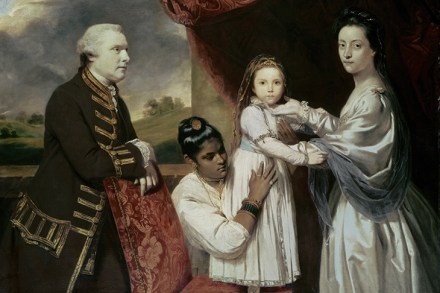
Imagine yourself a middle-class person in England in the 1870s. You sit down to drink a cup of tea while reading The Spectator. It probably doesn’t cross your mind, but in your hand you hold products from around the world. Your tea is from Ceylon, the sugar in it from Jamaica, and your porcelain cup

A tidal wave of grief

Most victims of the 1755 Lisbon earthquake — which convinced Voltaire there could be no God — perished not in the six-minute tremor, but in the tsunamis which foamed up the Tagus soon after, causing devastation as far away as Brazil. These towering sheets of water can have an impact greater than that of a