Lead book review

The real Calamity Jane was distressingly unlike her legend

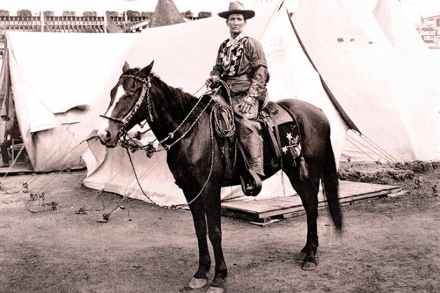
‘This is the West, Sir,’ says a reporter in The Man Who Shot Liberty Valance. ‘When the legend becomes fact, print the legend.’ This is very much the advice that has applied to Calamity Jane over the years. She was the lover of ‘Wild Bill’ Hickok, avenged herself on his killer and bore his secret love-child. She rode as a female army scout and served with Custer. She saved a runaway stagecoach from a Cheyenne war party and rode it safely into Deadwood. She earned her nickname after hauling one General Egan to safety after he was unhorsed in an ambush. She was a crack shot, a nurse to the wounded, a bullwhacker and an elite Pony Express courier. Not one of these things is true.

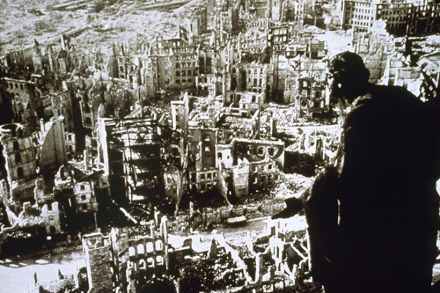
Was Dresden a war crime?

The literature of second world war bombing campaigns is surprisingly extensive. The books written in Britain largely focus on the night sorties by RAF Bomber Command, but the equally destructive second world war campaigns by the US 8th Air Force (daylight raids on Germany) and the Luftwaffe (the Netherlands, the Blitz on the UK) are covered too. There is little or no equivalent literature from Germany, although in recent years there have been several deeply researched books by German authors about the destruction of their cities. The RAF books take all forms. There are authoritative personal histories (pilots, air chiefs, politicians), as well as vernacular accounts (WAAFs, ground crew, rear gunners). There are squadron histories. Bio-graphies of notables like Gibson, Cheshire, Bennett.

How a fraudulent experiment set psychiatry back decades

In January 1973, Science (along with Nature, the most influential general science journal in the world) published an article that immediately captured major media attention. David Rosenhan, a Stanford social psychologist, reported that eight pseudo-patients had presented themselves at a variety of mental hospitals, 12 in all, complaining that they were hearing voices saying ‘hollow, empty and thud’, but otherwise behaving completely normally. All of them, he reported, were promptly admitted, and all but one diagnosed as suffering from schizophrenia (the other receiving the somewhat more hopeful diagnosis of manic depressive psychosis). It took weeks for them to be released, though they were instructed to show no symptoms once admitted.

Carrying on loving: Elizabeth Hardwick’s and Robert Lowell’s remarkable correspondence throughout the 1970s

Since Robert Lowell’s sudden death in 1977 his critical reputation has suffered from the usual post-mortem slump. Interest in Lowell’s life, however, remains as strong as during his celebrity heyday, when he graced the cover of Time magazine and marched on the Pentagon with Norman Mailer. A biography (excellent, by Ian Hamilton), an edition of his letters, and a volume of the correspondence between Lowell and Elizabeth Bishop are all firmly in print. Now we have The Dolphin Letters: 1970–1979, which includes both Lowell’s letters to his wife Elizabeth Hardwick (during and after the dissolution of their marriage) and her letters to him, long thought to have been lost or destroyed.

The Tudor dynasty owed everything to Margaret Beaufort’s machinations

Of the clutch of female powerbrokers who emerged during the civil wars of the English 15th century, the diminutive figure of Margaret Beaufort stands out: first, for her spectacular navigation of the repeated regime changes of the Wars of the Roses; and second, for the act of political opportunism which saw her help her son Henry Tudor to the throne, in the process founding a new dynasty. She herself became the epitome of a dynastic matriarch, a pious, self-assertive figure of immense independent wealth and power. Margaret was born in 1443 into a great Lancastrian family.

Who are today’s fictional heroes?

What’s a hero? There are probably at least two answers to that. One is that heroism is a moral quality: to do with courage above all but, in its wider connotations, to do with altruism or protectiveness and self-sacrifice. The answer that probably precedes that one, though, is a more technical, narratological one: the hero is the star of a story. In storytelling terms it’s a matter of narrative focus, and the reader’s implied identification with one character above the others — or, perhaps, admiration rather than identification. Heroes are bigger, braver, more purposeful, more important than the ordinary run of humanity. It happens that on the whole the aforementioned moral qualities have come to be attached to heroes.

More juicy gossip from Kenneth ‘Climbing’ Rose

When this second volume of diaries begins in 1979, Kenneth Rose is 54 and well established as the author of the Sunday Telegraph social column ‘Albany at Large’. The first volume, published last year, was reckoned by many to be a disappointmaent on account of Rose’s snobbery. This one is better. By now Rose has arrived. The Thatcher years were his glory days. When he died in 2014 Rose left six million words of journals, which he bequeathed to the Bodleian Library, and the two volumes edited by D.R. Thorpe which have been published amount to roughly half a million words. Rose saw his diary as his legacy. Back in 1988 he recorded: ‘George Weidenfeld is very enthusiastic about eventually publishing the journals I have been keeping.

As English spread over the subcontinent, India lost forever its rich Persianate literary heritage

In the seventh century, the Chinese Buddhist monk Xuanzang made an epic journey through the Gobi desert and over the Himalayas to the holy places of Buddhism in India. On the way, he noted to what extent the world he passed through was dominated by Indic ideas, languages and religions. ‘People of distant places, with diverse customs,’ he wrote, ‘generally designate India as the land they most admire.’ The account that Xuanzang wrote of his journey, Buddhist Records of the Western World, makes it clear that the places he saw on his 17-year, 6,000-mile pilgrimage looked to India as the centre of world learning.

When Cartier was the girls’ best friend

The word ‘jewel’ makes the heart beat a little faster. Great jewels have always epitomised beauty, love — illicit or sanctified —romance, danger and mystery. And no one knew better how to cash in on this mystique than the firm of Cartier, for years the go-to jewellers for discreet, elegant razzle-dazzle. Its customers were kings, princes, maharajas and the whole of ‘society’. The iconic panther brooch it created for the Duchess of Windsor sold for $7 million (in 2010). When Francesca Cartier Brickell, searching for a special bottle of champagne in her Cartier grandfather’s cellar, spotted a battered leather trunk in one corner, she opened it to find bundles of letters, each tied and neatly labelled.

The carnage inside Charlie Hebdo: an eyewitness’s account of the attack

It is almost five years since two trained jihadists went into the offices of Charlie Hebdo in Paris and killed 12 people. Philippe Lançon survived the editorial meeting that was taking place as the gunmen burst in. Published to huge acclaim in France last year, Disturbance is his account of events. It is long, perhaps too long, with numerous discursions. But who would edit such painful, painstaking testimony? On the morning of the attack, Lançon had been weighing up whether to go to Charlie or to Libération, where he also worked. He chose to go to Charlie, whose difficult, brilliant, brave team had kept producing the magazine, despite a decade of growing attention from Europe’s modern-day blasphemy police.

Books of the year – part two

Richard Ingrams A book that gave me great enjoyment (for all the wrong reasons) was Harvest Bells: New and Uncollected Poems by John Betjeman (Bloomsbury Continuum, £16.99). The compiler, Kevin J. Gardner, professor of English at Baylor University, Texas, claimed that all the poems in the book had been subjected to his ‘rigorous scrutiny’; yet somehow a spoof Betjeman poem, published in Private Eye after the exposure of Anthony Blunt as a Russian agent in 1979 (for which I was partly responsible), had found its way into the professor’s ragbag of a compendium: Who’d have guessed it? Blunt a traitor And a homosexualist, Carrying on with tar and waiter — There’s a sight I’m glad I missed.

Books of the year – part one

Philip Hensher The best novels of the year were Colson Whitehead’s The Nickel Boys (Fleet, £16.99) and James Meek’s To Calais, In Ordinary Time (Canongate, £17.99). These days, novels are often praised for the gravity of their subjects, but what elevates Whitehead’s treatment of race and American brutality is the elegance of its style and the satisfying inventiveness of its form. Meek’s book is an astounding linguistic fantasy about the advent of the Black Death. French, Anglo-Saxon and Latin collide in a world of fake news, uncertain sexual borders and the dread of a catastrophe which looks in some ways very much like our own.

Meet Dr Love: the infallibly seductive, pioneering French gynaecologist

Do not google Samuel Jean Pozzi. If you want to enjoy Julian Barnes’s The Man in the Red Coat — and believe me, it’s teeming with delights — stay away from search engines and trust the author to tell the story in his own way. But just to get you started: Pozzi (1846–1918), the man John Singer Sargent painted, gloriously, in sumptuous red, was a Frenchman, a prominent, pioneering doctor in Belle Epoque Paris, and a charming, ubiquitous, infallibly seductive socialite. (‘Disgustingly handsome’ is how the Princess of Monaco described him.) He was Sarah Bernhardt’s doctor and also her lover; she called him ‘Docteur Dieu’. (His other nickname was ‘L’Amour médecin’, which Barnes translates as Dr Love.

Is there no field in which the Jewish mindset doesn’t excel?

More than 20 years ago, George Steiner, meditating on 2,000 years of persecution and suffering, posed the ‘taboo’ question that no one dared ask: ‘Has the survival of the Jew been worth the appalling cost?’  It was not just the horrors of the pogroms or of Auschwitz that ‘enforced’ the question for Steiner, nor the centuries of exclusion and violence but — equally destructive — ‘the fear, the degradation, the miasma of contempt, latent or explicit,’ which has been the hereditary birthright of every Jewish child ‘across the millennia’. ‘Would it not be preferable, on the balance sheet of human mercies,’ Steiner asked, ‘if he was to ebb into assimilation and the common seas?

An unconventional biography of the visionary architect Frank Lloyd Wright

Paul Hendrickson’s previous (and very fine) book was Hemingway’s Boat, published in Britain in 2012. It was a nice conceit to see the writer’s life through his singular obsession with Pilar, the boat he commissioned from a Brooklyn shipyard, which remained the steadiest companion in his choppy voyage. The enormous life of Frank Lloyd Wright — the architect who was born two years after the Civil War, and died in 1959 when Bobby Darin’s ‘Mack the Knife’ was a hit — offers no such straightforward device. With more than 500 completed designs, splendid eccentricities and a well-developed taste for confrontation, every single Wright building could have become a novella.

Three remarkable sisters at the heart of 20th-century Chinese politics

In their lifetime, and afterwards, the Soong sisters from Shanghai seemed like figures from a Chinese fairy tale. There were three of them: ‘One loved money, one loved power and one loved her country.’ They came from a family of prosperous Methodist converts and, for almost 100 years, one or other of them presided at or near the centre of power in China. The middle sister, Chingling, married Sun Yatsen, the founding Father of the Republic, transferring her allegiance after his death to the small group of bandits, led by Mao Zedong, who formed the nucleus of the Chinese Communist party. To this day Chingling enjoys something like mythical status in the People’s Republic of China.

Man’s first instinct has always been to return to the sea

Travelling the Indus valley late in the third millennium BC you would have been awed by two Bronze Age megacities, 320 miles apart, ‘massive and tightly planned, very similar in layout’, their bricks and measures standardised, evidence of rigid authority. Their trade goods included Afghan lapis lazuli, Omani vases, legal seals from Sumeria, carnelian beads, packed for dispatch to Sumer — and that is almost all that is left of Harappa and Mohenjo-daro, and more than we know of them. Their names are modern labels. This section of The Boundless Sea, David Abulafia’s fascinating ‘human history of the oceans’, is one of many moments of thrilling implication. (Do not assume anyone will know the name of London in 5,000 years’ time.

For millennials, pre-Thatcher Britain must seem another — quite mystifying — country

Lymeswold; Hi-de-Hi!; nuclear-free zones; Walkmans; the Metro; Red Robbo; the SDP; Michael Foot’s Cenotaph donkey-jacket; Protest and Survive; Steve Davis and Hurricane Higgins; Sebastian Coe and Steve Ovett; hunger strikes; Red Ken and Fare’s Fair; ‘On your bike’; Lady Diana; ‘hog-whimpering drunk’; Chariots of Fire; Beefy Botham; ‘The lady’s not for turning’; the Peterborough Effect; Spectrum computers; ‘Gotcha!’; ‘We are not Britain. We are the BBC.’ Councillor Jeremy Corbyn. Merely to repeat these names and phrases, all drawn from this, the fifth in Dominic Sandbrook’s great chronicle of Britain since the 1950s, is to re-enter the period.

The best of journeys: Justin Marozzi’s monumental trek through the history of the Muslim world

This impressively clever, careful, and often beautiful book is the best sort of journey. It takes us through 15 cities that represent Islamic civilisation, but also through 15 centuries of Islamic history. Our voyage takes us through the core of the Middle East, but also to Fez in what is now Morocco and to Samarkand, in what is now Uzbekistan. We are introduced to very attractive characters such as Akbar, the tolerant and cultured warrior-poet who was Mughal emperor in the 16th century, and Harun al-Rashid, who turned Baghdad into a cultural and commercial centre so rich and powerful that its fame resonates more than a millennium later.

No one held Susan Sontag in higher esteem than she did: Her Life reviewed

Towards the end of this tale of imperial intellectual expansion, Susan Sontag’s publicist goes to visit his shrink and, dealing with some appalling professional trauma or other, mentions her name. The psychiatrist bursts out laughing. The publicist asks what is so funny and is told: ‘You can’t imagine how many people have sat on that couch over the years and talked about Susan Sontag.’ Benjamin Moser’s very substantial life of the cultural critic and writer is capable of detached bemusement at its subject’s unstoppable advance. She took herself extremely seriously. (‘On 3 October, the Nobel Prize was awarded to J.M. Coetzee. The award depressed Susan.