Lead book review

How do we greet one another today?

One of the most striking, and lowering, aspects of lockdown has been the deprivation of human exchange, and especially conversation. We can talk to our immediate families but not properly to a wider range of humanity. The Zoom chat, with so many ordinary conversational features removed, is not the same thing at all. Conversation is fundamental to what we think of as our being, and I don’t believe we could go on long without it.In view of how vital it seems to be, it’s strange that we rarely consider it seriously. About its main substance — the words used — we make all sorts of assumptions, many of which turn out to be wrong.

Splashing the cash at VIP nightclubs is now the favourite recreation of the rich

The world described in this book is weird enough anyway, but reading about it during lockdown is positively surreal. It’s about VIP nightclubs, mainly in New York, but also in Miami, Cannes, St Tropez or wherever rich people congregate. Ashley Mears is a professor of sociology, as she likes to remind us with references to Bourdieu, Durkheim, Veblen, etc, but mainly she is a very good reporter. The reason she was allowed into the VIP clubs is that she used to be a model and can still pass as one, though actually too old for admission (at 31) by most club standards. But it amused some of the promoters to have a professor who looked like a model taking an interest in their work. Some definitions first.

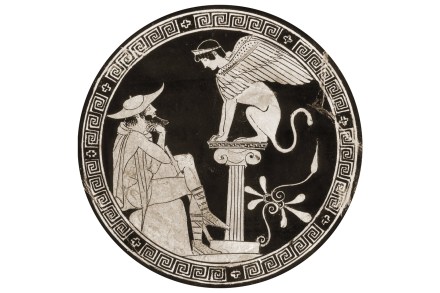
The history of Thebes is as mysterious as its Sphinx

The Spartans were not the only Greeks to die at Thermopylae. On the fateful final morning of the battle, when Leonidas, knowing that the pass had been sold, ordered the vast majority of the contingents stationed at the Hot Gates to retreat and live to fight another day, two detachments stayed behind to join the 300 in their heroic last stand against Xerxes. Both these detachments came from Boeotia, the fertile plain which stretched directly south of Thermopylae and extended as far as the frontier with Athens. One of these two detachments came from Thespiae, a small but famously cussed city in central Boeotia: 700 hoplites who, alongside the Spartans, fought, died and were lauded as martyrs for Greek liberty. What, though, of the 400 men who constituted the other contingent?

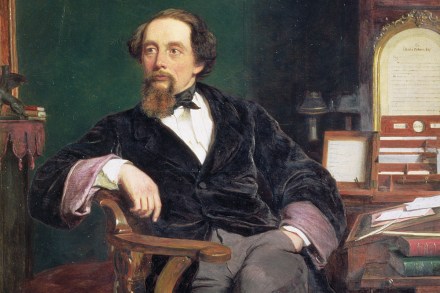
The many rival identities of Charles Dickens

Until the age of ten I lived in a street of mock-Georgian houses called Dickens Drive. Copperfield Way and Pickwick Close were just around the corner. Even now I regularly pass the Pickwick Guest House on the main road out of Oxford. None of this is especially surprising. Go online and you can buy a ribbed tank top for your dog emblazoned ‘I love Charles Dickens’ or a flexible Dickens action figure ‘with quill pen and detachable hat’. Visit Rochester or Chatham, the Kent towns where he spent the happiest years of his childhood, and it’s hard to turn a corner without bumping into a Dickensian ghost — Little Dorrit body piercing, or A Taste of Two Cities Indian restaurant.

How kind is humankind?

Augustine had it that ‘no one is free from sin, not even an infant’. Machiavelli deemed that humans are ‘ungrateful, fickle hypocrites’, and even the founding father John Adams, the paragon of American democracy, was sure that all men would be tyrants if they could. Thucydides, Luther, Calvin, Burke, Bentham, Nietzsche, Freud — all were wrong about our natures. So was William Golding, creator of Lord of the Flies, himself a child-beater* and a drunk. For a treatise on human kindness, Rutger Bregman’s new book Humankind has surprisingly many villains. Here’s ‘a radical idea… a mind-bending drug... denied by religions and ideologies’, we’re told. Humans are not evil. Deep down, at least most of us are pretty decent.

Where did birds first learn to sing?

The crisis inflicted by Covid-19 has been a source of anguish for everyone; yet we frequently hear how people are rediscovering solace in nature, especially in their gardens or in the surging renewal of life in the spring. According to Tim Burt and Des Thompson, the editors of a collection of essays about the importance of field research, this fulfilment reveals something much more profound than a distraction from lockdown.They argue that a response to the natural world is hardwired in the human psyche. Out of that fundamental reflex has evolved not just our prowess as hunters, then agriculturalists, but the entire edifice of science, whose assembled vision of the physical universe was described by C.P.

The genuine polymath is still one in a million

We live at a time of universal polymathy. We don’t know everything, but there’s not much difficulty in being able to discover any given truth. But it’s worth remembering just how hard it used to be to find things out. Thirty years ago if you wanted to research off your own bat it meant a trip to the public library — and perhaps filling out a form for an inter-library loan. Or you could try your luck in a bookshop, new or secondhand. The whole process took a long time, and most people stayed within their professional competence or enthusiasm, frankly admitting to ignorance outside those limits. It was the age of the specialist, memorably captured by Michael Frayn in Donkeys’ Years and the character of Kenneth Snell: Take me, for instance.

A ‘loneliness pandemic’ could prove as dangerous as coronavirus

The subjugation of nature has formed a cornerstone of the human agenda. How surprising and humbling, then, to find our way of life so rapidly and unexpectedly undermined by a biological force that transcends identity and culture. Still worse, when we discover that the source of this chaos is a sub-microscopic viral particle whose genetic code — simpler than a bacterium — is barely compatible with a living entity. Yet it has brought global civilisation to a standstill.

From ‘divine Caesar’ to Hitler’s lapdog – the rise and fall of Benito Mussolini

In 1919, an obscure political agitator called Benito Mussolini assembled a ragbag of Blackshirt diehards in the Lombard capital of Milan and launched the movement that was to become, two years later, the National Fascist Party. The party took its name from the classical Roman symbol of authority — an axe bound in rods, or fasces. Once in power, Mussolini introduced the stiff-armed Roman salute after the handshake was considered fey and unhygienic. At times he wore a richly tasselled fez and thrust out his chin pugnaciously for the cameras. For all his posturing and demagoguery, Mussolini was widely admired in pre-war Britain, where Lord Rothermere’s Daily Mail routinely carried flattering portraits of him.

Moscow rules in London: how Putin’s agents corrupted the British elite

In the past year alone, Russia-watchers have been treated to books entitled The Code of Putinism; Putin’s World; Putin vs the People; The Putin System and We Need to Talk About Putin — just to mention the ones with Putin’s name in the title. In addition, Robert Service’s Kremlin Winter, Sergei Medvedev’s The Return of the Russian Leviathan and Andrew Monaghan’s Dealing with the Russians have also offered their own insights into the history, politics and future of Putin’s Russia. In this crowded field, is there a place for Putin’s People? Happily, there is.

The cult of Sappho in interwar Paris

I like a book that can put its point in four outrageous words and use it as its title. Diana Souhami might be right. Without the women her book is devoted to, literary modernism would have looked very different. A consciously new approach to writing met a body of women who were being heard for the first time; the results were compelling. At the beginning of a novel by one of them, Gertrude Stein’s The Making of Americans, the terror of masculine traditions is concisely stated: Once an angry man dragged his father along the ground through his own orchard. ‘Stop!’, cried the groaning old man at last, ‘Stop! I did not drag my father beyond this tree.

Excess and incest were meat and drink to the Byrons

‘Some curse hangs over me and mine,’ wrote Lord Byron, and thanks to Emily Brand, who is a genealogist, it is now possible to see why Byron was so darned Byronic: excess, incest and marital misery flowed in the bloodstream. The gloom that looked like a Regency pose was entirely pre-programmed; George Gordon Byron’s script was handed to him at birth. Being mad, bad and dangerous to know was as instinctive to the Byrons as howling at the moon for a pack of wolves. When he compared his family to ‘whole woods of withered pines’, the poet was not exaggerating. Every branch was rotten.

Wordsworth may have been partially eclipsed by his fellow Romantics, but his life was far from dull

Between 1798 and 1807 William Wordsworth revolutionised English poetry, giving voice to the marginalised in poems such as ‘The Idiot Boy’ and anticipating modern psychology in his exploration of childhood. Today, his ability to articulate the connection between man and nature can still bring us up short, as in these lines from ‘Tintern Abbey’: ... And I have felt,A presence that disturbs me with the joy Of elevated thoughts; a sense sublimeOf something far more deeply interfused,Whose dwelling is the light of setting suns,And the round ocean and the living air,And the blue sky, and in the mind of man...

From Liverpool’s Cavern to the world stage: how the Beatles became a global phenomenon

When the Beatles’ first authorised biographer, Hunter Davies, clinched the deal in 1967, his publisher remarked that ‘we know everything we could possibly know about the Beatles and they’ll disappear soon’. In that same year, the philosopher Bryan Magee adopted an incredulous tone in the Listener: ‘Does anyone seriously believe that Beatles music will be ... part of daily life all over the world in the 2000s?’ But here in the recently released statistics for the Top Ten global recording artists of 2019, among the Taylor Swifts and the Ed Sheerans, 50 years after they broke up — let me introduce you to the band you’ve known for all these years.

Gustav Mahler’s bid for greatness: the ‘Symphony of a Thousand’

A kind of gigantism took hold of the European mind in the years before the first world war. It shaped everything, from empires to poetry. In the confidence of new technology and new ideas, things could be attempted on a larger scale than ever before. The mental power of the age could be measured in the sheer size of the things it produced. This might be ‘Jacky’ Fisher’s Dreadnought in 1906, which set off a European arms race in huge battleships, or a great construction — the Victoria memorial in front of Buckingham Palace is nothing to the one built in Kolkata.

America’s love-hate relationship with Shakespeare

Shakespeare’s single explicit reference to America is found in The Comedy of Errors. The two Dromios are anatomising the unseen ‘kitchen wench’ Nell, who is ‘spherical, like a globe’: ‘I could find out countries in her,’ says one Syracusan brother. ‘Where America?’ asks his twin. The reply, ‘O, sir, upon her nose, all o’erembellished with rubies, carbuncles, sapphires’, embodies early colonial fantasies about the famed riches of El Dorado.The first record of a Shakespeare text in America comes a century later, and the first known production — an amateur run of Romeo and Juliet in the Revenge Meeting House, New York — three decades after that.

Knowing Cromwell’s fate only increases the tension: Mantel reviewed

When the judges for the 1992 Booker Prize received Hilary Mantel’s A Place of Greater Safety, an 800-page novel set during the French Revolution seemed a quirky diversion from the work of a novelist then most associated with shortish dark comedies of contemporary or recent life, such as Fludd (1989), featuring a weird Catholic priest, and Eight Months on Ghazzah Street (1988), in which an Englishwoman suffers Saudi Arabian culture shock. We did not shortlist the book. History shows that monumental distant-historical fiction would subsequently become the glorious core of Mantel’s work, though, perhaps validating our doubts, featuring English, rather than French, revolutionary struggles.

‘The most powerful and disturbing book that I have ever read’

I had assumed, after 40 years of researching and writing about war in the 20th century, that I was prepared for just about any horror. But Christina Lamb’s research, into the mass rape of women and young girls in more recent wars and ethnic cleansing shook me to the core. This is the most powerful and disturbing book that I have ever read, and it raises important questions. Lamb takes us from one zone of racial and religious aggression to another. The attackers have different motives and each persecuted minority is culturally unique, yet the pain and suffering of their victims are terrifyingly similar.

Shades of the prison house: the ghosts of suicides fill our prisons

About the time Chris Atkins’s cell was slammed shut at Wandsworth Prison for the first time, I was sitting on the tenth floor of the Ministry of Justice, glued to BBC News. My boss, Michael Gove, had just been given the boot by Theresa May, and as his speechwriter I would be inherited by whoever replaced him as justice secretary. Without warning, No. 10’s black door swung open to reveal a delighted looking Liz Truss — the new chief executive of a creaking government department with 75,000 employees (including all prison and probation staff), with responsibility for a prison system that was in meltdown. I remember madly googling what she might think about prisons, only to be reminded that she was coming straight from the environment department.

Unspeakably prolix and petty: will anyone want to read John Bercow’s autobiography?

John Bercow obviously intended his book to annoy people, and he’s certainly succeeded in that. MPs who don’t find their names in the index can generally count themselves lucky. He just loves pouring shit over other politicians, especially Tories. He finds David Cameron ‘an opportunist lightweight, sniffy, supercilious and deeply snobbish’; Theresa May ‘as wooden as your average coffee table’; Michael Gove ‘prone to oleaginous flattery’; Amber Rudd ‘all gong and no dinner’; Michael Howard ‘a decidedly cold fish’.