Lead book review

What made Lucian Freud so irresistible to women?

Amedeo Modigliani thought Nina Hamnett, muse, painter, memoirist, had ‘the best tits in Europe’. She fell 40 feet from a window and was impaled on the basement railings. Not suicide. She was peeing out of the window, the shared lodging-house lavatory being too distant. On her deathbed, her breathing was like a harmonica. The collector Roland Penrose liked being tied up by a dominatrix, a woman wrestler, whom he and his photographer wife, Lee Miller, brought to England and shared. The busy philosopher A. J. Ayer was known as Juan Don. When Isabel Rawsthorne finally had sex with the persistent, overweight sculptor Eduardo Paolozzi, she reported that it was ‘exhausting’. She had to do all the work.

Did Christianity make the western mind — or was it the other way round?

Nobody can accuse Tom Holland of shying away from big subjects. Dominion is nothing less than a history of Christianity with an underlying theme. The subtitle says it all. It is dedicated to the idea that Christianity has formed the western mind, not just in its moral and intellectual conventions but in their opposites, such as atheism or the natural sciences. An argument so paradoxical provokes thought, whether one agrees with it or not. This one is sustained with all the breadth, originality and erudition that we have come to associate with Holland’s writing. The technique is a sort of literary pointillism. An incident, an image, an individual, a place are presented as capturing the spirit of an epoch.

Novel explosives of the Cold War

One autumn night in 1991, I stood on the rooftop terrace of a tacky villa in Saranda once owned by Albania’s Stalinist dictator Enver Hoxha, beside three elderly former SOE officers who were returning to Albania for the first time since 1945. In an image that summed up the waste and the horror of the Cold War, David Smiley stared out over the dark water at the lights of Corfu, from where, on a similar night in October 1949, he had sent a group of dissidents, code-named the ‘Pixies’, to launch an insurgency — and wiped his eye in silence. Smiley’s men had been ambushed as they landed, and then killed, on the tip-off from Kim Philby, the highest Russian agent to infiltrate British Intelligence, and in charge of anti-communist espionage.

Moving stories

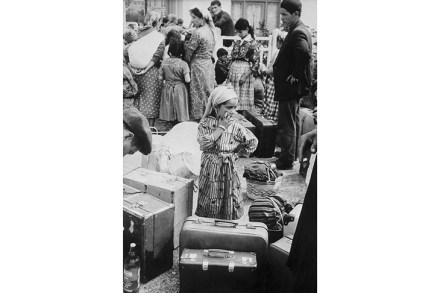
Two words may pique the reader’s interest on the cover of this timely, panoramic history of Europe by the distinguished writer on human migration Peter Gatrell: ‘unsettling’ and ‘1945’. Why unsettling, and why choose the end of the second world war as a turning point? By the close of dramatic Part I (‘Violent Peacetime, Cold War Rivalry, Rebuilding Europe 1945–1956’), we have gained detailed insight into just how demographically, economically, politically and psychologically shattered — and geographically unsettled — Europeans were in the decade after 1945.

The man and the legend

It is not often that a book’s blurb gives any idea of what’s inside, but Helen Castor’s endorsement — ‘a masterclass in the practice of history’ — is as good a description of this brilliant new biography of Charlemagne as we are likely to get. The broader contours of the life will be familiar to many readers, but what we have here — pace Janet Nelson — is less the ‘old-fashioned’ biography that she claims but a wonderfully generous sharing of knowledge that combines the conversational tones of the ideal classroom with the intensity of the trained anatomist, poised, knife in hand, to reveal the musculature beneath the skin.

The unseen enemy

We could begin almost anywhere. But let’s start in Ukraine, with Babar Aliev. Babar is a former gang leader who used social media disinformation campaigns to undermine a separatist movement. When his opponents won, he was picked up and put on a train out of town. His great disappointment, he tells Peter Pomerantsev in This is Not Propaganda, is that the separatists sent just three men for him. (Last time, he says proudly, there were three vans with Swat teams.) Today he is setting up ‘media literacy’ classes, helping people differentiate between true and untrue stories, reliable and unreliable sources.

The brutal truth

Novelists will always be interested in enclosed communities — or the ‘total institution’, as sociologists say. When you separate a group of individuals from larger society with a wall and a controlling mechanism, all sorts of interesting facts about the way people interact become apparent. Convents, hospitals, asylums, schools, universities and prisons all serve the purpose. But different nations tend to prefer one sort of institution over another. It’s a curious fact that where the British will enter into a novel of school life with gusto, Americans show a distinct preference for writing about prisons.

Distant voices, shattered lives

In 1990s Russia, war veterans were a bossy, even aggressive presence, upbraiding people in shops and pushing to the front in the trolleybus queue. Complaining about this at some point, I was struck and shamed by a Russian friend’s reaction: ‘Oh, but it’s sad... Imagine how hard their lives have been, to make them like that.’ Last Witnesses consists of about 100 accounts by men and women who were children when the Nazis invaded. Without preface or context of any kind, their voices rise off the page — hesitant, desperate, terrified, matter of fact, poetic, bewildered. Their ellipses are loud with choked tears and still-raw fear.

The ‘rumours’ we chose to ignore

On 14 October 1942, the 23 Swiss members of the International Committee of the Red Cross met in Geneva to decide whether or not to go public with what they then knew about Auschwitz and the Nazis’ extermination plans. When they emerged two hours later they had voted, almost unanimously, to remain silent. As did the US state department, the British government and the Vatican — all in possession of the same evidence of mass murder across German-occupied Europe. The reasons given ranged from the danger of reprisals against Allied PoWs to the need to focus on military targets, and thus shorten the war. And, most importantly, because of a profound unwillingness to believe what they had been told.

King of the World: The Life of Louis XIV

I was flicking through an old copy of The Spectator the other day, one of the issues containing contributors’ ‘Christmas Books’, and there was a comment of Jonathan Sumption’s that ‘as a general rule, biography is a poor way to learn history’. It is primarily a matter of approach rather than simply subject of course, but if one was drawing up a shortlist of men who might qualify as exceptions to the rule, then Philip Mansel’s ‘King of the World’, Louis XIV, would surely be very near the top.

The riddle of Chapel Sands

At first glance, Laura Cumming’s memoir On Chapel Sands begins with what appears to be a happy ending. On an autumn evening in 1929, a small child is snatched from a Lincolnshire beach. Her name is Betty Elston and she is three years old. The girl’s mother, Veda, is happy to let Betty play on Chapel Sands, not far from the family’s cottage, keeping an eye on her from a distance. Veda’s attention wanders; when she looks back the toddler has disappeared. Panic sets in and the police are called; Betty has been kidnapped. A few days later, however, the little girl is found safe and well in a neighbouring village, wearing a different set of clothes. She has not been harmed but she has no memory of where she has been or who took her off the sands.

Bona to vada your dolly old eek

Imagine you’re a gay man living in the year 1950. Not unnaturally, you would like to meet another gay man. How to identify yourself to a potential partner? A confession might bring the police; dressing and carrying yourself in distinctive ways will invite ridicule or violence in the street. The solution is this: you casually remark to a stranger that the pub you are both in is ‘naff’. He looks up, and before you know it, you’re talking like this: ‘Pauline? Can’t swing a cat but hit a cove. She’s had nanti bully fake. Dyed her riah, her end’s a right mess.’ ‘Nanti bona. I hope she vaggeried straight to the crimper.’ ‘Well that’s where she’d been. The palone tried to give her an Irish. Moultee palaver.

‘God wills it’

The crusades are part of everyone’s mental image of the Middle Ages. They extended, in one form or another, from the 11th to the 16th century. Those which reached the Holy Land were fought by men on horseback wearing metal armour and carrying lances and swords, as in the pictures. The onset of gunpowder had not yet spoiled the fun. They were truly international, in their own way emblematic of the myth of a single Christian European polity. They embodied everything that people associate with medieval warfare: reckless courage, murder, loot, adventure and romance. Christopher Tyerman has been writing about the crusades for nearly 40 years. His work includes the only full-scale study of English crusaders and God’s War, which for my money is the best one-volume history in print.

Revelations about the prophet

In 2011, when the editor of Charlie Hebdo put Muhammad on the cover, he did so as the heir to more than 200 years of a peculiarly French brand of anti-clericalism. Just as radicals in the Revolution had desecrated churches and smashed icons, so did cartoonists at France’s most scabrous magazine delight in satirising religion. Although Catholicism was their principal target, they were perfectly happy to ridicule Islam too. If Jesus could be caricatured, then why not Muhammad? Sure enough, one year after the prophet’s first appearance on the cover of Charlie Hebdo, he was portrayed again, this time crouching on all fours and with his genitals bared.

Freudian dramas

I must have seen hundreds of opera productions in my time. Out of these, hardly any made a lasting impression on account of their design: the great Tarkovsky Boris Godunov for Covent Garden; Hockney’s Rake’s Progress for Glyndebourne; Es Devlin’s Les Troyens; the Richard Peduzzi Bayreuth Ring preserved on film. Very few others. For many opera-goers, an interventionist or bold visual approach to an opera is automatically a bad thing, and (I guess) a lot of the musicians involved are visually somewhat conservative. The ludicrous 1980s Met Ring cycle, designed by Gunther Schneider-Siemssen to follow every one of Wagner’s demands, was driven by musicians.

Towards a technological utopia

The rebranding of John Browne has been a long and, to those of us living overseas, instructive affair. Readers will recall the unedifying circumstances leading to his dismissal from BP ten years ago, when the country’s usual gang of disagreeable and unkindly figures such as Paul Dacre and Tom Bower were snapping busily at his heels. Much has happened since. In the classic style of the British establishment, his disgrace has been followed by a steady stalactitic drip of preferments and praise, committees and chairs and board memberships, much aided by quires of unctuous journalism, most tending to focus on the impeccable taste and artistic judgment (not to say financial savvy) with which he has furnished and stocked his digs in the fashionable quarters of London and Venice.

From fame to shame

Biographers are a shady lot. For all their claims about immortalising someone in print, as if their ink were a kind of embalming fluid, it has long been suspected that they enjoy wielding their pens more like a cosh or a scalpel. Victorian writers were especially nervous about the prospect of a biographer prodding and slashing away at their reputations. Tennyson worried that he would be ‘ripped up like a pig’ after his death, and many of his contemporaries did all they could to present their best face to posterity: hand-picking an authorised biographer; making a bonfire out of any embarrassing letters; discreetly muzzling friends who might be tempted into unflattering reminiscences.

The agony of the ‘almost man’

You may ask yourself, is it worth one of the best American non-fiction writers producing a book of just under 600 pages on an arrogant and abrasive egotist whose highest sustained rank in the State Department was that of a lowly assistant secretary? The answer is unabashedly yes. This is a remarkable work about a remarkable, if deeply flawed, statesman whose career was intimately intertwined with the 50 years of American decline from Vietnam to Afghanistan. Nearly all biographies have long, boring stretches you want to skip. This one has none. The access to Richard Holbrooke’s papers and to the uncensored memories of his wives and mistresses, as well as George Packer’s own racy writing, makes this a fascinating and compulsive read.

Women of the Raj

Despite efforts to prevent them, British women formed a part of the Indian empire almost from the start. Although the East India Company warned them off, citing difficulties of climate, disease, morality, religion and culture, a few managed to travel there all the same. By the late 18th century their numbers had increased considerably, making women some of the most interesting witnesses to the British Raj. In this way, the white Christian woman became a significant face of imperial rule. She would usually be caricatured as one who, having failed to find a husband in London, cast her lot in with the ‘fishing fleet’ in Bombay; or portrayed (by E.M.

A man for all ages

The deployment of Shakespeare to describe Brexit is by now a cliché. It might take the form of a quotation, be borrowed in a headline, or involve the name of one of the better-known characters; it might turn up in that most hollow of adjectives, Shakespearean. It has two possible modes. There is triumphalism drawn from the history plays: this sceptred isle, once more unto the breach. And there is tragic calamity: the betrayal by Brutus, Hamlet dithering. Nobody much invokes the comedies, perhaps because negotiations with the EU have not yet descended to cross-dressing.