Lead book review

The man and the myth | 17 April 2019

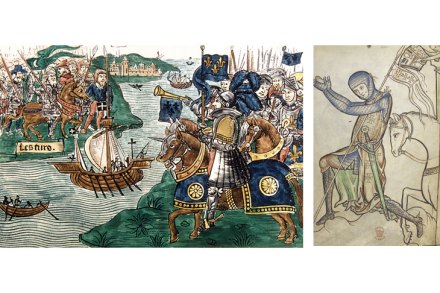
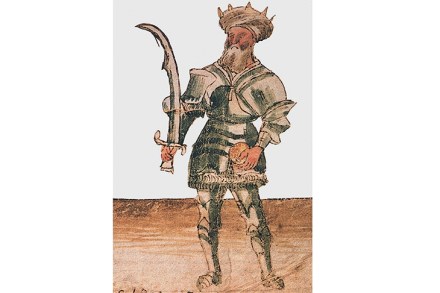
I can only remember one page of any of the dozens of Ladybird histories that I read avidly as a child: an illustration of a scene from the Third Crusade, when Richard the Lionheart, at the head of his Christian army,  met Saladin, the leader of the Muslim forces, outside the port city of Acre in 1191. The picture does not show the battle but the two men comparing swords, like top level sportsmen discussing preferred bats or rackets. They were standing before a tent, broadly medieval in appearance. On the ground lay an iron bar, evidently chopped in half with a single blow from the great broadsword between King Richard’s mailed fists. A silk scarf floated in the air and Saladin, slender, saturnine and subtle, was preparing to slice it in half with his razor-sharp scimitar.

A born rebel

Running the entire course of the 20th century, Michael Tippett’s life (1905–1998) was devoted to innovation. He was an English composer who worked within established forms —symphonies, oratorios, string quartets, piano sonatas — to startlingly new effect. But his innovation was not just as a composer. He was also a political and social radical, embedded in Trotskyite, pacifist and gay rights ideas. The newness made itself known in a long attempt to find novel ways of living. Oliver Soden’s biography feels like an attempt to answer a series of questions. How, in the 20th century, should a creative artist live? Or be a pacifist? Or a homosexual? The answers were sometimes wrong; the music could be disastrously unsuccessful.

The new freedom

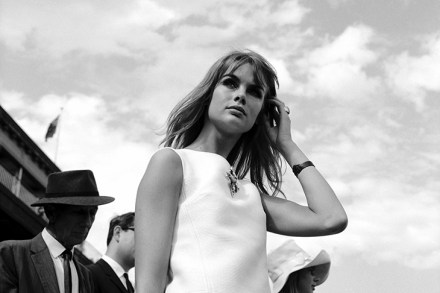
For me this book evokes a Gigi duet moment: ‘You wore a gown of gold.’ ‘I was all in blue.’ ‘Am I getting old?’ ‘Oh, no, not you.’ Memory plays us false, and it takes the skill of a sympathetic historian such as Virginia Nicholson to sift the evidence, written and oral, and unfold a story that is both plausible and sound. I look back to my 1960s life and think how many of us were metaphorically clothed in gold… how we strode through the years enjoying new freedoms, new loves, music, clothes, drugs, opportunities. I have in my time contributed to the myth of unalloyed pleasure, extolling the 1960s for the quickening pace of change, the broadening mood of happiness and hope.

How to read the Bible

In this careful study of the sacred texts of Judaism and Christianity, John Barton, former Oriel and Laing professor of the interpretation of holy scripture at Oxford  University, tells us that the OUP sells a quarter of a million Bibles in the King James or Authorised version every year. He doubts if many of them are actually read by the people who buy them or receive them as presents, with the possible exception of one important group. In Britain and the US the churches that are bucking the trend of decline are usually those that take a conservative approach to the interpretation of the Bible; and for many of them the King James is the version they use. But not because of the beauty of the language.

Conversations between truth and power

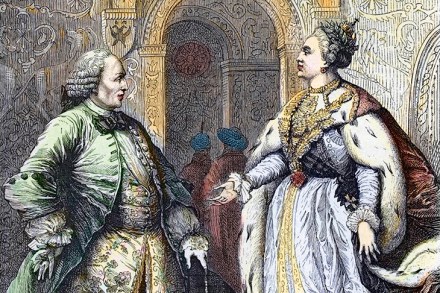
Denis Diderot (1713–84) is the least commemorated of the philosophes. Calls for his remains to be moved to the Panthéon on the tricentenary of his birth in 2013 were ignored. He has not taken his place alongside Rousseau and Voltaire in the Parisian vaults of fame, even though he was no less radical or progressive. Instead, his name has been given to a metro stop in the 12th arrondissement: Reuilly-Diderot. Even here, he comes second, tacked on by a hyphen, one of history’s and philosophy’s also-rans. The injustice done to Diderot can partly be explained by the fact that he was a collaborative writer and thinker.

The name’s Sorge, Richard Sorge

Interviewed on the Today programme on 7 March, a former executive of the gigantic Chinese tech firm Huawei admitted: ‘It is the nature of humanity to spy, to conduct espionage.’ A gold-plated incarnation of this impulse is the tall, craggy-faced German journalist who was arrested in his pyjamas in his Tokyo house in October 1941. ‘I am a Nazi!’ he insisted to the Japanese police, who, before entering his study, had politely removed their shoes. On the sixth day of his interrogation, he finally broke. He raised his vigilant, deep-set blue eyes, which could have charmed the whiskers off Blofeld’s cat, and said: ‘I will confess everything.

The motherhood dilemma

A single survey, elevated by news organisations to scientific certainty, suggests that air travellers may be more susceptible to tears than their earthbound selves. I remembered this on a recent long-haul flight, when I wept not at a weepy, but over Sarah Knott’s Mother: An Unconventional History. The last book of similar intellectual heft to make me cry toppled from a bookshelf on to my foot. The emotive power of Knott’s social history flows from her excellence as a writer and storyteller. Back home, Lorna Gibb’s wonderful Childless Voices: Stories of Longing, Loss, Resistance and Choice stirred my emotions too. The authors’ subject matter is complementary and overlapping.

‘Working late at the Bauhaus’

Walter Gropius (1883–1969) had the career that the 20th century inflicted on its architects. A master of the previous generation in the German-speaking lands, Otto Wagner, could create his entire oeuvre without venturing outside the city limits of Vienna. Gropius found himself thrust into one unprecedented role after another, uprooted and exiled repeatedly. His work was carried out wherever he landed — in Germany, England or America. Despite the huge disruptions of history, he displayed extraordinary single-mindedness. From the 1914 Fagus factory onwards, his buildings argued for the modernist position of function over ornament. By the time of his death, in America, the vast majority of practising architects, if not the public, were converted to his position.

Who’s aping whom?

For a practical at medical school on the subject of the nervous system, it was thought unwise to wire students up to a live electrical circuit, so we used worms instead. The task was to measure lumbricus terrestris’s giant neurons as they fired. My worm’s bruise-coloured rings concertinaed in a final effort to escape before I made the necessary incisions, stuck pins through its body, and connected its extremities to the electrodes. The paper instructions suggested: ‘You can if you wish cut off the worm’s head.’ I guess we were lucky; apparently similar lessons used to be taught using live dogs. I’ve always disliked the spirit of historical re-enactment involved in amateur lab work.

Only connect | 14 February 2019

At the time of his death in 1900, John Ruskin was, according to Andrew Hill, ‘perhaps the most famous living Victorian apart from Queen Victoria herself’. He was a landmark — more or less literally. You could visit Brantwood, where he had his Lake District home in later life, and buy postcards of him. There were ‘Ruskin ceramics, Ruskin linen and lace products and Ruskin fireplaces’ available. In New Jersey, undismayed by the great man’s loathing of tobacco, there was a company that sold ‘John Ruskin’ premium cigars. Postmortem you could get Ruskin souvenir brassware or toasting forks and a scale model of the Ruskin monument near Keswick. But that, Hill also says, was about the peak of his fame.

The land beneath the sea

Somewhere deep in the water-thick layers of Time Song, Julia Blackburn says, funnily, that in Danish, ‘the word for book is bog’.And Time Song itself is a kind of beautiful bog, a memoir-cum-meditation focusing on the stretch of land that once connected Britain to the Continent but was drowned by the rising waters at the end of the Ice Age. It is a subject for now — where for God’s sake would Brexit be if Essex and Yorkshire were still parts of the lower Rhineland? — but Blackburn’s thoughts run deeper than that, to the long and subtle conversation between the present and past, to the preservations of time and its erosions.

Eric the Red

Sir Richard Evans, retired regius professor of history at Cambridge, has always been a hefty historian. The densely compacted facts in his books, the evidence of an inexorable mind incessantly at work, the knock-out blows that he has dealt to adversaries from David Irving upwards — they all characterise authoritative books by a hard-man among scholars. But in retirement, it seems, the great man is mellowing. His latest book — a biography of his friend, the historian Eric Hobsbawm — is a masterpiece of gentle empathy. Hobsbawm was born in 1917 in Alexandria, where his father (a naturalised British citizen of Polish origins) worked for the Egyptian Post & Telegraph service. His mother’s family were jewellers in Vienna.

In the realms of gold

A thought kept recurring as I read Toby Green’s fascinating and occasionally frustrating book on the development of West Africa from the 15th to 19th centuries: that the money in my pocket was just a piece of polypropylene. And what is that worth in the greater scheme of things? The thought occured because money and its predecessor, barter goods, play a central role in the story Green has to tell in this monumental volume. The shells of the title are cowries, which for centuries were accepted as currency across the region. Cowries are not native to West Africa and had to be shipped from the Indian Ocean. But they worked as currency in the way polypropylene does: they had no absolute value but were accepted as currency because they were impossible to fake.

An eye in the storm

Ernst Jünger, who died in 1998, aged 102, is now better known for his persona than his work. A deeply confusing and controversial figure who loathed democracy and glorified German militarism, yet despised the Nazis, he not only bore witness to the industrial flesh-mangles of two world wars, but almost the entirety of the 20th century. His writings and insights have long earned him sage status in Germany. This, the first publication in English of his diaries from 1941–45, heightens his complexity but also makes him a more rounded figure.

Where three empires met

Norman Stone has already written, with a brilliant blend of humour, understanding and scepticism, histories of the Eastern Front, Turkey, Europe between 1878 and 1919, both world wars and the Cold War. A history of Hungary is his latest book. He has one qualification increasingly rare in England. As polyglot as an educated archduke, he knows Hungarian in addition to German, French, Russian and Turkish. Moreover, he has been visiting Hungary for more than 50 years, since he first went as a student in the dark days of 1962. He has returned many times — his Hungarian improved in a communist prison and he reported the fall of the communist regime in Budapest in October 1989 — and now lives there part of the time.

‘I am the master’

Whenever I find myself visiting some great historic house, I always like to break off from gawping at tapestries to ask the tour guide: ‘How did the family make its money in the first place?’ For some reason, this almost always astonishes and bewilders. It’s as if the devotion of capital to bricks and mortar, acres of commemorative canvas and fresco, marble and landscaping, covers up any roots in the slave trade or the amassing of bribes from Indian nawabs. Money is made, and then it sets about dignifying itself. The Gulbenkian Foundation is a solid organisation based in Lisbon. It dispenses money in improving ways and possesses a very handsome art gallery, full of treasures. It is a blameless thing. But why is it in Lisbon? Why does it have so much money?

Words to rally and inspire

It was a surprise, on reading Speeches of Note, to find myself laughing and chuckling at the speech of a Kentucky congressman of whom I’d never heard on a subject of little interest to the rest of the world. Yet it is such a gem of effective persuasion, brilliant construction and escalating hilarity that I happily went over it again. The speaker was James Proctor Knott in 1871, opposing the use of federal land in his district for a new railroad that would terminate in the backwater of Duluth. He did so by means of an exaggerated and sarcastic description of the wonders of that little town.

A death-haunted world

‘A is for Amy who fell down the stairs/ B is for Basil, assaulted by bears...’ The Gashlycrumb Tinies, an alphabet in dactylic couplets of the surreal fates visited on a succession of blameless tots, is probably Edward Gorey’s best-known work — and that work forms a pretty coherent whole. Dozens and dozens of tiny booklets, almost all intricately hand-crosshatched in black pen, darkly spoofing established genres, set in a Victorian-Edwardian world of sighing flappers, funerary urns and decaying stately homes. They are filled with surreal menace and random violence or moral horror — much of it offstage — and always played for laughs. The dreamlike, associative drift of Gorey’s work — is that an umbrella or a bat?

All heart, trust and gut feeling

‘To me, he was sort of like a unicorn,’ writes Mrs Obama, looking back on her courtship days with Barack. He was affectionate, loving, secure and brainy. Very brainy. ‘He consumed volumes of political philosophy as if it were beach reading.’ He was laid back but his sense of purpose was strong. ‘Barack was serious without being self-serious. He was breezy in his manner but powerful in his mind. It was a strange, stirring combination.’ In a languid late-night moment, she asks a penny for his thoughts. ‘Oh, I was just thinking about income inequality.’ This book takes you right back to those days when we all fell in love with Obama.

Man of mystery and mysticism

Nobody has ever quite known what to do with the German-language novelist Hermann Hesse. Born in 1877 and living until 1962, he rather deliberately refused to experience most of the traumatic events of his culture. His tiny home town was Calw, in the Black Forest, and he lived mostly in backwaters, and latterly for decades in Switzerland. He only visited Berlin once, and hated it. His work strenuously avoided making any comment on the larger events of the time, insisting on a kind of neutrality. Some readers took him for a mystic Nazi; others for an enemy of German culture; others still for a communist. He was a substantial bestseller in his lifetime, though many more elegant writers, such as the Austrian Robert Musil, thought him simply terrible.