Features

What’s gone wrong for Ron DeSantis?

It’s widely acknowledged that, as governor of Florida, Ron DeSantis has been a success. As a presidential candidate, however, he has been a disaster – at least, so far. Last weekend, amid reports that his bid for the White House was floundering, DeSantis sacked a dozen of his staff and scaled back his travel plans. He may have raised some $20 million between April and June, but some of the biggest Republican donors, who flocked towards him at the end of last year, are starting to turn away. His campaign is now concerned about funds running out. ‘The question comes down to: do you want boring Trump? And the answer is no’ DeSantis disputes the ‘doom and gloom’ characterisations of his candidacy.

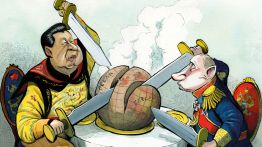
Tory floundering over China is a gift to Labour

Earlier this month, a Chinese spy reportedly tried to enter a private House of Commons meeting with Hong Kong dissidents. The alleged spy claimed to be a lost tourist, and there was a brief stand-off before he quickly left. The area was far from those usually visited by tourists, and some Hongkongers, fearing for their safety, covered their faces during the event. ‘I believe this man was a [Chinese Communist party] informer,’ said Finn Lau, one of two pro-democracy activists at the meeting who have CCP bounties on their heads. ‘This is one of the remotest committee rooms in parliament. And it is on the top floor. It is not a coincidence that a random Chinese tourist was outside the room at the exact right time and was attempting to access the event.

What Britain can learn from Romania

Romania gets a bad rap here, associated as it often is with organised crime. In recent years around half a million Romanians have settled in the UK, making them the fourth largest group of foreign-born residents. But the irony is that as Romanians head to Britain in search of a higher standard of living, we Brits should really be booking our flights to Romania to remind us of how our country once was. Romania has everything: fascinating medieval towns, unspoilt countryside, vibrant major cities and a 150-mile coastline. There are even still horses and carts on the roads. But the appeal is more than that: it’s the spirit of the place. If you want to go back to 1988 or even 1978 then a Wizz Air flight east is like a time-machine.

The bliss of Phuket’s Millionaire’s Mile

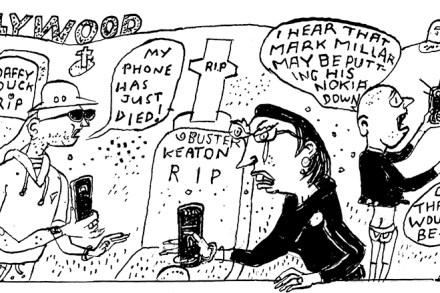
Many of my friends, stranded by the Hollywood writers’ and actors’ strikes, have temporarily given up their film projects and settled down to write that hopeless novel which they could never finish before. Those film projects were more alluring – more necessary – than the lingering novels because they at least held out the prospect of one day bringing them, the openly despised writers, to the kind of fantasy scenarios towards which they have worked all their life. For some, a timbered Elizabethan priory in Sussex; for others a tropical villa perched on a headland with a constant blue bar of sea to make the approach of death feel philosophical. (I’m in the latter category.) It’s a dream both childish and rooted in childhood.

Barbie’s world: the normalisation of cosmetic surgery

If Barbie were a real woman, she wouldn’t be able to walk. Her enormous head would loll forward on her spindly neck, her tiny ankles would buckle under her elongated legs, and she would be forced to move about on all fours. In the upcoming Barbie film, Margot Robbie nails her character’s toothy smile and blonde bouffant, but even she cannot come close to imitating Barbie’s monstrous proportions. More adventurous imitators have tried. It’s rumoured that the so-called ‘Eastern Bloc Barbie’ – a 37-year-old Moldovan by the name of Valeria Lukyanova, one of several plastic surgery addicts dubbed ‘human Barbies’ – had ribs removed and her eyelids trimmed in her efforts to look as much as possible like the real (or, rather, unreal) thing.

Poland’s battle with the EU over migrant quotas

Another day, another spat between Warsaw and Brussels. This time, Poland has declined to participate in the European Union’s latest plan to relocate migrants and asylum seekers within the bloc, with countries who refuse being expected to pay €20,000 per refugee. Hungary has also voted against the pact, while Malta, Lithuania, Slovakia, Bulgaria have quietly abstained.  On 15 June, the Polish parliament (the Sejm) went further and passed a resolution opposing the plan, with the ruling conservative Law and Justice party (PiS) announcing a national referendum on the matter. The referendum will take place on the same day as the general election in either October or November this year.

Will mounting casualties change the debate in Ukraine?

At a small army field clinic outside Bakhmut, I watched as the body of a dead soldier was carried in. Two more soldiers followed, this time seriously injured – and this was what troops described as a ‘quiet day’. Ukraine doesn’t talk about its military deaths much and refuses to reveal any figures. There’s little in the way of victim culture here; the emphasis is on how brave its troops are, not how many have perished. Most people know someone who’s died in action, but treat the collective trauma as something to worry about when the war is over. In the meantime, there’s vodka. While Russia has used the conflict to drain its jails, Ukraine is losing its brightest and best Here and there, though, glimpses of the nation’s best-kept secret emerge.

The changing face of the BBC Proms

There are two faces of the BBC Proms. The faces are somewhat at odds with each other. The one that everyone knows, whether they have an interest in music or not, is the Last Night of the Proms. It’s a concert consisting of a series of small musical items, or ‘lollipops’ as Sir Thomas Beecham used to call them. It culminates in a sequence of sea shanties, ‘Rule, Britannia’, ‘Land of Hope and Glory’ and ‘Jerusalem’. Classical music has gone from being a supreme cultural statement to just another curious musical genre The other face, much more substantial, is the series of concerts that precede that last one, from mid-July to mid-September, still centred on the Royal Albert Hall. Surprisingly, many people don’t seem to know anything about that aspect at all.

Should we fear AI? James W. Phillips and Eliezer Yudkowsky in conversation

James W. Phillips was a special adviser to the prime minister for science and technology and a lead author on the Blair-Hague report on artificial intelligence. Eliezer Yudkowsky is head of research at the Machine Intelligence Research Institute. On SpectatorTV this week they talk about the existential threat of AI. This is an edited transcript of their discussion. JAMES W. PHILLIPS: When we talk about things like superintelligence and the dangers from AI, much of it can seem very abstract and doesn’t sound very dangerous: a computer beating a human at Go, for example. When you talk about superintelligence what do you mean, exactly, and how does it differ from today’s AI?

Has the Vatican abandoned beauty?

The Cathedral Church of the Holy and Undivided Trinity in the Cambridge-shire market town of Ely is one of the supreme achievements of European Gothic architecture. Its octagonal tower lifts the eye to a sumptuously restored wooden lantern from which Christ looks down in majesty. Who on Earth thinks faith can be awakened by seeing a crucifix floating in urine? On the last Friday in June, his gaze fell on a congregation worshipping him at Evensong. Two hours later, as the Times reported, the cathedral was filled with ‘a very different crowd: 800 people [wearing headphones] attending a 1990s-themed silent disco. They wore diamanté strappy heels and leather trousers, carried glow sticks, drank chardonnay, yelled the words to Robbie Williams hits and twerked in the nave to Beyoncé.

Watch out Wimbledon: padel is taking over

For the past 15 years, I’ve had an entirely healthy compulsion – my wife, I suspect, would disagree – to play tennis at least twice a week. I assumed this habit was so ingrained that nothing short of a calamitous injury could ever keep me from my fix. Spain is where the craze took hold. Now it’s the country’s second most popular sport, after football I think I may have been mistaken. Recently, I’ve discovered a new sport which is proving, if anything, more addictive. Time will tell if this is a fleeting crush, or the start of something more enduring – but I am beginning to wonder whether my new-found love of padel will lead me to abandon tennis. I hear you ask: what exactly is padel?

The fine art of French rioting

Marseille One of the benefits of holidaying during a riot is you feel remarkably safe. Ruffians have no interest in you while they can be having fun at the expense of a much more exciting foe, the police. And besides, there are Lacoste stores to be raided: they have no time for your wallet. The other major benefit is you can get a table anywhere. We had the best seat in France last week: the first-floor balcony of La Caravelle, an old-school bar overlooking Marseille’s historic port and the perfect vantage point for taking in the fine art of French rioting. The choreography unfolded in fits and starts. The police vans snaked around the water’s edge in military formation. Out filed the riot cops, their tessellated body armour making them look like mutant woodlice.

Life with Low Life: my happy years with Jeremy Clarke

‘Am I gonna die today, Treen?’ I kissed his cheek. ‘Darling, your oxygen, blood pressure and pulse are fine and you’re a good colour. Since you woke up you’ve had a poached egg on toast, plain Greek yoghurt with berries, granola and maple syrup, a Snickers bar, a piece of fruit cake, a baked fresh mackerel with tomatoes and a Mini Magnum. It’s two o’clock – if you do die it’ll be from gluttony.’ Jeremy was modest, kind, passionate and loving. He was a great laugh and a terrific dancer. We had a blast This was early May. Jeremy, paralysed from the chest down, was attached to three syringe drivers for pain control and had a urinary catheter in situ.

Jonathan Ashworth: ‘We are at risk of a lost generation’

Jonathan Ashworth has started carrying a card in his shirt pocket. It’s the licence his father was given when he got a job in the 1970s at the Playboy casino in Manchester. ‘It’s silly, really. But it’s just a reminder that my dad was able to start a job as a croupier from a very poor working-class background in Salford and that completely changed his life,’ the shadow work and pensions secretary says when we meet in his Commons office. It was at the casino that his father met Ashworth’s mother – a Playboy bunny girl working as a waitress. ‘Every week, the Playboy bunny girls had to queue up and had to be weighed by the head of the bunny girls. Isn’t that awful?’ Scales aside, Ashworth, 44, says his childhood taught him early on of the importance of employment.

Why Putin still needs Wagner

It will be a matter of deep regret for Vladimir Putin that, in the wake of Yevgeny Prigozhin’s ill-fated attempt to overthrow Russia’s military establishment, he has finally been forced to come clean about the Kremlin’s association with the Wagner Group. Deniability is a vital facet for a veteran spook like Putin. Even when Wagner’s band of mercenary cut-throats were spearheading the assault on the east Ukrainian city of Bakhmut earlier this year, the Russian leader rebutted claims of Prigozhin’s involvement. ‘He runs a restaurant business, it is his job – he is a restaurant keeper in St Petersburg,’ Putin told Austrian television.

How my brother-in-law Boris got me cancelled

Nigel Farage and I don’t have too much in common beyond liking a pint and a cigar. Yet I now discover a link: we are both PEPs, or ‘politically exposed persons’. Such a handle may not be a total surprise to Nigel. (He may not have been surprised, either, when Coutts said that it had closed his bank account simply because he didn’t have enough funds.) But it certainly was to me – especially as I found out from an official at the bureau de change in the baggage hall of Mexico City airport. As I proffered a couple of grubby $100 bills to change to pesos, I filled in a short form – name, address etc – then noticed the cashier looking quizzically at my passport. He called over a supervisor. My passport was analysed by a machine.

The secret life of China’s Banksy

The crypt of St John’s Waterloo feels serene and secure, a world away from the bustling city above. ‘I will spend the day here, because I feel safe here,’ Badiucao tells me. The dissident political cartoonist, who has been called ‘China’s Banksy’, is preparing to display his work on the crypt’s newly restored brick walls as part of an exhibition by exiled artists. ‘I don’t walk alone in any city. I don’t feel safe,’ he says. I meet him soon after he flies in from Warsaw, where the Chinese government tried to close down his solo show, ‘Tell China’s Story Well’. Chinese diplomats pressured the Polish government and the Ujazdowski Castle Centre for Contemporary Art, which hosted him.

Is the glucose monitoring craze really so healthy?

At £300 a go, the Zoe is a reassuringly expensive accessory. It has a recognisable logo and even had a 200,000-strong waiting list at one point. That wouldn’t be so unusual if Zoe was a must-have handbag or jewellery, but it is  a continuous glucose monitor that you stick to your arm. Some charities ask non-diabetics to donate their wearables to be reused by people who actually need them Continuous glucose monitors have been available to diabetics for a few years, but now non-diabetics without any particular reason to worry about their pancreas are also getting in on the act. Like the fear of gluten a few years ago, glucose levels have gone from something only those with a diagnosed medical condition ever think about to a widespread obsession.