Christina Lamb

Christina Lamb is chief foreign correspondent for the Sunday Times and author of Farewell Kabul.

Katy Balls, Christina Lamb and Sam Leith

From our UK edition

20 min listen

This week:  Katy Balls discusses the SNP’s annual conference and asks what will it take to hold the party together if things get much tougher over the next twelve months (01:10), Christina Lamb goes to Ukraine, only to be told that she’s 'at the wrong war' as events unfold rapidly in the Middle East (06:55), and Sam Leith chats to the man who heads up the tiny publishing house that regularly churns out Nobel Prize winners (12:13).  Produced and presented by Linden Kemkaran.
Ukraine’s fight has been eclipsed by the ‘Other War’

From our UK edition

The first indication that this was a literary festival like no other came with the request to provide ‘proof of life’ questions in case of kidnap. I’ve been to some unusual festivals – earlier this year I found myself discussing war-rape, ancient and modern, with the classicist Mary Beard on a barefoot island in the Maldives – and had some unusual festival encounters, such as the woman who asked me to sign a book to her dead husband, adding that he was reading it when he died. This, however, was my first in a war zone. There was a polite warning from the Lviv Book Forum organisers: ‘If there is an airstrike, we will interrupt the event.’ It’s all part of the resilience of Ukrainians, determined in the face of Russian aggression that life must go on.

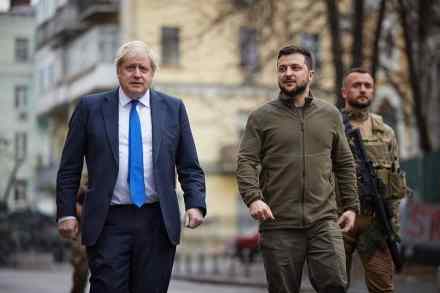
Lviv diary: ballet, bomb shelters – and everyone loves Boris

From our UK edition

It is a glorious spring evening in Lviv and what could be better than a ballet gala at one of Europe’s grandest opera houses? The performance starts with an unusual announcement. In the event of an air raid siren, all spectators must go to the bomb shelter. The red-velvet seats are less than a third full – not for fear of going to a ballet in a war in which Russians have bombed a theatre, but because they can sell only 300 tickets since that is the bunker’s capacity. There is an emotional rendering of the national anthem for which the audience stand, hand on heart, and it is hard not to shed a tear, then the lights dim and the curtains open.

Christina Lamb, Simon Clarke and Hannah Moore

From our UK edition

21 min listen

On this week's episode, Christina Lamb reads her letter from Kabul about the situation on the ground under the new Taliban control (00:56). Simon Clarke makes the case for Covid boosters (06:19). And Hannah Moore talks about the horrors of so-called 'American' sweet shops in the West End (15:18).

Life under the Taliban’s charm offensive

From our UK edition

The Taliban Cultural Commission sounds a contradiction in terms but for all foreign journalists it’s the first stop in the new Afghanistan. There, in a dusty office on the first floor of the old Ministry of Information, I was handed a letter which allowed me to go anywhere in the country, except Kabul airport or military installations. In a neighbouring office I met Anamullah Samangani, a Taliban commander from the northern province of Samangan. He’s an Uzbek, resplendent in crisp white shalwar kameez, black waistcoat and black and white silk turban. He told me he has read one of my books. ‘Do you feel safe in Kabul, have you had any difficulties?’ he asked. He assured me that the new Taliban just want to be friends.

The Christina Lamb Edition

From our UK edition

55 min listen

Christina Lamb is an award-winning journalist who has reported on conflicts and politics across the world for more than three decades. Her latest book is Our Bodies, Their Battlefields, highlighting especially the treatment of women in war.

Christina Lamb: how rape is used as a weapon of war

From our UK edition

38 min listen

In this week’s Book Club podcast, my guest is the veteran foreign correspondent Christina Lamb. Christina’s new book, Our Bodies Their Battlefield: What War Does To Women is a deeply reported survey of rape as a weapon of war, described in our pages by Antony Beevor as the most powerful and disturbing book he has ever read.

Diary – 1 February 2018

From our UK edition

It never occurred to me, when I was interviewed for Desert Island Discs back in November, that I’d actually be on one when it aired last week. The plan had been to laze in a hammock under a palm tree in Ko Yao Noi in the Andaman Sea, with waves lapping against the white coral beach, read books and recharge for the year. These days, however, it’s hard to be totally cut off. I’ve read about ‘digital detoxes’ but never understood how you deal with the avalanche of messages on your return. So I left my phone on and soon it was pinging with notifications from WhatsApp, Twitter et al. Most were lovely. There were messages from people I hadn’t heard from for years, who’d listened to the programme.

My longed-for wishing lamppost

From our UK edition

Once I read about a wishing lamppost that answered wishes in a place where nobody believed in them. My wish for a first female president didn’t come true and I am still wishing the UK will take in Yazidi sex slave survivors, that Russia will stop bombing Aleppo and that all children can go to school. Ten years ago in a muddy field in Helmand surrounded by Taleban, I wished more than anything not to die. Somehow, miraculously, that wish was granted. But I have never wished anything more than when my son was born 11 weeks early weighing less than a bag of sugar and in a scary intensive care unit linked to an array of tubes and flashing lights. Now he is taller than me and applying for university. If I had a wishing lamppost I would thank it every day.

Diary – 9 July 2015

From our UK edition

One strange consequence of my job as a foreign correspondent is discovering beautiful places when terrible things happen in them. So it was that I have been spending the past couple of weeks in Tunisia, a land of azure skies, whitewashed houses and apricot light which has inspired artists such as Paul Klee. That beauty — along with soft sandy beaches, local rosé and low prices — also attracted hundreds of thousands of British tourists. Not any more, after a young Tunisian took a gun from inside a beach umbrella at the resort of Sousse and slaughtered 38 holidaymakers, 30 of them British. Almost every Tunisian I met apologised on learning I was British: ‘Please don’t think Tunisians are like that — we are people of peace.

Is Obama stalking you?

From our UK edition

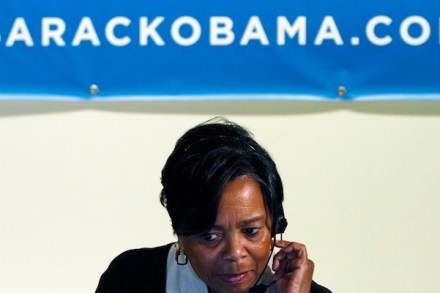
At a wine-tasting-cum-briefing of volunteers at the Democratic Women’s Club headquarters in Washington last month, Obama campaign adviser Mindy Burrell stood up in a flowery dress. ‘Get people to visualise election day,’ she told the women about to knock on doors in the key swing state of Virginia. ‘How will they go and vote? What time will they go — after work? After dropping the kids off at school? What route will they take?’ If people said they planned to vote for President Barack Obama, the women were to ask them to sign a pledge card explaining why, which would be posted back to them just before election day on 6 November. The volunteers, mostly lawyers or wealthy housewives, looked dubious.

Trapped in the palace

From our UK edition

When Barack Obama and David Cameron met in London this week, one problem would have been foremost in their minds. It’s more than six weeks since they penned their joint article with Nicolas Sarkozy demanding that ‘Gaddafi must go’. It’s more than two months since they started airstrikes in Libya. Yet Gaddafi is stubbornly refusing to be toppled. He is not alone. In Yemen, Ali Abdullah Saleh has reneged on two deals to step down and, at the last minute, refused to sign a third — despite an American promise of immunity. In Syria, Bashar Assad seems determined to stay on through sheer bloody force, unmoved by US and EU sanctions. In Zimbabwe, Robert Mugabe has announced that he will run for president again this year at the age of 87.

Out of the shadows

From our UK edition

Bin Laden’s death has exposed Pakistan’s double game with the West Even those of us who did not believe that Osama bin Laden was producing his videos from a cave in a remote tribal mountain would never have guessed that he was, in fact, living in a ‘Come and Get Me’ three-storey house surrounded by cabbage fields just down the road from Pakistan’s top military academy. To many in Washington, here was final proof — if any were needed — that its supposed ally has been playing a double game; that, for the past ten years, Pakistan has been playing the role of US ally (and taking more than $18 billion of American aid) while all the time sheltering the Taleban and al-Qa’eda.

For Pakistan, America is the enemy

From our UK edition

Only a Pakistani journalist could have linked a New Jersey school’s decision to cancel its Christmas concert because of head lice with the American conspiracy to subjugate Islam. In her ‘View From US’ column in the Dawn newspaper, Anjum Niaz, one of Pakistan’s leading journalists, quoted the letter to parents. ‘Although the likelihood of spreading lice by attending the concert is near zero, we feel that this is an appropriate precautionary measure at this time.’ In the same way, she complained, ‘peace-loving Muslims across the world are getting the flak’ as ‘the Americans are taking “appropriate precautionary measures” against the mother of all lice, al-Qa’eda’.

Meet the Brit in charge of the Af-Pak ‘kill list’

From our UK edition

No one has followed the Taleban and al-Qa’eda more closely than Richard Barrett, head of the United Nations monitoring mission. He tells Christina Lamb why Obama’s reinforcements won’t scare the fundamentalists away It’s known as the ‘kill list’. The world’s biggest directory of bad guys — the 1267, as it is officially called after the United Nations resolution which voted it into force — has long been essential kit for Special Forces scouring Afghanistan and the tribal badlands of Pakistan for al-Qa’eda and Taleban. From Osama bin Laden and Mullah Omar down, finding or eliminating these baddies will be crucial to the success of President Barack Obama’s much awaited Get Out of Afghanistan strategy.

More troops will just mean more targets

From our UK edition

It was Bonfire Night last year in the Officers’ Mess of 2 Rifle and I was jokily explaining how fighting is such a national sport among Afghans that they fight with birds, kites and even boiled eggs, when I suddenly realised my heart had gone out of it. As one of the few journalists to have been reporting from Afghanistan since the days of the Soviet occupation, I had often been asked to visit regiments before they deploy and had always enjoyed talking to young soldiers about a land I love and hearing their expectations. But that grey November evening in Abercorn barracks in the Northern Irish town of Ballykinler was different. I had been in Helmand the previous month and was shocked at the lack of progress.

‘Whoever killed Benazir wants to kill me’

From our UK edition

Islamabad On the wall above Asif Ali Zardari’s dining table in Islamabad is a framed copy of a letter. The handwriting is small and neat and it looks nothing special but he frequently grabs it from the wall to show to visitors. For on this piece of paper rests the remarkable rise of the man for years vilified as Mr Ten Percent, who this weekend looks set to become Pakistan’s President. The letter is written by his late wife Benazir Bhutto, and dated 16 October 2007, two days before her return to Pakistan from exile, and 11 weeks before her assassination.

Pakistanis now fear that anyone who speaks out will be silenced

From our UK edition

Benazir Bhutto’s son has none of his mother’s glamour, says Christina Lamb, but he must now do his dynastic duty in a country cruelly deprived of its only pro-Western, liberal leader and in which no one feels it is safe to criticise the establishment On top of the bus carrying Benazir Bhutto from Karachi airport last October, at the start of the journey that had been planned as her triumphant return from exile but was to end so tragically, I fell into conversation with her amiable cousin Tariq, who told me his wife had begged him not to board. As we waved at the cheering crowds holding banners of Bhutto and her late father, I asked if he had ever been tempted to give up farming and go into the family business. He laughed grimly. ‘No way’, he said.

Soon we’ll see if Musharraf is a man of his word

From our UK edition

When their TV screens suddenly went fuzzy on Saturday afternoon, most Pakistanis felt they had seen it all before. Their country has, after all, spent 33 of its 60 years under military rule. The troops surrounding the TV and radio stations, the phone networks down, the round-up of opponents, the concertina wire across Constitution Avenue blocking off the Presidency, Parliament and Supreme Court . . . all these have been a periodic feature of Pakistan’s politics. But this time the army chief imposing what amounted to martial law was himself already the President.

‘If assassination is the price I must pay …’

From our UK edition

An eyewitness report of the bombing of Benazir Bhutto’s bus It’s Saturday night on Clifton beach and men in shalwar kameez are selling rides on short white horses or camels decorated with coloured bobbles. Stalls lit up by halogen lights offer roasted cobs of corn and cups of sugarcane juice ground from a large wheel. A noisy crowd gathers to place bets for a fight between a snake and a mongoose. Everywhere there are people — rich Karachi-ites out in their gold-threaded finery and conspicuous designer watches; the poor in plastic sandals. Pakistan doesn’t look like a country at war with itself or a people living in fear of extremists.