Jonathan Spyer

Jonathan Spyer is a journalist and Middle East analyst. He is director of research at the Middle East Forum and the author of The Transforming Fire: The Rise of the Israel-Islamist Conflict.

Trump has a choice to make on Iran

From our UK edition

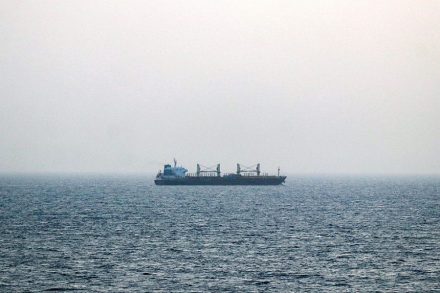
President Donald Trump cancelled a planned trip to Islamabad by his envoys Steve Witkoff and Jared Kushner over the weekend. The move followed the departure from the Pakistani capital of Iranian Foreign Minister Abbas Araghchi. Following the cancellation, the two sides traded rival accounts of the current state of affairs in their ongoing stand off. Trump, speaking to Fox News, professed himself in no hurry for diplomatic progress, saying that ‘We have all the cards. They can call us anytime they want.’ The US President suggested a version of events in which Teheran, pressured by the US blockade of its tankers in the Strait of Hormuz, was showing increased flexibility regarding the issue of the future of its nuclear programme.

Israel won’t stop in Lebanon until Hezbollah is crushed

Direct US-brokered talks between Israeli and Lebanese representatives are set to take place in Washington this week. The Israeli delegation will be headed by Yehiel Leiter, Jerusalem’s ambassador to the US. Lebanon will be represented by Nada Hamadeh, the Lebanese ambassador to Washington. The US State Department will host the negotiations. In his statement on Thursday announcing the talks, Israeli prime minister Benjamin Netanyahu framed their purpose as ‘‌disarming Hezbollah and establishing peaceful ‌relations between ⁠Israel and ⁠Lebanon'. Lebanese prime minister Nawaf Salam, for his part, expressed his hope that Beirut should become a ‘demilitarised city'.

The winners and losers of the Iran ceasefire deal

The abrupt announcement of a two-week ceasefire in the war between the US, Israel and Iran resolves none of the issues which caused the conflict. Beyond an agreement to cease attacks, the arrangements that will hold during the two-week period appear themselves unclear. Each side in the last hours seemed to commit to different versions of the ceasefire in key areas. Iran remains an aggressive and dangerous power, with the ambition of expelling the US from the region, dominating the Gulf states and destroying Israel From Israel’s point of view, the bottom line is clear. The Iranian regime has been significantly weakened in its capacities in a number of key areas. At the same time, the regime has not been destroyed or even severely damaged in its continued ability to rule Iran.

The fate of the Iran war lies in the Strait of Hormuz

From our UK edition

Unless something shifts profoundly in the current direction of the US war on Iran, the Iranian regime appears set to survive this round of conflict. Survival alone does not represent victory for Tehran. If, however, the fighting ends with the Iranians still in control of the Strait of Hormuz, the strategic balance in the Middle East will have shifted, with likely profound consequences for the future direction of the region.  The US and Israel are continuing to demonstrate their absolute superiority over Iran in the conventional military arena. Israel’s air force is working its way down a long list of regime and military targets. But planners in Israel no longer expect that their air action will plausibly lead to or assist a popular revolt in Iran to bring down the regime.

Why Israel is carving out a buffer zone in Lebanon

From our UK edition

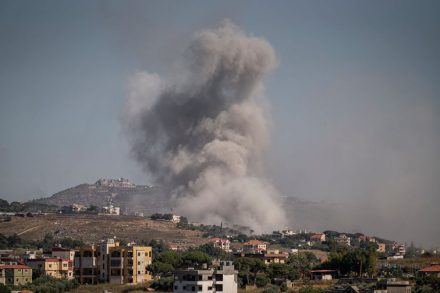
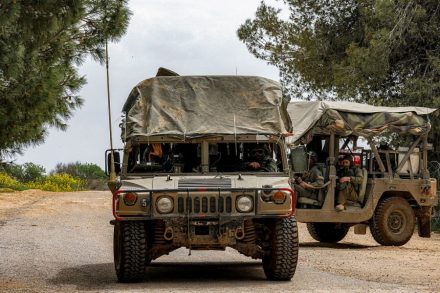
IDF troops have continued to push further into southern Lebanon this week, encountering determined but not particularly effectual resistance from Hezbollah. But while the Iranian proxy group appears unable to prevent the movement of the IDF on the ground in Lebanon, it is succeeding in launching large amounts of ordnance at Israel from further north. 600 projectiles were launched at Israel over a 24 hour period between Wednesday and Thursday. There was only one fatality thanks to Israel’s air defences and drills.   On the other side, the Lebanese government has reported over 1,000 dead. It doesn’t differentiate between civilian and Hezbollah casualties. Israel says it has killed around 700 Hezbollah fighters.

Will Iran give Benjamin Netanyahu a wartime boost?

Israel’s current war on two fronts shows few signs of wrapping up any time soon. In Lebanon, the indications are that the IDF is looking to establish an expanded buffer zone north of the border, with the intention of holding it for as long as the government in Beirut fails to fulfil its pledge to disarm Hezbollah. In Iran, meanwhile, Israeli air attacks are continuing daily, even as Tehran's missiles and drones continue to target Israel’s centres of civilian population. This year is an election year in Israel, with polls required by law to take place by October. So what impact, if any, are the conflicts having on the political debate inside Israel?

Israel can’t assassinate its way to victory over Iran

The killing of the Iranian senior security official Ali Larijani this week is the most significant ‘targeted assassination’ undertaken since Israel’s killing (in cooperation with the US) of Supreme Leader Ali Khamenei on the opening day of the war. These two very high-level hits have been accompanied by a long list of killings of less well-known senior Iranian officials. These have included Islamic Revolutionary Guards (IRGC) commander Mohammad Pakpour, intelligence minister Esmail Khatib, armed forces chief of staff Abdolrahim Mousavi, defence minister Aziz Nasirzadeh, military intelligence chief Saleh Asadi, and many others. Around 30 officials in all have met their deaths at the hands of this campaign.

Why Israel is pushing further into Lebanon

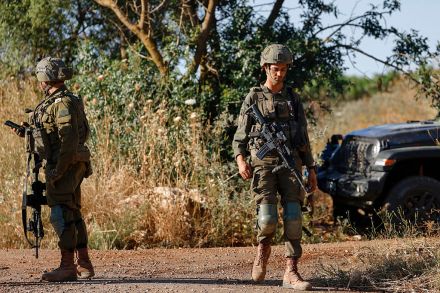
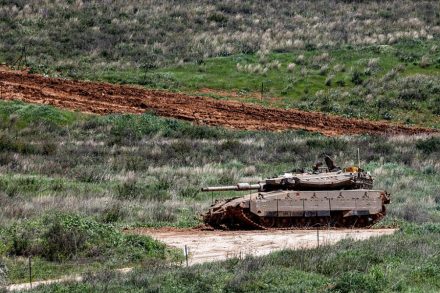
Israel launched a limited ground operation in southern Lebanon this week, intended to expand the de facto buffer zone which it has maintained along the border since the ceasefire of November 2024. Following a year of fighting at that time, Israel held control of five positions on the Lebanese side of the border. In response to Hezbollah’s decision to re-engage with Israel in the context of the current conflict between Jerusalem and Tehran, the IDF is pushing further into Lebanon.   As of now, Israel is bombing Hezbollah targets throughout the country. Ground forces, meanwhile, are cautiously pushing forward. According to Israeli media reports, the IDF’s goal is to establish 13 additional positions north of the border.

Will Kurdish insurgents help America in Iran?

From our UK edition

The US and Israel rapidly established air superiority over Iran in the first days of the war now under way in the Middle East. Regimes, however, cannot be destroyed from the air. President Trump clearly has no intention of committing a large ground force to Iran. If Washington and Jerusalem are serious in their stated ambition of destroying the 47-year-old Islamic regime in Tehran, then they are in obvious need of allies on the ground. A number of credible reports in regional media in recent days have identified a relationship of cooperation between the US and Israel and a number of armed Iranian Kurdish groups located in the Iraq-Iran border area. A recent article on the al-Monitor website suggested that fighters of these organisations may deploy across the border in the coming days.

Even Khamenei’s death might not finish the Iranian regime

From our UK edition

As of now, it is possible to draw a number of immediate conclusions from the war currently under way between the alliance of the United States and Israel, and the Islamic Republic of Iran. Firstly, the range and nature of US and Israeli targeting indicates that a determined attempt to destroy the 47 year old regime in Iran is now finally under way. The most senior leadership, up to and including Supreme Leader Ali Khamenei, appear to have been targeted – and possibly killed – by Israel. Action of this kind make sense only as part of a comprehensive attempt at regime destruction. History provides no unambiguous examples of regimes removed by air power alone Secondly, Iran’s response has been immediate and very comprehensive.

Trump must help Iranians bring down the Islamic regime

From our UK edition

With diplomatic talks between the US and Iran set to take place in Muscat, Oman, today, the prospects for de-escalation between the two countries appear slim to non-existent. Teheran is clear that it is prepared to discuss only its nuclear programme and has so far refused the White House's demands to put its ballistic missile programme, support for regional proxies, and internal repression on the agenda.   With diplomacy on the verge of faltering, preparations for an American military strike are proceeding apace. The USS Abraham Lincoln carrier group has now reached Middle Eastern waters and the area for which United States central command is responsible.

Syria’s Islamic State camps could fall

From our UK edition

As Syrian government forces advance into the formerly Kurdish controlled north east of the country, the issue of future arrangements at the camps holding Isis members and their families has become a matter of increasing urgency. This issue has two levels – one more immediate, the other more structural and long term. The first level is concerned with ensuring the continued incarceration of the jihadis; the second relates to the nature of the emergent Syrian regime. Isis maintained its own court system within al-Hol. This extended up to and included the passing and carrying out of death sentences There are around 8,000 Isis fighters held in facilities in Syria east of the Euphrates at the present time.

How America could help bring down Iran’s Islamist regime

From our UK edition

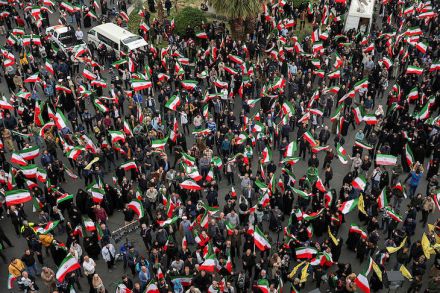
The near-total internet blackout imposed by the regime in Iran has now continued for nearly a week. Behind the veiled effort to cut the country off from the world, sufficient evidence has emerged to establish a clear picture of what the authorities are attempting.  In a move wearyingly familiar to all observers of the contemporary Middle East, the leaders of the Islamic Republic of Iran are seeking first to isolate the masses of protestors now in the streets demanding an end to their regime. Then, under the cover of the resulting darkness, they are slaughtering a sufficient number of them so as to drive the remainder back into a terrified silence.

It’s a matter of when, not if, Israel steps up its war on Hezbollah

From our UK edition

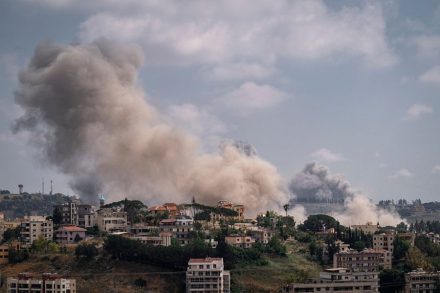
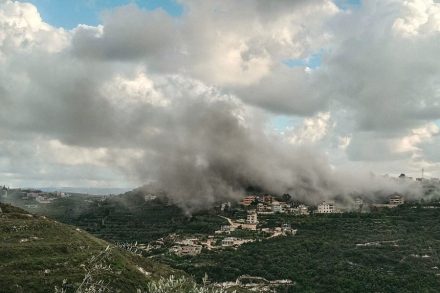
Israeli aircraft struck targets in Lebanon on Monday. Hezbollah and Hamas military infrastructure was targeted in the Hezbollah heartland of the Beka’a, and in Hatta and Aanan villages in the south of the country, according to a Israel Defense Forces (IDF) spokesman. The Israeli strikes came days after the expiry of the 31 December deadline set for the Lebanese Armed Forces (LAF) to complete the disarmament of Hezbollah south of the Litani River. This runs according to the terms of the ceasefire agreement which ended the last war between Israel and the Iran-supported Shia Islamist militia in November 2024. The LAF has predictably failed to complete its mission. No one in Israel expected otherwise.

Israel is turning the screws on Hezbollah

The killing of Lebanese Hezbollah military chief Haytham Ali Tababtabai by Israel this week reflects how much the balance of power between Jerusalem and the Iran-backed Shia Islamist group has shifted since the year-long war between the two in 2023 and 2024. Yet, paradoxically, Tabatabai’s killing also shows that nothing has been finally settled between the two enemies. While Hezbollah has now been shown to be much weaker than Israel, it nevertheless remains stronger than any internal faction in Lebanon, including the official Lebanese government.

Isis is stirring once more

Indications that the Islamic State (Isis) has begun to employ artificial intelligence in its efforts to recruit new fighters should come as no surprise. At the height of its power a decade ago, Isis was characterised by its combination of having mastered the latest methods of communication with an ideology and praxis that seemed to have emerged wholesale from the deserts of 7th century Arabia. In 2014 and 2015, Isis recruitment took place on Twitter and Facebook. YouTube was the favoured platform for the dissemination of propaganda. The group's videoclips of its barbaric prisoner executions, including the beheadings of a series of western journalists and aid workers and the immolation of a captured Jordanian pilot, became the organisation’s gruesome trademark.

Why Israel fears Turkey’s involvement in Gaza

As the Gaza ceasefire struggles into its second month, a significant difference between the position of Israel and that of its chief ally, the United States, on the way forward is emerging. This difference reflects broader gaps in perception in Jerusalem and Washington regarding the nature and motivations of the current forces engaged in the Middle East. The subject of that difference is Turkey.   The Turks have expressed a desire to play a role in the ‘international stabilisation force’ (ISF), which, according to President Donald Trump’s 20-point plan, is supposed to take over ground security control of Gaza from the IDF (and Hamas) in the framework of the plan’s implementation.

Will the Gaza ceasefire hold?

From our UK edition

In the latest blow to the beleaguered Gaza ceasefire, Israeli aircraft this week struck targets in Gaza City after Hamas carried out an attack using rocket-propelled grenades and sniper fire on IDF soldiers in the Rafah area. One Israeli reserve soldier was killed in the Hamas attack. The exchanges of fire took place amid continued Hamas stalling on the issue of the return of the bodies of slain Israeli hostages.  There was widespread Israeli outrage this week after filmed evidence emerged showing Hamas fighters re-burying body parts of a murdered hostage whose corpse they claimed to have already returned.

What Israel has learned from two years of war

From our UK edition

Today marks two years of Israel’s Gaza war. The current conflict is perhaps now close to conclusion, depending on the negotiations in Egypt over President Trump’s peace plan. It is already the longest war that the Jewish state has fought since its establishment in 1948. It isn’t the bloodiest conflict Israel has been involved in, though it’s getting up there. Six thousand, three hundred Israelis were killed in the 1948 war. Two thousand, six hundred died in the Yom Kippur War of 1973. Right now, the current war has taken the lives of just over 1,980 Israelis.

The final act of Israel’s war in Gaza is under way

From our UK edition

Israel’s operation to conquer Gaza city is now entering its third day. Two IDF divisions are engaged on the ground. These are Division 98, which is the IDF’s airborne formation, and Division 162, a mechanised unit. An additional division, the 36th, is set to join the fighting in the coming days. As of now, Israeli forces are advancing from the Shejaya, Sheikh Radwan and Tal al Hawa neighbourhoods. Israel has established two exit routes for civilians wishing to leave the area. The first main route is the coastal road leading down to the designated safe zone in al-Mawasi. The IDF has temporarily also established a second route on the central Salah al Din road. Around 650,000 civilians are thought to remain in Gaza City, along with an estimated 3,000 Hamas fighters.