Carl Heneghan

Carl Heneghan is professor of evidence-based medicine at the University of Oxford and director of the Centre for Evidence-Based Medicine

The Covid farce

From our UK edition

38 min listen

This week: The Covid Inquiry has reached its more dramatic stage this week with the likes of Domic Cummings, Lee Cain and Martin Reynolds giving evidence. But in his cover piece for the magazine Carl Heneghan, professor of evidence-based medicine at the University of Oxford and director of the Centre for Evidence-Based Medicine, says that the Hallett Inquiry is asking all the wrong questions, and is preoccupied with who said what on WhatsApp. He joins the podcast alongside Tom Whipple, science editor at the Times to go through this week's revelations. (01:43).  Also this week: will Israel succeed in its stated aims?
We needed a Covid inquiry – but this isn’t it

From our UK edition

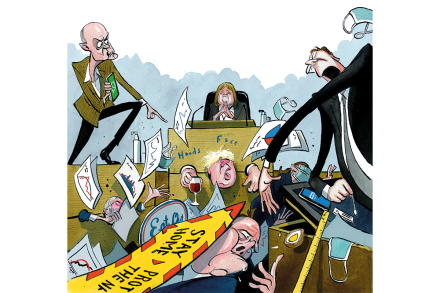
What is the point of the Covid Inquiry? It should be to establish which parts of the government’s pandemic response worked, which parts didn’t, and what to do next time. Instead, it is a farce – a spectacle of hysteria, name-calling and trivialities. The stakes could hardly be higher. Lockdown was the most disruptive policy in British peacetime history, with huge ramifications for our health, children’s education and the economy. At the time, lockdown theory was new and untested: there was no data around it. Now we have data. This is an opportunity for the inquiry to gather evidence and ask whether lockdown and other interventions actually worked. What were the benefits and the side-effects? What about masks? Care homes? Mental health?

The ten worst Covid decision-making failures

From our UK edition

Dealing with a pandemic requires a clear aim, planning, intelligence and supreme flexibility to react to the unknown. However, ever since reports broke in the West of a newly-identified virus in Wuhan in January, this has not been the case in Britain. The result? We have suffered a very high death toll, and substantial social and economic damage has been inflicted on our society. It did not need to be this way. Our Covid-19 outcome could have been very different if certain mistakes were not made. Here we list some of the major decision-making blunders made over the last eight months. 1. Lack of a clear aim In March, Health Secretary Matt Hancock set out ‘to protect the NHS by building it up and flattening the curve.

It’s time to fix the NHS’s looming winter crisis

From our UK edition

My patient has sepsis. The window for treatment is short; in less than an hour, he could die. In urgent care, the direct line to ambulance control bypasses 999: it lets the call handler know a doctor requires urgent attention for a sick patient. Ten minutes: no response. I’m on a second phone to central dispatch: what is going on? A critical incident has been called; the service is overwhelmed. Finally, after 15 minutes, the phone answers and help is on its way.  Worryingly, this is far from an isolated incident. Last week, it was reported that an ambulance service sent a taxi to a GP practice in Bristol to collect a patient with a broken hip after a nine hour wait.

The hidden death toll of lockdown

From our UK edition

The last patient I treated was 105 years old. She has lived through two world wars, a depression and at least five pandemics. It’s a real honour to treat centenarians. They teach me much about life: how it is and how it ends. I can also lighten the mood with my 80-year-old patients by telling them that they’re still young. It’s common to hear talk about an ‘ageing society’ being some kind of disaster befalling the country. Yes, people are leading longer, healthier lives now than ever before. Is this really a ‘demographic timebomb’? I’d call it the greatest achievement of our time. When my patient was born in 1915, average life expectancy was about 55.

Can Boris be reinfected with Covid?

From our UK edition

Boris Johnson is self-isolating in Downing Street after hosting an MP who subsequently tested positive for Covid-19. As we all know, Johnson has already been affected by SARS-Co-V2. So can the Prime Minister, who has presumably built immunity to this virus, be reinfected? For once the answer is clear: it’s possible. We know this thanks to the work of the Medical Research Council’s Common Cold Unit (CCU). The unit, which worked on the site of a WWII American Red Cross base near Salisbury, ran over a thousand studies between 1946 and 1989. One of its last projects analysed the time course of the immune response to experimental coronavirus infection of man. Fifteen volunteers were infected with coronavirus 229E.

How many people are catching Covid in hospital?

From our UK edition

One aspect of the original outbreak of coronavirus in March and April that has not received enough attention was the spread of the virus in NHS hospitals. With NHS staff lacking Personal Protective Equipment – and as we know now, suffering from a lack of preparedness – the virus spread at rapid speed between people in close proximity in hospitals – the very places where people expected to get better, not worse. In this first phase of the pandemic at least one in eight patients contracted the virus while already in hospital. These patients tended to be older and frailer, and if they survived, they ended up staying in hospital on average for more than a month.

The nine worst Covid-19 biases

From our UK edition

We all suffer from cognitive biases that cloud our judgment and lead us to the wrong conclusions. But now that we are in the middle of a pandemic, and restrictions are being put in place that have a profound impact on people’s lives, it is more important than ever that we look to the evidence and challenge these biases before they lead to serious mistakes in our response to the disease. Unfortunately, this has not been happening. Here are nine big mistakes that have shaped our response to Covid-19: 1. Herd thinking From the offset, the government’s thinking about the pandemic was based on influenza modelling.

The long winter – why Covid restrictions could last until April

From our UK edition

39 min listen

Why does the government think the second wave will be worse than the first? (00:49) Will a Biden presidency restore America's fortunes? (18:45) And finally, does Covid mark the end for the silver screen? (30:10)Spectator editor Fraser Nelson talks to Carl Heneghan, professor of evidence-based medicine at the University of Oxford; editor of The Spectator's US edition Freddy Gray is joined by columnist Lionel Shriver; and reviewer Tanya Gold is in discussion with The Spectator's arts editor Igor Toronyi-Lalic.Presented by Lara Prendergast.Produced by Gus Carter, Max Jeffery and Sam Russell.

Lockdown cycles

From our UK edition

The appearance of SARS CoV-2 has been deemed worthy of extraordinary measures to contain or suppress its spread. With a rise in infections across Europe, politicians are once again scrambling to reintroduce a series of policies that amount to lockdown in all but name. France has introduced a curfew. Italy has made the wearing of masks mandatory outdoors. And London’s nine million residents have been banned from meeting people they don’t live with indoors. Such extraordinary measures imply that the epidemic of SARS-CoV2 has features that are out of the ordinary when compared to previous pandemics. But is this right? Or are we setting a precedent for the way we deal with infectious diseases? We are, of course, all familiar with acute respiratory infections and their effects.

Following the evidence for hospital admissions

From our UK edition

The recent warnings of exponential growth of Covid-19 cases, inevitably followed by a rise in hospital admissions, is one focus of the Government's Covid messaging. Jeremy Hunt described this spike in admissions as a 'wake-up call' for the Government. But while this year the disease is newly identified, warnings of a winter crisis in the NHS occur annually. So should we be worried? For 20 years, 'influenza' has been blamed for putting hospitals under pressure in winter. Now, this fear has been substituted by 'Covid'. Yet both are one-track, one-pathogen scenarios, which ignores the reality that there are scores of different pathogens that cause respiratory infections across a community at different times of the year.

How is the Vallance Covid projection working out?

From our UK edition

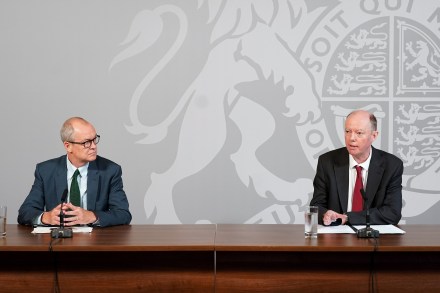
Prediction, projection, illustration — call it what you wish, but when you make a statement about what’s going to happen next, people are going to assess whether you’re correct or not. Sir Patrick Vallance, the Chief Scientific Adviser, said last week:  At the moment we think that the epidemic is doubling roughly every seven days...If, and that’s quite a big if, but if that continues unabated, and this grows, doubling every seven days… if that continued, you would end up with something like 50,000 cases in the middle of October per day. Making projections is fraught with danger, but there are ways to caveat such statements that allow better understanding.

The rule of four: how to make sense of Covid case numbers

From our UK edition

Are Covid cases doubling or not? And if so, in what time frame? If you listened to Boris Johnson and chief scientific adviser Patrick Vallance, you'd be forgiven for being confused. The Prime Minister said this week:  'The chief medical officer and chief scientific adviser warned that the doubling rate for new cases could be between seven and 20 days.' In fact, Vallance had said this:  'At the moment we think that the epidemic is doubling roughly every seven days.” And added, “It could be a little bit longer – maybe a little bit shorter – but let’s say roughly every seven days.' So what's going on?

Boris’s ‘whack-a-mole’ Covid strategy is failing

From our UK edition

Will the current cycle – lockdown; open up; eat out; restrictions; lockdown – go on forever? In their handling of coronavirus, Boris Johnson and his colleagues have become increasingly media-responsive, fear-bound, model-sensitive, sound-byte producing, u-turn prone and, quite frankly, embarrassing to all who believed the UK to be a beacon of rational thought. Has the Government lost the plot? We are not sure if it ever had one. This week at its annual meeting, the British Medical Association lamented the Government's lack of grip on the public health during the current pandemic and proposed a ‘near-elimination’ strategy.

What does a case of Covid-19 really mean?

From our UK edition

‘What's in a name? That which we call a rose by any other name would smell as sweet,’ wrote the Bard. He was referring to a rose which is a rose, instantly recognised by its fragrance and its appearance. But a case of Covid-19 does not fit the metaphor, because it differs wherever you look. In the course of our evidence gathering activities, we have gone through a few thousand papers reporting studies on all aspects of Covid-19 spread. We found that not very many defined a case of Covid, which is a sign of sloppiness when that is what you are looking for. Those that did, reported different definitions and ways of ascertaining what they meant by a ‘case’.

Boris Johnson needs to bin the rule of six

From our UK edition

When Boris Johnson returned to work in April after his brush with coronavirus, he warned that lockdown restrictions must remain to prevent a second wave. Ever since, beset by anxieties, doubts and fear, and surrounded by a platoon of advisors, the PM has made one cautious, catastrophic error after another. Last week’s roll of the dice with the ‘rule of six’ could well be the policy that tips the British public over the edge. For it is a disturbing decision that has no scientific evidence to back it up, and may well end up having major social consequences. The government has decided to blame young people for the latest restrictions, having spent August asking them to revive the economy.

Covid-19 cases and the weekend effect

From our UK edition

There’s significant mounting interest in the increase in detected cases in the UK. However, it’s worth looking at the data to try and understand what is going on. First, it is essential to analyse cases by the date the specimen was taken, as opposed to reported. The second vital thing to do is to observe this data for emerging patterns, even before looking at the numbers. If you do this, then the Government’s Staging Data shows an emerging pattern, whereby the number of people testing positive on the weekend is significantly lower than that observed in the week. Furthermore, if you assess the data for the last week, you see this effect is accentuated by the Bank Holiday Monday on 31 August.

Covid-19 and the end of clinical medicine as we know it

From our UK edition

When we trained at medical school we were taught to approach each patient on his or her own merits. We were taught to take a history: ask questions about past medical problems, drugs and present complaints; to do a physical examination and make a management plan including those tests that allowed us to narrow the range of possible diagnoses. Treatment was the next option. After we learned to do all this, we were awarded the title of doctor – professionally trained, licensed and regulated to carry out the procedures described. This model of actions which has a long history is called clinical medicine. But what impact has Covid-19 had on this tried and tested way of doing things? In the last 30 years, clinical medicine has had two important evolutions.

Coronavirus cases are mounting but deaths remain stable. Why?

From our UK edition

Something rather odd is happening in the two Europeans nations worst hit by Covid-19. The UK and Italy have a rising number of cases but a stable and very low number of deaths, even weeks after the cases started rising again. At the time of writing, the UK records 1750 new cases daily and one death in a population of 67 million. With a roughly similar population and an average of 602 cases a day, Italy has had just over four deaths a day over the last month. The ratio of cases to deaths is nowhere near what it was at the height of the pandemic. The other notable feature is a shift of cases to a younger population. There can be several explanations for this trend. First, the viral agent may have mutated to a less virulent form.

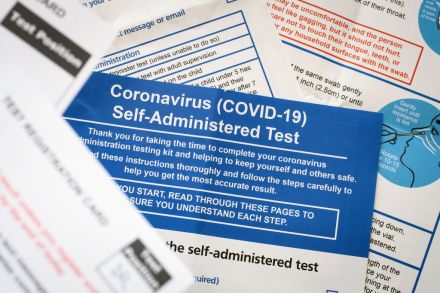
It’s a mistake to think all positive Covid tests are the same

From our UK edition

Italy was the first country in Europe to implement lockdown, so what can we learn from the country's attempt to impose restrictions to stamp out Covid-19? And what does Italy's experience of finding a path out of lockdown teach Britain as it emerges out of lockdown itself? Ten towns in the province of Lodi, Lombardy, and one town in Veneto were designated areas or 'red zones' on 23 February 2020: two days after the first Covid-19 death and three days after the identification of the first autochthonous case of Covid-19 (i.e. a case which could not be linked to contact with outsiders). By the time Italy's prime minister Giuseppe Conte announced the complete national lockdown – the 'orange zone' – on the 11 of March, there were 12,482 cases and 827 deaths.