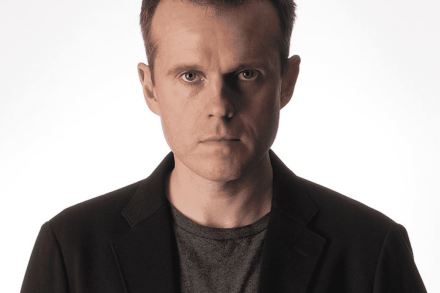
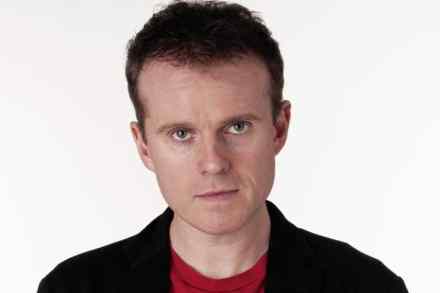
Andrew Doyle

Andrew Doyle is a comedian, author of ‘Free Speech and Why It Matters’ and a presenter on GBNews.
.

Is the ‘woke’ movement really over?

From our UK edition

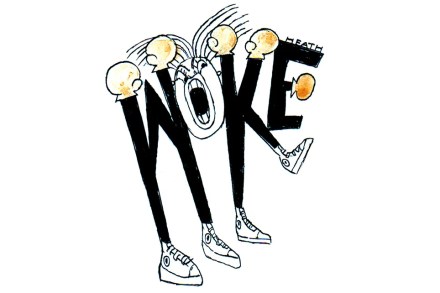
‘I was with some doctors last week who said there is no such thing as biological sex.’ It sounds like the rambling of a madman or a drunk, but these words were uttered last week at the Charleston literary festival in East Sussex by Lady Brenda Hale, former president of the Supreme Court. Personally, I would avoid doctors who lack this rudimentary knowledge of the human body. They might start asking me about the regularity of my menstrual cycle. Wokeness has destroyed lives. Children who are gender nonconforming have been persuaded that they are ‘born in the wrong body’ The ubiquity of wokeness has meant that we have grown accustomed to hearing these kinds of deranging remarks from figures of authority.

‘Comedy is much more important than I thought’: John Cleese on the press, his new talk show and the power of Fawlty Towers

From our UK edition

John Cleese enjoys tough questions. He’s currently touring America with An Evening with the Late John Cleese, and a substantial part of the show is thrown open to the audience. He tells me that when someone asks a particularly rude question – such as ‘Why can’t you stay married?’ – it simply adds to the fun. Another one of his favourites is ‘What’s the worst film you ever made?’ I ask him the same question. ‘Well, there are a lot of contenders,’ John says. Apparently his ‘sabre-toothed daughter’ Camilla might have the answer, because she often introduces him to the stage as ‘the star of The Pink Panther 2’. When I tell John that I haven’t had the pleasure of seeing it, he offers me some succinct advice: ‘Don’t.

Who is Pride really for?

From our UK edition

Towards the end of the first century AD, the Emperor Domitian rebranded the month of October as ‘Domitianus’. It will have troubled him that Julius Caesar and Augustus already had their own months, and this was a neat way to affirm his godlike status. Fast forward two millennia, and the high priests of the new religion of intersectionality have decreed that June shall henceforth be known as ‘Pride Month’. For the next 30 days, cities throughout the UK will be festooned with the symbol of this new established church: the ‘Progress Pride’ flag. This eyesore will flutter above civic institutions, corporations, and high street shops. It will decorate tablemats in restaurant chains, be displayed as bunting in schools, maybe even splashed across the sides of police cars.

How the culture war became a crusade

From our UK edition

In February 2020, I was invited on to the BBC’s The Big Questions to debate the topic: ‘Is wokeness the new religion?’ I had already anticipated that mine would be the unfashionable view, and so I steeled myself in advance for the inevitable onslaught. This being a British daytime television show, the onslaught took the form of audible grumbles and a few raised eyebrows. One of my fellow panellists expressed her dismay that we were discussing this topic at all, which is akin to accepting an invitation to a birthday party and then complaining about the bunting.

Why has the West caved in to the progressive witch-finders?

From our UK edition

34 min listen

Is western society in the grips of a progressive hysterical epidemic comparable to the Salem Witch Trials? My guest on Holy Smoke this week, Andrew Doyle, argues precisely that in his book The New Puritans. He suggests that gender ideology, and particularly the dogmas of trans activists, together with the fantasies of Critical Race Theory, are dragging society into an alternative reality that resembles a fanatical religion. But it's one that doesn't have to employ its own ideological police – because actual police forces, along with other powerful institutions including the churches, have signed up to the New Puritanism (usually without understanding it).

Eric Gill’s crimes were unforgivable, but his statue is blameless

From our UK edition

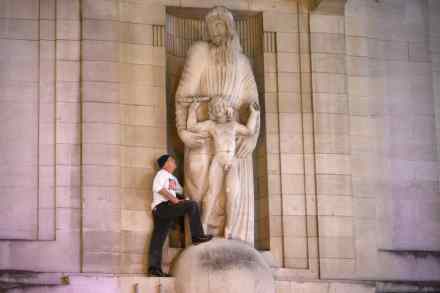
I like to think of myself as a latter-day Mother Shipton. I may not live in a cave in the north of Yorkshire, but I do occasionally dabble in prophecy. And, like Mother Shipton, I am accurate approximately roughly one per cent of the time. And I can prove it. In a diary piece for the Spectator in June 2020, I wrote the following: ‘Is it really any great leap to suppose that the same activists who would see a statue of Mahatma Gandhi toppled for his 'problematic' views might not wish the same fate on Eric Gill’s sculpture of Prospero and Ariel on the facade of the BBC’s Broadcasting House?’ This week, a man fulfilled my prediction by climbing a ladder and attacking Gill’s work with a hammer. https://www.youtube.com/watch?

Andrew Doyle and Ian Leslie: How do we disagree?

From our UK edition

51 min listen

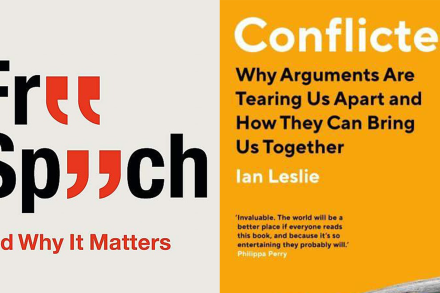
The public conversation - especially on social media - is widely agreed to be of a dismally low quality. In this week’s Book Club podcast I’m joined by two people who have ideas about how we can make it better. Andrew Doyle’s new book is Free Speech: And Why It Matters; Ian Leslie’s is Conflicted: Why Arguments Are Tearing Us Apart And How They Can Bring Us Together. We talk free speech, tribalism, cancel culture - and how we can learn to disagree more productively.

Cancel culture is nothing new

From our UK edition

Spectator contributors were asked: Which moment from history seems most significant or interesting? Here is Andrew Doyle’s answer: The Synodus Horrenda of January 897 is one of many bleak episodes in history that the Catholic Church would probably rather we forget. This is when Pope Formosus was put on trial for perjury and violating canon law. The twist is that by this point he had been dead for eight months.  The trial was an exercise in score-settling by his successor, Stephen VI. He had the corpse exhumed, dressed in his sacerdotal garb and propped up in the papal court. Pope Formosus was even provided with a defence council, but the outcome was never really in doubt.

The ‘anti-racism’ movement is sowing deeper divisions

From our UK edition

Have you ever claimed to be ‘not racist’? If so, sorry, but you’re a bigot. Should this seem incoherent, then you’re clearly not well versed in critical race theory: a once niche academic field that has gone mainstream and popularised concepts such as ‘white privilege’, ‘white fragility’ and ‘systemic racism’. According to Ibram X. Kendi, author of How to Be an Anti-Racist, ‘the claim of “not racist” neutrality is a mask for racism’. Alana Lentin, author of Why Race Still Matters, takes it a step further, arguing that to be ‘not racist’ is ‘a form of discursive racist violence’.

American meltdown: November’s democratic disaster

From our UK edition

40 min listen

Is this week's presidential debate a taste of the chaos to come? (00:55) In defence of 'wokeness' (15:10) and are male-only spaces immoral? (30:25)With Matt Purple, Senior Editor at the American Conservative; Karin Robinson, host of the Primarily: 2020 podcast; Sam Leith, The Spectator's Literary Editor; Andrew Doyle, the writer behind Titania McGrath; and Emily Bendell, the entrepreneur who is bring a lawsuit against the Garrick Club.Presented by Cindy Yu.Produced by Cindy Yu and Max Jeffery.

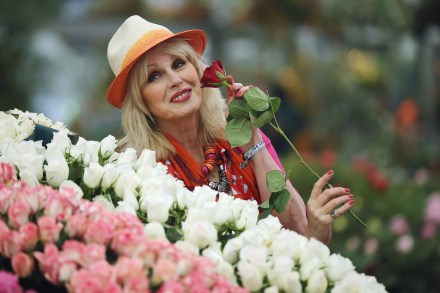
Joanna Lumley, Lionel Shriver, Andrew Doyle and Jeremy Clarke

From our UK edition

27 min listen

On this week's edition, Joanna Lumley recalls her meeting with Mongolia’s former champion wrestler – now the country’s president – and reflects on the joys of eating birdseed (01:14). Lionel Shriver argues that the true novelty of coronavirus is just how scared it's made us all (07:14). Andrew Doyle suggests that the SNP's hate crime bill could lead to the criminalisation of the bible (15:34). And Low Life's Jeremy Clarke shares his sadness at seeing an old neighbour and friend moving on (20:14).

Could possession of the Bible become an offence in Scotland?

From our UK edition

For the Scottish National party, the phrase ‘nanny state’ is not so much a criticism as an aspiration. This is the party that wanted to assign a state guardian to every child born in Scotland through its ‘named person’ scheme, only to be thwarted by the Supreme Court. Under Nicola Sturgeon’s leadership, there have been repeated attempts to regulate the eating and drinking habits of people, including proposed bans on two-for-one pizza deals and minimum pricing on cheaper alcoholic drinks. It makes sense, then, that the party’s paternalism should extend to the question of free speech.

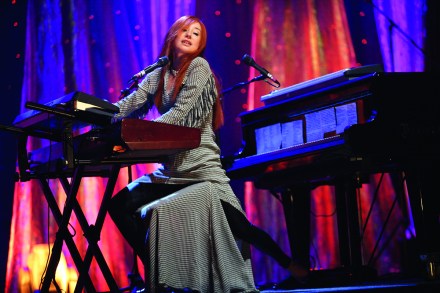
Tori rebel

In her new book, the singer-songwriter Tori Amos advises aspiring artists to be wary of those who would lead them astray. ‘Most people cannot raise their hand and say, “Your expression, your piece, your song, your art, is not to my taste; in fact I have an aversion to it, but I think it’s brilliant.” And that means that... some people judge something to be good or not good by what they personally like. Beware of this, I say to all artists.’ The simple sentiment encapsulates why so much creative potential is stifled before it can flourish. An artist whose principal goal is to please an imagined audience, or to adapt his or her work to critical trends, is no kind of artist at all.

tori amos

We are living through a frenzy of conformity

From our UK edition

Reality seems thinner these days. As I walk along the high street, passers-by drift apart as though afraid of crossing auras. Three months of lockdown has made this repulsion of human contact a matter of instinct. I can’t help but see this tendency reflected in the escalating intolerance and hostility on social media. So at the start of the week I decide to spend a few days away from Twitter. It’s not the ideal forum for civilised debate at the best of times, but even some of those I respect are now behaving like poorly socialised children who’ve just learnt some flashy new expletives. J.K. Rowling is bombarded for holding views about biological sex differences that would have been considered self-evident only a decade ago.

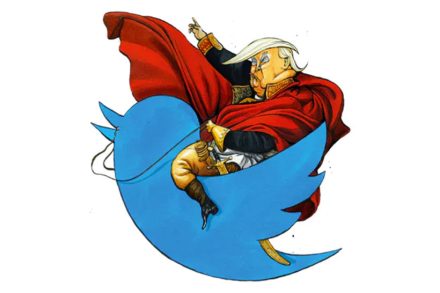
Trump vs Twitter: the battle begins

From our UK edition

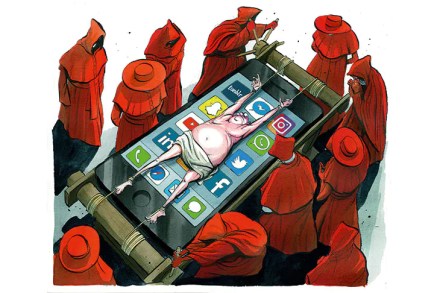
When Tony Wang, general manager of Twitter in the UK, described the company as the ‘free speech wing of the free speech party’ he was expressing an ideal that would soon collapse. This was in 2012, long before the prospect of a Donald Trump presidency was anything other than a flippant punchline in The Simpsons. Six months after the 2016 election, Twitter’s co-founder Evan Williams expressed his regret for the part they played in securing Trump’s victory. The implication – that the decisions of the general public are shaped by bad actors who prey on their malleability, and it is the responsibility of technocrats to do something about it – is one that has since become depressingly familiar.

The vocal minority celebrating Boris Johnson’s coronavirus diagnosis

From our UK edition

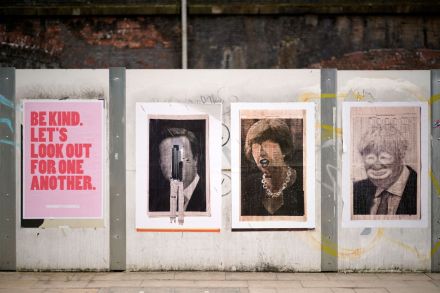
What does it tell us that so many left-leaning individuals took to social media this week in order to celebrate the news that Boris Johnson has tested positive for coronavirus? Others stooped even lower and openly yearned for his death, complete with triumphal emojis and GIFs. It would simply never occur to most of us to revel in the illness of a fellow human creature simply on the grounds that he or she represents a political worldview that we find repellent. So why does this instinct come so naturally to those who, barely a few weeks earlier, were hectoring their followers about the importance of compassion and peppering their tweets with the #BeKind hashtag?

With Andrew Doyle

From our UK edition

17 min listen

On the latest episode, Andy and Benedict talk to comedian and author Andrew Doyle, the brains behind the Twitter persona 'Titania McGrath'. Andrew explains just why he's so suited to self-isolation, the politicisation of coronavirus, and which quarantined celebrities he feels most sorry for.

Laurence Fox and the curdling of rational minds

From our UK edition

I start the week by going through my iPhone to delete the numbers of former friends. It sounds depressing, but it’s actually quite cathartic. I suppose it all started with Brexit. I’m not a confrontational person, so it was surprising to find so many friends turning against me over their newfound devotion to a neoliberal trading bloc. Since then, I’ve watched the ongoing curdling of rational minds with a growing sense of incomprehension. So many on the left appear to have surrendered to a collective fantasy in which the slightest point of political disagreement is interpreted as evidence of fascism.

Andrew Doyle: I may have to kill off Titania McGrath

From our UK edition

I start the week by going through my iPhone to delete the numbers of former friends. It sounds depressing, but it’s actually quite cathartic. I suppose it all started with Brexit. I’m not a confrontational person, so it was surprising to find so many friends turning against me over their newfound devotion to a neoliberal trading bloc. Since then, I’ve watched the ongoing curdling of rational minds with a growing sense of incomprehension. So many on the left appear to have surrendered to a collective fantasy in which the slightest point of political disagreement is interpreted as evidence of fascism.