Features

Veep show: who will Trump pick for his running mate?

We are in the fifth week of Donald Trump’s ‘hush money’ trial and the real scandal is that it’s all so intensely boring. Sex, porn-star witnesses, shady lawyers, a president in the dock – the headlines are a tabloid dream. The crux of the case, however, is a bunch of tedious charges to do with tax reporting and accountancy. Who wants to read about that?   Trump is ‘not looking for an heir because that would be Macbeth or King Lear, a bloodbath’ Trump adores the attention, naturally. As the greatest showman of the 21st century he understands that we, the people, need fresh drama and new characters.

No tips please, we’re British

I hate tipping, not because I am intrinsically mean but because of the anxiety it induces. You pitch up at some glam hotel, after a gruelling flight, then the guy next to the concierge takes your bags to your room, and, as you go, you fumble in your pockets, searching for the mysterious notes and coins, even as you try to estimate the right amount to tip the porter. Tipping is yet another toxic byproduct of America’s tragic past and should be treated like an invasive species This is a complex equation at the best of times, as it involves so many imponderables: the state of the local economy, the likely wages hereabouts, the emotionally correct sum to give – not insultingly little but not so much that you look like an oligarch.

Why do people make excuses for surly staff?

‘You grab that table, I’ll get the drinks.’ I did as bid. A couple of minutes later, Paul was back, beers in hand, and we started chatting. Soon the member of staff who’d served him appeared. She was stony-faced and holding a card machine. ‘You didn’t pay,’ she said. Paul looked confused for a second, then glanced down at the machine. ‘Oh, it didn’t go through?’ The staff member shook her head. Paul held out his card, she punched the numbers again, we all waited for the beep. Then she handed him his receipt and left. ‘Service with a smile,’ I said. He laughed. And then, a second or two later: ‘Oh well, I guess she’s having a bad day.

What Xi wants in Europe

On a quiet street in Belgrade, a bronze statue of Confucius stands in front of a perforated white block, the new Chinese Cultural Centre. This is on the former site of the Chinese embassy which in 1999 was bombed by US-led Nato forces during the Kosovo war. Three Chinese nationals were killed. The Americans said the bombing was an accident, but the deaths allowed China and Serbia to share a common anti-Nato grievance. This week, timed to coincide with the 25th anniversary of the bombing, Xi Jinping visited Belgrade and talked about the Sino-Serbian ‘bond forged with the blood of our compatriots’. He had been expected to visit the embassy site but seems to have decided that that would be too provocative against Washington.

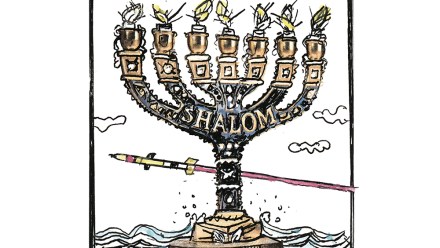
The Israeli-Hamas negotiations are fraught with complexity

Jerusalem For weeks the Israel Defense Forces (IDF) had been preparing for an assault on Rafah. Yet when the order finally came on Monday night, it caught Israel’s generals by surprise. This was despite the fact that two armoured divisions had been deployed on Gaza’s southern border, and hundreds of thousands of leaflets printed warning the local population to evacuate to a ‘humanitarian area’ on the coast. Twice the plan to drop the leaflets over Rafah had been postponed, following American pressure. On Monday morning, when the green light came, the plan was to give civilians at least a week to move. Ten hours later the tanks moved in. There was another reason for the generals’ surprise.

Sex and the shires: Plum Sykes reveals all

‘I looked at a picture of him today and thought: “Why are you wearing those expensive clothes, you twit?”’ Plum Sykes is in the Claridge’s ArtSpace Café, eating the avocado on toast and talking about Rishi Sunak. ‘He looks like he’s wearing handmade shoes, which is a real no-no – a real no-no! But he can’t stop himself.’ ‘People want to be Martha Stewart, Carole Bamford. I’m not sure they want to be Meghan Markle’ David Cameron would never be so gauche, says Plum. ‘In fact, I remember asking David about that and he said he’d never wear a custom-made suit on the campaign trail because it sends the wrong message.’ Plum quite likes Sunak ‘because he’s clever and sensible’.

Bugs, biscuits, trench foot: from the front line of the uni protests

On the grass in front of UCL’s main building, on Sunday night, there were about 30 tents and the portico was plastered in handwritten signs: ‘Students: You’re in debt so UCL can fund a genocide!’ Some protestors sat on chairs, eating biscuits. Others stood at the front gate chanting ‘From the River to the Sea’. ‘Do you want a tent, bro?’ asked one protestor. I explained that I was a reporter and was immediately whisked away to talk to a spokesman. ‘Spectator, Spectator … yeah, I think that’s left-wing. All good.’ A girl who had come along for the day received a keffiyeh tutorial and as night began to fall, I watched as most of the demonstrators headed towards the front lawn to pray. One student didn’t fall asleep until 6.30 a.m.

How universities raised a generation of activists

It was only a matter of time before America’s student protests spread to the UK. In Oxford, tents have been pitched on grass that, in ordinary times, no student is allowed to walk on. The ground outside King’s College in Cambridge looks like Glastonbury, complete with an ‘emergency toilet’ tent. Similar camps can be found at UCL, Manchester University and more. There have been no clashes with police, but that may yet come. In Leeds, for example, pro-Palestinian students tried to storm a university building, leading to bloody clashes with security guards. From the Sorbonne to Sydney University, the movement has gone global. Its ostensible cause is hardly ignoble. It’s possible to be appalled both by the 7 October attacks and the tens of thousands of Palestinian deaths.

Wales is facing a US-style opioid crisis

In Europe at the end of the Noughties, the problem drug was krokodil. The semi-synthetic, necrosis-causing alternative to heroin was cheap. My father favoured it so much before his death that he started importing it from eastern Europe into Wales. Across the pond right now, the problem drug is fentanyl, which has made its way into much of the US drug supply. Indeed, it’s become so synonymous with death that many casual users have given up the bag all together (‘I love a line, but I’m not going to die for it,’ one Manhattanite told me recently). More than 75,000 Americans died from synthetic opioids in 2022. And now the opioids crisis has arrived in Wales.

Why Trumpists think the real conspiracy is RFK Jr

A riddle wrapped in a mystery inside an enigma. Winston Churchill’s description of Soviet Russia in 1939 could also apply to the independent candidacy of Robert F. Kennedy Jr in the presidential election of 2024. What we can say with certainty about RFK Jr is that, in a year when the American electorate is deeply unhappy about having to choose once again between Donald Trump and Joe Biden, he has the opportunity to win over an enormous number of disgruntled voters. At first glance RFK appears to outflank Trump along the wackier fringes of US politics He’s currently polling at up to 15 per cent. That makes him the biggest threat to the Republican-Democratic hold over presidential politics since Ross Perot, who in 1992 won some 19 per cent and came second in two states.

Meet Hillingdon Man, Britain’s unhappiest chap

It’s official. I live in the unhappiest place in Britain. Who says so? My neighbours here in Hillingdon, that’s who. They’ve been polled by the property company Rightmove, along with citizens the length and breadth of the country, and Richmond came top(seems money can buy you happiness, after all) while my own London borough, Hillingdon, a few miles away, came rock bottom. For me, this was a complete surprise. In 2011, my wife and I moved to Hillingdon, from insufferably trendy Chiswick to profoundly unfashionable Ruislip, and we’ve never been happier. We raised our two children here, and even though they’re now both away at university they return home whenever they can. What’s so good about living here?

Joseph Stiglitz: ‘We know where fascism led last time’

When Joseph Stiglitz talks, the left listens. The Nobel laureate has advised multiple Democratic presidents and the World Bank, where he worked as chief economist and senior vice president. He’s long been a leading critic of the liberal leanings that have dominated the West’s economic policy for four decades. So when we meet in The Spectator’s office, I ask him if the Labour party has sought his advice. It wouldn’t be unthinkable. ‘I just met with, in a TV show, one of the Labour shadow ministers. We had a good discussion,’ he says, smiling. But the New Keynesian economist is in the UK for four days, and his new book, The Road to Freedom, is keeping him busy. No summits on ‘securonomics’ this time.

Paris, city of blight

You know that feeling when you haven’t seen someone for several years and when you do, you really notice the changes? Generally it is a melancholy moment: you spot the extra wrinkles, the added pounds. Occasionally it can be positive: gym-toned physique, amusing new green-and-orange hair. Lots of us had these moments as we emerged, blinking and bewildered, from the bunker of Covid. I’ve just had this same experience, but with a city. Paris. The French capital is a place that I know well. I must have visited a dozen times over the decades. I’ve seen the Louvre Pyramid go up, I’ve seen Notre-Dame go down in flames (on TV, in a horrified airport in Vegas). But I have not been to Paris since before the pandemic, so I was keen to check out how the old girl was doing.

Survival plan: is Rishi ready for the rebels?

Ever since Rishi Sunak became leader of the Conservative party, he has been preparing for this week. Entering 10 Downing Street without winning a general election or even the Tory membership vote, he owes his position entirely to Conservative MPs. At any moment, they could decide to replace him as they did Boris Johnson. This bank holiday weekend, as the results of the May elections roll in, has always had the potential to be his moment of greatest vulnerability. The results will show how the Tories are performing now compared with the local elections of 2021 when a triumphal 30ft giant-sized Boris balloon in Hartlepool came to symbolise his political dominance.

Why were Germany’s Covid files redacted?

There are two kinds of long Covid. One is a medical syndrome, the other manifests as a healthy obsession – an urge to shed light on what happened during the pandemic crisis. Too many questions remain unanswered: why did Sweden come out of the pandemic better than other countries without having endured a lockdown? Why were masks imposed when scientific studies repeatedly demonstrated that they were unnecessary? Why was discrimination introduced between the vaccinated and the unvaccinated when it was clear that vaccines were incapable of blocking the transmission of the infection? And why, since the lockdowns, has there been such a high excess-death rate in Europe? Why were masks imposed when scientific studies repeatedlyshowed they were unnecessary?

How the Jilly Cooper Book Club turned toxic

The Jilly Cooper Book Club was set up about a decade ago by two friends who’d had enough of book groups where someone would insist, ‘We really must do Dostoevsky this year.’ Members of the JCBC, in a co-founder’s words, just wanted to get together to ‘drink champagne and shriek about Jilly’. ‘Book clubs are basically Mean Girls for middle-class women’ For some time, I stalked key members on Twitter before managing to wangle an invitation. My first meeting was at a large townhouse in Clapham to discuss Rivals. There was a lot of champagne and a gaggle of smart, entertaining women. One was wearing a Vivienne Westwood corset dress; another had flown in from California. It was far more glamorous and fun than the usual cheap-wine-and-crisps affairs.

Has the C of E got its reparations bill all wrong?

Reparations have a troubled history, and rightly. The word itself, in its familiar sense, seems to have been a euphemism thought up by lawyers after the first world war. President Woodrow Wilson had promised a peace ‘without indemnities’. So no indemnities: ‘reparations’ instead. It sounded less objectionable. It was further agreed that liability should cover only demonstrable damage, not be punishment for the act of war itself – a remarkable and perhaps unprecedented concession by the victors to the vanquished (who had themselves recently imposed heavy indemnities on Russia, and before that on France). Yet reparations – relatively modest in total and largely unpaid – still became probably the most divisive and damaging aspect of the post-war Treaty of Versailles.

Daniel Dennett’s last interview: ‘AI could signal the end of human civilisation’

Do we still need philosophers? Daniel Dennett, who died last week, believed strongly that we do. ‘Scientists have a tendency to get down in the trenches and commit themselves to a particular school of thought,’ he told me from his home in Maine, not long before he died. ‘They’re caught in the trenches so a bird’s eye view can be very useful to them. Philosophers are good at bird’s eye views.’ Scientists of all sorts valued their conversations with him, ‘I think because I could ask them questions that they realised they should have had answers to,’ he said. I grew up with Dennett. First, as a teenager, watching YouTube videos as he raged joyfully against the irrationalities of religion. Then, as an undergraduate, I came to his ideas about consciousness.