Features

My ringside seat at the Nixon resignation melodrama

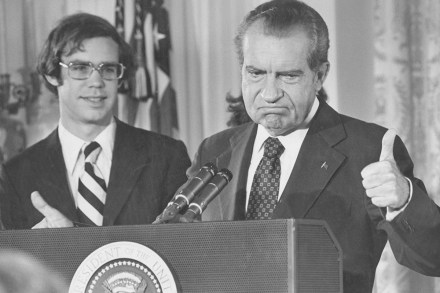
American politics seem particularly febrile in 2024. The sitting President has withdrawn from the election, days after his predecessor was shot campaigning at a rally in Pennsylvania. But American democracy is by nature restless and tumultuous. It’s worth remembering that 50 years ago this week, Washington was in turmoil over the question of whether Richard Nixon was going to resign. Those early days of August 1974 seem like yesterday to those of us who became swept up in them. At the time I was a 31-year-old MP, five months into my first parliamentary term as an opposition backbencher. My summer recess took me to the home of a hospitable Anglophile hostess in Georgetown.
Why children have stopped reading

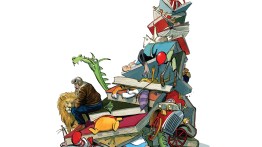
It’s only when you read the old stories again, to a child maybe, that you become aware of the extent to which the characters still live inside your mind, bobbing about just below the level of consciousness. I still find myself puzzling over the stories collected by the Brothers Grimm, decades after I first read them. How could Little Red Riding Hood have avoided being eaten? (We read the original, merciless version.) What should Hansel and Gretel have done? Any good book leaves its mark, but the characters from the books you loved as a child embed themselves. They inform the way you think as an adult, which is why it’s so sad and so significant that children all over the West have stopped reading.

Who is your favourite character in children’s literature?

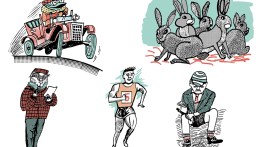
Rod Liddle Rabbits, always rabbits. I remember at age 13 forcing my poor parents to trudge despondently across hilly downland on the borders between Berkshire and Hampshire, with me jubilantly pointing out stuff like: ‘Look, it’s the combe where Bigwig met the fox!’ and ‘I think this could be the Efrafa warren!’ For a while, Watership Down jostled uneasily with the grown-up stuff I was just beginning to enjoy – Jack Kerouac, James Thurber, Ray Bradbury – but it still held a big claim on me and does today. Better than On the Road, isn’t it? Watership Down also took me back from the awkwardness of puberty to the safety zone of post-toddlerdom and, of course, Brer Rabbit.

Why Britain riots

Riotous summers seem to occur in Britain with about the same frequency as sunny ones: roughly every decade. Sometimes it’s Afro-Caribbeans protesting (Brixton in 1981), sometimes Asians (Oldham in 2001). The white working classes rioted over the poll tax in 1990 and in Southport this year. The riot in Harehills, Leeds, last month was precipitated by social services removing children from a Roma couple. Whatever sparks the unrest, what all riots have in common is that they involve mindless destruction. Rioters smash and burn their own communities and opportunists descend, trying to exploit the situation for political ends. Fake news and misinformation abound.

Sharing riot videos? You’re part of the problem

We’re told these riots are about immigration, racism, angry Islam, elite blindness and identity politics – and, to a point, that’s all true. But the disorder in British cities is also about the internet – and online videos in particular. People just can’t stop sharing ‘riot porn’, whether it be savage beatings, vicious clashes between rioters and the police, or buildings and cars being set on fire. Violence, like sex, goes viral because it is so addictive to watch. Unlike with pornography, however, there’s no stigma attached to the circulation of such footage, especially if the person on the receiving end of the brutality seems to be a villain. It’s schadenfreude on steroids.

Down and out in Birmingham and Rotherham

The Holiday Inn Express in Manvers, Rotherham, is opposite an RSPB nature reserve. For months, its 130 rooms have been fully booked, rented by the Home Office to house migrants. Last weekend, the hotel was surrounded by a mob who broke in and tried to burn it down. Most of the ground-floor windows are now covered with chipboard. The migrants, I was told, have been moved to another hotel. ‘Violent disorder isn’t right, but people from down south don’t know what it’s like up here’ ‘It used to be migrant families that were housed here,’ says a woman in the Aldi carpark next door. ‘Now it’s just young men.’ The only other journalists here are from Chinese state TV, keen to show Britain descending into anarchy.

Can anything stop a full-scale conflict in the Middle East?

The fact that the Middle East stands on the brink of a catastrophic war can be explained by a scene from The Gentlemen, Guy Ritchie’s preposterous but entertaining series on Netflix about aristocrats and sarf London drug-dealers. The dim eldest son of a duke is in trouble with a vicious gangster, who makes him dress up as a chicken and cluck and dance while the whole excruciating spectacle is filmed. Eventually the humiliation is too much for the aristo: he gets the family Purdey and blasts the gangster in the face – even though he knows that there will be terrible consequences.

How I learned to embrace my autism

I’m autistic, I teach autistic children and I care for autistic adults, but I never kid myself that we are better than other people. When I asked a fellow autistic man if he could name any famous autistic people, he replied: ‘Hitler and Einstein.’ I love his answer because it punctures the romanticism around autism. There are evil autistic people, as well as geniuses. Was Hitler autistic? We’ll never know for sure, but he showed several symptoms. People who met him found that once he started talking, he would not stop. He was also nocturnal, had an addictive personality and developed lifelong obsessions (in his case, racial purity). Around half of all the people referred to the anti-radicalisation programme Prevent are autistic males.

Aliens exist? Prove it

At Wright-Patterson Air Force Base in Ohio there is, it is rumoured, a secret underground room where a crashed alien spacecraft is kept. It’s warm to the touch, buzzing with a strange energy, an indication of technology light years ahead of ours. Meanwhile, over at Groom Lake Air Force Base in Nevada, otherwise known as Area 51, there are apparently more alien spaceships, some intact, as well as the preserved bodies of alien pilots. Is it true? Well, a recent survey indicated that half of the US population believed their government was covering up evidence of aliens. As someone involved in the scientific search for life in space, however, I put that down to poor journalism, a lack of critical thought and shallow scientific knowledge.

Beware the bat police

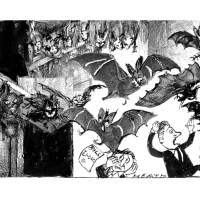
My friend Andrew is angry. He has just had the bat people round to look at his building project in Swanage. There was no evidence of bats that they could find, but that didn’t mean there weren’t any. A full survey would be required. In total the non-existent bats in our village hall cost the parish more than £2,500 I advised him to pay up and not dwell on the madness, but his ire reminded me of my own recent experience with the bat fuzz. From 2018 until this June, I chaired the committee responsible for refurbishing a village hall deep in rural Somerset. As law-abiding and nature-loving people, we followed our surveyor’s stern instruction and did all the bat-friendly things we needed to do before starting the work.

Woody Johnson: What a second Trump term would mean for the UK

If Donald Trump does return to the White House, then another restoration could soon follow. Woody Johnson, a confidant of the president since the 1980s, served as his man in London from 2017 to 2021 and is now tipped for a second spell as ambassador. ‘What I know about President Trump is if he asks you to do something, you probably do it,’ Johnson says. ‘So, it depends on what he would want me to do, if anything. If he would want me to do something, of course I would consider it.’ When we meet at the Republican National Convention in the splendour of Milwaukee’s Pfister Hotel, it is just five days after a would-be assassin’s bullet narrowly avoided killing Johnson’s old friend. ‘He’s got divine inspiration or divine help. That’s the only way that happened.

The cult of Bedales

Another of my ageing Bedales school cohort has died and so there’s an ad hoc reunion in his honour at the pub in Steep, the bucolic village near Petersfield, scene of our youth, where we used to sneak out to smoke and drink when the teachers weren’t looking. Which they often weren’t. Bedales implanted itself here in deepest Hampshire in 1900, a pioneering co-educational boarding school, quickly patronised by British and European progressivist-bourgeois-bohemian-leftist artists, writers and intellectuals. It has been chi-chi ever since. Since the place was co-educational, plenty of sex education went on behind the bike sheds From its rustic origins, the school has grown and grown and now dominates the no longer quite so sleepy village.

Let prisoners phone home

‘A society is measured by the treatment of its prisoners,’ Winston Churchill said. Last year, in England and Wales, every three and a half days a prisoner killed themselves. What does this say about our society? Perhaps you think: why should we care – aren’t there better things to worry about than criminals committing suicide? But the suicide rate in prisons is actually, surprisingly, a measure of the safety of society at large, because those who kill themselves in their cells represent the tip of an iceberg of despair within the prison population. It’s an indication of just how desperate life inside is – and when prisoners are feeling desperate, you can be sure that, when they are released, they are far more likely to reoffend.

Keir Starmer’s plans to soften Brexit

Anew political bromance is brewing on the continent. Keir Starmer has met Olaf Scholz, his German counterpart, three times since he entered Downing Street last month. Already the two men have found plenty in common. Both are social democrats, both are lawyers from similar backgrounds and both went through a socialist phase before selling themselves on competence. ‘Charisma is largely alien to them,’ said Der Spiegel after the two met recently at Blenheim Palace. ‘Perhaps this is why they like each other so much.’ Most importantly, Starmer and Scholz are both very keen for a new, closer relationship between the United Kingdom and the European Union.

Evita meets Thatcher: the woman fighting Venezuela’s autocracy

Maria Corina Machado is showing the world how opposition politicians can fight an autocrat. When President Nicolas Maduro tried to thwart her campaign by banning her from taking domestic flights, she drove between her rallies on a motorcycle. When he then banned her from running as a candidate in Venezuela’s presidential election, which takes place this Sunday, she found a retired diplomat to run as her proxy. Without even being on the ballot, she may bring down Maduro’s socialist regime. Machado mixes the crowd-pulling allure of Evita Peron with the politics of Margaret Thatcher Venezuela is used to left-wing populists whipping up crowds by railing against America, the rich and capitalism in general. Machado is their equal and opposite.

Olympics on steroids: the millionaire behind the Enhanced Games

Aron D’Souza likes to celebrate the new year with Peter Thiel, the venture capitalist billionaire who is good friends with Donald Trump and J.D. Vance. ‘Before Peter had kids, we’d go on these holidays around the world. Small group of us. Gay, tech, venture capital, founder-types,’ says D’Souza, an Australian businessman. ‘It’s quite a close-knit little community.’ Lately, because of the kids, they’ve partied at Thiel’s place, an $18 million compound on a man-made island off Miami’s turquoise coast. In December 2022, days before Thiel’s annual party, D’Souza came up with the idea of an ‘Enhanced Games’. The Olympics – but all the athletes dope. ‘That’s what I do over Christmas, when no one else is working,’ D’Souza says.

The rise of the ‘divorce influencer’

On Woman’s Hour recently, Anita Rani and her guests set out to celebrate the positive sides of a woman’s midlife. Forget the crisis: your forties and fifties could instead be a time for change, a refresh. You could take up a new hobby, they said, or a new exercise regime. Or you could get a divorce! What’s alarming is that this sort of discussion isn’t unusual. I regularly spot articles in newspapers and on social media that talk about divorce as if it’s just the latest wellness trend. They usually go like this: a middle-aged woman walks out on a long marriage and insists that she’s never been happier, that she’s free, that she’s ‘starting a new chapter’ in her life. She then demands through a rictus grin that you be happy for her.

How supporting Trump became cool

For the past decade, the basic lines of conflict in American public life seemed clear. Donald Trump was pitted against the establishment, the ‘basket of deplorables’ who supported him against the elites. The reality was more complicated. Yes, plenty of rich and powerful Americans supported Trump and plenty of poorer Americans on the fringes of society were against him. But in a certain section of society the disdain for Trump was unequivocal. Among the country’s elite – at Harvard and Stanford, at Google and Goldman, near the beaches of the Hamptons and the mountains around Aspen – anyone who defied the anti-Trump consensus could expect swift consequences for their social standing. There have been constant melodramas over this form of social ostracism.