Features

Babies with Down’s syndrome have a right to be born

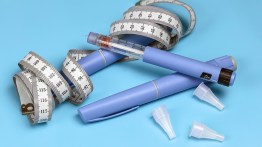
Many of us remember at least one morning in our childhoods when fate threw us some unexpected twist and we knew instantly that life would never be the same. Mine came in July 1991, two months shy of my fifth birthday. I had just received the news from my aunt that my mum had gone into labour overnight; my siblings and I had a new sister. We were gleefully baking biscuits that morning when we heard my father’s car on the drive returning from the hospital. But someone almost unrecognisable walked into the kitchen; shell-shocked, with a ghostly pallor. Something was wrong. We cannot legislate for the total eradication of suffering and it would be dangerous to try Today, hundreds of women in the UK will discover they’re pregnant.

A.A. Milne and the torturous task of writing

For those of us lucky enough to have been regular contributors to Punch magazine, April is a slightly crueller month than most, since it was on 8 April 32 years ago that the last edition collapsed, exhausted, on to the newspaper stands. By then it was way past its best, but in its day it had employed some of the very best brains in the business, led by some of the very best editors. I was lucky enough to be around when Alan Coren was in his prime. He led the magazine from the front, literally, and set a standard that the rest of us did our hardest to emulate, but rarely achieved. If ever.

Joe Biden is running out of time in the Middle East

Jerusalem The idea of a Saudi-Israel rapprochement would have been unthinkable not so long ago, and yet, shortly before the 7 October attacks, it was on the cards. The Emirates and Bahrain had recognised Israel’s sovereignty. Crown Prince Mohammed bin Salman (MBS) was positioning Saudi Arabia to do the same. Now Joe Biden – who on Tuesday said he was ‘outraged’ at a convoy strike that killed seven people – is desperately trying to see if he can get things moving again. Jake Sullivan, the White House national security adviser, is in Saudi Arabia this week meeting with MBS in a last-ditch attempt to save Biden’s grand design for Middle East peace.

What a super-majority means for Labour

When the last Tory government fell, the famous question after election night was: ‘Were you up for Portillo?’ Were you awake in the small hours when the man many expected to be the next leader lost his seat? This year, there’s no shortage of big beasts likely to be turfed out by the electorate. Jeremy Hunt, Jacob Rees-Mogg and Grant Shapps are just some of those tipped to lose their seats. Many touted as potential leaders – Penny Mordaunt, Miriam Cates and James Cleverly – are also endangered. If current polls are to be believed, the Tories could be reduced to a rump of about 100 MPs and Keir Starmer will be sitting with one of the largest majorities in parliamentary history.

Can Starmer control 450 unruly MPs?

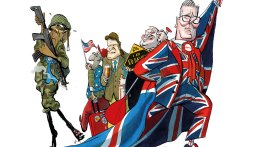
It doesn’t matter how loyal a candidate is. Once elected, all MPs (to a greater or lesser extent) conclude they have won their seat because of their unique qualities and personal vision. When they look in the mirror, many will see a future prime minister. Almost every backbench MP believes they are one reshuffle away from ministerial office. Managing 450 MPs is a tall order for any party leader. As prime minister, Keir Starmer would have his work cut out managing the payroll vote of 150-160, especially as only around a third of the new parliamentary Labour party will have been in office before. A big Starmer win would inevitably pave the way for new Labour tribes, each with their own instincts, demands and ambitions.

Inside Sue Gray’s Labour party

At 8.30 a.m. each morning, Keir Starmer holds a meeting with his inner circle to go over the business of the day. Once, these meetings were mainly filled with unelected aides, but now they are attended by senior shadow ministers, such as Labour’s campaign co-ordinator and Blairite old-timer Pat McFadden or the shadow cabinet office minister and Brown-ite Jonathan Ashworth. Starmer’s deputy, Angela Rayner, may drop in too. If Rachel Reeves can’t make it, one of her shadow treasury aides goes in her place. The new setup is one of the many measures Sue Gray has brought in since she was appointed Starmer’s chief of staff a year ago. Her aim is to strengthen ties between the Labour leader and his shadow cabinet.

How Ukraine plans to revive its birth rate

In my village in Ukraine, there aren’t many families left intact. The funerals of those who have been killed in the war have been taking place with crushing regularity. It feels like everyone’s loss. Today, in house after house, you can find parents whose children have either died or are still fighting with no indication of when they may return. It’s almost impossible for couples to start families – men are deployed to the front line with little hope of any leave. If they return alive, most are maimed in some way.  There is, though, a spark of hope for these young Ukrainians. Ukraine has quite an advanced network of fertility clinics, which are often used in more peaceful times by foreigners taking advantage of liberal surrogacy laws.

Why I’m fighting to ban smartphones for children

I am not often lost for words, but the five middle-aged homeless men who spoke at the Big Issue celebration in the House of Lords last month left me truly awestruck. All five had endured lives of childhood abandonment, violence, pain, destitution. All five had emerged from the darkness philosophical, hopeful and loving of their fellow man. I have not stopped thinking about them, and when I start on my usual daily beefs – signs on the Tube telling me I mustn’t give money to beggars (why not if I want to?); signs on the Tube telling me I can’t stare at people (what if someone is listening to a deafening violent video on their phone, should I deck them instead?); signs on the Tube telling me I mustn’t press into someone (try the Victoria line at 6 p.m.

Grappling with anti-Semitism at Easter

Easter meant little to me as a child. It was chocolate eggs, magical rabbits, films about Jesus on television. I had three Jewish grandparents and, though not raised with any particular religious identity, there was a sense of cultural Jewishness in the home. But those Easter movies must have made an impact, because I became a Christian in my mid-twenties and am now an Anglican priest. I am, however, deeply aware of Christian anti-Semitism – something that is once again becoming grimly fashionable. Anti-Semitism is especially poignant at Easter, the epicentre of the Christian calendar. We remember the great commandment to love one another, and take shelter from an increasingly unforgiving world under the divine promises of Christ personified in the resurrection.

The utter horror of UHT milk

On a trip to Italy via Paris last month, my travelling companion and I went to the Gare de Lyon at sparrows to catch a train to Rome. We badly wanted coffee. I came to coffee late in life and am infantile and uncool in my love of frothy buckets of what is effectively a hot coffee milkshake. It is almost all about the milk, preferably whole and organic but, at the very least, fresh. So it was that Starbucks – which uses conventional milk in the UK – twinklingand open in the middle of the freezing station, made the heart lift. I recognised in my childhood that the French did everything better than us except for two things: loos and milk I took one sip and nearly spat it out. That inimitable taste and stench of UHT, or ultra-high temperature processed milk, made me heave.

A Christian revival is under way in Britain

Tom Holland recently invited me to attend a service of Evensong with him at London’s oldest church, St Bartholomew the Great. Holland, who co-hosts the phenomenally popular The Rest is History podcast, has been a regular congregant for a few years. He began attending while researching Dominion, his bestselling book which outlined the way the 1st-century Christian revolution has irrevocably shaped the 21st-century West’s moral imagination. It also recounts how Holland, a secular liberal westerner who had lost any vestige of faith by his teenage years, came to realise he was still essentially Christian in terms of his beliefs about human rights, equality and freedom. Christianity is not just a useful lifeboat for stranded intellectuals.

Could I find love at the British Museum?

Mirabile dictu, as we Latin lovers like to say. In other words, wonderful news! Attractive women have fallen for ancient Rome – and for classicists. Well, that’s what the British Museum thought when it cooked up its advertising campaign for its new show, Legion: Life in the Roman Army, about Roman legionaries. The Museum put up a controversial social media post, promoting the exhibition as an opportunity for single women to find single men. I spotted a lissom blonde in green T-shirt and tie-dye trousers. We fell in step as we approached the gift shop The post read: ‘Girlies, if you’re single and looking for a man, this is your sign to go to the British Museum’s new exhibition, Life in the Roman Army, and walk around looking confused. You’re welcome x.

Why the British think differently from Americans

When I first started teaching undergraduates at Harvard, the grading system the university employed struck me as very odd. Even ambitious students at top colleges in the United States see it as their job to answer any essay question in the most thorough and reasonable way. They regurgitate the dominant view in scholarly literature in a competent manner. If they pull this off without making major errors, they fully expect to get an A. And with grade inflation rampant in the Ivy League, they usually do. This attitude has had a significant influence on American public life. If you read an opinion piece in the New York Times or the Washington Post, its basic thesis is often utterly unsurprising.

The disruptive comeback of Jacob Zuma

Johannesburg For a decade to 1973, Jacob Zuma – or JZ as he is known – was an inmate of Robben Island, the infamous prison built on a 1,300-acre slab of rock four miles off the South African coast. A fellow inmate was Nelson Mandela, also inside for treason. Both went on to become presidents of South Africa; but whereas Mandela had the Robben Island prison shut down and turned into a national monument, JZ, who has once again set his sights on high office, now wants it re-opened. In 2018 Zuma was removed from office by the ruling African National Congress (ANC), accused of theft and embezzlement. It’s bizarre that he has now made a return to politics in the run-up to the May presidential election, but so far his brand of patriotic populism has once more proved appealing.

Japan shows up Britain’s impoverished councils

I’m halfway through a stay in Japan, the land of the free public toilet. City squares, riverside walks, bus interchanges in the middle of nowhere – chances are there’s one waiting. The grubbiest are old but clean enough. The cleanest are like operating theatres. I think of days in British cities where you have to draw up a dot-to-dot itinerary taking in that Starbucks (customers only); that department store (if it hasn’t closed down); that museum (entry £5). And I’m a guy: we have it easy, I know. Why is public provision for this basic bodily function so dismal across the UK? I keep hearing this vicious rumour it’s because councils no longer have the money to maintain on ‘discretionary spending items’ like evacuating bodily waste.

Johan Cruyff, ‘total football’ and the birth of the modern game

The greatest rivalry in football for the past decade is coming to an end. Managers Jürgen Klopp and Pep Guardiola clashed in 30 games across Germany and England, but neither came out decisively on top (their final meeting was a 1-1 draw earlier this month). In May, Klopp will leave Liverpool for good. It’s a shame that two of the best managers of all time may never face each other again, because their rivalry has raised the calibre of the sport so spectacularly. Klopp and Guardiola tinkered relentlessly with their squads, tweaking formations, positions and playing styles in order to best one another.

Could Jordan Bardella be France’s next PM?

Dixmont, Yonne In Britain, France’s National Front is synonymous with the Le Pen family. Jean-Marie founded the right-wing party in 1972 and his daughter Marine replaced him as its leader in 2011. In France, however, the National Rally – as it was rebranded in 2018 – is increasingly the party of Jordan Bardella. The 28-year-old was elected its president in November 2022. The party members had a straight choice: Bardella, a working-class youngster from northern Paris, or the veteran Louis Aliot, the 53-year-old mayor of Perpignan who had joined the party before Bardella was born and who was for many years in a relationship with Marine Le Pen.