Features

Hell is a rented garden

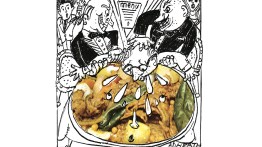
For the past few years, I have been a joyful Chelsea Flower Show attendee. Every May, my phone’s photo album usually becomes stuffed with pictures of plants: variegated borders in shades of white and purple, hostas bursting from decorative pots, cornus trees providing shade over ground cover of miniature geraniums. I obsess over dahlias, clematis and roses, not to mention the mini greenhouses, chic she-sheds and pretty pergolas. A couple of years ago, I had recently acquired for the first time my own garden and was embarking on filling it with gusto. I was drunk on possibility when it came to what I could fill my little patch with. Climbing roses! Strawberry beds! A fig tree! I spent accordingly. It was impossible to pass a garden centre without dropping a ton every time.

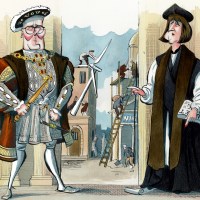
The heyday of the gay guardsmen

In 1943 the music critic Desmond Shawe-Taylor placed an advertisement in Exchange & Mart offering a pair of trooper’s breeches for sale. A number of men replied, one asking ‘Have they been worn by a trooper or just yourself?’, while another observed: ‘It is always good to see the boys pulling themselves into tight troopers and then admire the “smashing finish”.’ Members of the Household Division of the British Army, in their figure-hugging breeches and scarlet coats, had always held a particular appeal for homosexual men. It was therefore fortunate that, though the military authorities publicly denied it, there was a long tradition in Guards regiments of combining ceremonial duties with casual prostitution.

Putin’s purge of his top generals

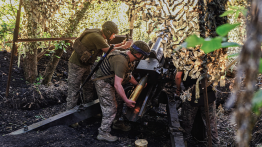
In the past month, Vladimir Putin has had five top generals arrested on corruption charges. More are likely to follow in what looks like a gathering purge by the Federal Security Service (FSB). ‘There is a fierce clean-up under way,’ a source close to the Kremlin told the Moscow Times last week. ‘There is still a long way to go before the purges are finished. More arrests await us.’ Without doubt, the FSB will find plenty of the corruption it’s looking for. Timur Ivanov, Russia’s deputy defence minister – the first senior general arrested – was hardly shy about flaunting his wealth.

Could Ozempic bankrupt the NHS?

The NHS spends around £6.5 billion every year treating obesity. People who are overweight cost the health service twice as much as those who maintain a healthy weight. Half of all cancer cases are linked to obesity and being severely overweight significantly increases the risk of other conditions, such as diabetes, strokes and heart attacks. No public health campaign or intervention has ever worked. Obesity rates have nearly doubled in the UK since the 1990s. More than 60 per cent of adults are overweight. It’s hoped that weight-loss injections, known as GLP-1 agonists – semaglutide (also known as Wegovy or Ozempic) and the more recent market entry tirzepatide (Mounjaro) – could reverse this trend.

The TikTok stars taking on the Tories

‘Sorry to be breaking into your usual politics-free feed,’ chirrups Rishi Sunak in his first-ever TikTok video. He is awkward, understandably. TikTok is enemy territory for the Tories. What most users learn about the Conservatives is usually damning, from left and right. ‘I think the Tory party deserves to die,’ says Jess Gill, who with 1.2 million ‘likes’ has a larger TikTok following than the party she wants dead. ‘They’ve betrayed Britain. On all fronts, but particularly immigration. We have an extremist immigration policy that is ruining this country.’ She is from Bolton and commutes from Reading to King’s College London on the two days she has to go in to study. Her videos denounce those who ‘simp for’ (or ‘defer to’) the Tories.

Project Dunkirk: Rishi Sunak’s real election strategy

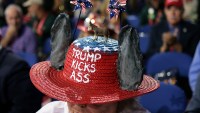
Since Rishi Sunak called the election last week, Tory MPs have been in a state of discombobulation. ‘It’s an absolutely crazy decision,’ pronounces a minister, after seven days of chewing it over. ‘It is the dumbest thing that has ever happened.’ To most Conservatives, every aspect of the campaign has seemed eccentric, even self-defeating – from Sunak’s rain-drenched announcement speech to his visit to the Titanic Quarter in Belfast. The policy announcements, moreover, seemed designed to further alienate young voters. The plan for mandatory national service for 18-year-olds – 95 per cent of which would consist of compulsory ‘volunteering’ at weekends – is an idea which had never been seriously discussed at any point in 14 years of Tory or coalition government.

The shadow fleet helping Russia to evade sanctions

Economic sanctions were meant to be the West’s secret weapon against Russia, a way of crippling Vladimir Putin’s war machine and bringing his invasion of Ukraine to a halt without Nato firing a shot. Instead, Russia’s economy and military remain in rude health. After recent heavy attacks north of Kharkiv, Putin’s troops have seized more than 38 square miles of territory and stretched Kyiv’s already thinly deployed defences as they grind forward in Donbas. Putin has demoted his long-serving defence minister Sergei Shoigu, replacing him with the little-known economist Andrei Belousov. Appointing a finance specialist as military chief was a reminder that armies march on money. In Russia’s case, oil money.

Why is the government making it harder to get an au pair?

You will have heard, I am sure, of the Conservatives’ recent largesse towards working parents, as their ‘free’ childcare policy has been much publicised. Fifteen hours a week for your kid, from nine months old to the grand age of four. You may not, however, have seen the new rules governing au pairs, which came into effect last month. Our dear, wise governors, while giving with one hand, have taken away with another; they have placed more obstacles in the way of those who need help with looking after their children. They’ve made it even harder to have an au pair. Children, of course, have a tendency to grow past the age of four, at which point they trundle off to school down the merry lane in the sunshine, complete with their adorable little rucksacks.

Anti-Semitism has returned to French politics

New Caledonia is an archipelago in the South Pacific not far from Australia. James Cook discovered it in 1774, but, after concluding that too many languages were spoken there, he declined to annex it to the British Empire. France, not as cautious, made it a distant colony under Napoleon III. Today, riots are convulsing the territory. Supposedly ‘decolonial’ in aim, they are most certainly violent and fuelled by the anti-white racism that, from London to Brussels and Paris, has become the trademark of the new radical left. The strangest thing is that among the flags of the Kanak independence movement, one also sees Azeri flags. Why Azeri?

South Africa’s migrant crisis

Johannesburg It’s called the ‘Reverse Jive’, retracing your steps to where your journey began, and you’ll hear it talked about all over Johannesburg, especially now, with an election next Wednesday and immigration such a hot-button issue. South Africa has a huge informal sector where the poor can at least scratch a living In Pretoria, the government estimates there are more than three million Zimbabweans, or ‘Zimbos’, living in South Africa. Decades of oppression and mismanagement at home have collapsed the economy and Zimbos form a visible presence in Jo’burg, Durban and Cape Town. And thousands of them have done the Reverse Jive.

In Kharkiv, culture is a form of defence

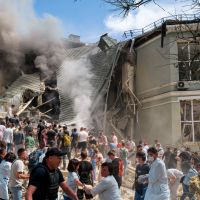
Kharkiv It was a strange feeling to walk alone through eerie corridors in the basement of the Kharkiv Opera Theatre and suddenly hear a burst of music and applause. As Kharkiv faced the Russian advance, a Kyiv-based drama group had come to the city to hold an Art Fortress concert to raise the spirits of local residents. For the audience, mainly middle-aged women, this underground event was a welcome distraction from the encroaching reality. Many waved in time to the music, delighted by the performance, and chanted ‘Slava Ukraini’ as the closing remarks were made. As another missile is heard, first responders in helmets and body armour rush down to the metro This support is vital as the city braces for what lies ahead.

What happened to the electric car revolution?

China is often characterised as a copycat when it comes to industry and technology but in one way it has proved to be a pioneer. It was China which saw the first boom in electric cars – and it was China that was the first to suffer when demand for them collapsed. The vast graveyards of unsold vehicles found in Hangzhou and other Chinese cities are the result of a huge, subsidised push to manufacture electric vehicles, demand for which has never caught up with supply. Ride-share services bought the vehicles– in a rerun of the great cycle-share fiasco of 2018, which led to piles of unused and unwanted bikes. But private buyers have been notably less keen. Where China leads, the rest of the world seems doomed to follow.

The deluge: Rishi Sunak’s election gamble

‘Only a Conservative government, led by me, will not put our hard-earned economic stability at risk,’ said Rishi Sunak as he announced a general election on the steps of Downing Street in the pouring rain. Upon these words, the Labour anthem ‘Things Can Only Get Better’ boomed out from the street. The din made the rest of his speech nearly inaudible. His suit jacket went from wet to soaking. ‘It’s bizarre,’ said one former minister. ‘How are we supposed to trust No. 10’s judgment when no one in the group even knows what an umbrella is?

The power of restorative justice

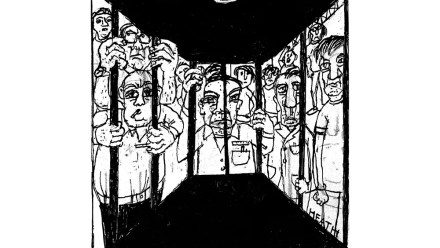
In a week when the Chief Inspector of Prisons published an Urgent Notification detailing the horrors of HMP Wandsworth, I found myself revisiting memories of being jailed there for the crime of fraud. Clanging doors, rattling chains, men screaming at night in anguish or despair or because their cellmate was assaulting them. No help coming. Emergencies unattended for far too long, and people dead as a result. No purpose, no hope, not even the possibility of redemption. Wandsworth is a miserable prison, one which does as much as possible to brutalise, punish and hurt those it jails, and nothing to heal or change them for the better.

Gangs of Tehran: how Iran takes out its enemies abroad

‘It was Friday afternoon, around 2.45. I came out of the house and was going towards the car on the driver’s side,’ Pouria Zeraati says casually. Zeraati – a presenter at the London-based TV station, Iran International – is recounting what was probably an Iranian state-sponsored attack. ‘I was approached by a man who pretended to be someone asking for £3. The second man then approached. They held me strong, very firmly, and the first person stabbed me in my leg.’ The Iranian regime is reshaping the murder-for-hire market in the US and parts of Europe Zeraati is talking on his first day back at work since he was knifed on Good Friday in Wimbledon. It’s still too painful for him to sit down, so we’re standing for our conversation.

The Church of England’s volunteering crisis

John Betjeman knew that a church cannot run on prayers alone. ‘Let’s praise the man who goes to light the church stove on an icy night,’ he wrote in his poem ‘Septuagesima’, going on to celebrate the ‘hard-worked’ wardens, cleaners, treasurers, the organist and, most of all, ‘the few who are seen in their accustomed pew’ come rain or shine. ‘And though they be but two or three,’ he concluded. ‘They keep the church for you and me.’ In smaller churches, filling voluntary vacancies is a headache, not helped by ever-increasing bureaucracy Some vicars today may feel fortunate to garner two or three volunteers. A recent Church Times survey found a worrying decline in numbers taking on the lay roles of warden, secretary and treasurer.

Ahmad Massoud: ‘I’m 100% sure I can topple the Taliban’

It’s fighting season in Afghanistan again. When the Americans were in charge, after the poppy fields had been harvested in late spring, and the madrassas in Pakistan that supplied the Taliban with fanatical soldiers had finished for the term, the Islamists kicked off the fighting. Between 2001 and 2021, around 200,000 people died, including 453 Britons. Now an insurgent group called the National Resistance Front (NRF) are starting the annual springtime assaults, this time against the Taliban government. ‘The Taliban do not possess the support of the mass of the people. We do’ ‘In the past 31 days, we have staged 31 attacks on Taliban, only in Kabul,’ Ahmad Massoud, the NRF leader, cheerily tells me from Tajikistan, where he directs his troops in exile.