Features

Let’s bring the abortion debate to life

No one ever really expected Nadine Dorries’s ill-fated abortion bill to succeed — not after the Lib Dems had made a fuss, and the PM had withdrawn his support with his usual principled grace. But what’s more surprising has been the strange and unpleasant consensus which has risen up from the debate about the bill, and has been twisting into the minds and out of the mouths of journalists all week — not just on the left, but across the centre too, and throughout Westminster. The consensus that’s taken shape seems to be this: that abortion is not just a necessary evil, but a jolly good thing. That being pro-choice no longer means just accepting that a woman has a right to decide, but that abortion must be celebrated and all doubters deemed religious nut jobs.

Token gestures

Charity might begin at home, but worrying about charity begins at Waitrose. Those little green tokens they give you with your receipt — nice touch, I used to think. If the store won’t give me any of my money back by way of a loyalty card, at least they’ll give it to someone I can vote for, by dropping the token into one of three compartments in a big clear plastic box by the exit. Each compartment relates to a local charity. New line-up every month, new chance to feel good about yourself. But no good deed goes unpunished, so it didn’t take long for doubts to creep in. There was the whole concept of Waitrose donating to charity, for a start. Given their prices, shouldn’t they be aiming a little higher than the local playground?

Prince of war

Why shouldn’t one of Liberia’s most infamous psychopaths become its president? Human rights are universal and indivisible, existing as they do in an unexplored metaphysical sphere in which the European Court of Human Rights plays the role of Christopher Columbus. So it is a wonderful thing to see the court’s discoveries accepted, applied and even extended in a country in which its writ does not yet run, namely Liberia, in West Africa. There, a man called Prince Y Johnson is running for president in the forthcoming elections. When I met him, a little more than 20 years ago, he was Field Marshal Brigadier-General Prince Y Johnson, but just as he awarded himself these ranks, so he has now divested himself of them.

Looting for scoops

Tripoli Coming pretty much straight from the London riots to the Libyan revolution has made me more contemptuous than ever of Britain’s self-pitying, self-indulgent, social-security-claiming insurrectionaries. For all the fear and death, Tripoli’s uprising has been far more disciplined. Cool young rebels, in their bandanas and Free Libya T-shirts, guard the streets. Barely a shop has been looted, and trainers are still changing hands in the normal way. Only one group of people, in fact, is brazenly disregarding private property and disrespecting the law: western journalists.

Amy was right

Something queer has happened to Amy Winehouse in the six weeks since her death: she has been turned from an anti-rehab rebel into the poster girl for rehab. The tragic Camden songstress was famous for singing ‘They tried to make me go to rehab, but I said no, no, no’. Yet now her demise is being held up as a sign that all troubled folk should seek expert rehabilitation as soon as they can. Her deeply distraught father, Mitch, is having meetings with Home Office ministers to discuss setting up more rehab centres. There’s even talk of opening something called the Amy Winehouse Rehabilitation Centre. It’s a bit like making Princess Di the patron saint of landmines.

A rich man for all seasons

Multibillionaire Warren Buffett may sound cuddly, but he’s talking from both sides of his mouth August was a typical month for Warren Buffett, America’s second richest man. While the leisure classes lolled, he called for higher tax rates for the rich. If America had a debt problem, he wrote in the New York Times, it was high time the rich paid a greater share of their earnings to the government. Then, two weeks later, he sank his fangs into the fleshy rump of Bank of America, one of the bailed-out giants still staggering three years since the start of the financial crisis. Buffett had been circling Bank of America for a while, hoping that its problems would force it into his arms. It was simply a question of when not if they would have to take his money.

Who are the ‘undeserving rich’?

Westminster isn’t sure. But it’s suddenly obsessed with them Recently, one Tory cabinet member went for dinner at a top London hotel with some of the most famous members of the financial elite. Good food and better wine: it was the kind of occasion that, in days gone by, would have turned into an orgy of mutual self-congratulation. But the world has changed. The bankers spent the evening attacking the Conservative party for not doing enough to defend them. The cabinet member became steadily more irritated, and as soon as he left the hotel, turned to a friend and decried ‘the obscene arrogance of these people’. The contempt, it seems, is now mutual. Now is not a good time to be rich in Britain.

Punish the rich, hurt everybody

The Bible tells us that the poor will always be with us, but there is no good reason, and certainly no scriptural authority, to support the widespread belief that the rich will be too. As capital has become more mobile, slipping across fiscal boundaries at the snap of an enter-key, so too have its owners, who are today only a Gulfstream ride away from somewhere where the climate is more agreeable, the taxman less importuning and the populace less hostile. In the past, we have indulged ourselves during downturns in the politics of envy, responded with tax and regulation — then watched as the globalised rich took flight. From bankers to the Rolling Stones, those who could work anywhere decided not to stay as ministers made their pips squeak.

Don’t wait for One Day

The correct response to the film One Day is, apparently, to cry your eyes out. Me, I couldn’t squeeze a single tear; in fact the sentiment I could barely suppress throughout was rising irritation. If ever two characters needed a slap it’s the hero and heroine of One Day. Let me explain. This is a film based on David Nicholls’s best-selling novel — and I don’t think I’m giving too much away here given the number of spoiler reviews — about a boy and a girl who never quite get it together for years and years, almost until it’s too late.

The road not taken

Abdul Haq and the ‘Afghan solution’ Just after September 11 2001, a piece appeared in the London Evening Standard under the headline: ‘Rebel chief begs: Don’t bomb now, Taleban will be gone in a month’. The accompanying photo showed a bearded man shaking hands with a beaming Margaret Thatcher. The man was Abdul Haq, perhaps the most famed Pashtun commander of the 1980s anti-Soviet jihad. Haq’s fabled exploits included blowing up the Soviet army’s seven-storey-underground munitions dump with two single rockets; an event that turned the war. This time, Abdul Haq had a plan for how to win another war — the one that America had vowed to wage on al-Qa’eda and their friends the Taleban in Afghanistan.

New York Notebook

When the earth began to move, I was on lying on my bed with my cats in my lap. My son was in his room across the hall. The bed began to shake and I thought, inexplicably: is my little brother doing this? And then I thought, ‘Oh no, are we under attack again?’ (having 9/11 on the brain the way I and many other New Yorkers do). The cats lifted their heads at me looking for answers as the building swayed and the door to my bedroom opened and closed. When it was over, I called out to my son, asking if he’d felt anything, but he, an almost teenager, was oblivious. I went online to see the origins of the trembling I’d felt — the world is so nuts these days, was it al-Qa’eda, a bomb, my upstairs neighbours remodelling?

Is Nato finished?

After Muammar Gaddafi and his ghastly children fled Tripoli, Libyans desecrated his statues and stamped on his posters. As it turned out, the Libyans really did hate Gaddafi enough to rise up, arm themselves and overthrow him. Gaddafi’s own elite units mostly melted away when the rebels advanced into Tripoli, and even the dictator’s tatty palaces (where did all that oil money go, one wonders) were abandoned by his personal guard. Backed by western airpower and special forces, the rebels entered many of these ramshackle structures unopposed. The Libyans have a right to be proud, and we in the West have a right to feel relieved. This wasn’t Suez, in the end, and the most dire predictions have so far failed to come true.

Fifteen minutes later

Pauline Pearce did not know she was being filmed when she spoke out against the rioters running amok in her Hackney neighbourhood. Standing in the darkness, on a debris-strewn pavement in front of graffiti that read ‘Fuck Cameroon’, she seemed a lone voice of conscience amid the carnage. ‘Get real black people. Get real!’ she shouted, waving her walking stick. ‘You lot piss me the fuck off! I’m shamed to be a Hackney person. Because we are not all gathering together and fighting for a cause. We are running out of Foot Locker and thiefin’ shoes.

Show us the money

In 2002, a few months before the invasion of Iraq, I was invited to speak at the James Baker III Institute for Public Policy in Houston, Texas. I had a meeting with Baker, one of America’s best post-1945 secretaries of state, who served under his friend George H.W. Bush. Together, they drove Saddam Hussein out of Kuwait in 1991. Jim Baker is an unsentimental politician from the realist school of American foreign policy. Like most of Bush Snr’s entourage, he clearly had doubts about invading Iraq. He recalled Douglas Hurd, then foreign secretary, complaining after the liberation of Kuwait that Britain was not getting a fair share of the reconstruction contracts. They had been hogged by American companies. I could bear witness to this.

The post-Gaddafi future

The question for Libyans, as they take their first momentous steps into the post-Gaddafi era, is whether they can now build a government and country worthy of their heroic struggle against one of the world’s worst tyrants. For decades, conventional thinking about Arab nations, especially among the experts, argued that they were best ruled by ‘strongmen’, a western euphemism for pro-western dictators such as the deposed Egyptian president Hosni Mubarak and his former counterpart in Tunisia Zine el Abidine Ben Ali. According to this line of thought, Arabs don’t do democracy. They are too tribal and fractious for such enlightened politics. For western leaders, it has been a case of better the devil you know, and hang the consequences for the Arabs.

Blots on the landscape

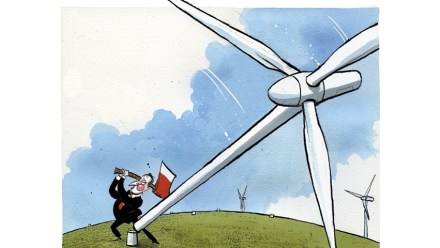
On a walking holiday in France a couple of weeks ago, I was making my way along the ridge that forms the very edge of the plateau of the Vercors when I heard a whooshing, rushing sound behind me that made me jump. When I turned, I jumped again, for there, less than 100 yards away and level with me, was a glider sailing through the sky, so close that I could see the pilot’s face as he gracefully rode the thermals that rose from the valley bottom, a thousand feet below. As the plane flew away, some words flew into my head: ‘Then off, off forth on swing,/ As a skate’s heel sweeps smooth on a bow-bend: the hurl and gliding/ Rebuffed the big wind.

The truth behind hacking? It’s a global business – and journalists are the least of it

‘Hi, this is Mr Pretext from mobile phone activations. Our systems are down and I need you to bring up a customer’s mobile account for me please.’ I must have repeated this lie thousands of times in the past 20 years. It helped me gain access to information — criminal records, social security numbers, phone logs — that I would then hand on to all sorts of clients: journalists, insurers, cuckolded husbands and even policemen. As an American who spent many years in this underground industry, I can tell you that the British phone-hacking scandal has exposed only a tiny part of a vast criminal network. In the old days, private investigators would peer through letterboxes or ransack the bins of their targets.