Dot Wordsworth

Fantasticks, calash, noctivagation – the wonderful words of Anthony Wood

From our UK edition

When the King visited Oxford in September 1687, there was a bit of a shambles in the Bodleian, where they had laid out a banquet for his breakfast. He ate some mutton and pheasant, but, not inviting others to eat, he alone ate. When he had finished, there was a scramble for the many dishes left over. The University had paid £160 for this banquet or ambigue, noted the antiquarian Anthony Wood (1632-95). Ambigue, borrowed from French ambigu, meant a meal where all the dishes were served at once.

What makes an ‘old boys’ club’?

From our UK edition

In 1969, The Spectator’s leading article appeared on the cover. The first of that year was headed ‘The Old Boys’ Club’ and declared: ‘The Commonwealth is an Old Boys’ Club, whose members’ only universal characteristic is the entitlement to wear the Old British Colonials’ tie.’ Last week Nicola Sturgeon, responding to remarks by Sir David Davis in the Commons in which he accused her of lying, got her lawyers to issue a statement: ‘This member of the “Old Boys Club” has been spreading conspiracy theories on behalf of the late Alex Salmond since 2021.’ No apostrophe this time. Perhaps lawyers charge extra for those. An old boys’ club is different from a boys’ club – or in the north, a lads’ club.

The muddle over vanishingly unlikely

When my husband asked me whether I knew any mathematics at all, I replied by telling him that I had been a properly brought-up girl. The cause of our little wrangle was the phrase vanishingly unlikely. A newspaper article on scams pointed out that ‘only a tiny minority of oil workers are women, meaning it is vanishingly unlikely to meet a real one online’. Another said that ‘Britain is vanishingly unlikely to meet Nato’s target of spending 5 per cent of GDP on national security by 2035.’ In both those examples, vanishingly is used in the sense ‘infinitesimally’. But the meaning properly wanted here is ‘hugely’ or ‘almost infinitely’ unlikely. It is the likelihood that is vanishingly small. The unlikelihood is very great.

The true origins of Manchesterism

From our UK edition

‘If I hear anyone say Manchesterism again, I will…’ said my husband, leaving his thought unfinished, and slipping, rather easily, into the role of Lear in his impotence. I had no intention of explaining to him what Andy Burnham means by Manchesterism. No one knows – perhaps not even he. But the word has been around since 1883, when it was reputed to be a system that ‘enriched the few at the expense of the many’. That had been the charge against its inventors, Richard Cobden and John Bright, whom Disraeli accused in 1846 of being ‘Gentlemen of the Manchester School, who believe they may fight hostile tariffs with free imports’.

Who’s the real King of the North?

From our UK edition

Andy Burnham must feel the burden of the sobriquet with which he has been saddled: King of the North. It is recognised as a joky reference to Game of Thrones, even though in that series and the novels by George R.R. Martin that inspired it, the title is King in the North. The North has a reputation for being stern and hard, with moorlands and mountains and a harsh climate; a wall across the land protects it from alien dangers even further north. The people of the North stand out by their accents. All this is also true of Martin’s fantasy land. There is in addition a King-beyond-the-Wall (John Swinney?). On the television, Robb Stark, King in the North, marches south but is betrayed and killed, and with him are slaughtered most of the Northmen in the South.

Why should we call Turkey ‘Türkiye’?

From our UK edition

Thank heaven my husband doesn’t even pretend to like football. Indeed he emphasises his indifference by making ironic remarks like: ‘Poor old Ivory Coast was robbed.’ The World Cup has brought out the Babel in naming countries. Do we call them by the established English names or by what they call themselves? Ivory Coast, which has French as its official language, calls itself Côte d’Ivoire. (Diacritics cause online complications, as with plucky little Curaçao, which I heard referred to as ‘Cure-a-cow’.) Fifa too employs the home-grown Côte d’Ivoire, but BBC News and BBC Sport call it Ivory Coast. To us it is obvious that Germany is not Deutschland and Spain is not España. As names used by those outside, Germany and Spain are known as exonyms.

My guide to thuggery

‘Don’t they speak English?’ asked my husband, tossing over a copy of the Daily Mail as though it were my fault. The headline read: ‘Missing in action’. It referred to Dan Jarvis disappearing from view in his new job as Defence Secretary. The headline writers should know that, militarily, those missing in action are presumed dead. The Mail meant Awol – absent without leave. I mentioned this ignorant error here in 2022. In 2024 I remarked how odd it was that Sir Keir Starmer, the Prime Minister, should say about mob violence outside a migrant hotel near Rotherham: ‘It is organised, violent thuggery.’ Now Hilary Benn, the Northern Ireland Secretary, is at it.

Grab bags are up for grabs

From our UK edition

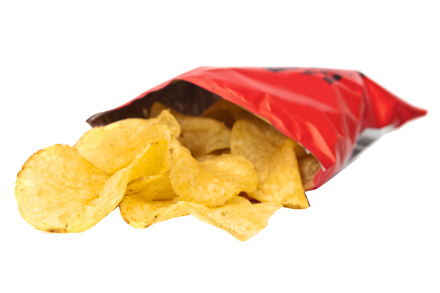
My husband’s task was a simple one: to buy a couple of bottles of water from the Morrisons opposite the station in case there was no buffet service on board (which would have made a waterless three-hour journey torture). If the train had left on time, he’d have missed it, but he came puffing up the steps full of talk about a ‘meal deal’ and proffering some Walkers crisps. Luckily for him he had also bought water, but what caught my eye was the labelling on the crisps: ‘Grab bag.’ I was aware of the term meaning an emergency bag containing food, water and first aid supplies, which would be kept near the door in emergency or war. A packet of crisps would hardly be a substitute.

Know your facepalm from your headslap 

‘That’s not a facepalm,’ said my husband. ‘It’s a headslap.’ He proved the point by making contact between the flat of his hand and his noble brow, producing a percussive sound. Then he covered his eyes with outstretched fingers and said: ‘That’s a facepalm.’ He was right to make a semantic distinction between these two non-verbal gestures. The headslap signifies usually comic frustration at another’s stupidity. The facepalm conveys embarrassment. The names are recent. Facepalm is not found earlier than 1996 in the Oxford English Dictionary. Those who like to employ emojis (which I do not) will find one for the job. The headslap has not yet been noticed by the OED.

strait

Italy’s doomed war on English

From our UK edition

‘Italians are not inventing any new words,’ the head of the Italian language academy told the Telegraph. ‘They’re not creating anything. They take everything from English.’ Professor Paolo D’Achille is the head of the Accademia della Crusca, founded in 1583. Crusca means ‘bran’, which is what the academy wants to keep out of the fine flour of Italian. English is of course bran. There was a big hoo-ha in Italy a decade ago when a recruiting poster appealed to young people: ‘Be cool and join the navy.’ I suppose there’d be a bigger hoo-ha in Britain if a recruiting poster was printed in German. These things have their degrees of unacceptability.

When does a drama become a psychodrama? 

When Labour blocked Andy Burnham from standing as its candidate last time around, Douglas Alexander, the Scottish Secretary, rejoiced at avoiding ‘three months of psychodrama – who’s up, who’s down, who’s getting on with who…’ But as Gareth Roberts remarked in The Spectator’s Coffee House, ‘I’m not quite sure what the difference is between psychodrama and good old-fashioned plain original-flavour drama.’ Indeed, Mr Alexander’s characterisation of psychodrama sounds like the essential lineaments of pure politics: ‘Who loses and who wins; who’s in, who’s out,’ as King Lear puts it. King Lear itself might be a classic psychodrama, if madness is the defining feature.

When did waiting lists become wait lists?

From our UK edition

‘Here you are. This is a funny one. It would suit you,’ said my husband unkindly, showing me online a picture of a tight-skinned model wearing an XS size barn-style ‘Balmoral’ cotton jacket made by Helsa, with faux-fur collar and cuffs and a cinched-in waist: £419. He found the idea of me with a cinched waist irresistibly funny. For another £80 I could have bought a Balmoral 1700mm Double Ended Roll Top Bath with White Claw & Ball Feet, reduced from £899. Balmoral seems to figure frequently in the nomenclature of sanitary ware, along with Sandringham, Windsor, Richmond, Clarence (butt of Malmsey), Carlton (Prince Regent) and Worsley (the late Duchess of Kent), as though past members of the royal family had sanctified them with their bottoms.

Why does everything now pivot?

‘As the door turneth upon his hinges,’ says the Book of Proverbs, ‘so doth the slothful upon his bed.’ But today nothing turns, neither the door, nor the slothful, nor his ox, nor his ass. It pivots. I read in the paper that Meg O’Neill, the new CEO of BP is ‘expected to double-down on the pivot back towards oil and gas’. Doubling down on a pivot must take some gymnastic skill. Saudi Arabia meanwhile is trying out a new snooker shot: ‘to pivot away from less lucrative projects’ – such as snooker. Here the writer might as well have said ‘turn away’, as in the Bible. Pivot has the restrictive extra sense of remaining in one place as you turn. We English borrowed the noun pivot from the French in the 14th century, and they used it to mean ‘hinge’.

Do ‘picky bits’ give you the ick?

From our UK edition

Marks & Spencer’s (as we still call it) has designated 27 June National Picky Bits Day. It entails eating things like olives and dips straight from their packaging. An evening meal of this kind is called a picky tea. It is, of course, a class minefield. ‘So what’s going on here, are we having a children’s party?’ asked Mary Berry when she was presented with a picky tea on Radio 1 three years ago. ‘I think I’m right in saying you have cooked none of this,’ she continued as she inspected the goods. On St George’s Day this year, the Scottish edition of the Times had a strap across the front page declaring that readers would find inside details of ‘The best supermarket “picky bits”.

Where do passion-killers come from?

‘Rearing homing pigeons was always a passion for the Queen,’ said a feature in the Daily Mail about Elizabeth II on the centenary of her birth. Yet perhaps that passion didn’t rage, hot as lava, through her veins, decade after decade. With Sir Keir, it has been football – ‘his only real passion and his one release from the tensions of office’, according to another source of the Daily Mail’s. Every young person tries to convince their chosen ‘uni’ that they are passionate about law or sport science. ‘When you can turn your hobby and passion into your profession, then that is the best thing there is,’ observed Marie-Louise Eta, the football coach, as though it were a truth universally acknowledged.

invalid

Why do we loiter?

From our UK edition

When my husband wants to do something I won’t like, such as getting tickets for Henley, he hangs about, plucking up courage, while I’m busy in the kitchen. Normally he sits idly by. It’s the loitering that is unsettling. He might get a job, if he could fly, as a loitering munition. These drones hover or circle until they detect a target. In 1988 an article in the American Air Force Magazine mentioned unmanned aircraft being developed to ‘loiter on high and then swoop down’. In 2022, Britain declared it would send ‘hundreds of loitering aerial munitions’ to Ukraine. Loitering, in use since Chaucer’s day, comes from a Dutch word meaning ‘to wag about (like a loose tooth)’.

Is a ‘link-up’ a modern ‘flash mob’?

The public disturbances in Clapham, achieved by social media link-ups, have their precedents. ‘You can imagine what an exhilarating week this has been,’ wrote Harold Nicolson in 1945, ‘The surrounding of Berlin; the link-up with the Russian armies.’  Link-up, first recorded from 1945 by the Oxford English Dictionary, has since been applied chiefly to military connection and that of spacecraft. On the same day as the first Clapham disturbance, three ‘flash mobs’, as they called themselves, were honestly busy in Slough High Street, doing little dances and holding up placards calling for the place to be named UK Town of Culture 2028.

The creep of AI ‘slop’

From our UK edition

‘The creep of “AI slop” in writing on the arts is everywhere,’ complained the Telegraph’s music writer Ivan Hewett the other week, and it’s up to us readers, he says, to stop it. For others, it means weirdly disjointed videos of anthropomorphic cats. But where did the forceful term AI slop come from? For prisoners, slopping out meant emptying chamber pots in the morning. For two centuries slop has been swill or food for pigs. At the same time it could be dirty household water. Long before that, it meant unappetising, semi-liquid food. Sloppy Joes were, from the 1940s, a kind of mushy hamburger (and also a loose-fitting sweater). I remember from the 1960s a probably ironic use of slop in the lyrics of a song by Arthur Lee on Love’s Forever Changes (1967).

A guide to Strait talking

I little thought in 2023, when writing about dire straits, that we’d so soon be pushed into them by trouble in the Straits of Hormuz. In discussions of these on the wireless, I find that even the best-informed commentators begin by referring to this geographical feature as the Strait of Hormuz but before long fall into calling them the straits. Insisting on the singular strait seems sterile pedantry. The Oxford English Dictionary has got the usage pretty straight: ‘When used as a geographical proper name, the word is usually plural with singular sense, e.g. the Straits of Dover, the Straits of Gibraltar.’ A pleasant piece of naval slang 100 years ago was up the Straits, meaning ‘in the Mediterranean’.

Why does a burglar burgle?

From our UK edition

When I hear surveil on the wireless I often imagine it is spelt surveille, since it is a back-formation from surveillance. But the spelling has settled down as surveil. The Telegraph had a report the other day about someone who found his iPhone had been infected with spyware ‘in order to surveil him’. The word sounds unhappy to my ear, as new back-formations often do, though it has been in use for 60 years. Back-formation appeared in the OED before it had an entry there. Its entry came in the Supplement of 1933, but it was coined by Sir James Murray in 1888 and used by him in the dictionary’s entry for burgle. This was marked as originally colloquial or humorous (as burgling probably was in The Pirates of Penzance in 1879: ‘When the enterprising burglar’s not a-burgling.