Ahmed Rashid

Ahmed Rashid is the author of Taliban and Descent into Chaos.

Are we seeing a new kind of Taliban?

From our UK edition

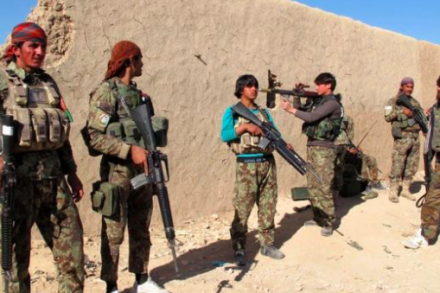
Are we seeing a new kind of Taliban? The men who seized Kabul with such ease last weekend are doing their best to sound more moderate. Women, they say, should be allowed to work and have an education. They have offered amnesty to officials of the now-deposed Afghan government, something the old Taliban never dreamed of doing. It’s far too early to tell just how much of this will last. But the more interesting question is not about the elders but the next generation of Taliban: the young commanders who were really the ones who conquered Kabul. The Taliban never really showed much interest in exporting their type of Islamic revolution around the world. They only cared about Afghanistan. But the new, younger members are much more militant and radical.
End game

From our UK edition

Britain has been at war in Afghanistan for over a decade. Many Britons now take it for granted that its country’s intervention in Afghanistan has failed and when Nato troops pull out in 2014 they will leave behind a volatile and unsettled state that could easily plunge into a civil war — much worse than what western forces inherited back in 2001. No doubt the chance of Afghanistan fracturing in the hands of a corrupt, incompetent government, a well armed and motivated Taleban opposition in the south and ethnic warlordism in the north is high. Rapacious neighbours, especially Pakistan and Iran, may regenerate their proxy wars for influence, as they did in the 1990s. Al-Qa’eda is still active in many parts of the world.

War-war, not jaw-jaw

From our UK edition

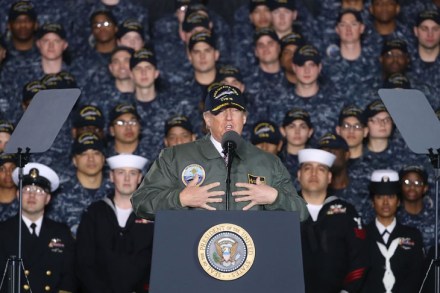
It’s often said that the Trump administration is ‘isolationist’. This is not true. In fact, we are now witnessing a dramatic escalation in the militarisation of US foreign policy in the Middle East, Africa and Afghanistan. This has not been announced but it is happening, and much of it without consultation with Nato or other key allies, or any debate in Congress or the media. A few weeks ago, US aircraft carried out over 30 air strikes against Islamic militants in Yemen — almost the same as the number carried out there all last year. In Iraq and Syria there have been many reports of civilian casualties in US raids. As many as 200 are thought to have been killed in air strikes on Mosul, although Iraqi authorities dispute that. Andrew J.

Death of Leonard Cohen – how the light gets in

From our UK edition

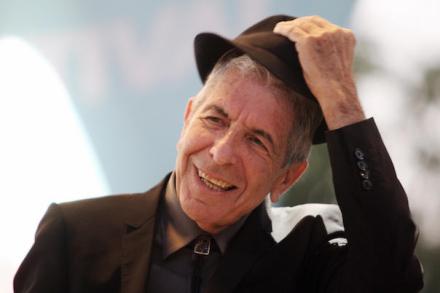
For millions of people around the world the shock of the US election results will be enormously magnified by news of the death of Leonard Cohen, 82, a singer poet icon who had long sung about his own impending death. Thin and frail he died in Los Angeles in the early morning hours of November 8 -- the day of the US elections -- according to sources close to the family. A Canadian by birth he had long said that he wanted to be buried in his hometown of Montreal in the family graveyard lying alongside his Jewish forefathers, before any public announcement of his death was made. The formal announcement of his death has only spoken about a public memorial service to be held in the future in Los Angeles and there is no mention of where or when he was buried.

If the Taleban takes Helmand, then Afghanistan could go the way of Syria

From our UK edition

Even by Afghan standards, it is an unorthodox cry for help. The governor of Helmand province, Mohammad Jan Rasulyar, has posted on Facebook tagging in Ashram Ghani, the Afghan president, to tell him that some 90 members of the security forces have killed in the past month fighting insurgents and that the province - under British control for so long - may be about to fall to the Taleban. He apologised for using Facebook, but said he was unable to make direct contact with the President by other means. He had this to say:- “Your Excellency, Facebook is not the right forum for speaking with you, but as my voice hasn’t been heard by you I don’t know what else to do. Please save  Helmand from tragedy.

Afghanistan’s new agony

From our UK edition

Amid all the chaos in the Middle East, the breakdown of borders and states, a new threat is fast emerging. The key strategic bulwark to stabilise the region is a strong Afghanistan. But after 15 years of occupation by western troops and a trillion dollars spent, it now appears to be going the way of the Levant. A weak government in Kabul has proved unable to forge a political consensus. The Taleban is resurgent, while other similar groups control much of the Afghan country-side. And this — with the potential spread factor of Isis — means that Afghanistan is probably worse off today than when foreign forces intervened in 2001.

Al-Qa’eda’s new war

From our UK edition

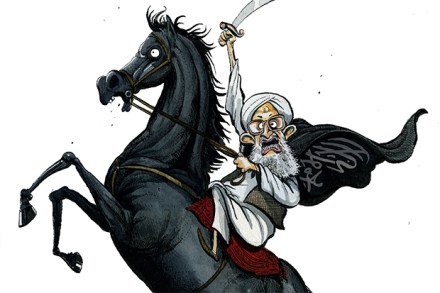
Lahore, Pakistan From a distance, the devastating attacks on Shia Muslims in three Afghan cities this week looked like the type of sectarian religious attacks which we got used to in Iraq. The faultline between Sunni and Shia is one of the greatest and most violent in the world, and now and again it divides countries. But in Afghanistan, nothing is ever this simple. For all its woes, it hasn’t seen a sectarian religious attack for ten years. And while the Taleban have had their history persecuting the Shia, it is highly unlikely they were responsible. The more likely ­explanation is less obvious — and even more sinister. These attacks were intended to kill as many as possible.

Al-Qaeda could end up the big winners in Syria

From our UK edition

[audioplayer src="http://rss.acast.com/viewfrom22/workingwithal-qa-eda/media.mp3" title="Ahmed Rashid and Douglas Murray discuss how the West is working with al-Qa'eda" startat=38] Listen [/audioplayer]After plunging Syria into five years of a bloody civil war that has killed 300,000 and displaced 10 million, Bashar al-Assad is preparing for the endgame. He has been digging a bunker for himself, creating an enclave in the mountains around the coastal city of Latakia where his community, the Alawites, are in a majority. The Iranians are helping him set up this new retreat, but his hope of hanging on to Syria is dying.

Ahmed Rashid: The five things that must go right for Afghanistan to prosper

From our UK edition

 Lahore   From Washington to Kabul and in every capital in between, governments, armies, intelligence agencies and the media are asking what will happen in Afghanistan next year when the US and Nato finally leave after 12 years fighting a war they did not win. Despite the enormous amount of intelligence available, the truth is that nobody knows, not even the Afghans. The best predictions can only be based on knowing what is going right, what is going wrong and what can be done to minimise the dangers of things getting worse. For more than a year we have been deluged with the so-called success story of the military transition — the handing over of security to the 350,000-strong Afghan army and police — as western forces pull out.

Increasingly isolated, Karzai turns to Pakistan

From our UK edition

The extraordinary raw intelligence leaks from the Afghan battlefield confirmed what many people already believed, or feared, about the war. But amidst the avalanche of documents, several new facts have emerged. We now know, for example, that civilians are being killed in much larger numbers than officially admitted by Nato. We know that the Taleban has acquired surface-to-air missiles which downed Western helicopters. We know that both Iran and Pakistan are deeply involved in the conflict, working closely with the Taleban. Finally, we know that the Taleban’s deployment of new weapons, tactics and especially landmines has been devastating to Western and Afghan forces — but, above all, to civilians.