Features

My boy the radical Muslim

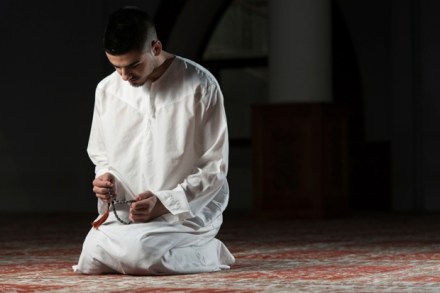
Two years ago this week, my stepson came home wearing an Arabic black thawb. He walked into the sitting-room, smiled defiantly at me and at his father, and asked us how he looked. We were a little shocked, but being English of course we said he looked very nice. Our boy had never shown any interest in religion before he found Islam at 16. We’re atheists, and we raised him to be tolerant of all faiths but wary of anyone selling easy answers. It all began after he left school. He was feeling slightly isolated, depressed and vulnerable after breaking up with his first girlfriend, so we were pleased when he began college and some new friends appeared. They were all young Muslim men.
Clive James on his late flowering: ‘I am in the slightly embarrassing position where I write poems saying I’m about to die and then don’t’

Clive James has published a new poem days before we meet. It opens, ‘Your death, near now, is of an easy sort’. It is about a Japanese maple his daughter has planted in the garden of his Cambridge home where we are sitting, and whether the poet will live to see the leaves flame red this autumn. The poem has made news. ‘At the moment,’ he says, laughing, ‘I am in the slightly embarrassing position where I write poems saying I am about to die and I don’t. My wife is very funny on that subject.’ It is part of an astonishing late body of work. This month there is a new book of writing on poetry, Poetry Notebook.

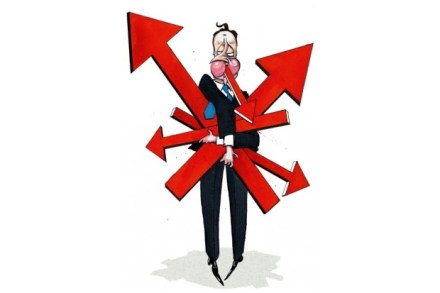
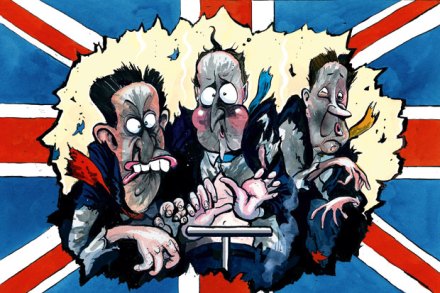
Cameron signals left, but turns right. Can he please now choose a direction?

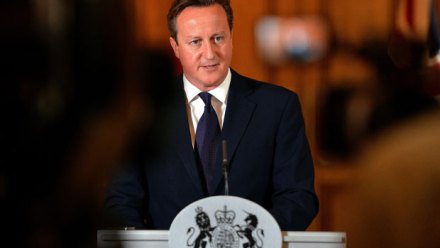
[audioplayer src="http://traffic.libsyn.com/spectator/TheViewFrom22_25_Sept_2014_v4.mp3" title="Freddy Gray, Fraser Nelson and James Forsyth on Cameron's radicalism" startat=70] Listen [/audioplayer]It is not mere hyperbole to say that the period between the Conservative party conference and the general election will be momentous. The next election will decide whether we have a chance to vote on Britain’s relationship with the European Union. Both Labour and the Conservative party will try to tackle ‘the English question’ — together with other great issues raised by the Scottish referendum. It is vital that the right David Cameron turns up to these debates.

Why do we care about the mutts from Manchester and not the chickens from KFC?

[audioplayer src="http://traffic.libsyn.com/spectator/TheViewFrom22_25_Sept_2014_v4.mp3" title="Melissa Kite, Camilla Swift (and Charlie the dog) discuss animal welfare" startat=630] Listen [/audioplayer]We love animals more than we love people. Of course we do. Following the recent fire at a Manchester dogs’ home, people donated £1 million and blocked the M6 with their cars as they arrived in their multitudes to adopt the displaced animals. It would have been heartwarming, it really would, if we hadn’t also demanded the death of the teenaged boy named on Twitter as the suspect in the arson attack. All over the internet apparently normal people, including ‘friends’ of mine on Facebook, called for a 15-year-old boy to be burned alive. I feel sick about the dogs too.

Students – bunk off your sex classes and learn on the job

[audioplayer src="http://traffic.libsyn.com/spectator/TheViewFrom22_25_Sept_2014_v4.mp3" title="Brendan O'Neill and Amelia Horgan discuss student sex" startat=1174] Listen [/audioplayer]The freshers heading off to university this month won’t only be bombarded with invites to join clubs and enough free Pot Noodles to sustain them till Christmas. They’ll also be swamped by advice on how to have sex. These young men and women, who probably thought that squirm-inducing sex-ed classes were a thing of their childish pasts, are in for a rude awakening. For now, sex education extends into adulthood: students must now have ‘consent classes’. At some universities, including Oxford and Cambridge, they’ll be compulsory.

How an Oxford degree – PPE – created a robotic governing class

If graduates from an architecture school designed buildings that were unfit for human habitation or doctors from a university’s medical faculty left death in their wake, their teachers would worry. The graduates of Oxford’s Politics, Philosophy and Economics course form the largest single component of the most despised generation of politicians since the Great Reform Act. Yet their old university does not show a twinge of concern. Alex Salmond spat out ‘Westminster’ as if he meant ‘Babylon’, and every time he did, thousands of Scots decided to leave Britain. Ukip, a vehicle for another cynical demagogue, convinces its growing band of supporters that all politicians are liars (apart from Mr Farage, of course).

Michael Fallon: parliament needs the ‘courage’ to vote for war

The Ministry of Defence is like a sauna on Sunday. The air circulation system has been switched off and the place is hot — and deserted. Yet when you reach the Secretary of State’s floor, a small team is hard at work. As you enter Michael Fallon’s office, you see why. On an easel sits a map of Iraq and Syria. Tellingly, though, this isn’t the only map on the stand. Sitting behind it are ones of Pakistan, the Central African Republic and Sierra Leone. It emerges later that the one of Ukraine has gone missing. Fallon is 62, but he has the energy of a man half his age. Our conversation is punctuated with regular requests from him to his staff to bring him a map, a copy of the Nato charter or some other piece of paper.

The Union is saved – but at what cost?

The worst has not happened; Scotland has not seceded from the United Kingdom. But David Cameron will have known some time ago that, whichever side won in the referendum, there would be no victory. This morning, the United Kingdom wakes up to one of the biggest constitutional messes in its history. Given that the unionists had the best product to sell — Britain — it is alarming that they were supported by only 55 per cent of Scots. For months, the opinion polls had suggested far bigger support. The unionists may have won the election, but the separatists emphatically won the campaign. The Prime Minister had to turn to Gordon Brown, and seemingly give him the authority to redraft the constitution at will. He must now accept the consequences.

The fatal mistakes of Sweden’s David Cameron

Cool, calm Sweden can still produce a surprise from time to time. Yes, our economic recovery has been the best of any major European country. Yes, our finance minister, the earringed and formerly pony-tailed Anders Borg, is hailed as the best in the world. And yes, our government has somehow managed to cut taxes so the disposable income of the average Swede is 18 per cent higher than before the crash. But when Swedes were asked to pass verdict on all this, in last weekend’s election, we decided to kick out the government. David Cameron has had another small northerly country to worry about of late, but the fate of his friend Fredrik Reinfeldt, the now-deposed prime minister, ought to alarm him.

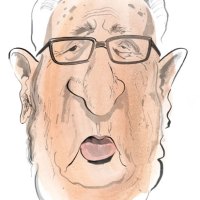
Henry Kissinger interview: ‘I don’t see the wisdom there once was’

Henry Kissinger doesn’t believe in retirement. At 91, having had a heart-valve operation three months ago, he is nonetheless publishing a book entitled World Order. As I happened to be interviewing him about it on 11 September, I asked him about his memories of 13 years ago. ‘I was in Frankfurt addressing a business group,’ he recalled in that voice of his that sounds like gravel has found its way into your car’s exhaust pipe. ‘A member of the audience had just asked a question when someone came on to the stage to say that he had an important announcement to make. I said that that may be, but I wanted to answer the question first, which I did, before the man said that New York had been attacked. It was about 2 p.m.

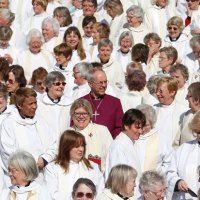
Conservative Anglicans’ emergency plan to escape women bishops

Anglicans aren’t the sort of church-goers who set much store by miracles, signs and wonders. Yet their own church is one of the greatest miracles of our society: it has managed to hang together, in spite of raging differences, for centuries. Since 14 July, that miracle has been under threat. For most, it was a great leap forward when the General Synod finally approved the ordination of women bishops. A delighted Archbishop of Canterbury was ‘grateful to God and to answered prayers’. David Cameron called it a ‘great day for the church and for equality’. But one section of the church didn’t feel it was a great day. Members of the conservative evangelical movement, represented by a pressure group called Reform, had resisted this change for years.

Women on Facebook are too bitchy even for me

In the heyday of the Hollywood studio system, Louis B. Mayer, head of MGM (‘More stars than there are in the heavens’) was rumoured to have had a very strange chart on his wall. This graph, allegedly, kept a record of the menstrual cycles of the studio’s leading ladies: Ava Gardner, Lana Turner, Grace Kelly and the rest. By consulting it, directors and cameramen knew when their precious cargo might be feeling a mite tearful and would ruin her make-up if spoken to sharply, or when her skin might not be in the best condition for a big close-up.

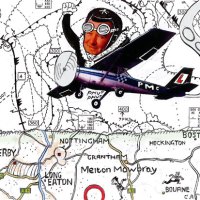
The wonder of learning to fly

We’d taken off smoothly and the two-seater Cessna 152 was climbing through 1,000 feet on full power. Then my instructor, Gill, reached over and closed the throttle. As the plane’s nose began to sink, she told me calmly, ‘We’ll simulate an emergency now. Can you find a suitable field to land in?’ Hurrying panic wouldn’t look good, I felt. On the other hand, finding somewhere more or less immediately might be appreciated. An empty-looking golf course fairway below looked promising. It had two sand bunkers, probably easier to avoid with a plane than a golf club, but what if previously unseen golfers pulling buggies strolled out of the trees into my flight path on touchdown? A lush-looking green field to the right looked big, firm and long enough.

‘Please, stay with us’: the best of Spectator readers’ letters to Scottish voters

[audioplayer src="http://traffic.libsyn.com/spectator/TheViewFrom22_11_Sept_2014_v4.mp3" title="Fraser Nelson, Tom Holland and Leah McLaren discuss how we can still save the Union" startat=50] Listen [/audioplayer]At 9.30 p.m. last Saturday news broke that Scotland’s ‘yes’ campaign had established its first opinion poll lead. Since then, the country has been confronting the possibility of its impending dissolution. The vote will affect all 64 million people in the United Kingdom, and most have neither a vote, not a voice. Last weekend, The Spectator asked readers to submit letters to Scottish voters, saying why they are hoping for a ‘no’ vote. Those printed here are a small selection from the hundreds we received.

A summer’s social whirl, from Bette Midler to Satan

This summer brought highs and lows, sadness and laughter, some irritating, some exhilarating. I was fortunate to be uplifted by an encounter with Leslie Bonham Carter, a remarkable woman who seems quite British but is in fact American. She is the daughter of Condé Nast, who founded the company that bears his name. He was born 145 years ago, in 1869. Leslie witnessed the full glamour of 1930s America. When the first world war came, many British grandees packed their children off to America. Young Leslie had opposite plans. All she thought of was how to get to England, to be there in its darkest hour. Diplomatic strings pulled, she sailed, barely in her teens and without either parent, in a battleship across those sub-infested waters. At 8.

So, Ken Livingstone, do you like Boris personally? ‘No’

I am standing outside Ken Livingstone’s family home in a pleasant row of terraces in the multi-ethnic, north-west London suburb of Willesden Green (commemorated in the novel White Teeth by the novelist Zadie Smith, perhaps the most widely celebrated daughter of the parish). If the authenticity of a Labour politician’s socialism can be gauged by the size of his house after leaving office, then Livingstone certainly has the edge on Tony Blair: it’s a long way from the hauteur of Blair’s main residence in Connaught Square. I ring the bell, but no one appears to be in. Then the 69-year-old former London mayor strolls up the street after doing the school run for his two younger children, aged 10 and 11, by his wife Emma Beal.

Brian Lara: Why I’m helping build a cricket stadium in Rwanda

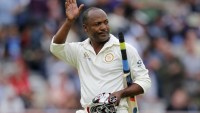
Twenty years ago, in 1994, I had a golden summer. I scored 375 against England in Antigua, a Test record that stood for nine years, and two months later I posted 501 against Durham, which remains today the world record in first-class cricket, as my team Warwickshire achieved an unprecedented domestic treble. I was in my mid-twenties, and of course I was very happy, but I was also very aware that in another part of the world, a great tragedy was unfolding. Every evening when I turned on the TV there were images of the genocide in Rwanda, and the contrast with my own feelings of euphoria haunted me.