Features

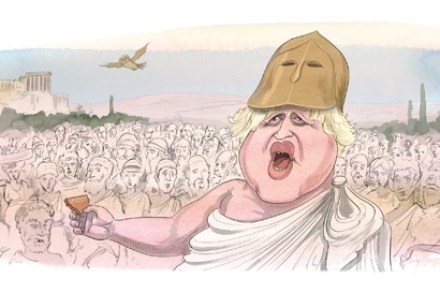
The secrets of London’s Athenian golden age

I had a misspent youth. During the period when most normal adolescents were playing Grand Theft Auto or discovering ten interesting facts about Pamela Anderson, I am afraid that I would take the tube by myself — aged about 13 — and visit the British Museum. I would walk through the cat-headed Egyptians and the cloven-hoofed Babylon-ians and the typewriter-bearded Assyrians, and all the other savage and ludicrous Near Eastern divinities, until I penetrated the innermost and holiest shrine of London’s greatest cultural temple, the Duveen galleries. And there, like so many before and since, I would give thanks to the slightly dim--witted 7th Earl of Elgin.
What it means for your savings if Scotland votes yes

[audioplayer src="http://traffic.libsyn.com/spectator/TheViewFrom22_11_Sept_2014_v4.mp3" title="Fraser Nelson, Tom Holland and Leah McLaren discuss how we can still save the Union" startat=50] Listen [/audioplayer]I bet that until a few days ago you thought the referendum in Scotland was a mildly amusing sideshow. Perhaps you still do. Perhaps you are convinced that the ‘silent majority’ that Better Together are so sure will step up to the plate at the last minute really exist. Perhaps you think that the reasons many people are giving for voting ‘yes’ are so vague that voters will change their mind on the day. Or even if they don’t you might think it is all an irrelevance.

How to Ed-proof your portfolio

It was 2 May 1997. Not only was most of the country celebrating the election of a bright young Kennedy-esque Prime Minister called Tony Blair, so too, perhaps more surprisingly, were the champagne-swilling Thatcherites of the City of London. As the government took office, the FTSE 100 index climbed up to 4,455, and it was to carry on rising over the next few months, reaching 5,193 by the year’s end. Indeed, for much of its first term, Britain’s last Labour government was accompanied by a raging bull market, as the dotcom bubble reached its peak. Will history repeat itself? In May, we may well see another newly elected Labour prime minister, Ed Miliband. Unlike his predecessor Blair, Red Ed seems rather more committed to old-fashioned socialism.

Keeping the flame alive

Most of our independent schools in Great Britain have a religious origin and the campuses of many are dominated by school chapels. The earliest surviving foundations, including Eton and Winchester, contain vestiges of their religious inspiration in their statutes and constitutions. Some of the older grammar schools began life as training places for developing Protestantism, while the older Catholic schools were staffed by the religious orders notably Jesuits and Benedictines. Many of today’s schools have, however, lost their overtly religious character and followed Oxford and Cambridge into a world where academic success and ‘excellence’ are the dominant ideals.

Tough luck, old boys

For a centre-right political party, the Conservatives are oddly obsessed with where people went to school. Michael Gove and Lady Warsi both lamented the number of Old Etonians in influential positions earlier this year. It may not have been coincidence that, within five months, both had moved posts: there remains a potent undercurrent of class tension in today’s Conservative party. The charge sheet is simple. David Cameron has stacked the corridors of power with those who share his black-and-turquoise old school tie. How can it be that British politics has regressed into the chumocracy days of Harold Macmillan? Yet the prominence of Old Etonians today is not a throwback to an era that we thought we’d left behind — it’s a last hurrah.

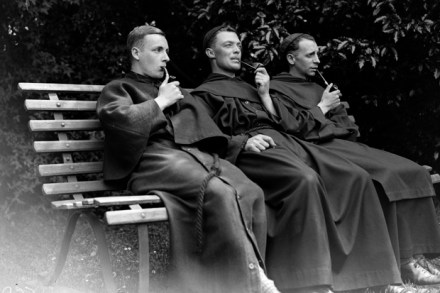
Pipe dreams

The two great regrets of middle age are: ‘I never learnt a language’ and ‘I never learnt an instrument’. One of my regrets is that, because I was a happy-go-lucky sort of chap at school, my music teachers kept giving me heavier and heavier cases to carry. They started me on the trumpet. That was fine; I could hide away in the brass section and camouflage my errors among the better players. But then they moved me to the euphonium. ‘We need one of those, Newton. Get practising.’ I could just about cope with the euphonium. But then came the final call. Your school needs you. The orchestra expects. ‘We need a tuba, and you’re the man!’ I was suddenly armed and dangerous.

Hard times | 4 September 2014

When the late, great Ronald Searle and Geoffrey Willans conspired to create St Trinian’s and Nigel Molesworth, the archetypal English prep school boy, they wanted to evoke an air of -austere, post-war gloom. Molesworth’s school, St Custard’s, was, in his own words, ‘built by a madman in 1836’. For both St Custard’s and St Trinian’s, Searle plumped for a grim, early Gothic Revival style, all inky, glowering crockets and pinnacles. His choice of Gothic was inspired by his wartime service when he was stationed in Kirkcudbright in 1940. There he met two schoolgirls, evacuated from a school called St Trinnean’s, Edinburgh, an OTT exercise in high Scottish Gothic.

It is easy being green

The problem with going green, I’m told, is that it often means spending a great deal of money on lots of equipment that could at any moment be rendered obsolete. When it comes to renewable energy, scepticism abounds. But the outcome of this cynicism is that our efforts to be greener have been incremental at best, and symbolic at worst. Just before I left school seven years ago we were told that all bedrooms were to be fitted with low-energy light bulbs. The school would reduce its carbon footprint a trifle, while also saving a bit of money (or vice versa). I remember thinking at the time that this was less an initiative than a gesture — a head-fake towards social responsibility to soothe their conscience.

History of art needn’t be a subject just for posh public-school girls

When I think back to history lessons at school, the predominant focus was always on war. From the Battle of Hastings to the Battle of Agincourt, the Crusades to Nazi Germany, the curriculum seemed jammed full of stories about aggressive military affairs. Fascinating, but it was a relief to reach sixth form and discover another way to study the past — through a cultural lens, via the history of art. History of art is often viewed derisively in the UK. It’s almost ignored by the state system, yet is offered by many independent schools. Because of this, it’s seen as a ‘posh’ choice, in much the same way classics is. A--level history of art is available at only 17 state secondary schools out of more than 3,000, plus a further 15 sixth-form colleges.

Decline and rise again

Verb says to noun, ‘Would you like to conjugate?’ Noun replies, ‘No, I decline.’ A nice witticism for Latin-lovers brought up on L.A. Wilding’s Latin Course for Schools; but do today’s prep-school Latin pupils have any idea what a conjugation or a declension is? Some do and some don’t, is the answer, and it all depends on which textbook your teacher uses and how much he or she believes in the importance of grammar over the importance of enjoying a story. The story of Latin teaching in this country over the last 130 years has been one of reaction and counter-reaction; and there are signs of a counter-counter-reaction on the way. First, there was Kennedy’s Latin Primer (1888).

Great masters

Frankly, I wasn’t a great success at school — although I like to think it was more a case of peaking at prep school, where I was captain of football, a prefect and even managed to pass Common Entrance, thank you very much. And then it all went downhill. No excuses (plenty actually), but one reason for failing to dazzle at Eton was because my classical tutor cast such a long, dark shadow over me that by the age of 16 all my energies went into disliking him as much as he clearly disliked me. His name was Fred How and he was a bachelor so set in his creaking ways that even the swots and goodie-goodies struggled to find anything pleasant to say about him.

Escape from the hothouse

South Korea’s education system puts us to shame. Last year the BBC tested a group of 15- and 16-year-olds with some questions from a GCSE maths paper; they all finished in half the time allowed, four scored 100 per cent and the other two dropped one mark. It’s the kind of performance most British teachers and parents can only dream of, so at first it’s surprising that a London girls’ school has opened up a branch in South Korea. The North London Collegiate (NLCS) is one of Britain’s top schools, but it still looked like they were going to have a lot of competition on their hands when they chose South Korea for their first international franchise.

Pushing the right buttons

My first memory of a computer is of a hulking Acorn PC that dominated a corner of my primary school classroom. I remember crafting a story about ghosts on the beige keyboard before saving it to a floppy disk, which was filed away by the teacher for safekeeping. That was in 1995, and washing machines now easily outpower that Acorn. Yet it’s not only the gadgets in our schools and colleges that have advanced as tablets, interactive whiteboards and internal mail systems make relics of blackboards and personal planners. From September, Information and Communications Technology classes (ICT) will be replaced with Computing as part of an initiative to teach children how to create their own programs, instead of just learning to use other people’s.

Early editions

‘The bath is still stained pink,’ said Anna, laughing as we reminisced about those halcyon days, now over a decade ago, when she started a school magazine. Anna and I went to Westminster School for sixth form. We’d both come from St Paul’s Girls’ School, where magazines proliferated, and were surprised to discover that Westminster had none except for a rather grand annual put together by the development office, aimed more at Old Westminsters than current pupils. Anna was keen to set something up. It would be called Pink, she decided, after the school colour. This brings us to the bath. A launch party was deemed of paramount importance, so we duly assembled in the basement of Anna’s parents’ house, where she had turned everything pink.

A new way over the wall

Want your sprog to be toughened up on the playing fields of Eton but can’t afford the fees? From September there is an intriguing alternative. You can send him instead to Holyport College, a free school which is opening in the shell of an old special school six miles away. Though the chairman of governors, Simon Dudley, insists his new school is not ‘Eton Lite’, the website offers more than a hint that here is an opportunity to obtain an Eton-standard education for a third of the price, if your child boards, or nothing at all if he doesn’t. ‘Eton College is our sole educational sponsor,’ reads the blurb, ‘and therefore brings its educational and pastoral expertise to Holyport College.

Exams: the great leap forward

GCSEs have already begun to change, and the A-level revolution comes next year. Sophia Martelli considers who benefits from the new rules – and who doesn’t A year from now, the new A-level curriculum will hit sixth-form classrooms; changes to GSCE have already been partly implemented. The exam reforms initiated by Michael Gove are hailed either as ‘much-needed’ or ‘carnage’ depending on who you talk to. Although controversial, most teaching professionals agree that a good sort out of exams is overdue, including Paul Redhead, a former head teacher who now works with the Council for Independent Education. Public exams have been ‘systematically devalued since the 1980s’, according to Dominic Cummings, Gove’s former special adviser.

How Eurosceptics will squeeze Cameron

[audioplayer src="http://traffic.libsyn.com/spectator/TheViewFrom22_4_Sept_2014_v4.mp3" title="Isabel Hardman, Fraser Nelson and James Forsyth discuss the Tory civil war" startat=60] Listen [/audioplayer]Tory backbenchers, who have been happy for months, are once more sunk in gloom, sitting in dejected huddles in the Commons tearoom. William Hague went to gauge the morale of the troops there this week and was told by one MP that the atmosphere was akin to the tail end of 1996; a party waiting for what feels like inevitable defeat. In public and on the news Tories put on a brave face, but in private, it’s grim. But while the Tory leadership has lost the momentum it built up over the past few months, there is one group feeling distinctly perkier.

The Tories are in civil war. If that doesn’t change, they’ll lose

[audioplayer src="http://traffic.libsyn.com/spectator/TheViewFrom22_4_Sept_2014_v4.mp3" title="Isabel Hardman, Fraser Nelson and James Forsyth discuss the Tory civil war" startat=60] Listen [/audioplayer]The general election is now Ed Miliband’s to lose. This is not a controversial statement: the polls say it, the bookmakers say it and in the last week several of David Cameron’s own ministers have come to believe it. The confidence that seemed to envelop the Conservative party before the summer recess has been replaced by a sense of doom. On its own, Douglas Carswell’s defection to Ukip would not be seen as a body blow — but it hammers home the fact that the right is fractured and many Tory voters made the jump long ago.