Michael Karam

Michael Karam is the founder of the news website NowLebanon.

Israel wants to destroy Hezbollah once and for all

At around 2:30 a.m. on March 2, Israel bombed Beirut’s mostly Shia southern suburbs in response to a Hezbollah rocket attack on northern Israel. The road heading into Beirut from South Lebanon and the city’s southern suburbs was jammed with cars filled with Lebanese fleeing further reprisals. Some 52 civilians were killed and 154 injured, a hefty butcher’s bill even in this part of the world. Most Lebanese are happy Hezbollah has been defanged, even if they wish it wasn’t thanks to Israel Hezbollah’s actions were a demonstration of their ongoing support for Iran, but goading Israel was a cataclysmic miscalculation.
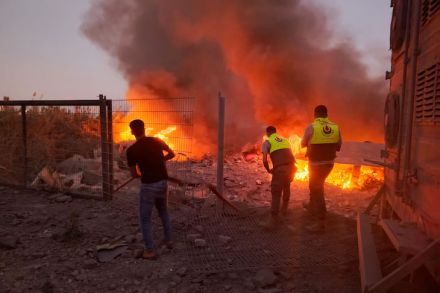
Is this the end for Hezbollah?

From our UK edition

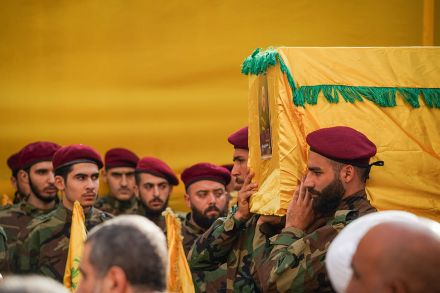
The recent fighting between Israel and Hezbollah is a war that’s not yet officially a war, initiated by a political party without a mandate that takes its orders from Tehran, in support of a Palestinian party that few Lebanese care about. Hezbollah was the jewel in the Mullah’s turban It is a decades-old conflict, an exhausting, deadly stalemate, but this recent escalation could prove to be decisive. There’s a chance Israel could finally deliver a dagger blow to Hezbollah. This would be a staggering achievement because the Iranian-backed Shia militant group controls many, if not all, of the levers of power in Lebanon, and has been a constant irritant to Israel for nearly 40 years. The optics don’t look good for either side.

The Lebanese always return home

From our UK edition

Beirut You might have thought that the threat of the Gaza war spiralling into an all-out regional conflagration, along with breathless travel advice from western governments urging their nationals to leave the country, would have deterred Lebanon’s expats from flying home to celebrate Eid al-Fitr this year. Not one bit. Flights, hotels and restaurants were fully booked despite Iran’s drone strike. The Lebanese know that even if there is fighting (and in South Lebanon, there is on an almost daily basis), if it isn’t on your doorstep, there’s no reason to stop the party. The Lebanese know that even if there is fighting, if it isn’t on your doorstep, there’s no reason to stop the party In any case, the Lebanese always think they have the inside track.

Will Lebanon be dragged into a war with Israel?

From our UK edition

Southern Lebanon In the week following the 7/10 attacks by Hamas, a journalist in Beirut put the question all of Lebanon wanted to ask to the Prime Minister, Najib Mikati: do we have to be dragged into the war with Israel? It was more of a cri de coeur than a question, because the whole country knows the answer and knows that Lebanon has no choice. Hezbollah, the Shia Islamist party and militant group, unofficially controls many, if not most, of the levers of power in Lebanon and it does not answer to the people or the government here. Hezbollah’s leader, the reclusive cleric Hassan Nasrallah, holds no public office and he doesn’t give a stuff about Mikati’s government. He takes orders only from Tehran.

How Lebanon unravelled

From our UK edition

Lebanon will be 100 years old on 1 September. But the joke circulating in Beirut is that the country may not be around for the party. Eye-watering hyper-inflation, not helped by the Covid pandemic, has brought the country to its knees, just as famine and extreme poverty sparked its creation after the end of the Great War. Lebanon eventually won full independence from the French in 1943, and became an impossibly glamorous, multilingual entrepôt with a rare facility for doing business. According to Major General Sir Edward Spears, the British minister to Syria and Lebanon, the country ‘sprang from a far older and higher’ civilisation than the French. Even so, it has always had a tendency towards self-destruction.

Ya Allah!

From our UK edition

Last month Luigi Brugnaro, the mayor of Venice, warned that anyone who yelled Allahu Akbar (‘God is the greatest’) in his city was liable to be shot dead by a police sniper. A bit harsh you might think, but it’s weird how tricky it’s become to use the world’s fifth most spoken language in Europe, let alone invoke the Arabic name for God. Three days after the London Bridge attacks, a trio of Muslim women attacked a female nursery worker on Wanstead High Street in north-east London. One of her colleagues told the Daily Mail they were ‘chanting the Quran, and invoking Allah’.

The Middle East could teach America a few things about ‘terror’

From our UK edition

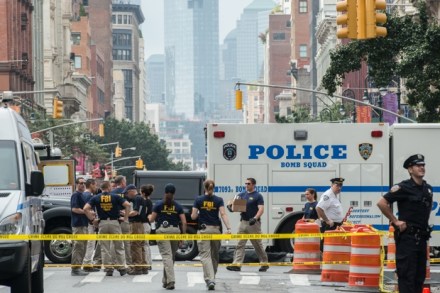
I was a little less than three blocks away on West 26th street when I heard the blast. Twenty-two years of living in Beirut had taught me to wait for the sirens before becoming concerned. And they came, distant at first, and then louder, followed by the clatter of a helicopter. But the New Yorkers enjoying the pop-up food court in Madison Square Park on that balmy Saturday night didn’t appear to be panicking. Neither for that matter was CNN, which was covering the Black Caucus Foundation in Washington, attended by both President Barack Obama and the Democratic presidential nominee Hillary Clinton.

How Lebanon is coping with more than a million Syrian refugees

From our UK edition

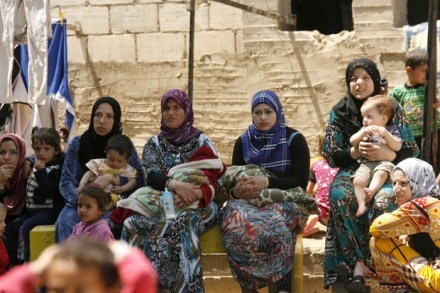
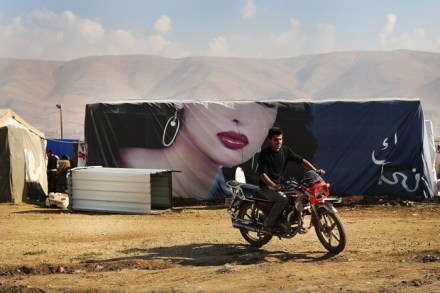
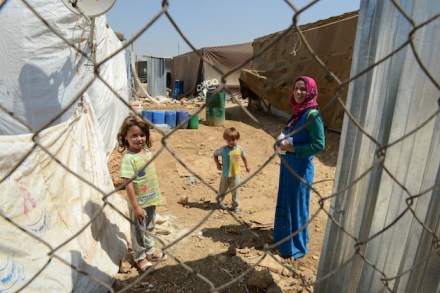
Beirut If any of the Syrian refugees who have made it to the relative safety of Europe have been watching the smash-hit TV show Homeland (season five), they would be baffled by its warped depiction of their compatriots’ plight in Lebanon. Unlike the vast majority of Homeland’s viewers ,they would know there are no government-sanctioned camps guarded by nervy UN soldiers and run from the inside by menacing Hezbollah operatives. This is out-and-out nonsense and insulting to the Lebanese, who have arguably done more than any country to absorb this unfolding human tragedy. For the record, Lebanon, a country a tad bigger than Wales, plays host to around 1.5 million Syrians, a number equivalent to a third of its population.

Why I’ve joined Lebanon’s exodus

From our UK edition

In early autumn I was on a train travelling from London to Brighton, on the final leg of a journey that began earlier that day in Beirut, and which was taking me back to live in Britain for the first time in 22 years. It was late Friday afternoon and the man opposite me was droning into his mobile phone. He had not drawn breath since he joined at Clapham Junction except to take a swig from one of three bottles of Black Sheep beer he had lined up on the table. Friday night clearly couldn’t start soon enough. Back then, the Islamic State had just begun to pick at the edges of Lebanon. A force of 6,000 fighters from IS and the Nusra Front were scrapping with units of the Lebanese army in and around the Bekaa Valley border town of Arsal.

Lebanon is falling apart on its 70th birthday

From our UK edition

It's Lebanon's birthday this month -- 70 years since independence -- but no one's really in the mood to party. Our first birthday present last week came in the form of two suicide bombers belonging to the Al Qaeda-affiliated Abdullah Azzam Brigades who detonated their payloads at the Iranian embassy in Beirut killing 26 people.

When Syria sneezes, Lebanon catches a cold

From our UK edition

  Beirut News that the Syrian regime has agreed to hand in its arsenal of chemical weapons is a great relief to Lebanon. For the past few weeks we have been wandering around like inmates on death row, fearing that a US-led strike would ignite a potentially apocalyptic conflict between Hezbollah and Israel or at the very least provoke a prolonged internal Shia-Sunni terror campaign. This was no idle fear. The salvos fired at the end of August brought back memories of the darkest days of the civil war. But Lebanon is still not in the clear, especially as a framework for handing over the chemical weapons still needs to be thrashed out.

First Syria, then Lebanon

From our UK edition

  Beirut On New Year’s Eve 2011, I asked a senior Swedish diplomat, who had just crossed over from Damascus and was ready to see in the New Year Beirut-style, how long he gave Bashar al-Assad as Syrian president. ‘Longer than we think, but not as long as he thinks,’ he said with a wink. That was still in the days of what we naively called the Arab Awakening; we Lebanese assumed we could sit back and wait for Syria’s hated system to fall. But the weeks have turned to years, and not only is Assad still in place, he might just be prevailing. Lebanon, meanwhile, is falling apart.

Don’t trust Hezbollah — whatever Terry Waite says

From our UK edition

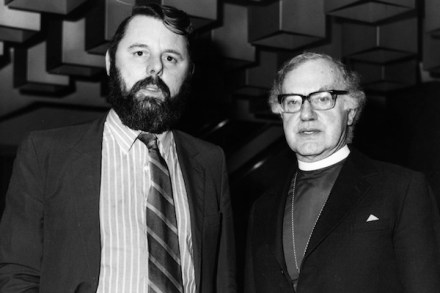
Earlier this month, while he was in Lebanon to highlight the plight of Christians in the Middle East, in particular those fleeing the fighting in neighboring Syria, Terry Waite, the former special envoy to the Archbishop of Canterbury, kissed and made up with Hezbollah, the militant Shia group that held him captive in Lebanon between 1987 and 1991. One probably shouldn’t blame Waite, now 73, for wanting to exorcise any residual demons of his 1,763-day nightmare, but in doing so he unwittingly gave Hezbollah dangerous and unwarranted legitimacy.

Leaving Lebanon

From our UK edition

Beirut is usually a party town, capital of the Middle East’s most glamorous country where people from all over the region come to kick back — but this year’s been a little different. Kidnappings, bank robberies, roadblocks and gun battles — no wonder the free-spending and normally blasé Gulf Arabs have stayed at home, leaving us Lebanese to consider not only a decimated economy, but also the very real prospect of a descent into another civil conflict. Which is why finally, after 20 years, I’m leaving. My Lebanese adventure, during which I married, had children, lived through three wars, a popular revolution and an attempted coup, has come to an end.