Features

An alternative history

On 20 July, Germany’s political elite recalls the day in 1944 when Colonel Claus Schenk Count von Stauffenberg exploded a bomb intended to kill Hitler, and ran an abortive coup which ended in his own death and that of other plotters. To mark the anniversary, a military band in Berlin will thump out ‘Prussia’s Glory’, whereupon Defence Minister Ursula von der Leyen will urge massed recruits to emulate the rebels’ ethics. Many of us know these events from the 2008 film Valkyrie with Tom Cruise as Stauffenberg and Kenneth Branagh as co-conspirator General Henning von Tresckow.

The rehabilitation of Assad

Amid the confusion and the almost deafening cries of treachery and collusion over Donald Trump’s relations with Russia, few noticed the most tangible outcome of this week’s Helsinki summit. In the lead-up to his face-to-face talk with Vladimir Putin, senior US and Russian diplomats — in close coordination with leaders from mutual ally Israel — brokered a deal among all the warring parties (bar the Islamist terrorists) finally to end the devastating seven-year Syrian civil war. As is often the case with Trump, the hype tends to drown out the message but it was there for anyone paying close enough attention. The US, Russians and Israelis have agreed on a solution to Syria. His name is Bashar al-Assad.

Jean-Claude drunker

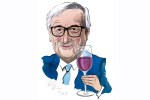
The atmosphere in Brussels has become, of late, reminiscent of the late Brezhnev era. We have a political system run by a bureaucratic apparatus which — just like the former USSR — serves to conceal important evidence. Especially when it comes to the health of its supreme leader, Jean-Claude Juncker. At the Nato summit gala dinner last week, videos emerged showing Juncker unable to climb the few steps leading to the podium. He hesitates at the bottom before being grabbed by the very sturdy Ukrainian Petro Poroshenko. He is then held up during the ceremony. Afterwards Juncker — who is only 63, hardly an old man — staggers and wobbles away, propped up by Mark Rutte and António Costa, prime ministers of the Netherlands and Portugal.

Losing streak

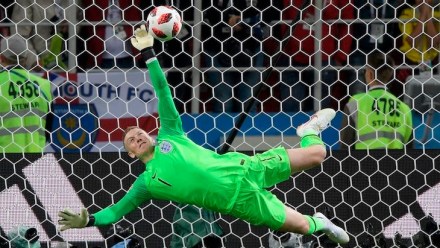
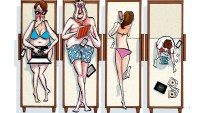
England didn’t just lose the World Cup. When it comes to male nudity, the country has also lost its sense of shame. Everywhere — on the Tube, in buses, on the streets, in the pub — men are striding around topless. On Sunday in north Oxford I saw a man skiing topless, on roller-skis, with poles, down the Banbury Road. It’s as if Adam and Eve never ate from the tree of knowledge. Yes, it’s very hot. And yes, in the summer of 1976, men took their tops off but only in particular situations: on the beach, on a building site or in their back garden. I must admit that I cycle with my shirt open in this heat. But because I’m moving at speed, no one is exposed to my mottled flesh for long.

Unhappy returns

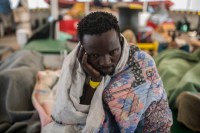
What to do about illegal migration from Africa into Europe? The EU’s repatriation programme seems at first like a great idea. Rather than just watching as desperate people risk their lives in the Med, we persuade them to go back home and help them to remake their lives there. The EU Emergency Trust Fund for Africa has coughed up £125 million for the scheme and about 25,000 migrants have already taken part, most heading home to west and central Africa. The poster boy of the programme is Smart Akawa. Two years ago, Akawa was flown by the EU back to his native Sierra Leone from a detention centre in Libya. With a modest EU grant, he has set up his own street-cleaning business, employing 14 other returnees to give garbage-strewn Freetown a much-needed scrub.

Brexit in a spin

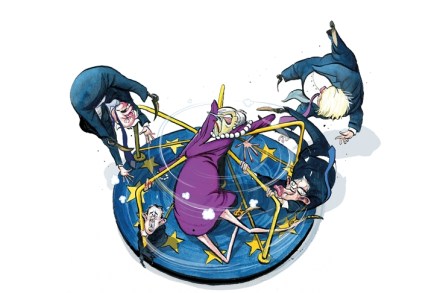
‘The numbers just don’t stack up,’ one cabinet minister wearily declared to me on Monday night. This is, perhaps, the single most important fact in British politics today: Theresa May does not currently have the votes to pass her Brexit plan even if she could get the European Union to accept it. Boris Johnson and David Davis’s resignations mean that it won’t just be Jacob Rees-Mogg and a dozen ultras voting against Theresa May’s Brexit deal, but a far larger group. Further proof of this came on Tuesday, when two of the party’s vice-chairs — Ben Bradley and Maria Caulfield — resigned so that they could oppose the deal. Tellingly, neither one would have been on anyone’s list of Brexit obsessives.

Not so fast

I’m losing my patience. Not so long ago I’d happily wait ten minutes for a bus, or even whole days for the next instalment of my favourite television programme. It didn’t seem to bother me in the slightest that my holiday photos would not be seen until I’d picked them up from the chemist. I even went to the library to get information from an encyclopaedia. Life, in short, used to be a waiting game, and patience was not just a virtue but a habit. Now I wonder how I survived in a world without Google Maps, Uber or smartphones with in-built cameras. The whole direction and purpose of modern life, at least on the surface and for those well-off enough to benefit, is to make everything frictionless, personalised, easy. Click a button, a taxi turns up to your house.

Dogs of war

When I was a child in the 1950s it was unheard of for someone to be killed by a dog. Dogs were rarely killed by other dogs. By the early 1990s, things were different. Dog-fighting made a comeback and the fad was for the ‘weapon’ dog, promoted via American gangsta rap. Staffordshire bull terriers were being bred in large numbers again and other fighting breeds, previously unheard of here, were brought into this country. In 1991, concerned about attacks, the government passed the Dangerous Dogs Act (DDA), which banned the American pit bull terrier as well as the lesser-known dogo Argentino, fila Brasileiro and Japanese tosa, all of fighting origins.

Happy is England

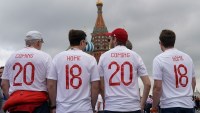
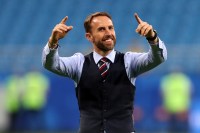
Buying fish at Cambridge market on Sunday, I found myself chatting to the fishmonger about the prospects for England in the World Cup. Another customer, a middle-class woman, joined in. None of us, I think, was a habitual fan. But we found ourselves enjoying a few minutes of spontaneous shared pleasure. It was not mere satisfaction in winning, but shared pride in a team of nice young men, seemingly unassuming, modest, sporting, decent. English, we might have said (though we didn’t). But English as we would like to think it should be — perhaps the Englishness of another time. A once and future Englishness, let us hope. It’s not every day that one has this un-sought sense of shared ‘identity’.

Gimme shelter

How we love our homes: we make them cosy and secure, protected from the outside world, defended by locks, bolts and burglar alarms. But we haven’t always had our own private dwellings, and under the invasive influence of the internet, home, as we’ve come to understand it, may well soon be a thing of the past. In early medieval times, a home was often just a basic tenement, a shelter shared with cattle, owned by an employer. As prosperity spread, so a sense of the private developed. Common areas subdivided into individual ones; pieces of furniture (chests, bookcases, beds, wardrobes) marked areas for particular activities and specific people. At the same time, a sense of home as a place of refuge started to take hold.

You can say that

‘There. I said it.’ That phrase, and the attitude it strikes, says something pretty specific. It doesn’t just say: here’s what I think. It says: ‘Here’s what I think, and, you know what? It’s what nobody except me dares to say in public.’ It says: I’m brave. It says: I speak truth to power. It says: here I am on the battlements. It also says: I’m a grade-A chocolate-coated plonker. And though most people are too fly these days, too aware of the lurking threat of Craig Brown, to use that form of words, there’s a good deal of there-I-said-it-ism about these days. In particular, when it comes to the issue of ‘free speech’.

Keep off the grass

The autumn squill, Scilla autumnalis, has bright bluebell-coloured starry flowers. It is rare in the British Isles. It is also tiny, so small that most people could easily clodhop straight over it without noticing how lovely it is. I nearly did just that when I went looking for it in Surrey last summer until a kindly local botanist helped me find it flowering away on a grass verge. I went home pleased to have met such a minutely pretty wild flower. But a few days later, the kindly local botanist got in touch again, distraught. The local council had strimmed the verge where the autumn squills grew, and they were no more.

False start | 5 July 2018

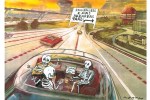
I was worried that going to the autonomous vehicle exhibition in Stuttgart would be tantamount to an atheist walking into St Peter’s while the Pope was conducting a mass. There is something religious about the fervour with which adherents to the driverless credo practise their faith and promise us a new kingdom. Their proselytising has indeed convinced many. Politicians are making outlandish statements, such as Jesse Norman’s two weeks ago, that ‘Our entire use of roads is to be revolutionised by autonomous vehicles’, and pouring large sums — a promised £180 million so far — into bizarre research projects such as the development of strange robot cars slower than a Reliant Robin and allowed only on pavements in Milton Keynes.

Football, not rugby, is now the gentleman’s game

Most British sports fans are familiar with the maxim that ‘football is a game for gentlemen played by hooligans, and rugby union is a game for hooligans played by gentlemen’. It was coined more than half a century ago by Arthur Tedder, then chancellor of Cambridge University, and for decades the saying stood the test of time: George Best and Gareth Edwards, Paul Gascoigne and Gavin Hastings, John Terry and Jonny Wilkinson. I rest my case. But something strange has happened in the past season or two. This current crop of footballers, particularly the ones wearing England shirts, are polite and presentable.

The return of walls

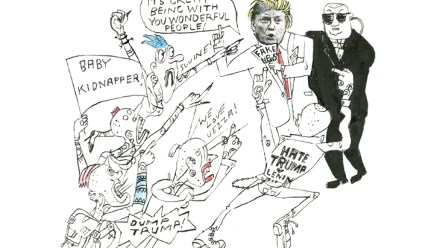
What kind of a president would build a wall to keep out families dreaming of a better life? It’s a question that has been asked world over, especially after the outrage last week over migrant children at the American border. Donald Trump’s argument, one which his supporters agree with, is that the need to split parents from children at the border strengthens his case for a hardline immigration policy. Failure to patrol the border, he says, encourages tens of thousands to cross it illegally — with heartbreaking results. His opponents think he is guilty, and that his wall is a symbol of America closing in on itself. In fact, building a wall would make Trump the norm, not the exception.

Angela’s ashes

‘This is not about whether Mrs Merkel stays as chancellor next week or not,’ said Xavier Bettel, the Prime Minister of Luxembourg, as he came out of an emergency summit on immigration last weekend. He was joking. That was exactly what the meeting had been about, and everybody there knew it. The summit was Operation Save Mutti. Their mission: to stop Merkel’s government collapsing by thrashing out a tough stance on immigration to assuage her critics. It’s quite a turnaround. Once, Merkel was queen of Europe, now she’s a beggar. Suddenly, European politics has changed beyond recognition. Merkel may, by now, regret standing for re-election last year.

Dr Spacelove

Americans traumatised by their current president could be forgiven for thinking that his demand for a ‘space force’ was about protecting the country from aliens. Aliens, that is, of extraterrestrial persuasion, not the ones currently hurling themselves against the southern border. What, really, is implausible these days? As baseball savant Yogi Berra said when told that a Jewish woman had been elected mayor of Dublin: ‘Only in America.’ But as it turned out, Donald Trump’s demand to have a new sixth branch of the US armed services is about protecting America’s satellites and cyber capabilities. A worthy goal. Per the President’s custom, he didn’t inform the White House that he was going to issue his decree.