Tim Marshall

Greenland: why Europe needs to ‘grow up’ | with Tim Marshall

From our UK edition

15 min listen

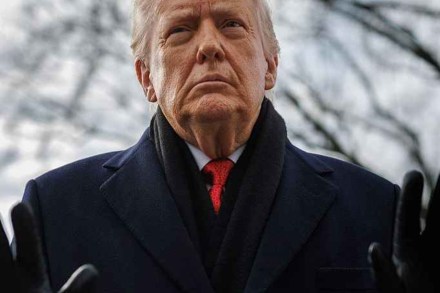
Donald Trump has thrown another diplomatic hand grenade. This weekend, the President threatened sweeping tariffs on countries backing Greenland’s independence – a move that has rattled European capitals and reignited questions about America’s global strategy. Is this about Arctic security, rare earth minerals, or something more personal? As tensions rise, how should Britain respond? Can diplomacy defuse Trump’s latest escalation, or does this mark a deeper shift in US–European relations – and the future of Nato itself? James Heale speaks to Tim Shipman and Tim Marshall, foreign affairs analyst and author of Prisoners of Geography. Produced by Megan McElroy and Oscar Edmondson.
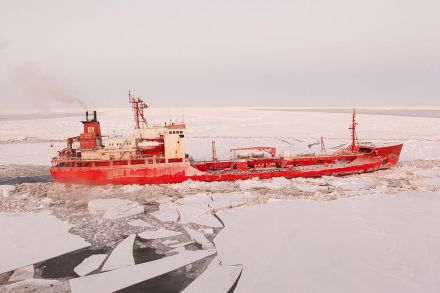
Greenland: why Europe needs to 'grow up' | with Tim Marshall

Trump, Putin, and the hidden power of the Bering Strait

Ahead of the Trump-Putin summit in Alaska to discuss Ukraine, President Trump said there would be “some land swapping.” He waxed lyrical about “prime real estate.” The summit’s location is a good example of land swaps and prime real estate and is in a region of growing geopolitical importance.   In 1867 Russia "swapped" Alaska for $7.2 million in a deal mocked as Seward’s Folly after Secretary of State William H. Seward who negotiated the exchange. It turned out to be a snip. Commercially viable oil was discovered three decades later and has brought in more than $180 billion in revenue since Alaska became a state in 1959.

Trump Putin Alaska Bering Strait

Wannabes: are any of them ready?

From our UK edition

36 min listen

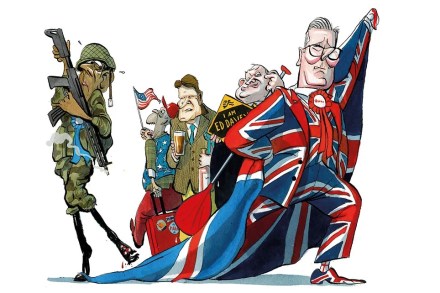
On this week's Edition: Wannabes - are any of them ready? Our cover piece takes a look at the state of the parties a week into the UK general election campaign. The election announcement took everyone by surprise, including Tory MPs, so what’s been the fallout since? To provide the latest analysis, The Spectator’s political editor Katy Balls joins the podcast (2:00). Then: Angus Colwell reports on how the election is playing out on social media, and the increasing role of the political ‘spinfluencer’. These accounts have millions of likes, but how influential could they be during the election? Alongside Angus, Harry Boeken, aka @thechampagne_socialist on TikTok, joins us to share their thoughts on who is winning the social media war (15:08).

What Putin’s Russia fears most of all

From our UK edition

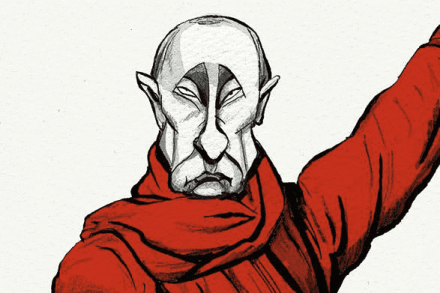
When Vladimir Putin called the collapse of the Soviet Union 'a major geopolitical disaster of the century' he wasn't channelling his inner Marxist-Leninist. Russia's leader is not interested in remaking the Soviet empire, which finally fell apart 30 years ago today, on Boxing Day 1991. But he does want to roll back the losses of the post Cold War era, expand Russia’s sphere of influence, and build a buffer zone around the homeland. It's this that explains Russian aggression on the borders of Ukraine. While western observers might like to paint this as mindless sabre-rattling, the reality is that this massing of troops is driven by fear – and the memories of past encroachments onto Russian soil. Understanding this is key to realising what Putin is up to.

The return of walls

From our UK edition

What kind of a president would build a wall to keep out families dreaming of a better life? It’s a question that has been asked world over, especially after the outrage last week over migrant children at the American border. Donald Trump’s argument, one which his supporters agree with, is that the need to split parents from children at the border strengthens his case for a hardline immigration policy. Failure to patrol the border, he says, encourages tens of thousands to cross it illegally — with heartbreaking results. His opponents think he is guilty, and that his wall is a symbol of America closing in on itself. In fact, building a wall would make Trump the norm, not the exception.

‘Arab Spring’ is a misnomer

From our UK edition

What do you do when confronted with a prejudice so strong it takes your breath away? In my case, I did what was immediately necessary. I took a deep breath to replenish lost oxygen, and moved on. It wasn't the time or place to take on this particularly ugly example of intolerance; but it is an intolerance which needs to recognised. I was giving a lecture at a charity that trains journalists from around the world. Some are already making their way in the industry and are expected to do well. I was talking about my theory that the term 'Arab Spring' actually clouds our understanding of what has been happening in the region over the past 18 months.  From the Egyptian coup d'etat onwards, I've argued that calling these events the 'Arab Spring' automatically frames them as positive.