Features

Does aid help?

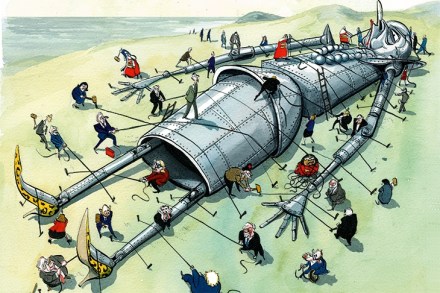
What a scandal for our times. Oxfam, that upholder of modern-day virtue, unassailable in its righteousness, buried for seven years that its aid workers exploited young girls. The men abused their power to have sex with desperate victims of the Haiti earthquake — the very people they were supposed to protect. Michelle Russell of the Charity Commission is clear about the deception. ‘We were categorically told by Oxfam; there were no allegations of abuse of beneficiaries. We are very angry and cross about this.’ Nor was this a one-off. Helen Evans, the charity’s global head of safeguarding, begged senior staff, ministers and the Department for International Development to act.

Keep the peace

Virgin East Coast, reneging on its franchise, is not in anyone’s good books at the moment, but since it is the only direct service available from Newcastle upon Tyne to London, many in the north-east have no option but to use it. The service in my experience is pretty good, and even better when it is possible to book well ahead and thereby, with use of the Old Gits’ railcard, treat oneself to a seriously cheap first-class advanced ticket. This offers excellent value for money, the food and drink far better than that on the West Coast equivalent. But the icing on the cherry is the quiet coach.

Spies and lies

There are two Trump-Russia ‘conspiracies’. In one, the US President is bought or blackmailed by the Kremlin. In the other, the FBI and the intelligences agencies — the ‘deep state’ — commit a monstrous abuse of power to try to overturn the election result. The first conspiracy is described in the ‘dossier’ written by a former British intelligence officer, Christopher Steele; the second, in a series of memos and leaks over the past week, from Congressional Republicans defending Donald Trump. They accuse Steele of setting out to destroy Trump for money. They want to see him prosecuted for ‘lying’ to the FBI about his contacts with journalists.

Our best weapon

According to the latest recorded crime figures in England and Wales, there has been a steep rise in violence. Knife offences are up by 21 per cent in the year to September 2017; in London alone the increase is 30.2 per cent — that’s 13,715 incidents. How should police deal with this disturbing trend? One view is that they need to target likely offenders, especially through an increase in the use of stop and search. However, this has been resisted by human-rights and anti-racism campaigners, who regard the use of such powers as heavy-handed and intrusive. Tottenham MP David Lammy has been particularly vocal, calling stop and search ‘inherently unfair’ because it is used disproportionately to target BME people.

Living in fear

January was a particularly violent month in Sweden. A 63-year-old man was killed in Stockholm by a hand grenade lying in the street. A Dutch exchange student was hit by a stray bullet during an execution-style killing at a pizza restaurant in Uppsala. In Gothenburg, a hand grenade was thrown into a flat and exploded in the kitchen — the same predominantly immigrant-populated suburb where an eight-year-old British boy was killed in a grenade attack less than two years ago. In Malmö, a grenade was tossed at a police station and exploded outside. So it has not, so far, been a very happy new year. For Swedes, this has become a familiar theme. Gun violence is on the rise, with daylight shootings and without regard for bystanders.

Add dwarf to cart

You’re planning a party. You’ve hired the vaults of a former bank, Le Caprice is doing the catering, and a celebrity DJ will round things off on the dance floor — but you want that little bit extra to give your fashionable, jaded guests something to remember. What about a dwarf? It’s a curious fact that even people who think of themselves as modern and caring feel quite comfortable laughing at dwarfs. Type the words ‘dwarf’ and ‘rent’ into a search engine and you’ll be amazed at the number of websites offering to ‘supply a little someone’ for every occasion. Just click ‘dwarf’ and ‘add to cart’.

17 reasons to love Brexit

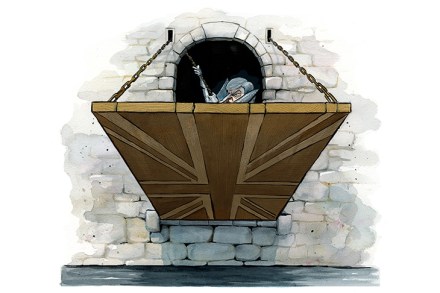
‘But what are you going to do with the powers?’ the minister asked, while I negotiated devolution of powers to London when Boris was mayor. The government wouldn’t grant powers unless we explained how we would use them. And that is what is missing in the Brexit non-debate. We are ‘taking back control’ — but we haven’t really thought what we will do with that control once we have it. It is true there has been discussion of trade deals, transforming the Common Agricultural Policy and the colour of our passports. But if that was all we could do, even most Brexiteers wouldn’t have considered it worth it. So, what could we do once we Brexit? Well actually, given how extensive EU law is, an awful lot.

A very minor prophet

Now that I seem to have become a prophet of doom, I wonder whether I should have been a guru instead. Doom doesn’t sell. Bookshops hide my books in back rooms. My recorded harangues and TV appearances reach a few thousand dedicated YouTube enthusiasts. But Dr Jordan B. Peterson, supposedly as reactionary as I am, speaks to millions. His new book 12 Rules for Life: An Antidote to Chaos adorns the front table of every Waterstones. Annoyingly, friends of mine recommend his lectures to me, people on Twitter tell me incessantly that I ‘must’ explore his work. They become positively rude if I express reluctance. How has he done this? Is he a cult? Should I too be a cult? Is it the way to reach minds otherwise closed to conservative thought?

Crisis of conscience

In 1989, the year Soviet communism collapsed, John O’Sullivan, Margaret Thatcher’s former speechwriter, gave the world O’Sullivan’s First Law of Politics. ‘All organisations that are not actually right wing,’ he pronounced, ‘will over time become left wing.’ No one who watched Amnesty International’s descent from austere principle to cultural relativism can deny he spoke with a little truth. Yet if you listened carefully, you also caught notes of self-satisfaction and self-regard. Subversives corrupt impartial organisations, O’Sullivan continued. They rig the system and impose their prejudices against ‘private profit, business, making money, the current organisation of society and, by extension, the Western world’.

The man who wouldn’t be president

Boris Titov is running to be president of Russia, but he’s eager to talk himself out of the job. ‘I am not a good politician,’ he says, over breakfast at the Lanesborough hotel in Knightsbridge. ‘To be a president means you need to be wise, a big politician like Thatcher, Deng Xiaoping, Lee Kuan Yew. Russia needs a tough politician in the presidential chair and I am not that man.’ Titov knows that on 18 March, Vladimir Putin, the toughest politician of our age, will be re-elected as Russia’s Supreme Commander-in-Chief. ‘Everybody understands that,’ he says. ‘We are not stupid. I have common sense.’ Which prompts the question: why run?

MenToo

These are tough times for what I call the #MeToo Men — those white, liberal, high-minded men who pride themselves on being good feminists. Disgusted with Trump and horrified by Harvey, they want to show solidarity and be good allies to the women of the #MeToo and Time’s Up movements. So they wear their feminist hearts on their sleeves and their Time’s Up pins in their lapels — and they wear them with pride. But pride comes before the fall, especially if you try to parade your feminist credentials in public. Just ask actor James Franco and comedian Aziz Ansari. After appearing at the recent Golden Globe awards, both of these #MeToo Men were spotted sporting Time’s Up pins and ended up being denounced for sexual misconduct. Poor Franco.

Inside out

‘I murder people!’ says Elanger matter-of-factly in response to my question about what he does for a living. From the comfort of my home in the UK, I have managed to get in touch, through contacts of contacts on Facebook, with someone serving 19 years in prison for double murder in Venezuela. The country has some of the most notorious jails in the world. Inside one of them, Elanger has got hold of a Samsung Galaxy S5 Neo. Between 2010 and 2014, I lived in a student city called Mérida in the Venezuelan Andes. It is a beautiful old colonial town and was a fun place, full of bars and discos.

A robot to love

‘I gotta be me,’ Sammy Davis Jr. croons as the android Dolores Abernathy (Evan Rachel Wood) steadies her horse, stands up on her stirrups, takes aim with her Winchester, and picks off her human masters one by one. The trailer’s out at last and the futuristic TV series Westworld is set to return in the spring. It’s a prescient show, but not in the ways you might expect. It’s not about robot domination. Westworld is about an uprising of pleasure cyborgs in a futuristic resort. It is, for all its gunplay, about love. And that makes it a very timely show indeed. In the real world, robots are actually being designed to love us — to fill traditional caring roles for which we have neither the time, energy, nor resources.

A new Europe | 25 January 2018

The occasion was a central European conference on the subversive disinformation campaigns of Putin’s Russia (which, incidentally, are real, subtle, and potentially effective). The speaker was an American warning that the central European democracies were in imminent danger of succumbing to the lures of authoritarian populism, even of abandoning democracy itself, under this influence. He cited the probable election of the media billionaire Andrej Babis as prime minister in Czech elections as one sign of this democratic collapse. A heavy sigh came from a European participant, standing next to me: ‘Why do Americans exaggerate so?

The mess in Syria is putting America’s credibility on the line

 Beirut ‘If I had a world of my own, everything would be nonsense,’ said Alice. ‘Nothing would be what it is because everything would be what it isn’t. And contrary wise, what is, it wouldn’t be. And what it wouldn’t be, it would. You see?’ For the United States, and for the rest of us, Lewis Carroll is as good a guide as any to what is happening in northern Syria right now. Turkey — America’s Nato ally — has sent tanks rolling across the border to attack the Kurds, America’s ally against Isis. Thus the United States finds itself supporting both sides in the same war. You see? Some wit in Turkey’s defence ministry has named the offensive ‘Operation Olive Branch’.

Admission of failure

I am in a good position to report from the NHS frontline, having been in hospital with pneumonia for just over a week from 28 December. I was admitted following an early evening visit from a district nurse to the home I share with my younger daughter, her husband and their three children. The nurse rang A&E to advise them of my impending arrival but warned us that there was a four-hour wait for an ambulance. My daughter therefore decided to drive me in, and we arrived at a packed casualty unit. I was desperate for oxygen and my daughter begged at the reception desk for me to be triaged to access some, with no success. At 11.30 p.m. I was finally examined and hooked up to an oxygen supply. I was found a bed in the admissions ward at 4 a.m., in an atmosphere reminiscent of a war zone.

A huff to the music of time

You’re in the index, but not in the book. This ghostly sensation has been my experience since 1990 after commissioning Auberon Waugh to review Anthony Powell’s Miscellaneous Verdicts. Waugh’s verdict appeared in the Sunday Telegraph on 20 May that year. Next morning, Powell resigned in a celebrated huff from the sister paper, of which I happened to be literary editor. When, seven years later, Powell published his Journals, I wanted to know how he dealt with this incident which had caused acute distress. The index directed me to page 40, yet my name wasn’t there. Nor any entry for 20 May 1990; nor one for Auberon Waugh, as promised, on page 49. The absence hinted that lawyers may have been at work.