Features

The tiger and me

I am here in India looking for tigers, and am struck by the way my fellow human beings respond to their encounters —what they want from the whole tiger experience. It is a privilege to see these animals in the wild, and believe me, you can easily fail. Years ago I spent days tracking them at another park, and though the gamekeepers kept up a plucky commentary — pointing to scratches on trees and snapped grass stems that proved ‘tiger was here’ — we saw neither hide nor hair. Here at Ranthambore in Rajasthan, however, it is another story.

City slacker

According to people at City Hall, Sadiq Khan writes some of his own press releases. I can believe it: they’ve certainly become a lot more excitable since he took over. I like to imagine the Mayor of London, late at night, combing the thesaurus for fresh superlatives to bugle his ‘unprecedented programme of far-reaching improvements’ for the taxi trade (allowing black cabs in more bus lanes) or his ‘bold package of measures’ to revive street markets (creating a London Markets Board and an interactive map). One release even panted that Khan had ‘personally scrutinised’ the New Year’s Eve fireworks display ‘to make the acclaimed event the most exciting yet’.

The grand tourist trap

Last week, I was in the Florence Baptistery by 8.30 a.m. That used to be early enough to avoid the crowds and admire the Baptistery’s east doors by Ghiberti — the Gates of Paradise, as Michel-angelo called them. No longer. As I stared at the 13th-century mosaics in the apse and Donatello and Michelozzo’s tomb of Antipope John XXIII, a group of bored Italian teenagers started hugging each other and gossiping on the front pew next to me. It was the same all over town. In the Piazza della Signoria, tourists flocked round the copy of Michelangelo’s David at 8 a.m. Next door, they were queuing to see the Botticellis at the Uffizi before the gallery opened at 8.15. And this was in early spring, long before the mass tourism of summer.

Macron’s battles

The honeymoon is over for Emmanuel Macron. His first 11 months in office have been something of a breeze — defined by economic growth, international approval and museum openings in the Middle East. But France’s youthful President is gearing up for months of domestic hostility. ‘The war of attrition’ was the headline in Tuesday’s Le Parisien. Alongside this stark declaration was a photograph of one of the President’s enemies, a prominent figure in CGT, the hard-left trade union. Burly, bearded and belligerent, Laurent Brun, head of the union’s railway section, vowed intransigence in the three-month rolling railway strike that started this week. Macron is as determined as the strikers and appears confident that victory will be his.

The democracy delusion

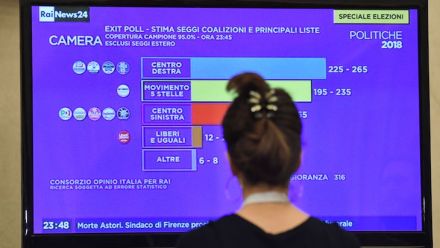
Andrés Sepúlveda sleeps behind bombproof doors in a maximum-security prison in central Bogota, Colombia. When travelling to judicial hearings or to meet prosecutors, he is accompanied by a caravan of armed guards with serious firepower. As they move at high speed through the capital, the motorcade uses sophisticated equipment to jam mobile phones to lower the risk of a coordinated assassination attempt. Sepúlveda is one of the world’s most notorious election-rigging specialists. Now that he has been caught and put in jail, he is helping atone for his crimes by explaining how he fixed elections — and the people he used to work with want him dead. But Sepúlveda isn’t the only specialist in this field.

A tale of two Sarahs

If you’re looking for a snapshot of the state of global Christianity today, a good place to start would be by looking at two violently contrasting Sarahs: Bishop Sarah, and Cardinal Sarah. One is Anglican, the other Catholic; one white, the other black; one bland, the other terrifying. Both are tipped to be leaders of their respective churches: Bishop Sarah as a future archbishop of Canterbury; Cardinal Sarah as a possible pope. I wonder which of them Jesus would prefer to be stuck on a desert island with. Sarah Mullally, the Bishop of London--elect, comes across as about the most upbeat, smiley person you could hope to meet.

The Corbynasties

It took a protest of Jews in Westminster for Jeremy Corbyn to own up to the Labour party’s problem with anti-Semitism. It ‘has caused pain and hurt to Jewish members of our party and to the wider Jewish community in Britain,’ he said — an admission that has been a very long time coming. But among Corbyn’s cultish young followers, the apology was met with a shrug. ‘Problem? What problem?’ This I know, because I’m (roughly) a Labour supporter and have lots of Corbyn--supporting friends. And for Corbynites of my age (early twenties), the whole issue remains just another attempt to delegitimise Corbyn’s bid to become prime minister.

Stand up for Muslims

Anti-Christian persecution, for so long a great untold story, has started to gain the world’s attention. But the suffering of Christian communities, from Syria to Nigeria to China, is part of an even broader phenomenon. Religious conflict is on the rise across the globe, with ancient tensions being raised by new political methods. And in many countries — Sri Lanka, India, the Central African Republic and elsewhere — it’s Muslims who have the most reason to fear violence. In Burma, they may even have been victims of genocide. That, at any rate, is what UN officials are trying to investigate after a wave of brutality which has forced 700,000 Rohingya Muslims to flee the coastal region of Rakhine State since last August.

Overdosed

We have become a nation of sad pill-poppers. The British, once Churchill’s ‘lion-hearted nation’, are now among the most depressed people in the developed world. The UK ranks joint seventh out of 25 countries, with double the rates of Poland, Estonia and the Slovak Republic. According to the Children’s Society, English children are more miserable than those in 13 other countries such as Ethiopia and Algeria — despite the widespread introduction of ‘wellbeing’ lessons. One in six workers in England experiences ‘symptoms’ of mental illness, and around 300,000 people leave their jobs every year because of them. The cost to the economy is put at up to £99 billion. And the lower we plummet, the more antidepressants we take.

Big data is watching you

From the outside it all looked haphazard and frenzied. A campaign that was skidding from scandal to crisis on its way to total defeat. That’s not how it felt inside the ‘Project Alamo’ offices in San Antonio, Texas where Trump’s digital division — led by Brad Parscale, who’d worked previously with Trump’s estate division setting up websites — was running one of the most sophisticated data-led election campaigns ever. Once Trump’s nomination was secured, the Republican Party heavyweights moved in, and so did seconded staff from Facebook and Google, there to help their well-paying clients best use their platforms to reach voters.

Witness to an extinction

   Laikipia, Kenya   Before vets put him down in Kenya this week, I attended the deathbed of Sudan, the world’s last male northern white rhinoceros, to observe up close what extinction looks like. Like a king he lay on his side, all 2,800 kilos of him. For millennia, his species had been one of the largest of land mammals. At the grand old age of 45, his back legs had given out, then he had developed a nasty lesion. Finally his vast grey bulk became covered with what looked like bedsores. I expected Sudan’s hide to be rough and petrified. I thought of Kipling’s rhinoceros, bad-tempered on account of the crumbs hidden inside his skin by the Parsee on the Altogether Uninhabited Island in the Red Sea. To my surprise, Sudan was soft to pat and stroke.

The big fat truth

Sofie Hagen is a young Danish comic I admire. I didn’t see her most recent show, Dead Baby Frog, but I saw her win the best newcomer award at Edinburgh in 2015 and I was happy for her. I liked her sweet face and her fury. The audience treated her as a benign oddity. Because Sofie is fat. I say this with no judgment, for I am fat myself, but I am not as upset about it as she is. I make no attempt to spin my fat into a matter for universal sympathy and something to be admired. It is, as the adult self says, what it is. Even so, I used to write about being fat so often that other columnists told me to stop it, for fear I was monetising self-hatred. To which I say — what else are you supposed to do with it?

The Russian wives club

The Russian Orthodox Cathedral in Knightsbridge is nestled in a maze of mews streets and embassy rows somewhere between Harrods and Hyde Park. It’s as much an expat social club as it is a place of worship, and on Sunday mornings it’s packed to the rafters. In what can sometimes look like one big game of Grand-mother’s Footsteps, the congregation of headscarved women and men in leather jackets quietly make a dash to circulate every time the priests turn their back, while old women maunder about kissing icons and hushing grandchildren. Tatyana Ivanova was conspicuously aloof from all this. I first saw her one Sunday morning in a ray of stained sunlight, her face angelically upturned.

Putin’s poison

Vladimir Putin’s spies have a dizzying variety of weapons at their disposal. This week Britain learned of a new one: Novichok, a nerve agent used in an attempt on the life of a former Russian intelligence officer in Salisbury. But Putin’s real power, far more dangerous than all the rockets and poisons in his arsenals, lies in his toxic ability to corrode truth. Putin lies, barefacedly and repeatedly. So do his acolytes. Even when the forensic evidence is massive and incontrovertible, Putin tells palpable falsehoods with easy fluency. In March 2014 he insisted that there were no Russian troops in Crimea, claiming that ‘anyone could buy’ Russian military uniforms. Within a month, he publicly thanked the troops that had participated in the annexation.

Poet of the century

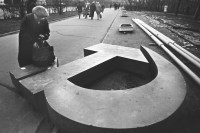
The first book that Tomas Venclova read in English was Nineteen Eighty-Four. Not a bad start in the language, given his future career. Venclova is less well-known in the West than his late friends Joseph Brodsky and Czesław Miłosz, but he’s something like their Baltic equivalent: a dissident poet of international standing, who spent many of the years of his home country’s Soviet occupation in exile in the US. He describes Nineteen Eighty-Four as ‘a very important book in my life, and the one that taught me the most about the Soviet system’. A passage he says made ‘a very strong impression on me’ comes in an exchange between Winston Smith and his interrogator O’Brien. Winston asks O’Brien: ‘Does Big Brother exist?

The art of the sledge

‘Good morning, my name’s Cowdrey.’ England batsman Colin, later Lord Cowdrey, to the Australian fast bowler Jeff Thomson. ‘That’s not going to help you, fatso. Now piss off.’ Lord, who wrote those lines — was it Oscar Wilde? Noël Coward? Woody Allen, maybe? Or was it just a primordial example of sledging: the art and science of the cricketing insult? Sledging is hot again as the Test series in South Africa against Australia reaches new heights of bad vibes. And when we’re getting moral lectures from David Warner — the Australian player who thumped the England player Joe Root in a bar for the unforgivable sin of wearing a joke wig on his chin — well, we know we’re faced with one of those fascinating moral puzzles.

‘Populism, fascism – who cares?’

We are in a hotel suite at the Park Hyatt Hotel in Zurich when Stephen K. Bannon tells me he adores the fascist dictator Benito Mussolini. But let’s be clear. Bannon — as far as I can tell — is not a fascist. He is, however, fascinated by fascism, which is understandable, as its founder Benito Mussolini, a revolutionary socialist, was the first populist of the modern era and the first tabloid newspaper journalist. Il Duce, realising that people are more loyal to country than class, invented fascism, which replaced International Socialism with National Socialism. He was thus able to ‘weaponise’ — to use a favourite Bannon word — what the people wanted.