Features

Is zero Covid achievable? A scientific debate about the virus

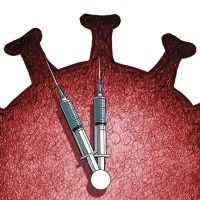
Throughout the year Carl Heneghan, professor of evidence-based medicine at Oxford, and Simon Clarke, associate professor of cellular microbiology at Reading, have written for The Spectator about the virus and the government’s measures to contain it. They have had very different outlooks, but can they agree about what will happen next? They start by looking back at their early predictions. CLARKE: During the first wave I said: don’t lock down too quickly because there will be a cost. People won’t like it. But if we had acted sooner, perhaps we wouldn’t have been locked down for quite so long and the death toll probably wouldn’t have been so high.

Theresa May’s recipe for Christmas cake

This recipe was given to me years ago by an old friend — hence the imperial measurements — and I have been making it ever since. Sadly, since my diabetes, I can’t really eat it any longer although I still make it for my husband and for friends (although not this year, I’m afraid, due to the limit on how many people we can see). While the recipe is for the cake itself, I recommend covering with marzipan and icing. What you’ll need3lb mixed dried fruit4oz glace cherries8fl oz rum8oz butter8oz plain flour8oz soft brown sugar5 medium eggs, separated5fl oz clear honey What to do 1. Soak dried fruit in rum overnight2. Set oven to 170°C3. Cream butter and sugar, then add egg yolks one at a time with a spoonful of sugar with each egg4.

The ideological bankruptcy of modern monetary theory

If you can’t explain something, try an abbreviation. The latest in economics is MMT — Modern Monetary Theory or, in other words, a magic money tree. It’s a simple idea. It costs almost nothing to print money: the cost of printing banknotes is negligible compared with their face value, and even lower when the Bank of England creates money electronically through its so-called ‘quantitative easing’ programme (QE). That money could be given to the public — either directly or indirectly via the government — to enable people to spend more, so raising output and employment. We are all better off. Why didn’t we think of this before? Well, of course we did.

How to find hope in a year filled with despair

This year we might sing the words ‘Tidings of comfort and joy’ to one another with poignancy. ‘God Rest Ye Merry, Gentlemen’ differs from many other well-loved Christmas carols in one respect: despite being a hopeful song, it’s written in a minor key. There is a sense of melancholy, perhaps a touch of darkness; a feeling that not all is sweetness and light. It holds together the tension of joy and sorrow. How do we explain the comfort and joy of Jesus Christ in a year when things aren’t comfortable and they definitely haven’t been joyful? We have an image of Christmas — idyllic, pretty, like the front of a Christmas card. We have our expectations of an ideal holiday.

How Korean cinema mastered the art of horror

There is a moment in the Jung brothers’ 2007 ghost film, Epitaph, when a young doctor in wartime Korea realises that the wife he adores does not have a shadow. He is entertaining her with a shadow puppet show in their home when he notices the aberration. ‘Walk to me,’ he says as he waves a naked light bulb in front of her. She had been a visiting medical student in Japan a year earlier and, unbeknownst to him, had died in an accident. It’s a moment that perfectly illustrates the psychological subtlety and brilliant scene-making of Korean film. Epitaph is about a group of young doctors working in a hospital under the Japanese occupation.

Why AI will never write a great song

Two years ago, the songwriter Nick Cave told his fans that he’d speak to them directly — not through an interviewer. ‘This will be between you and me,’ he wrote. The letters he has received and the answers he has given are collected online in The Red Hand Files. Here is a selection of the best. Considering human imagination the last piece of wilderness, do you think AI will ever be able to write a good song?Peter, Ljubljana, Slovenia Dear Peter, In Yuval Noah Harari’s brilliant book 21 Lessons for the 21st Century, he writes that Artificial Intelligence, with its limitless potential and connectedness, will ultimately render many humans redundant in the work place. This sounds entirely feasible.

The anxieties that long ago shadowed Christmas are back

Christmas has been given the green light by the government this year less because it marks the birth of Christ than because retailers and the hospitality industry desperately need it to go ahead. Other feast days in the Christian calendar still belong to the church. Christmas is the feast day that a fundamentally secular nation has made its own. It’s become part of the festive tradition for Christians to mourn this as the ultimate triumph of commercialisation and self-indulgence. But it might comfort them this year to know that their anxiety has deep roots.

Why Britain chose Brexit

None of us will easily forget the emotional response to the Leave vote in 2016, the national and international lamentation and the angry reproaches and insults, heaped on the majority: they were ignorant losers, white, old, xenophobic and stupid, ‘gammon’ who would be better dead or disfranchised. But leave aside the arrogance and snobbery; more fundamental was the basic ignorance of Europe shown by these zealous Europhiles. They mistook Brexit for a British, or English, aberration. In fact, it was the manifestation of a pan-European disillusionment with the ‘European project’. Popular support for that project peaked 40 years ago, and has been in decline ever since. The French only just voted for the Maastricht Treaty even in 1992, the heyday of integration.

‘People confuse sadness with darkness’: the complicated world of Mary Gaitskill

In the early 1990s, the American novelist Mary Gaitskill suffered an abrupt awakening. ‘I lived in New York, I didn’t have a television, I didn’t listen to the radio. I didn’t even read magazines or newspapers very often. I was really too preoccupied with my own existence, which was hand to mouth a lot of the time,’ she says. ‘But when I was a little better off, I began to pay attention. I did get a TV. I did listen to the news a lot. And I was just like, holy shit. What a weird fucking world.’ What particularly astonished her, she says, is how central the fashion industry had become: ‘Models had always been glamorous figures, but it was suddenly they were the most important thing any woman could possibly aspire to be.

The insidious attacks on scientific truth

What is truth? You can speak of moral truths and aesthetic truths but I’m not concerned with those here, important as they may be. By truth I shall mean the kind of truth that a commission of inquiry or a jury trial is designed to establish. I hold the view that scientific truth is of this commonsense kind, although the methods of science may depart from common sense and its truths may even offend it. Commissions of inquiry may fail, but we assume a truth lurking there even if we don’t have enough evidence. Juries sometimes get it wrong and falsehoods are often sincerely believed. Scientists too can make mistakes and publish erroneous conclusions. That’s all regrettable but not deeply sinister.

Building Sizewell C would be a nuclear-sized disaster

I love Suffolk. This Christmas I will be there with my family and we’ll almost certainly walk up the coast, joining dog-walkers, bird-watchers, hikers and even swimmers in one of the most beautiful and unspoiled parts of the UK. The secret of Suffolk is its relative inaccessibility. No major motorway connects it and once you arrive you’re committed to a sprawling network of country lanes that twist through heathland and grazing marsh, mudflats and reedbeds. Minsmere, a nature reserve that’s home to 6,000 wildlife species, is among its glories. The nightjar, the woodlark, the Dartford warbler and the silver-studded butterfly are just some of the rare species found there. At least for the time being.

The wonderful ghosts of Christmas past

The past shifts about like clouds, now dense, now parting for a memory to shine out, perhaps randomly, but bright as the sun. Here is the Sheffield Christmas when I was four and slept in Great-Aunt Florence’s room, on an eiderdown beside her bed, in the terraced house that smelled of coal smoke — the Christmas of worrying about how dirty Santa must get, going up and down the sooty chimneys. Home was Scarborough: the bracing sea air and howling gales where I missed the coal dust smell, though it brought back the cough I had had since nearly dying of whooping cough, aged two — the cough that has never really left me, so that many a Christmas since has smelled of Vicks, camphor, Friars’ Balsam.

Why mRNA vaccines could revolutionise medicine

Almost 60 years ago, in February 1961, two teams of scientists stumbled on a discovery at the same time. Sydney Brenner in Cambridge and Jim Watson at Harvard independently spotted that genes send short-lived RNA copies of themselves to little machines called ribosomes where they are translated into proteins. ‘Sydney got most of the credit, but I don’t mind,’ Watson sighed last week when I asked him about it. They had solved a puzzle that had held up genetics for almost a decade. The short-lived copies came to be called messenger RNAs — mRNAs – and suddenly they now promise a spectacular revolution in medicine.

The magnificence of the Covid ‘business lunch’ loophole

A friend of mine went for a walk in the Cotswolds last weekend with his wife. At around four o’clock, tired but happy, they fetched up at a country pub. ‘You’ll have to eat a substantial meal,’ said the landlady, crossly. ‘But it’s four o’clock,’ said my friend. ‘We’re not hungry.’ The landlady tutted and showed him a long and expensive menu. My friend and his wife turned around and walked out of the pub. This, I think we can safely say, represents one end of the Tier 2 pub spectrum. At the other is a pub I know which used to be up the road from the local police station. This pub had, and continues to have, a famously good relationship with the rozzers: late-night lock-ins have long been a speciality.

Buying power: how China co-opts the UN

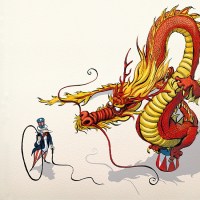
It was one of those forgettably historic moments at the United Nations. The year was 2015, the UN’s 70th anniversary, and China’s President Xi Jinping was in New York, speaking in person to the UN General Assembly. In festive spirit, Xi announced that China would set up a $1 billion trust fund to be dispersed over ten years to ‘support the UN’s work’ and ‘contribute more to world peace and development’. So began the Peace and Development Trust Fund, one of China’s more insidious projects to co-opt the UN, its logo and its global networks.

Cold war: Russia’s bid to control the Arctic

It may be time for Father Christmas to look for a new home, before the Russians kick him out. ‘This is our Arctic,’ declared the Russian explorer Artur Chilingarov when he went to the North Pole in 2003. Four years later, another Russian expedition, again led by Chilingarov, planted a titanium flag on the seabed 2.5 miles below the Pole. It was a symbolic gesture of a geopolitical ambition. The jingoistic Chilingarov proclaimed: ‘Our task is to remind the world that Russia is a great Arctic and scientific power.’ Since 2013, Russia has invested heavily in seven military/naval bases along its Arctic coast to strengthen the country’s power and influence.

We must stop treating juvenile offenders as lost causes

At the end of October, just before I started as HM Chief Inspector of Prisons, the inspectorate and Ofsted visited Rainsbrook Secure Training Centre near Rugby. Rainsbrook was built by the Blair government to house the increasing numbers of children imprisoned as a result of policing targets and tough-on-crime policies and it was one of four centres contracted out to private providers. The great hope was that these better-funded centres would provide a more humane alternative to Young Offender Institutions. Rainsbrook holds children aged mostly 15 to 18, but on our inspection we discovered that for their first two weeks, new arrivals were being locked in their cells for 23½ hours a day.