Features

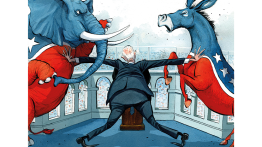
Biden’s burden: can he save the free world?

Joe Biden talks a lot about restoring America’s standing in the world. But the truth is that if he now has the chance to reshape America’s relationships for a new era, it’s because Donald Trump has already done the awkward stuff. The question is: can Biden and his team swallow their collective pride and build on Trump’s legacy, or will vanity and partisanship send the American Atlas tumbling to his knees? Trump won the 2016 election by forcing the difficult questions on to the national agenda. In office, he developed an alternative to the spent consensus of the 1990s. Call it vulgar realism, the lowest common denominator of American interest.

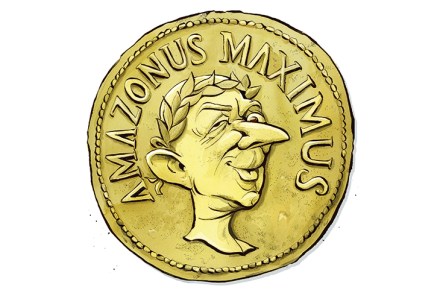
Why has eBay banned me for life?

Imagine a country where there is no rule of law, where you might be scooped off the street without warning, put before a kangaroo court and sentenced to life in prison without parole and without right of appeal. You have no idea of the charge against you because no one in authority will tell you. You are innocent of any crime, except you don’t know what your crime is; the full might of the law has been brought down on your head and you have nowhere to turn. What if this imaginary country was not in fact a nation state but a large, wealthy and powerful company? What if it was eBay? Recently, I was asked by a friend if, in my capacity as a serious amateur photographer, I would look over and value some vintage cameras and lenses that he had inherited.

Iran vs the rest: the Middle East has reached a tipping point

Last year, in the cigar bar of an opulent London hotel much favoured by visiting Arabs, an interesting conversation took place. My friend was rich enough to have two private jets and claimed to be doing private shuttle diplomacy between Israel and one of the Gulf states. Smoke curled around our heads and a young Qatari in Gucci trainers passed by with a woman my friend assured me was a Russian prostitute. My friend’s phone was out now and he was on a video call with a man he said was a senior official in the Iranian Revolutionary Guard. He asked him about a drone strike on Saudi Arabia’s two biggest oil refineries. The man chuckled. ‘Ah yes, that was us.

Save me from the cult of instant intimacy

The other day I made a couple of calls to a bank about a loan. After the usual jumping over hoops to get to talk to a human being — the failure of voice-activated systems to understand a word I say, even when it’s the word ‘loan’, is particularly wounding — I got through to a young man who passed me on to a young woman. In both cases the answer to my actual query was no; they ended the call with ‘Have a good one’ and ‘You take care now’. To which all you can say, a bit lamely, is: ‘You too!’ Whenever someone tells me to have a good day, I recall the gag about the man who invariably stiffened slightly and replied: ‘Thank you — I have other plans.

Trade not aid: spending more doesn’t mean we care more

Outside the Catholic mission I walked through rows of women in traditional hide skirts, squatting or sitting with legs astride, palms upturned in supplication. Many suffered from scabies and cradled emaciated babies, and all looked 20 years older than their true age. These are my memories of the Uganda famine in 1980 and these were the survivors. Africa is a different place today and so are the methods used to combat famine. But this was where I learnt about the contradictions of overseas aid. Aid is pernicious, and injudicious aid can destroy all before it. Take food aid. It is wonderful for saving those in extreme peril, but once the extreme event has passed, it destroys farmers and local markets, and inevitably leads to corruption.

The ‘anti-racism’ movement is sowing deeper divisions

Have you ever claimed to be ‘not racist’? If so, sorry, but you’re a bigot. Should this seem incoherent, then you’re clearly not well versed in critical race theory: a once niche academic field that has gone mainstream and popularised concepts such as ‘white privilege’, ‘white fragility’ and ‘systemic racism’. According to Ibram X. Kendi, author of How to Be an Anti-Racist, ‘the claim of “not racist” neutrality is a mask for racism’. Alana Lentin, author of Why Race Still Matters, takes it a step further, arguing that to be ‘not racist’ is ‘a form of discursive racist violence’.

The Sturgeon paradox: the worse she does, the more popular she becomes

Before Covid-19, if you can remember such a time, this was supposed to be a difficult year for Nicola Sturgeon. Her party had been in power in Edinburgh since 2007 and, like all ministries of such antiquity, was beginning to look jaded. There was never any doubt that she would remain First Minister following next year’s Holyrood elections, but the prospect of her winning a majority seemed to be receding. Opposition parties believed that a relentless focus on the SNP’s record in office would be enough to clip Sturgeon’s wings. After 13 years, it was hard to point to many stunning successes: on the contrary, failures and scandals were accumulating. Time ruins all governments and hers did not seem to be an exception.

Left behind: how Labour betrayed its base

I love the labour movement. I love its history, its traditions, its brass bands and banners. I love its rousing songs, anthems and festivals. I love its slogans and rallying cries, inspired, as they are, by an abiding faith in the collective spirit and the seductive vision of the New Jerusalem. For all that tribalism is given a bad name these days — sometimes with good reason — I feel tribal about my attachment to the labour movement. And I offer no apology for that. As it was for millions of others who grew up in working-class communities, tribalism in the cause of labour was for me less a matter of choice and more one of imperative.

The infantilism of Advent calendars for grown-ups

Long ago and far away, small children used to arm-wrestle their siblings for the privilege of opening a door in a cardboard Advent calendar. It was reward enough to find a picture of an angel or an awestruck donkey. How quaint that now seems. Because then Cadbury saw an opportunity and launched an alternative calendar, with little chocolate inducements. I mean, which would you choose, the donkey or a chocolate button? It was a no-brainer. Childhood, which used to end around the time you were tall enough to reach a clocking-in machine, now drifts on and on. Grown men forget to leave home, women in their fifties buy colouring books, and we are all exhorted to cosset our inner infant. Treat yourself. Go on, you know you deserve it.

I was dreaming of a cancelled Christmas

I am on the record as being, if not a convicted seasonal denier, at least insufficiently Christmassy. Last year I interviewed Noel Gallagher for the Christmas cover of a magazine and we bonded over our mutual dread of what our American friends call, dispiritingly, holidays. ‘Christmas Day’s the longest day, longer than D-Day — and more stressful,’ he moaned. ‘You’re sitting there exhausted, thinking, “And it’s only 11 o’clock”.’ For the avoidance of doubt, I love Christmas trees, holly, mistletoe, church services, chestnut stuffing and mince pies.

Sets appeal: the distracting beauty of TV backdrops

Never mind the regal and political tussles depicted in The Crown; the real action comes with the closing credits. This is the kind of list of job titles of which many feature films can only dream. In addition to the seven art directors of various ranks, there is an art department co-ordinator, art department assistant, five set decorators, two set decoration runners and a set decoration prop driver. Not to mention a drapes master, drapes master assistant, one florist and two home economists. You don’t get the stand-ins for Buckingham Palace, Balmoral and all the other stately piles of multiple turrets and crenelations looking as good as they do without armies of behind-camera personnel.

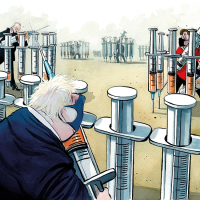
How to win over vaccine sceptics

We have a vaccine. In fact, we have three — and more are on the way. While we still need to scrutinise the full data from the Pfizer, Moderna and AstraZeneca trials, the initial reports are stunning: vaccines that in some cases exceed 90 per cent effectiveness, and might be ready within weeks. Previous surveys showed a big appetite for the vaccine, but more recent ones are concerning. According to YouGov, only 67 per cent of British people say they’d be ‘likely’ to get the Pfizer virus, with 21 per cent saying they’d be ‘fairly’ or ‘very’ unlikely to. Other polls also find that scepticism towards the vaccine is increasing.

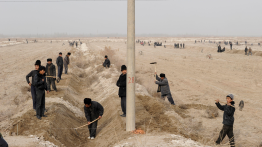
Things fall apart: Ethiopia’s terrifying descent into civil war

The world’s first conflict triggered by Covid-19 exploded on 4 November in Ethiopia’s northern region of Tigray. Before your eyes glaze over at news of fresh African horrors — hundreds dead in battles and air strikes, ethnic massacres, civilians fleeing, charities calling for food aid — consider this frightening new reality. For the first time in modern history, wars and insecurity now ravage a continuous line of African states from Mauretania’s Atlantic shores to the Red Sea — a 6,000km Sahelian suicide belt of jihadis, state failure and starvation. Intervene too hard in this mess and you get David Cameron’s ill-conceived 2011 Libyan bombing raids. Gaddafi gets butchered in a storm drain, the arsenals are pillaged and weapons flood the Sahara.

First names are for friends and family, not bosses and builders

Recently I was listening to Lieutenant-General Tyrone Urch, the army’s Commander Home Command, being interviewed by Martha Kearney on Today. I cannot remember what he was talking about, because I had become quite agitated by the officer’s insistence on using Ms Kearney’s name in every response: ‘Good morning, Martha… It absolutely is, Martha… The things the military is able to do, Martha… I’m no biochemist, Martha…’ On and on it went, this patronising and repeated use of the interviewer’s name. But what rankled more than the repetition was that Lieutenant-General Urch was using Ms Kearney’s first name. Did Ms Kearney tell Lieutenant-General Urch that it was all right for him to use ‘Martha’?

Boris in a spin: can the PM find his way again?

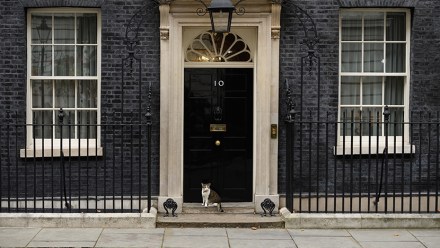
Something strange is going on in Westminster: nearly every minister and Tory MP has a spring in their step. It’s not (just) the vaccine breakthrough, or the magic money tree now bearing such fruit in the back garden of HM Treasury. The liberation-of-Paris feel in locked-down Westminster is inspired by the departure of Boris Johnson’s senior Vote Leave aides, Dominic Cummings and Lee Cain. Tories of all stripes seem to think they will now get what they want. When the news broke that the pair were to leave Downing Street with immediate effect — following a power tussle with the Prime Minister’s partner Carrie Symonds and new press spokeswoman Allegra Stratton — many in the parliamentary party were celebrating.

The dark art of playing world-class Scrabble

When the top players gathered in Torquay last year for the World Scrabble Tournament (this year’s contest should have been this week, but has been cancelled thanks to you-know-what), it was to use ‘words’ like these in their games: dzo, ch, foyned, ghi… Yep, that’s right; a whole lot of words that, let’s be frank about this, are not words. That’s why my spell-checker underlines them in red. The top players, you see, don’t win tournaments by being cleverer than the rest of us. They do it by memorising a long list of non-words so they can avoid the problems ordinary players encounter. With O I I I I U U on the rack, most of us would forfeit our turn while muttering something rude.

How the UK can help Hong Kong

Those of us who spent our formative China-watching years reading Chinese Communist party publications learnt early on that the word ‘basically’ was a synonym for ‘not’. ‘The party has basically succeeded in…’ meant that there was a problem. Hong Kong is basically an autonomous region. Xi Jinping is satirised by liberal Chinese as the ‘Accelerator-in-Chief’, whose policies are hurtling the CCP’s regime towards collapse. This could be wishful thinking on their part. Certainly, he has sped up the demise of the ‘one country, two systems’ concept.