Features

The Fire Brigades Union’s pandemic response has been a disgrace

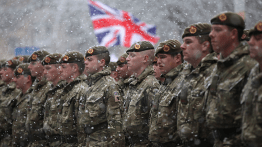
From the vaccination programme to the NHS intensive care units, much of the British state has risen magnificently to the Covid challenge. But there is one element of the public realm that has lived down to the lowest expectations of its performance. The Fire Brigades Union, long a byword for militant intransigence in defence of outdated practices, has been at its self-serving, uncooperative worst during the crisis. In place of solidarity and dedication, it has displayed an ‘I’m all right Jack’ mentality as it discourages its members from undertaking humanitarian duties. The FBU embodies British trade unionism at its most obstructive. It hides behind safety concerns, clings to rigid job descriptions and wallows in labyrinthine bureaucracy.

Secrets of the Vaccine Taskforce’s success

Until a few weeks ago, the government’s track record on Covid was one of repeated failure. The death toll, the depth of the recession, the public disapproval of the government: Britain’s figures were among the worst in the world. But with vaccines, things have changed. The UK is now on track to be the first major country in the world to vaccinate its way out of lockdown. The foreign press coverage has turned from mockery to awe, with Britain having vaccinated more people than France, Germany, Italy and Spain put together. Many of those behind this success are virtually unknown to the public. Their story matters, because the Vaccine Taskforce is already being looked to by ministers as a model for how government should work once the pandemic is over.

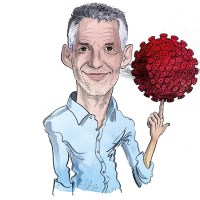
Stresses and strains: the evolution of Covid is not random

In the genetic diaspora of an epidemic, there is ferocious competition between strains of virus to get to the next victim first. That leads to apparently purposeful outcomes, as if the virus had a mind. One of the things people find hardest to grasp about evolution is that it appears purposeful but the mutations on which it feeds are random. How come dolphins evolved to swim if all they had to work with were random changes in genes? Viruses also mutate at random — but most people talk as though the rise and fall of these mutant versions is mainly down to chance or luck. It’s not. Mutations occur all the time in RNA viruses; what matters is which ones find favour in natural selection.

Holy relic: what will be left of the Church of England after the pandemic?

A clergyman admitted to me that he’d recently burst into tears. He’d received an email from his diocese in this latest lockdown ‘strongly urging’ vicars to close their churches. He has an elderly working-class congregation in a poor area. Coming to church was ‘the one thing keeping them going’. Local vicars like him represent the best of the Church of England. They are loving, kind, and they know their flock. Before the pandemic, the C of E had seen attendance halve in a generation. Weekly religious attendance is highest among non-Christian faiths (40 per cent), followed by Roman Catholics (23 per cent) and all other Christian denominations (23 per cent).

Coup de grâce: the downfall of Aung San Suu Kyi

Coup? What coup? The early morning takeover of Myanmar on Monday by the Tatmadaw (Burmese army) barely deserves the name. The word ‘coup’ suggests that Myanmar was being ruled by a civilian and democratic government before now. It was not. Although Aung San Suu Kyi’s National League for Democracy won a landslide victory in ‘free’ elections in 2015, the constitutional revision implemented by the military in 2008 meant that Tatmadaw retained 25 per cent of seats in both houses of the national assembly. More pertinently, whatever the outcome of elections, Tatmadaw reserved its rights to three ministries: home affairs, border affairs and defence.

The power of cold showers

Hippocrates prescribed it to allay lassitude, James Bond favoured it as a token of his manliness, and in less indulgent times Gordonstoun school insisted on it: the cold shower. And now it’s having a moment with the wellness brigade. (The very word ‘wellness’ used to send me screaming from the room: a Californian import, I was sure. Then someone pointed out that the word has been in the English lexicon since the 17th century, so that told me.) The proven physical benefits of exposure to cold water are impressive. A boost to the immune system, improved circulation, and a wake-up call to the body’s brown fat, which is apparently A Very Good Thing.

Why I joined the online army taking on the hedge funds

I spent most of last week drenched in sweat, launching a vicious assault on Wall Street hedge funds which cost them $20 billion. Along with thousands of other ‘degenerates’, I bought shares in GameStop, a struggling videogame shop whose value has recently soared by 2,000 per cent. Behind the surge is an online community called WallStreetBets, where bored young men gamble on barely researched stock tips and crack tasteless jokes. The community, which lives on the social media website Reddit, has a history of hilariously aggressive stock-market bets. In 2019, for example, a 19-year-old member made $700,000 and then lost it all again within two weeks. Last week WallStreetBets became global news.

Capital punishment: why wealth taxes don’t work

No new year would be complete without the traditional Oxfam survey showing that a few of the richest people on the planet own more assets than the poorest 50 per cent of the world’s population combined. The figures change, but the gist is the same. January is usually a slow month, and it makes for startling headlines, intended to get us thinking about capitalism’s shortcomings. It’s also been tradition, for those of us more positive about free markets, to offer a retort: before Covid, global poverty was falling at the fastest rate in history. Global inequality was narrowing because of capitalism, not despite it.

Vaccine wars: the global battle for a precious resource

Armed guards are patrolling the perimeter fence of a sleek factory. Software experts are fending off hackers. Border officials are checking trucks and ferries, not for weapons or illegal immigrants, but for a mysterious biochemical soup, while spies and spin doctors are feeding social media with scare stories flaming one national champion or another. Welcome to the first great geopolitical battle of the 21st century. It may sound like something ripped from the pages of a dystopian sci-fi novel, but in truth we’re seeing the opening salvos in the vaccine wars. Rather than co-operating with one another to roll out a global vaccination campaign to rid the world of Covid-19, the major powers of the world are instead descending into a fierce, increasingly nationalistic competition.

The true cost of school closures – an interview with the Children’s Commissioner

Teaching unions have spent much of the past year campaigning with the social media hashtag #CloseTheSchools. It’s a reminder of the imbalance in debate over education. Unions represent the adults, MPs represent their constituents, but who in Westminster speaks for children? In 2005 the Blair government sought to answer this question by creating a Children’s Commissioner, who would promote and protect the rights of children in decisions affecting their lives. Anne Longfield, the third to hold the job, is in the final few weeks of her six-year stint. She is spending those weeks campaigning for schools to re-open as soon as possible after the February half-term.

Australian border closures could work for Britain. Here’s why

Melbourne Australia has been a rare success story during the pandemic. There have been around 29,000 cases of Covid, 908 of which have proved fatal. There are currently just 125 active cases in the entire country, a mere 25 of which have required hospitalisation. For a population of 25 million, this is a vastly different experience to that of Covid-beleaguered Europe and North America. No wonder the British government is considering whether it might be time to copy Australia’s approach, to help save an economy and society battered to a degree Australians can scarcely comprehend. Australia benefits from being a remote island continent with no international land borders.

#MeTooInceste: has France’s code of silence finally been broken?

Montpellier Accusations of child abuse against Olivier Duhamel, now 70, ex-vice-president of Sciences Po university and of the secretive Siècle (Century) club of Parisian movers and shakers, have cast a dark shadow on the legacy of the soixante-huitards, the baby boomers who occupied the Sorbonne in 1968 and went on to rule (and ruin) France. Duhamel’s disgrace is long delayed. Only now has his stepdaughter, Camille Kouchner, published a book accusing him of sexually abusing her twin brother 30 years ago — and doing so within a culture in which his fashionable friends knew about the abuse but kept quiet. It’s an accusation Duhamel characterises as a ‘personal attack’ but has not denied. A criminal complaint has now been made by his stepson.

Will Britain’s orchestras survive the Brexit exodus?

In the first month of Brexit, two British orchestras were publicly beheaded. The London Symphony Orchestra was shocked to discover that its music director, Sir Simon Rattle, had taken a better job in Munich, while the City of Birmingham Symphony Orchestra was forced to accept that its luminous Lithuanian, Mirga Gražinyte-Tyla, was simply too hot to hold any longer. Some pundits quickly predicted a post-Brexit talent haemorrhage. Of the two decapitations, the LSO’s was by far the more painful. Rattle is a totemic figure, a tousle-haired Liverpudlian who learned his scores in public libraries and won a music scholarship from the local council. He is the ultimate welfare-state success story, with a knighthood and an Order of Merit to show for it.

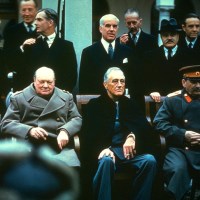
Biden and the darker side of Irish-American history

My introduction to an Irish-American sense of history was not in Boston or New York but in the American Midwest. I was visiting the eccentric House on the Rock in rural Wisconsin. The receptionist told me proudly that she was Irish. ‘My people were driven out during the Famine by Cromwell… and Strongbow.’ I admired her compositional virtuosity in bringing together the 12th-century Cambro-Norman warlord Strongbow, the mid-17th-century hammer of the Gaels (and the Scots) Oliver Cromwell, and the Irish landlord clearances of the 1840s — all in one short sentence. What’s more, her declaration chimed with the self-mythologising of Irish-Americans who trace their origins back to the Great Famine of the 1840s.

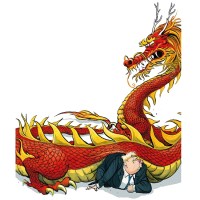
What the West can do about China’s Uyghur labour camps

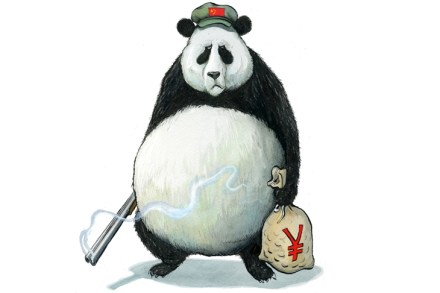
Coca-Cola’s most controversial bottling plant is a huge factory located in an industrial zone just outside the city of Urumqi in western China. Logistically, the factory is well situated: the international airport is a short drive away, as is the high-speed train station close to the fashionable Wyndham hotel. But the problem for Coca-Cola — and other western companies such as Volkswagen and BASF, which operate plants in the same region — is the existence of hundreds of facilities not mentioned on any official map. The Cofco Coca-Cola plant, a joint venture with a Chinese state company, is surrounded by prisons and re-education camps in which China suppresses local ethnic minorities, according to human rights experts.

Navalny and Putin: the next chapter

‘Arrest me? Why would anyone arrest me?’ said Russian opposition politician Alexei Navalny to reporters last week as he boarded a Moscow-bound plane. Four hours later he was in jail — but not before spending an hour circling above the Russian capital as riot police shut down the airport where 2,000 supporters awaited him and diverted his plane to another. Did Navalny truly believe he would not be arrested? Did anyone? A week before his planned return from Berlin, where he had been recovering from being poisoned by Russia’s security services, Navalny posted a video on social media in which he openly taunted Vladimir Putin. ‘Putin has been stamping his little feet, demanding that they do everything to prevent me from returning,’ he said.

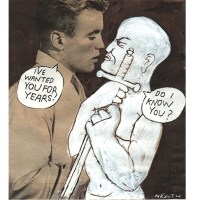
The problem with pop psychology

James Bond is not what he used to be. His motivations were once so simple: MI6 had told him to do it. Of late, though, he has been propelled about the screen by his inner demons, shooting people he’s not supposed to shoot, revisiting his childhood, collecting traumas, developing a mother-complex with Judi Dench. What makes Bond, Bond? Once, it didn’t matter, now it does. The next film, Bond girl Léa Seydoux has said, will be ‘even more psychological’. The screen reflects the culture. Psychology, it seems, is what we want now. The stuff is simply everywhere. Imposter syndrome, projection, narcissism, Stockholm syndrome, triggering, boundaries, personality type, self-care — these terms now pepper the discourse.