Features

Scotland can’t afford to remain part of the Union

Tony Blair’s biggest achievement was delivering a referendum that unified Scotland behind devolution and gave all parties a stake in its success. Boris Johnson is wrong to say it was ‘a disaster’, but in being wrong is helping precipitate the logical next step: independence. The opinion polls that show a growing majority for Scottish independence will mystify those who believe the lazy, metropolitan idea that independence is an emotional fantasy — all Braveheart, Bannockburn and bagpipes. How, they ask, could a band of Caledonian romantics ever convince the canny Scots to opt for such a thing? But what if the case for independence was a highly sophisticated position advocated by one of the most popular political leaders in the world?

Macron is preparing for intellectual battle against Islamism

It’s easy to see why so few western leaders have come to Emmanuel Macron’s defence: when they scrutinise extremists, they are accused of being ‘Islamophobes’. Since the French President’s speech last month about Islam in the West, he has been accused — by populist Muslim politicians such as Recep Tayyip Erdogan and Imran Khan, as well as publications that should know better, such as the New York Times — of being anti-Muslim. Yes, he was frank about the dangers of Islamism, but his speech was also a defence of what he called the ‘Islam of the Enlightenment’. Rarely for a political leader, he was able to point not just to the problem but to the alternative too. He understands that Muslims have faced these internal enemies before and won.

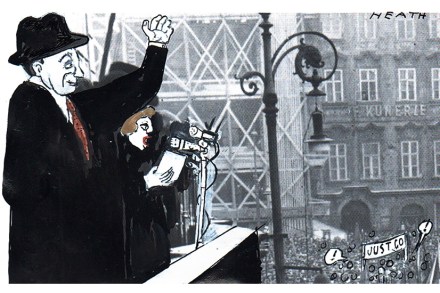
The peerless social satire of Pont of Punch

Eighty years ago this month, the cartoonist Graham Laidler — better known as Pont — died of polio. He contracted the disease while evacuating refugees from London in his car. He was only 32. In 1940, thousands of people were dying in the war, but Pont’s death was marked by an appreciation from J.B. Priestley in the Times, and an outpouring of grief in readers’ letters to the magazine with which he had become synonymous: Punch. Pont, the son of a successful painter and decorator, originally trained as an architect. But after he caught TB, doctors advised him to abandon his work and travel to Austria to recover. There he started submitting cartoons to Punch. After many rejections, a drawing was finally accepted in 1932.

The West has left Armenia to fend for itself

Bomb shelters have come a long way since the Blitz. As missiles from Azerbaijan rained down on Nagorno-Karabakh a few weeks ago, Hayk Harutyunyan and his family took refuge in a basement with wifi, an ensuite toilet and a makeshift mini-bar. There were 12 people crammed in there every night, he told me, ‘but we Armenians are very close as family, so we get on well’. Indeed, sipping brandy with them in their shelter, I was reminded of that other Armenian clan, the Kardashians, who spend their time sitting around and chatting. Keeping up with the Harutyunyans, however, makes for more challenging viewing. Armenia, a Christian democracy in a neighbourhood dominated by Islamists and strongmen, has been left to fend for itself by the West.

Wishful drinking: pubs have always been good at bending the rules

In Tess of the d’Urbervilles, Thomas Hardy has a running skit about the alehouse in his heroine’s home village where her father, and quite often mother too, disappear for hours at a time. People aren’t allowed to drink on the premises, so are strictly limited to ‘a little board about six inches wide and two yards long, fixed to the garden palings by pieces of wire’. But as the locals don’t like drinking while standing outside, they all head into the landlady’s bedroom and perch on her bed, chest of drawers and washstand while supping ale.

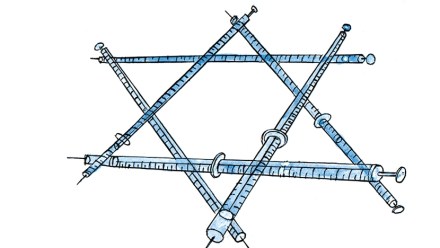
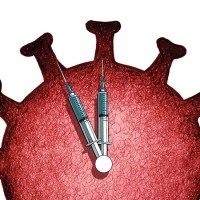
The questions we must ask about the Covid vaccine

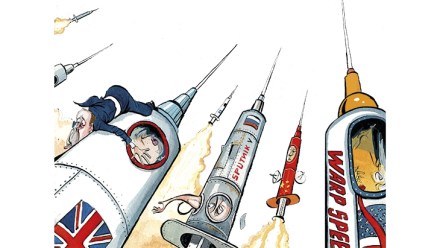
After a difficult nine months, we are naturally all sick of lockdowns and other Covid restrictions. Everyone misses parts of their pre-coronavirus lives, from seeing friends and family, to pubs and restaurants, to the theatre and concerts and, yes, even our workplaces. It was therefore no surprise that this week’s news of a vaccine breakthrough was widely applauded. It is human nature, after all, to cling on to things that give us hope. Hope that was encouraged by leading scientists such as Sir John Bell. After the Pfizer news broke, the Oxford professor was asked on BBC radio whether we would be returning to normal by spring. His response? ‘Yes, yes, yes.’ This was a When Harry Met Sally moment that proved to be music to the ears of millions of Britons.

Macron alone: where are France’s allies in the fight against Islamism?

A few years ago, in a Lords debate on the treatment of Christians in the Middle East, the late Rabbi Jonathan Sacks reminded his peers of some famous words of Martin Luther King: ‘In the end we will remember not the words of our enemies but the silence of our friends.’ That reflection may now be going through the head of the French President, Emmanuel Macron. In recent weeks he has been left alone on one of the most dangerous and delicate ledges of our time: that of Islamic extremism. And while he has already incurred the wrath of much of the so-called Muslim world — with French goods disappearing from many Arab supermarkets and Macron condemned from Ankara to Islamabad — it is the silence of everyone else that has been so striking.

Could ten million Covid tests a day get Britain back to normal?

In all the excitement about the Pfizer and BioNTech vaccine, it was easy to miss news of the other great hope for getting our lives back to some form of normal. Vaccines are not expected to have much impact for most of us this winter and it will be several years before they suppress Covid-19 globally. For now, a mass testing programme — not any jab — is probably the best chance of putting Covid back in its box. It has been piloted this week in Liverpool and it might be coming to us all in the near future. No one’s exactly sure yet how it will work, but you could start by imagining a world in which every other morning we all self-administer a rapid saliva test at home, with the results available within ten minutes.

Trumpism hasn’t been defeated

It’s all over, bar the litigation. Without some mind-blowing legal reversal in the coming days, Joe Biden will be the 46th president of the United States of America. Donald Trump must be extracted from the White House in the coming weeks, though if he is unwilling to leave nobody is quite sure how he’ll be removed. Trump believes the election has been stolen from him — so do many of the 70 million Americans who voted for him. Trust is a vanishingly rare commodity in American democracy. But Trump started crying foul weeks, even months ago. ‘This is a fraud on the American public,’ he declared in the early hours of Wednesday. ‘We were getting ready to win this election. Frankly, we did win this election.

A divided America is a gift for Putin

Russia is using a ‘drumbeat of disinformation’ to attack the American political system. That was the stark conclusion of the FBI director Christopher Wray in his testimony to the House of Representatives Homeland Security Committee in September. One aim, he said, was to undermine Joe Biden’s campaign. But the main thrust of the attack — as we will witness in the coming days and weeks — is to undermine public confidence in US democracy itself. To be fair, Russia did not create the problem. It was not Vladimir Putin who wrote the laws governing US elections, with their decentralised responsibilities, threadbare budgets and barnacled and opaque provisions. (Do you understand what the electoral college is and how it operates? Neither do most Americans.

The (absent) ethics of lockdown

Is it ethical to lock us down again? This is not a facetious question. Over the past eight months, we have heard a great deal about the policies used to manage the virus, but very little about the ethics. This is a mistake. We should be asking how we can critically and reasonably strike a balance between conflicting values and interests. Yet even now, with so much at stake, this basic question on the ethics of our policies is not being properly asked. When it comes to public health, the ethical balance is simply expressed: how do you achieve a certain public health goal with the fewest restrictions on individual rights? If the goal is to reduce obesity, for example, then is it justifiable to tax sugar — and if so, to what extent?

France vs Islamism: how does Macron hope to prosecute his war?

Montpellier France is under attack. Two weeks ago, Samuel Paty, a middle school teacher, was decapitated in a leafy suburb of Paris after showing his students cartoons of the prophet Mohammed published by Charlie Hebdo in 2015. Last week, there were three killings at the Basilica of Notre-Dame in Nice, and after that, an Orthodox priest in Lyon was shot and gravely wounded. ‘Tell my children I love them,’ were the dying words of Simone Barreto Silva, a 44-year-old mother of three and herself an immigrant, killed in Nice. France has gone to ‘war’ with Islamic ‘separatists’, Interior Minister Gérald Darmanin has claimed.

What lockdown means for families with disabled children

When lockdown starts, all kinds of things stop. The first one, in March, was the worst time of my life as a parent, not because of my daughter’s severe disabilities, but because of the lack of support. Elvi is 19. She has a mental age of three, sleeps four hours a night and can’t walk. She has to be showered, dressed, fed and physically moved around our home. I have learned so much from my beautiful, funny daughter. She works incredibly hard to achieve the smallest things. We were told Elvi wouldn’t live past two and that she was unlikely to speak. In the summer she said her first five-word sentence: ‘I want crisps please, Mummy.’ Through necessity, being Elvi’s mum has made me resilient and resourceful.

Will our churches ever reopen?

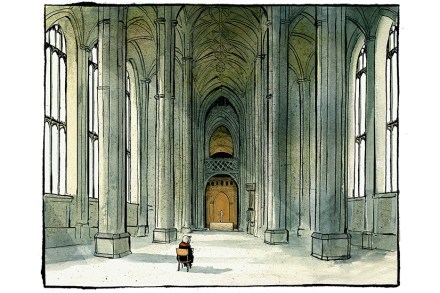
There used to be a joke, repeated by English tourists in deserted piazzas, that the Italian for church (chiesa) and for closed (chiusa) were almost the same. Whatever the orari on the door, you were always several hours out. And so you would consult your guidebook, admire in miniature the Ghirlandaio, the Lippi, the really very special fresco — and go for a consoling ice cream. The joke was told with the smug Anglo-Saxon certainty that our churches were open to all-comers from before breakfast until after vespers. Not so now. And not during the months we weren’t in lockdown — for all the bishops are protesting about the new one. But even before the latest lockdown, it was hard to find an open church.

Why is buying a car such an ordeal?

Why is it so insanely difficult to buy a car? And especially if you are a woman? Part of the trouble is that car salesmen are a particularly unreconstructed breed of men who think ‘lady’ customers will be more interested in the size of the vanity mirror than the fuel consumption. But it’s not just that — it’s the fact that they treat the transaction with all the pomp and gravitas of applying for a half-million-pound mortgage. This started back in February when I left a party (remember those?), got into my Volkswagen and set off into St James’s. Somehow I pressed the accelerator instead of the brake and drove smartly into the side of a taxi, making a serious dent.

Erdogan’s game: why Turkey has turned against the West

Six years ago, at the celebratory opening match of the new Basaksehir Stadium in Istanbul, an unlikely football star emerged. The red team’s ageing, six-foot tall centre-forward lumbered toward the white team’s goal; a delicate chip over the advancing keeper brought a goal that sent the stadium into ecstasy. The scorer was Prime Minister Recep Tayyip Erdogan. It was the run-up to an election in which he expected to become his country’s 12th president. For Erdogan, a former semi-professional footballer, it was brilliant self-promotion.

Michael Cohen: ‘I lied for Trump, but that doesn’t make me a liar’

When I met Michael Cohen in New York two years ago, he was a man visibly crushed by what life had done to him. His whole face sagged: he could have defined the word ‘hangdog’, a beagle caught peeing on the Persian rug. We stood outside his apartment building, which was Trump Park Avenue, Trump’s name bearing down on Cohen’s head in gold letters three feet high. We’d already had a long lunch and I was trying to say goodbye but as he spoke about one injustice or humiliation he remembered another, a torrent of self-pity. Everyone had treated Donald Trump’s former lawyer and fixer unfairly: the Feds, Congress, the media, above all his former boss. ‘I go to jail because he gets his pecker pulled by a porn star?

The long winter – why Covid restrictions could last until April

Not much makes sense during a pandemic but in recent weeks the Covid puzzle has become a deeper mystery. When local lockdowns failed, the solution was to try even more of them. Manchester was put into Tier 3 restrictions when its Covid cases were falling; now there’s talk of a Tier 4. Confirmed infections are nowhere near the 50,000 a day that Boris Johnson’s scientific advisers warned about last month - but the panic now seems far greater. The fear, of course, comes from what officials think will happen next. We’re told that the Prime Minister fears a second wave larger than the first, but we’re not really told why. Decisions are made to tighten restrictions on the basis of figures, scenarios and documents that are not shared with the public.