Richard Dobbs

Richard Dobbs was a director of the McKinsey Global Institute. He is currently serving as a non-executive director on several boards, but writes in a personal capacity.

Why is the public sector so unproductive?

From our UK edition

The government has achieved its promise to halve inflation from last December’s level, borrowing has come in at little under the predictions made in March’s budget, and the Chancellor has felt able to lower taxes. But one thing isn’t going well: productivity. Little-noticed figures released by the Office for National Statistics (ONS) this week show that output per worker has fallen by 0.1 per cent over the past 12 months and output per hour is down by 0.3 per cent. While productivity in the private sector has risen by around 30 per cent since 1997, in the public sector it has hardly risen at all The problem is especially acute in the public sector.
The Omicron variant is now in Britain. Here’s how we beat it

From our UK edition

As feared, Covid-19 is not going quietly. The arrival of the Omicron strain in Britain - with cases already identified in  Chelmsford and in Nottingham - is clearly not the news we wanted as we prepare for the Christmas holidays. The Prime Minister will hold a press conference later today, likely to mark a distinct change in tone. For a while, it was possible to feel that our vaccine programme, supported by better treatments, mass testing and non-pharmaceutical interventions had started to defeat the virus. So, we started to turn our focus to other activities such as levelling up, addressing the NHS waiting lists, climate change, violence against women and girls, and bickering with the French.

The Covid battle Sajid Javid still has to face

From our UK edition

Despite the humiliation of Matt Hancock’s exit, Sajid Javid, the new Health Secretary, might in fact find him a tough act to follow. After an appalling start to our Covid-19 response with missing PPE, high care home deaths, and delays to lockdowns and border controls, under Hancock’s watch the UK is now one of the most vaccinated countries in the world and appears to have decoupled deaths from Covid-19 infections. We seem on track to remove the remaining restrictions in July and deliver some of the strongest economic growth in the world as we bounce back.

Richard Dobbs, Tanya Gold and Rory Sutherland

From our UK edition

17 min listen

In this episode, Richard Dobbs reads his piece on why he's considering giving up his second vaccine for people more in need (00:55); Tanya Gold reports from her Kent road trip in a Ferrari (07:50); and Rory Sutherland on the unexpected joys of lockdown and why we may miss it when it's gone.

Why I’m considering cancelling my second Covid jab

From our UK edition

I am considering cancelling my second Covid-19 vaccination. I received my first jab in March, and at the time I happily booked the date for the second one in June, confident that by then we would be continuing to see a fall in infections. But last week the story changed. The B.1.617.2 variant, first identified in India, could, according to Sage minutes, be 50 per cent more transmissible than the variant identified in Kent. Early numbers suggest we could be at the start of an exponential growth in infections. The lesson of the past year is that if you wait to act until you’re certain of the data, you’re too late in changing your plans. Here, therefore, are four areas to consider now.

If we want herd immunity, we need mass testing

From our UK edition

At the start of the pandemic, we talked a lot about herd (or community) immunity. But talking about the journey to herd immunity became toxic as it was variously linked to high infection rates, sacrificing the elderly, and the NHS becoming overwhelmed. The debate on herd immunity was restarted last week by Professor Karl Friston, of University College London, who told the Daily Telegraph that the 73.4 per cent vaccinated reached on Monday meant that 'based upon contact rates at the beginning of the pandemic and estimated transmission risk, this is nearly at the herd immunity threshold.' This is an outlying view: other academics questioned this analysis. Matt Hancock said that the government will continue to watch the real-world data.

How should we tackle vaccine hesitancy?

From our UK edition

As Britain celebrates its vaccination success, we’re in danger of missing something important. A great many people have been offered the vaccine, but have turned it down — and we hear very little about them. No. 10 briefings trumpet the numbers vaccinated in the past 24 hours but are silent on the numbers who have refused. This matters, because if vaccine passports are on their way, granting access to pubs and so on, the unvaccinated will be excluded. More importantly, the unvaccinated will be vulnerable to the virus as we unlock. We need to know more about them. Dig deep enough and rough figures are there. Let’s look at the over-seventies in England.

The need for speed: can we outpace Covid?

From our UK edition

The Spanish flu pandemic a century ago resulted in around 50 million deaths worldwide. Its second wave was over ten times more deadly than its first. History is repeating, with the global death toll from Covid-19 this second winter already three times that of the first. In the UK, the number of deaths in this second wave is close to double the number we suffered in the first wave. The death toll in the first wave, while tragic, is somewhat understandable. A deadly pandemic came out of the blue, and we had to work out the best way of responding. But we cannot use this excuse to explain the higher death toll in our second wave, as we have had months to prepare this time.

A race against time: can the vaccine outpace the virus?

From our UK edition

34 min listen

Coronavirus vaccines are now being distributed across the world, but what are the challenges posed by its delivery? (01:30) Is Boris Johnson the SNP's greatest weapon? (13:55) And is Prince Harry becoming more and more like his mother? (23:35)With financial columnist Matthew Lynn; former director at the McKinsey Global Institute Richard Dobbs; the UK's former director of immunisation David Salisbury; The Spectator's deputy political editor Katy Balls; The Spectator's Scotland editor Alex Massie; journalist Melanie McDonagh; and royal biographer Angela Levin.Presented by Lara Prendergast.Produced by Max Jeffery, Alexa Rendell, Sam Russell and Matt Taylor.

A race against time: can the vaccine outpace the virus?

From our UK edition

The next three months may well prove to be the hardest of the whole pandemic. The new variants of Covid-19 appear to be the wrong type of game-changer. After our national lockdown in March, infection levels started falling because of extreme measures — including closing schools, places of worship and non-essential retail. But the infectiousness of the ‘Kent strain’ suggests that as it becomes prevalent, a new lockdown might be unable to contain it. When ministers first locked down, they did so in the expectation of taming the virus. This time, it’s more in hope. Boris Johnson didn’t show us any graphs when he announced the latest lockdown. He didn’t need to; the situation is clear.

Could ten million Covid tests a day get Britain back to normal?

From our UK edition

In all the excitement about the Pfizer and BioNTech vaccine, it was easy to miss news of the other great hope for getting our lives back to some form of normal. Vaccines are not expected to have much impact for most of us this winter and it will be several years before they suppress Covid-19 globally. For now, a mass testing programme — not any jab — is probably the best chance of putting Covid back in its box. It has been piloted this week in Liverpool and it might be coming to us all in the near future. No one’s exactly sure yet how it will work, but you could start by imagining a world in which every other morning we all self-administer a rapid saliva test at home, with the results available within ten minutes.

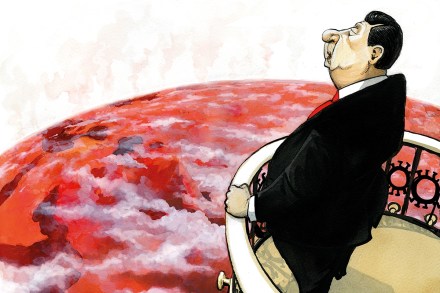
Xi’s world: how Covid has accelerated China’s rise

From our UK edition

32 min listen

China has come out on top from this pandemic year - what does this mean for the world? (00:50) Was Test and Trace doomed from the start? (12:35) And what's with all these Covid excuses? (22:35)With historian Rana Mitter; security expert Nigel Inkster; analyst Richard Dobbs; virologist Elisabetta Groppelli; editor of the Oldie Harry Mount; and Real Life columnist Melissa Kite.Presented by Cindy Yu.Produced by Cindy Yu, Max Jeffery and Matt Taylor.

The fundamental flaws of NHS Test and Trace

From our UK edition

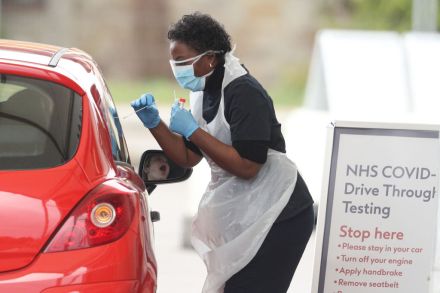
The NHS Test, Trace and Isolate programme — which was meant to be one of our main weapons in the fight against a second Covid-19 peak — has not had a good few weeks. First, when schools went back last month, an inevitable rush for tests was not met with sufficient supply. It then emerged that 16,000 people who had tested positive had failed to be transferred to the tracing system. Not a great start. Then, the government’s Scientific Advisory Group for Emergencies (Sage), for long an advocate, quietly disowned the programme, saying it is having marginal impact. Are these just teething problems as the programme gets scaled up?

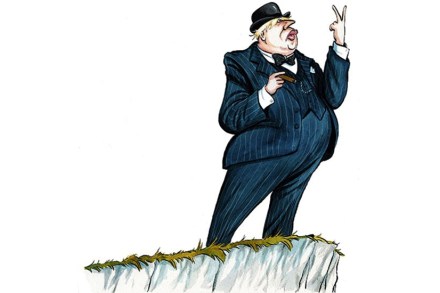
Boris’s Dunkirk moment

From our UK edition

It’s hard to deny that Boris Johnson’s government has so far had a ‘bad war’ against the pandemic. Our death toll is high compared with other countries and our economy is in worse shape. We face rising cases, increased hospital admissions and more restrictions. It’s all so bleak; yet that is why now is precisely the moment for Boris to imitate his great hero, Winston Churchill. In the coming months, Britain can play as pivotal a role in a global victory against the virus as we did in the second world war. The war analogies only go so far, of course. We are fighting a virus, not an evil ideology. But there are similarities. Like the second world war, Covid has caused UK government debt to exceed GDP.

Here’s how the Covid nightmare could be over by Christmas

From our UK edition

Matt Hancock has announced his ‘Moonshot’ project of achieving population-wide mass testing for Covid-19. He should be congratulated for this shift in strategy. The previous strategy of 'Test, Trace and Isolate' relied on people with the virus feeling ill and so taking a test. Those who tested positive would then be called by one of the NHS tracers to ask for their recent close contacts, who the tracer would in turn contact and ask to self-isolate. While this approach has worked in the past with illnesses such as Middle East Respiratory Syndrome in countries such as South Korea, it is unlikely to work in the UK for Covid-19.

The case for mass testing

From our UK edition

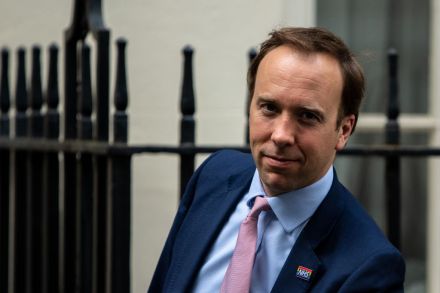
This morning, Matt Hancock claimed on the Today programme that the government is now working as fast as it can on developing a mass testing programme, which is ‘incredibly important’ if we want to ease coronavirus restrictions. The health secretary is right to finally focus on mass testing.

Matt Hancock needs a ‘big, hairy, audacious goal’ for test and trace

From our UK edition

Stanford Business School professors, Jim Collins and Jerry Porras in their book Built to Last: Successful Habits of Visionary Companies, introduced the idea of the ‘big hairy audacious goal’, or BHAG. A BHAG (pronounced ‘bee hag’) is a bold, clear and compelling target for an organisation to strive for, with the appropriate resourcing. A great example was President Kennedy’s speech to Congress in which he said ‘this nation should commit itself to achieving the goal, before this decade is out, of landing a man on the moon and returning him safely to earth’. This audacious goal committed and motivated NASA and its suppliers to deliver a massive step up in performance.

Is our test-and-trace system ready to stop a second spike?

From our UK edition

We are going to hear a lot about Test, Trace and Isolate (TTI) in coming weeks, as we approach autumn and fears of a second wave of Covid-19 grow. Now we have moved away from national lockdown but do not yet have a vaccine, the test-and-trace system is our main bulwark against a resurgence of the disease. But how good a defence is it? A study published in the Lancet Child and Adolescent Health this week suggests there is a huge amount at stake.

Introducing the Harding-Hancock Efficiency test

From our UK edition

We are going to hear a lot about Test, Trace and Isolate (TTI) in coming weeks, as we approach autumn and fears of a second wave of Covid-19 grow. Now we have moved away from national lockdown but do not yet have a vaccine, the test-and-trace system is our main bulwark against a resurgence of the disease. But how good a defence is it? A study published in the Lancet Child and Adolescent Health this week suggests there is a huge amount at stake.