Features

The new opposition: an interview with Ed Davey

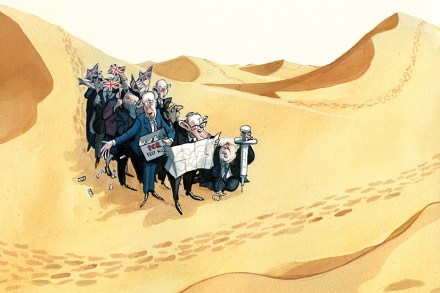
When Boris Johnson sought to extend the government’s emergency powers for another six months last week, he faced little opposition in the Commons. Rather than fight for parliament’s right to scrutinise the government, Keir Starmer told Labour MPs to vote with the Tories. There was only one party of opposition: the Liberal Democrats. Ed Davey, the party leader, complained in parliament about the ‘draconian’ powers taken by the government, and whipped his MPs to vote against them. The 11 Lib Dem MPs are a much-depleted force from the 57-strong party that propped up David Cameron in the coalition years. After they have spent years struggling to find ways to be heard, could a rediscovery of liberalism do the trick?

WHO knows? We still can’t be sure of Covid’s origins

Could Covid-19 have originated from a Chinese lab accident? When the virus was first identified, many pointed out that it was close to the Wuhan Institute of Virology. It sounded like a conspiracy theory. But it’s all too plausible. And there are questions that the long-awaited report by the World Health Organisation leaves unanswered. Only after the pandemic started did Professor Shi Zhengli, director of the Center for Emerging Infectious Diseases at the Wuhan Institute of Virology, notice that a close viral relative to Covid-19 had been found in a mineshaft years before. There was an apparent pneumonia outbreak nine years ago at a copper mine in Mojiang, around 1,000 miles from Wuhan, in an area where Zhengli’s team regularly hunted for new viruses.

What Mormons like me really believe

As one of the 200,000 British members of the Church of Jesus Christ of Latter-day Saints, my heart doesn’t leap when I hear about a new documentary made about us. Such films tend not to be flattering. But here’s the puzzle: if our faith is really based on nonsense, why is it growing? Why would people like me convert? If you can bear with me, I’d like to say a bit about who we are — and what we are not. We’re followers of Jesus Christ (i.e. Christians). Our scripture is the Bible. We also believe that the Book of Mormon, another Testament of Jesus Christ, revealed to Joseph Smith and published in 1830, is the word of God.

The troubling history of Mormonism

The new three-part Netflix series Murder Among the Mormons is attracting big audiences, and deservedly so. Finally someone has made a major documentary about Mark Hofmann, the squeaky-voiced Mormon nerd who was both the most brilliant document-forger in history and a psychopathic murderer. In the early 1980s, the young Hofmann manufactured a series of documents that portrayed its prophet Joseph Smith — the discoverer of the ‘gold plates’ that supposedly described a great Israelite civilisation in America — as a conman up to his ears in the occult. In 1985, panicking that he was about to be discovered, he blew up two Mormons with pipe bombs, was caught by police and is serving life in jail.

‘Spiritual but not religious’: the rise of consumerism in church

I was raised Christian and the more I’ve thought about it, the more curious something about my upbringing seems. My church was constantly denying it was ‘religious’. By any objective social--scientific measures, the community was decidedly religious. Maybe we weren’t that organised (there was no website), but we recited historic creeds, we submitted to the authority of a sacred text and we practised ancient rituals. We identified with the worldwide institutional expression of the body of Christ, yet we still liked to say we weren’t ‘religious’. Throughout my childhood I was reminded in sermon after sermon that we were ‘-Spiritual but not Religious’.

Has the vaccine cured my long Covid?

Everyone has their own Covid-19 story, and here’s mine. I caught it in Marks & Spencer in late March last year, when 200 clearly deranged panic-buyers set about stripping the store of its every last ready meal. Web designers grasping the last known packet of Our Best Ever Prawn Cocktail, estate agents fighting over the gooseberry and elderflower yoghurts: it felt like the end of times, and was actually one of the scariest experiences I have ever had. My friend Russell got it at around the same point at his daughter’s PTA meeting. He spent five weeks in hospital. Another parent died. There were four of us in this small flat. We knew if one of us got it, we all would. It was my daughter Martha, aged 20, who first started showing symptoms.

The fightback: it’s time for the West to take on China

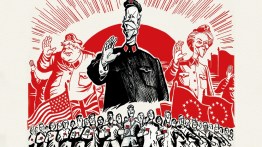
Boris Johnson says it is a mistake to ‘call for a new Cold War on China’. Yet China is, in many ways, a more formidable foe than the Soviet Union ever was. It is more integrated into the world trading system and its economic model is less flawed. This gives it a commercial pull in the West that the USSR never had. Its purchase over businesses and institutions goes some way to explaining why there is such reluctance in the UK, and the West more broadly, to take a tougher line on Beijing. ‘It’s the money, there wasn’t that complication in the Cold War,’ laments one cabinet minister. Yet in the past year China has made a series of tactical missteps.

We don’t need a law against ‘conversion therapy’

Earlier this month, with the citizenry still confined to their houses, borrowing at record highs and GDP in a record slump, there was a debate in Westminster Hall about ‘conversion therapy’. An internet petition has called on the government to ‘Make LGBT conversion therapy illegal in the UK’. And so for a couple of hours MPs from across the major parties competed with each other to express their horror at gay and trans people being subjected to this practice. Feelings ran high. Nobody spoke against. One Conservative MP arguing for criminalisation, Alicia Kearns, claimed that she had come into parliament with ‘one legislative change I wanted to deliver, which was to ban conversion therapy’.

Teenage life has never been so fraught

You’ve heard about Everyone’s Invited? It’s the controversial new website for female students, mostly schoolgirls, to unburden themselves about boys behaving badly. It has trashed the reputation of some independent schools, Dulwich being the latest. There are sections for St Paul’s, Eton and Latymer Upper — and, among the private schools, my son’s state school, which takes girls in sixth form. The first thing my daughter, 14, does in the morning is to whip out her phone and scroll through the posts. ‘More from J’s school!’ she carols. ‘Look at these! Actual abuse!’ Frankly, I am far from pleased that she can understand the language on the wretched site. I take a look and, my goodness, it’s sordid.

Europe’s panic: the meltdown over vaccines

The Dutch city of Leiden has rarely played a dramatic role in European history. Quiet, rainy and tucked away close to the sea, it is in many ways the Durham of the Continent. It was besieged by the Spanish in the Eighty Years’ War, Rembrandt was born and worked there, Einstein taught intermittently at its university — and that is about it. Yet this week Leiden is at the centre of European politics, and in a way that almost no one could have expected. In the city’s science park, the biotech company Halix has a crucial role in manufacturing the Oxford-AstraZeneca Covid-19 vaccine. The European Union threatened to seize control of the plant, demanding that all its output be diverted from Britain to the Continent.

Can Britain’s new military policy end decades of pretence?

Like most prime ministers, Boris Johnson has grown fond of deploying the military — albeit so far on the home front. Enthused by the army’s service in the London Olympics, he turned to them when the pandemic struck and 101 Logistic Brigade have been embedded in government ever since. They distributed PPE to frontline workers in March last year, and this year have become an integral part of the vaccine rollout. ‘The military don’t moan about health and safety regulation or a 40-hour week,’ says one minister. ‘Everything just works.’ The future of the military was this week laid out in a blueprint billed as the biggest strategic rethink for a generation.

The agony of watching friends succeed

I’ve just had the first sign that things are going back to normal — and that I’m going back to normal, too. I was suddenly struck by a feeling I’ve not had since the first lockdown last March; a feeling writers and journalists know all too well. Literary envy. Whatever your profession, envy is something we all know. A colleague’s promotion or a friend’s pay increase prompts that inner voice of brattish resentment. Envy is the herpes of competitive capitalism — it disappears from view and just when you think it’s gone for good, up it pops. But envy hasn’t had much of a chance to surface during lockdown. Everyone’s career in the so-called creative industries has been put on hold.

Bristol is now a hotbed of ‘ventrification’

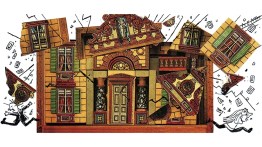
Seeing my hometown, Bristol, in flames this week following the violent ‘Kill the Bill’ riots, it was unrecognisable as the safe south-west city which I had dreamed of leaving since the age of 12 (when I started sleeping beneath a poster of Harry Beck’s classic London Underground map). I finally escaped to the capital in search of fame, fortune, sex and drugs at 17. When some people say ‘I don’t recognise the place’, they’re usually talking about the effects of immigration, but that’s not my experience.

Failing upwards: the story of Ursula von der Leyen

Ursula von der Leyen looks every inch the modern European stateswoman. Her tailored trouser suits, no-fuss hair and assured speeches: what’s not to like? When she was put forward by the European Council for President of the European Commission, her fellow Germans knew precisely what to expect. A poll found that only a third said she would be good at the job. Martin Schulz, a former president of the European parliament, did not mince his words. ‘Von der Leyen is our weakest minister,’ he said. ‘That is apparently good enough to head the European Commission.’ Having served as the deputy leader of Angela Merkel’s CDU party from 2010, she consistently achieved the lowest re-election results in the role’s history.

Unopposed: why is Keir Starmer making life so easy for the PM?

If there is one thing worse than being talked about, it is not being talked about — and this is the fate beginning to befall Keir Starmer. He is at risk of becoming an irrelevance. After not even a year of being Labour leader, Starmer finds his personal ratings on the slide: a YouGov poll this week showed his rating at minus 13, down from plus 22 last summer. Just over half of voters think he doesn’t look like a PM-in-waiting and Labour itself is consistently trailing the Tories in the polls. It’s not clear yet what Starmer stands for, and he is running out of time to make an impression on the public. There is some nervousness about the upcoming Hartlepool by-election despite the fact Hartlepool has never elected a Tory. This is telling.

Starmer’s long game: party repair comes before opposition politics

What is Keir Starmer thinking? His approach might baffle Tory MPs, who wonder if he will ever spring to life. The answer, though, is that he’s playing a long game. He hopes he will be a strong opposition leader when the time is right. For now, it is time to offer support to Boris Johnson’s government. The pandemic has created tricky terrain for the shadow cabinet. Much like in wartime, normal political rules don’t apply, because ‘people want the government to succeed’. Starmer’s supporters say coronavirus means the Labour party has been squeezed out of the conversation. It’s not as simple as Starmer not knowing what he wants, even if some Labour MPs see this as the main problem.

Awards season loses its shine when no one can go to the cinema

Here it is again, a couple of months later than usual but back nevertheless. It’s the time of the annual jamboree that is film awards season, a three-month extravaganza that predominantly revolves around three key events: the Golden Globes, the Baftas and the Oscars. All three of these celebrations of artistic excellence and mutual backslapping have been delayed due to Covid. The Globes took place — virtually — three weeks ago, Bafta revealed its shortlist last week and the Oscar nominees were announced on Monday. The starting gun has been fired — while all our cinemas remain closed. Have you seen Nomadland, The Father or Promising Young Woman? Of course you haven’t. No one, apart from the critics, has been afforded the opportunity.

Churchill’s enigma: the real riddle is why he cosied up to Stalin

Dresden. Tonypandy. Gallipoli. Bengal. Winston Churchill’s reputation has withstood an array of charges, made by each generation with their own prejudices. Whereas in the 1970s it was Richard Burton and Jim Callaghan accusing him of a vendetta against the Welsh miners, today it’s racism, imperialism and white supremacy. The words ‘Was a Racist’ were scrawled on his statue in Parliament Square during last year’s Black Lives Matter demonstrations. Earlier this week police protected the statue at a rally as protesters chanted ‘Protect women, not statues’.