Features

Bricks and pieces: the blight of London’s fake facades

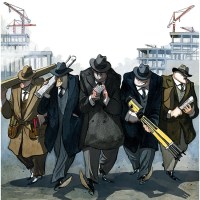
‘I found Rome a city of bricks and left it a city of marble.’ So Augustus is supposed to have said. What would an emperor of London say today? ‘I found the capital a city of bricks and left her a city of rubble’? London bricks are falling down. Across the capital, brick facades are coming off in chunks. Like the Cadbury chocolate Flake, this is the crumbliest, flakiest brickwork. I was all for the new brick city. I’m a brickwork bore. Away with glass, away with steel! Build back better, build back brick. When I saw brick buildings going up in new developments I cheered. I will bang on to anyone who will listen (most don’t) about fitness of materials, our vernacular heritage and the handsome nobility of London stock brick.

The case for sending vaccines to India

Hospitals in Delhi are openly pleading for supplies of medical oxygen, a commodity so scarce that it is now being sold on the black market for almost ten times the normal cost. Makeshift crematoria are being set up around the city to cope with the surge in the number of deaths. Richer countries are asking why India, with 20 million Covid cases now recorded, is so reluctant to lock down again. It is a good question. The answer lies in the disastrous effects of lockdown for so much of India’s population. Closing any society has serious consequences, but the results were always going to be worse in the developing world. I have been watching the pandemic unfold in India from Stanford University, where I’m a professor of medicine.

Can Anas Sarwar rescue Scottish Labour?

When the Scottish parliament was set up by Tony Blair in 1999, it seemed as if Labour would govern Holyrood for the foreseeable future. The Scottish Tories were a contradiction in terms. Devolution was sold as a device that would kill nationalism ‘stone dead’. Suffice to say, this plan did not quite work. The Scottish National party took power in 2007, the Tories were resurrected as the new opposition and it was Scottish Labour that ended up on the brink of extinction. Now, for the first time in two decades, Scottish Labour is on the up, with a new party leader. Anas Sarwar, 38, was elected in February so has not had long to prepare for the campaign.

What should we put in our time capsule of the plague year?

The ladies of my church knitting circle (note, we are open to those who identify ‘-otherly’, and to practitioners of diverse crafts) are an enterprising bunch, and no techno slouches either. Unbowed by Covid, we have continued to meet via Zoom, bringing along our own tea, cake and creative endeavours. We love a project, and we now have one: a time capsule of the plague year. This idea is so far proving to be more a feasibility study than a done deal. There are so many decisions to make. What size should the capsule be? Where will it be stored? When will it be reopened, and by whom? And what will they find when they do?

Bad news, Boris – childcare has cost me £500,000 (and counting)

Has Boris Johnson only just discovered the ruinous cost of childcare in this country? He has, allegedly, been seeking a rich donor to pay for a nanny for his one-year-old son Wilfred. What’s surprising is not that the Prime Minister has apparently told friends he needs £300,000 a year to keep on top of his outgoings (life gets expensive when you have multiple dependents and properties), but that he has only now realised the cost of finding someone to look after his son. And how even a dual-income couple will struggle. Especially in London. I should know: I have been paying for full-time childcare for almost 14 years. For the most part, I have been in denial about the crippling cost.

A vegan’s defence of field sports

In modern Britain, the quickest way to prove that you’re a good person is to show that you love animals. People share cat videos and pose with dogs in pictures for dating websites. Anyone who is seen to hurt animals — like the Danish zoo that culled a giraffe or the lawyer who clubbed a fox — is sent to a special circle of social media hell. Those who participate in field sports reside in this inferno: the men and women who shoot, stalk or hunt. They are killers in a society that doesn’t like to see death. When polled, around 85 per cent of the British public are in favour of keeping New Labour’s hunting ban, and a majority want to extend the ban to shooting and stalking. I consider myself an animal lover.

The nightmare: Boris’s battles are just beginning

When Boris Johnson parted company with Dominic Cummings at the end of last year, it was inevitable there would be trouble further down the line. To pick a fight with one of Britain’s most formidable campaigners and his allies was always going to have consequences. It’s now becoming clear what they are. Some of the revelations from Johnson’s enemies are quotable: for example, the allegation that he said in private he’d rather let ‘bodies pile high’ than allow a third lockdown. But what he said in anger, or what he considered doing, matters a lot less than what he actually did. That’s why the most serious question he’s facing is about the financing of the renovation of the Downing Street flat.

In India, the Covid crisis has left us helpless and broken

New Delhi Crematoriums are burning so many pyres that they have run out of space and wood to keep up with demand. Vehicles filled with bodies queue outside the funeral homes for hours. People are dying in the streets, some laid out on stretchers, while ambulances wait in vain outside every hospital in the city. This is what a collapsed healthcare system looks like. There are 4,700 Covid intensive care beds for Delhi’s population of 19 million. There are 20,750 non-ICU Covid hospital beds, but most are without any oxygen support and have strict admission criteria. To find a bed, the families of Covid sufferers are forced to call hundreds of leads to see if any hospital has capacity. I was one of those people desperately searching for a bed last week.

Why did Britain fall out of love with speedway?

It’s classified by the government as an ‘elite’ sport but you’ll struggle to find it mentioned in the national press. The current European champion is a Briton — Robert Lambert — but I’d be surprised if many people reading this have ever heard of him. It was once reckoned to be Britain’s second most popular spectator sport but the weekly numbers attending this summer’s shortened league season will be in the low tens of thousands. I’m talking about speedway, which has dropped out of national consciousness so much that it’s often necessary to explain what it actually is: motorbikes, four riders, racing four laps around an oval circuit at up to 70mph and, crucially, without any brakes.

The age of cyber warfare is a threat to us all

In his recent State of the Nation address, Vladimir Putin said that if challenged by another state, Russia’s response would be swift, harsh and ‘asymmetrical’. An unusual word, but anyone who has been paying attention to the developments in cyber warfare will know what he means. Despite Russia pulling back more than 100,000 soldiers positioned on the Ukrainian border, British troops will shortly join Ukrainian counterparts to prepare for any misadventures from the Kremlin. And if a conflict were to escalate, the action may not be limited to faraway battlefields. It might involve cyberattacks, which would hit us at home. This, too, is a threat the Ministry of Defence seeks to prevent.

The C of E has fallen for anti-Christian theories of race

In its new report, From Lament to Action, the Church of England has decided to focus on race. Now, there is no question that racism exists within all cultures, but the Judaeo-Christian tradition has always been opposed to it. Christianity emphasises the common origin of all humans, made in God’s image, and contemporary science corroborates this moral and spiritual insight. The Church is right to set its face against racism. Predictably, however, the C of E report urges an audit of monuments and an examination of the Church’s complicity in the slave trade. Why doesn’t it celebrate the long tradition of those Christians who devoted their lives to abolition?

How the Goveites took charge of No. 10

When Boris Johnson made the extraordinary decision last week to brief newspapers that Dominic Cummings was behind a series of leaks, the move seemed close to kamikaze. He had chosen a target who isn’t exactly known for walking away from a fight. And there’s another, more serious question: why did nobody in No. 10 stop him? Johnson has always been an impulsive politician, but he has also employed people who can act as a moderating force. He makes friends slowly, which is why he tries to take allies with him. Ann Sindall, his old secretary at The Spectator, went to work with him when he became London mayor. He hired no fewer than seven deputy mayors and took two (Sir Eddie Lister and Munira Mirza) to No. 10.

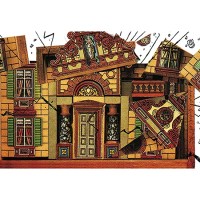
The fury and frustration of living in a listed building

You have to really love old houses to buy a listed building. My wife and I know this to our cost. We’re now on our third in a row. In each case we swore we’d never make the same mistake again and then, idiots that we are, we’d be seduced by some deceptively charming little gem and the same story would unfold. It’s not just that old houses are likely to be impractical by modern standards: cold, crumbly and liable to leak. You accept that there’s a price to pay for character and historic heft. Most of these problems can also be lessened with some hard — and usually extremely costly — work. No, the challenges posed by the house itself must be accepted with good grace. The fury and frustration lies in dealing with conservation officers.

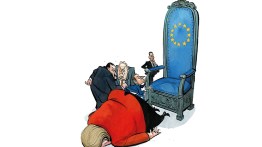
Is Germany about to go Green?

Angela Merkel never quite managed to appoint a successor. Her 16 years at the helm of Europe’s largest democracy has seen every potential challenger either annihilated or neutered. For all her motherly charms, Mutti Merkel is a merciless political operator. The Christian Democratic Union and its Bavarian sister, the Christian Social Union, seem to have settled on a political incompetent to lead them into September’s federal elections. Armin Laschet is, at least for now, set to become the bland, monotone heir to Merkelism — the result of a stitch-up that may yet unravel. Pandemic-stricken Germans are growing tired of the CDU: roughly a quarter of its voters have melted away since the start of the year. Meanwhile, the country’s Green party is surging.

How should I spend Joe Biden’s money?

I’ve spent nearly my entire adult life working in Britain, but Uncle Sam never forgets about Americans abroad. We can vote in elections. We still file tax returns. And we also, it seems, benefit from Joe Biden’s spending binges. His latest instalment slipped through my letterbox last week: a cheque for $1,400. It’s a stimulus; intended, of course, to rebuild the US economy, but in practice a giveaway for the world. When the first cheque arrived at the start of this year, I thought it must be a rare glitch in the system: why would the US Treasury want to boost the restaurants of south London? Maybe it was a fake. Donald Trump’s name was stamped at the bottom, which made it resemble Monopoly money.

Westminster and the truth about the class ceiling

I come from the Lancastrian town of Ormskirk, which, though pretty, provided little in the way of opportunity or aspiration. No one in our family had been to university. I qualified for free school meals. Expectations for my future were low. But I was lucky. I had great mentors and ended up in Downing Street. I also worked for a Prime Minister who believes in social mobility and put ‘levelling up’ at the very centre of his premiership. This was the reason I came into politics too. Boris Johnson understands that the need for social mobility is now more urgent than ever, as we emerge from lockdown. While the food poverty debate raged last summer, and the government found itself losing a PR war with the footballer Marcus Rashford, I attended a cabinet meeting.

Football’s billionaires will win in the end

Not for the first time, our Prime Minister has executed a very sharp U-turn. Last month, heralding the achievements of AstraZeneca, Boris Johnson professed that the vaccine had been made possible because of greed, echoing the phrase used by Gordon Gekko in Wall Street that ‘greed is good’. Now, though, he seems to be of the mind that greed is very bad indeed. He pronounced himself ‘horrified’ that six Premier League clubs intended to form a European Super League, from which, following the American model, they could never be relegated, in order to trouser even more outrageous sums of money for themselves. He was not alone: the entire country reacted with disgust and fury.