Features

Blair’s back – and advising Tories on vaccine ID cards

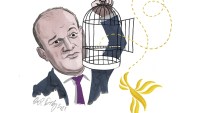
When the Prime Minister mentioned ‘Covid status certification’ as part of his route back to normal life, one man must have enjoyed the moment. For Tony Blair it was yet one more little victory in his UK comeback tour, made all the sweeter because Boris Johnson was once a principal opponent of the idea of any ID card system. Blair has been pushing vaccine passports like nobody’s business. A recent paper published by his Institute for Global Change advocated that we carry ‘digital health passports’ on our smartphones, which we could scan on entry to bars, theatres and other places. If you don’t have a smartphone, the paper suggested, the venue could take a photo of you instead, and check it against a database of people who have been vaccinated.

The break-up: is Boris about to lose Scotland?

At the stroke of five o’clock last Friday, the new head of No. 10’s Union unit was due to brief government aides on the robust new strategy to counter the SNP. It was urgently needed: campaigning for the Scottish parliament election starts in a few weeks and if Nicola Sturgeon wins a majority — as looks likely — she’ll demand another independence referendum. Even if Boris Johnson refuses, the SNP will attempt to push on regardless. Any plan to save Britain must be put into action sooner rather than later. But an hour or so before the briefing, an email went around to say it was cancelled. What’s more its author, Oliver Lewis, had resigned, just two weeks into his job as head of the unit.

The art of the public information ad

Bring back the Tufty Club. Bring back the Green Cross Code. Bring back ‘Charley says’. Bring back ‘Only a fool breaks the two-second rule’. Bring back Vinnie Jones and ‘Stayin’ Alive’. Bring back the Country Code and ‘Always take your litter home’. Bring back public information films. Bring back the Central Office of Information. For younger readers, I probably need to explain what the hell I am talking about. Tufty was created for the Royal Society for the Prevention of Accidents, and was an implausibly sensible young squirrel whose behaviour (in contrast to the foolish antics of the louche Willy Weasel) gave lessons to children on road sense. At its height, the Tufty Club had two million members.

For lovers who live apart, it’s been a long year

Spring is coming, the roadmap out of lockdown is here, and the faint signs of an End To All This can be seen, in smoke rings, on the horizon. I scan the list of freedoms with impatience: schools, if you must, parental visits in parks, fine, fine, but when will I get to see my girlfriend indoors? If you express some level of frustration with lockdown life, the worry is that you will be taken for someone who believes the right to spread plague is enshrined in the Magna Carta or that society took a wrong turn with the suspiciously foreign antics of Louis Pasteur. I am keen neither to catch Covid nor give it to others. That said, it has been illegal for me to hug my girlfriend since March and I’m starting to go mad.

Up Crash: why are markets soaring as the economy tanks?

Shops are boarded up. More than four million people are on furlough with little idea of whether they will have jobs to go back to. Global trade has hit levels last seen a decade ago, and government deficits are soaring, while most developed economies have seen output shrink by 10 per cent, a collapse not seen since the Great Depression of the 1930s. On just about every measure imaginable, the global economy has never been in worse shape, and we are all a lot poorer. And yet here is a puzzle. Why can’t we see any evidence for that in the financial markets? Instead we are witnessing a series of extraordinary, epic bull markets. Crypto-currencies finally took a dive this week, but Bitcoin has quadrupled in value in recent months. Tesla is worth more than Toyota.

The decline of American journalism

The latest absurdity in American journalism is the forced resignation of the veteran New York Times reporter Donald McNeil Jr for uttering the word ‘nigger’ in front of a group of teenage tourists on a Times-sponsored trip to Peru. It has been justly ridiculed by many sane conservatives and even some courageous liberals. Although the infraction happened more than a year ago, calls for reason have had no practical effect against the demands online and inside the Times that McNeil be fired after the Daily Beast revealed the teenagers’ complaints. McNeil’s own defence is that he used the racial epithet as information with the high school students, not as an insult. This cut no ice with the hanging judges of Times-world.

Power jab: the rise of vaccine diplomacy

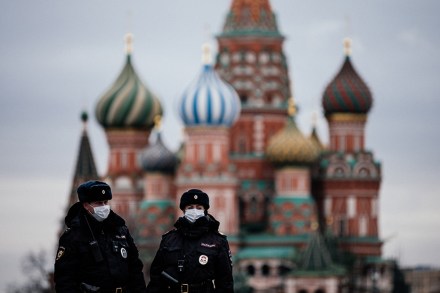
At the end of January the President of Chile, Sebastián Piñera, gave a speech on the tarmac of Santiago airport. ‘Today is a day of joy, excitement and hope,’ he said, standing in front of a Boeing 787 which had just arrived from Beijing. Inside it were two million vaccine doses produced by the Chinese company Sinovac. It was the first of two similar-sized shipments arriving that month. A few days earlier, the President of Mexico, Andrés Manuel López Obrador, had emerged from Covid confinement to thank a ‘genuinely affectionate’ Vladimir Putin for pledging 24 million Sputnik doses to Mexico in the coming months. Hopes of vaccinating his country with the Pfizer vaccine had dissipated when supply dried up.

The need for speed: can we outpace Covid?

The Spanish flu pandemic a century ago resulted in around 50 million deaths worldwide. Its second wave was over ten times more deadly than its first. History is repeating, with the global death toll from Covid-19 this second winter already three times that of the first. In the UK, the number of deaths in this second wave is close to double the number we suffered in the first wave. The death toll in the first wave, while tragic, is somewhat understandable. A deadly pandemic came out of the blue, and we had to work out the best way of responding. But we cannot use this excuse to explain the higher death toll in our second wave, as we have had months to prepare this time.

The importance of a good funeral

In ITV’s otherwise terrible drama Finding Alice, one line struck me with particular force. A funeral director is addressing our heroine, who finds herself unexpectedly having to organise last rites for her partner. Wicker coffins are particularly popular now with relatives, says the undertaker, and I found myself nodding in strong agreement. A light woven coffin, made of pleasingly biodegradable material and topped with a simple but stylish cross of early spring flowers, was exactly what we selected for my father, to be buried in one of the last remaining — and therefore highly sought-after — spots in the churchyard.

What Britain could learn from New Zealand about home-schooling

If ever there was a moment to address the issue of home-schooling, it is now. The pandemic has disrupted teaching, school life and examinations in catastrophic ways. Many children will now never get the education they would have had. But every crisis is an opportunity — and this crisis offers the chance to reform education in radical ways for the better. Britain could learn a lot from New Zealand. Since 1922, the Kiwis have run a state-funded national correspondence school, known now in Maori as Te Aho o Te Kura Pounamu (Te Kura for short). In Western Australia, a similar school has existed since 1918 and is known as the School of Isolated and Distance Education. The Correspondence School/Te Kura approach is not a revolutionary concept.

China vs America: the struggle for south-east Asia

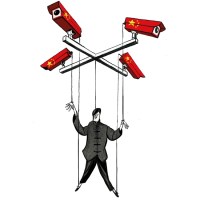
Is Antony Blinken, President Joe Biden’s secretary of state, preparing to abandon Barack Obama’s powder-puff Asian foreign policies? It is now widely agreed that Obama, under whom Blinken served as deputy secretary of state, ceded to China uncontested control of the South China Sea. Obama’s so-called ‘pivot to Asia’ was all talk and no trousers. Blinken, who believes that diplomacy must be ‘supplemented by deterrence’, may be about to implement a more aggressive foreign policy in south-east Asia and elsewhere. In his first speech as general secretary of the Communist party in 2012, Xi Jinping made his intentions clear.

Covid is hastening the creep towards a cashless society

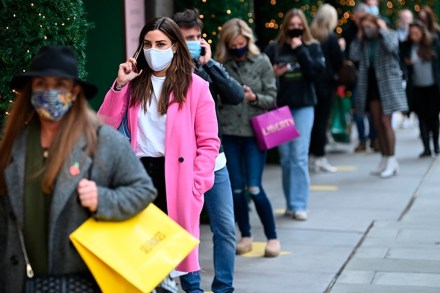
If your local pub ever reopens, don’t be surprised if one thing is missing: the till. The anti-cash lobby is seeking to take advantage of the pandemic to rid us of our banknotes once and for all. When UK Finance — the trade body for the banking and payments industry — pushed the government two weeks ago to increase the limit on contactless card payments to £100 (it was raised from £30 to £45 at the beginning of the pandemic), it was a new offensive in a campaign for a cashless society which has been going on for years.

How chess got cool

Ten years ago, comedian Matt Kirshen’s one-liner was voted the fifth-best at the Edinburgh Fringe. ‘I was playing chess with my friend and he said “Let’s make this interesting”. So we stopped playing chess.’ Not bad, as jabs go, and I’ve heard a few — as has any lifelong chess player. Well, times have changed. Late last year, Netflix TV series The Queen’s Gambit was watched by 62 million households in its first 28 days. Who’s laughing now? I suppose I can admit that the popularity of the series wasn’t entirely down to the chess. The wondrous eyes of Anya Taylor-Joy as heroine Beth Harmon surely played a part, and period styling works like catnip on TV audiences.

A defence of the Church of England

If you’ve been following the media coverage of the Church of England over the course of the coronavirus pandemic, one question you might have seen is: ‘Where is the C of E?’ Let us offer an answer. We have been burying the dead, comforting the bereaved, feeding the hungry and praying for our nation. We have been doing this not as superheroes, but as human beings living through the same crisis as everyone else: grieving, home-schooling, worrying, getting sick, shielding, isolating, weeping. With that said, we fully understand — and indeed share — the anger and frustration felt by some that the government ordered public worship to be suspended during the first lockdown.

The myth of ‘progressive’ thinking

One of the guiding instincts on the political left is that society should be ‘progressive’. Social attitudes, politics and the economy should all advance together, making society fairer and more equal in the process. In this view, a tax can be progressive if it targets the income of the wealthy, just as a law is considered progressive if it protects the rights of a minority. This progressive worldview permeates almost all thinking on the modern left. And yet the contemporary idea of the progressive society has undergone a logical collapse. It has been driven that way by activists, some of whom represent groups with valid causes, but whose messages have been concentrated and distorted out of all proportion by the lens of social media.

What’s happened to all the lesbians?

As a proud resident of Sussex, I had to laugh when I heard that Facebook had threatened to ban references to Devil’s Dyke — the 100-metre-deep South Downs valley which has been a tourist attraction since Victorian times — for ‘violating community standards on hate speech’. The touchy bots even slapped a 48-hour ban on a man who posted a photo of a bus bearing the beauty spot’s name as a destination with the caption ‘Heading up to the Dyke’. It’s nutty, but it sparked a serious thought: where have all the lesbians gone? Just the other week the lesbian Joanna Cherry was sacked as the SNP’s Westminster spokesperson for not being ‘inclusive’ enough over the issue of gender recognition.

Biden vs Merkel: the battle over Russian gas is heating up

Two months ago, a Russian pipe-laying ship called the Akademik Cherskiy left the Baltic island of Rügen to finish the last few miles of the most controversial gas pipeline in the world. Germany hopes that Nord Stream 2 will improve its access to Russia’s vast reserves of natural gas. In America, however, the project is seen as a way for Moscow to exert influence over Europe. Its completion marks the biggest diplomatic crisis in transatlantic relations since the Iraq War and now, as then, we see Germany pitched against the US. But this time, Germany is far more determined. Since its inception, the pipeline —which runs directly from Russia to Germany — has been opposed by many in Europe who share America’s concerns about dependency on Russian energy.