Features

The problem with ‘role models’

Watching the funeral of the Duke of Edinburgh at the weekend — that Land Rover, that lack of eulogy — I felt an alien emotion steal over me. Shortly after the last blast of the bagpipes faded away, I realised what it was: I’d like to be like that. Amusingly, the only person this working-class radical feminist has ever felt this emotion towards was a reactionary prince. Somehow, the very incongruity made perfect sense; I can’t think of anything drearier than having a ‘role model’ who was in any way like me. There are quite a few modern phrases which annoy the heck out of me. ‘Reaching out’ should only be used by a member of the Four Tops, while ‘Going forward’ should only be used of cars.

How Neanderthal are you?

My brother recently decided to get a DNA test. He discovered that our family were all descended from a mix of the usual British suspects — a bit of Viking, Anglo-Saxon and Celt — and were predisposed to standard diseases and health risks. But there was one surprise. My siblings and I had double the normal amount of Neanderthal in our genes. Reactions were mixed. My girlfriend declared she had suspected something of the sort for some time. My mother announced that it must come from my father’s side of the family. And it took us a while to digest.

Biden’s rodeo: the President’s first 100 days have been a wild ride

Joe Biden, the 46th President of the United States, has never been able to keep his mouth shut. Throughout his absurdly long career in politics, he has always said too much, made stuff up, gone too far. His friends and fans just shrug it off. ‘That’s our Joe.’ The trouble is, Biden is now America’s Commander-in-Chief, leader of the not-so-free-anymore world, and his loquaciousness — and the mental fuzziness it betrays — is becoming a problem. Take, for instance, his decision this week to intervene before the jury reached its verdict on the trial of Derek Chauvin, the white police officer now found guilty of the murder last year of George Floyd in Minneapolis, Minnesota. ‘I’m praying the verdict is the right verdict.

Money to burn: shoppers, not the state, will lead our recovery

Compared with the United States, the UK has so far been relatively cautious about launching stimulus programmes to kick-start the economy. And yet perhaps it doesn’t need to. People are paying off their credit cards, putting some money into the stock market, buying new houses, as well as finally booking a restaurant and getting back to the shops. A lot of money is about to be unleashed on the economy, even if this stimulus is largely invisible now. The interesting question is this: where will all the money go, and which sectors will be the big winners? It may at times seem as if Rishi Sunak is spending like crazy. By global standards, however, he is far from exceptional.

The green games: the Prime Minister’s big plan to rebrand Britain

It is not unusual for governments to focus on a big event after a period of crisis. In 1951, the Festival of Britain was meant to rejuvenate the country after years of post-war austerity and rationing. The 2012 London Olympics, presided over by Mayor Boris Johnson, supposedly announced the UK’s recovery from recession with a £27 million opening ceremony. But games are intended to be boosterish. A 12-day summit on the environment is not an obvious crowd pleaser. Yet this government is determined to turn COP26, the United Nations Climate Change Conference scheduled to be held in Glasgow in the first two weeks of November, into a great event to put Britain on the map.

The day I danced with the Duke of Edinburgh

I started working for the royal family in a temporary role at Balmoral Castle, Her Majesty the Queen’s residence in the Highlands, in 2006. I spotted an advert on my university careers website and thought it might be a good summer stop-gap job until I found something more permanent. I must have made a good impression as, three months later, I found myself one of a few staff members returning to London on the royal flight with HM and her troop of corgis. Buckingham Palace was then my ‘home’ for the next four years. I remember my first morning there — the changing of the guard was taking place in the forecourt, and they were playing a Beatles medley, the 1960s sounds reverberating up to my tiny bedroom at the top of the palace.

The deafening rise of ‘background’ music

One of my favourite things on British Muslim TV is Ask the Alim. An alim is a learned expert in the law. He’ll answer anything, live. The 2020 Best Bits highlights programme included a question about divorce. Can a man take back a woman he has divorced? Good question. It depends whether the divorce is revocable or irrevocable, according to the alim. Boris Johnson has been doing something similar on Facebook recently: Ask the Prime Minister. Instead of expertise on Shariah, he offers an ‘irreversible roadmap to freedom’. But there has been something a bit weird recently about the broadcasts (easily viewed and reviewed to your heart’s content on Twitter, too). It’s the music. The alim certainly does not speak accompanied by music.

Who can take on China in the tech arms race?

The government’s decision to water down new foreign investment rules designed to protect national security casts serious doubt about its resolve to keep China out of the most sensitive parts of the British economy. Raising the threshold above which an overseas stake must be examined from 15 per cent to 25 per cent will sharply reduce the number of deals facing scrutiny. The amendment to the National Security and Investment Bill, now wending its way through parliament, was presented by business secretary Kwasi Kwarteng as necessary to show Britain is still ‘open for business’.

Mourning sickness: our conspiracy of silence over grief

No one can say that, over the course of the past year, we have not had the opportunity as a country to practise the grim arts of grief and mourning. We all know the figures — 127,000 Covid deaths and counting — but I wonder if, in the face of this onslaught, we have lost sight of the vital fact that behind each loss there will be a group of family members and close friends of the deceased setting out on the long, slow trudge down the boggy path of grief. How are we dealing with this suffering? When my father died extremely suddenly six years ago, there was one thing for which I was even more unprepared than the abrupt absence of the most cheerful person I had ever had the pleasure to know.

The truth about Russia’s hidden Covid deaths

The secret is out: the Russian government has been lying to its people. Officially, Russia’s coronavirus death toll for last year — as reported on state television and logged at the World Health Organisation — was an impressively low 86,498 for a population of 146 million. In his traditional December press conference Vladimir Putin proudly reeled off statistics on how quickly Russia’s economy was recovering from the pandemic, and last month he made a triumphant address to a packed public concert to celebrate the anniversary of the annexation of Crimea in 2014. ‘Today is a holiday for our entire vast country,’ Putin told an 80,000-strong, maskless crowd at Luzhniki stadium. ‘Please, take a deep breath and answer this: Do we love Russia?

The competitive cult of cosiness

Do you remember the first wave of hygge, in 2015? It seems a long time ago — back in the freewheeling technicolour of a pre-Covid world — but at that time hygge was the hottest thing to come out of Denmark. The country already attracted envy for its vigorous welfare state, covetable knitwear and high rating on the international happiness index, but the new export outshone them all. It roughly translated as ‘cosy’, people said, but the English word was frail and puny next to the soul-feeding, friendship-cementing, quasi-spiritual force that was hygge. The latter signified home-baked bread and cakes, hand-knitted socks and friends laughing around a wooden dinner table as a hotpot bubbled on the stove.

How Prince Harry became celebrity frontman for a very questionable industry

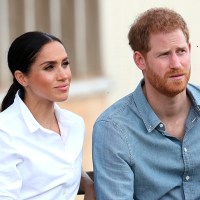
Prince Harry is now chief impact officer for BetterUp, a Californian corporate consultancy whose ‘mission’ is to sell online life coaching with — in his words, — ‘innovation, impact and integrity’. Harry may not realise it, but he is the latest celebrity frontman for the rapidly growing, broadly unregulated and frequently dubious corporate ‘coaching’ industry. And you might not realise it, but Harry, Duke of Malibu is your future, because California’s today is America’s tomorrow and Britain’s next week. BetterUp is one of a group of Californian companies on the growing, corporate edge of life coaching.

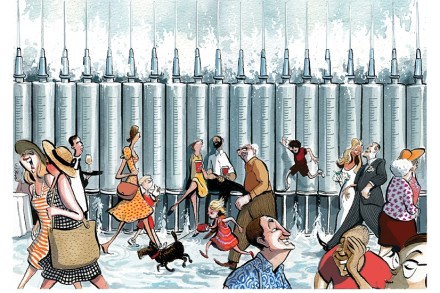
Britain’s vaccine success was supposed to lead to freedom. What happened?

In November, when cases were surging and a second lockdown was under way, Boris Johnson made a big promise: things might look bleak, he said, but the ‘scientific cavalry’ would arrive. It duly did, with a vaccination programme that became the envy of Europe. The mood of the country lifted. Today, Britain is still on course to become the first country in Europe to vaccinate its way out of the pandemic — and lockdown. The economy can reopen in time for summer: truly a great escape. Science achieved the seemingly impossible. Produced in record time, Covid vaccines are proving more effective than most predicted. In Britain, cases and deaths have fallen by 95 per cent since the latest peak, a stunning descent.

Boris on liberty: the PM has always been against ID cards – until now

‘I loathe the idea on principle. I never want to be commanded, by any emanation of the British state, to produce evidence of my identity.’ From the ‘personal notes’ on Boris Johnson’s website, February 2005 ‘There is the loss of liberty, and the creepy reality that the state will use these cards — doubtless with the best possible intentions — to store all manner of detail about us, our habits, what benefits we may claim, and so on.’ Daily Telegraph, November 2004 ‘The government would love to put issues such as these beyond the bounds of debate by creating an air of national emergency. As far as the Prime Minister is concerned, Britain is at war: with terrorists, muggers and fraudsters.

In Israel, vaccine passports are already redundant

Jerusalem The vaccination centre where I got my jabs was in the cavernous foyer of the Jerusalem Arena, Israel’s largest indoor sports venue. Through the locked glass doors, I could see the seats where my 15-year-old and I spent so many hours cheering on our basketball team. Putting my ear to the door, I could hear the players practising. Last week, we were finally back in the stands after a year’s absence. Fans were allowed in, at quarter of the arena’s capacity. After showing my season ticket, I was then asked for my ‘green pass’, which proves I have been vaccinated. My son, too young for vaccination, had to queue outside for a quick Covid test before joining me.

The misguided plan to ‘retain and explain’ statues

When Mao’s Red Guards first got to work in China, they defaced statues before they tore them down. It was common to find a statue of Buddha, for example, with new signs saying: ‘Destroy the old world! Establish a new world!’ Boris Johnson’s government isn’t keen on statue removal, but it is offering a compromise. Oliver Dowden, the Culture Secretary, has adopted a policy of ‘retain and explain’, whereby the statue remains but with a plaque giving more historical context. Explanation, it is assumed, can only be good. Yet you only have to look at the single case where ‘retain and explain’ has been deployed to see what we could be in for.

University challenge: conservatives are now the radicals on campus

On the letters page of the Sunday Times last month, the presidents of the Royal Historical Society and the Historical Association were among the signatories to a letter boldly headlined ‘History must not be politicised’. They were incensed by a rumour that government funding might be cut for the Colonial Countryside project, which looks at possible connections between the British Empire, the slave trade and National Trust properties. Unable to recognise their own political bias, the letter-writers accused the government of ‘politicising’ history by trying to depoliticise it. This extraordinary self-belief, this insistence that academics occupy the high moral ground, reflects what is happening in British universities, not least among my fellow historians.

Britain’s travel ban brings risks of its own

No one knows for sure how many cars are on the road without insurance. The Motor Insurers Bureau puts it as high as one million, and a good number of these won’t have a valid MOT either. Come to think of it, many such uninsured cars without MOTs are likely to be in the hands of drivers who don’t even have licences. And yet it’s never suggested that only those who have a ‘reasonable excuse’ to drive should be allowed to do so, just in case of encounters with revved-up lawbreakers. We know there’s a risk — but we don’t close down all the roads in the country. We get on with our lives. But when it comes to international travel 12 months on from the start of this grisly pandemic, we are not allowed to get on with our lives.