Features

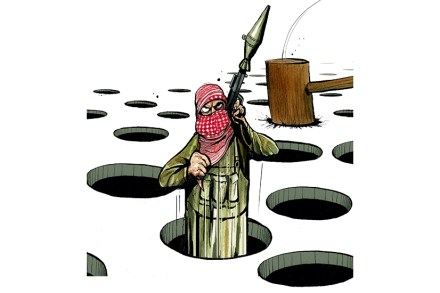
Triumph of the Taleban: the unfolding disaster in Afghanistan

There’s an apocryphal story, told and retold by journalists many times over the course of America’s longest war. A Taleban prisoner is sitting, relaxed, across the table from an American interrogator: ‘You may have all the watches,’ the prisoner says, ‘but we have all the time.’ Now, the Taleban’s patience is finally paying off. President Joe Biden has promised that the last US soldier will be out of Afghanistan by the heavily freighted date of 11 September. In fact, all the troops may be back on American soil by the even more symbolic date of 4 July. Other Nato soldiers — including a small British training mission — are hastily lowering their flags and scuttling out. They leave in their wake an unfolding disaster.
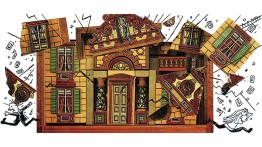
Why is modern architecture so ugly?

In Chesham and Amersham last week, Tory voters punished the government, not only for building on greenfield sites, but for allowing the construction of too many ugly, badly designed buildings. The British public are fed up with modern architecture. Despite polls that prove this time and time again, architects simply ignore people’s views. Indeed, if the public has the temerity to criticise their latest works, there is uproar — as I have discovered to my cost. At a dinner in late 2019, I asked Norman Foster, the ‘starchitect’ of such things as London’s widely derided City Hall and the Berlin Reichstag, if he was pleased by the government’s new Building Better, Building Beautiful Commission.

What Sweden’s political crisis says about Europe’s collapsing centre

Uppsala Nooshi Dadgostar is Sweden’s new political star. A young, softly spoken politician with Iranian immigrant parents and an unfinished degree in law, she became the leader of the Vansterpartiet (‘Left party’) late last year — taking over from Jonas Sjöstedt, a bleeding-heart version of Jeremy Corbyn who struggled to shake off the party’s communist past. Most of her predecessors have tried but failed to become a central part of the national political conversation. But this week, she succeeded: by taking out the Swedish Prime Minister. If he tinkered with rent controls, she said, she’d topple him with a vote of no confidence. She was as good as her word.

Even a robot assistant can’t help you make sense of Japan

Tokyo The late A.A. Gill, in his notorious ‘Mad in Japan’ essay, concluded that the only way you could make sense of Tokyo was to think of it as a vast open-air lunatic asylum, with inmates instead of residents. Gill would have loved Arisa. I don’t think I’ve ever encountered anything more stereotypically Japanese than Arisa. She’s a multilingual robot concierge at Nishi-Shinjuku station in central Tokyo, one of the thousands of new automatons installed in the city ahead of the Olympics next month. She has a rather creepy Doctor Who look to her — she could be Davros’s girlfriend — and she’s there to assist tourists.

The new leviathan: the big state is back

‘In this present crisis, government is not the solution to our problem; government is the problem,’ proclaimed Ronald Reagan in his inaugural speech as American president. Forty years on, the leaders of the G7 have reversed this mantra. In Cornwall last week they declared that the government, and more specifically its $12 trillion of economic support, had not only been the answer during the pandemic but would continue to be the answer during the recovery. They committed ‘to support our economies for as long as is necessary, shifting the focus of our support from crisis response to promoting growth into the future’. It would have been quite possible for leaders to have drawn a very different conclusion: bloated government bureaucracies have failed.

The fraudulent business of recycling

I am a litter picker. No, not one of those high-minded volunteers who have proliferated of late with litter-picking sticks and black bags, but a professional: I am paid to empty the bins and collect the debris left by the public in a small park in Middle England. And I’m angry, not with the great British public who leave the stuff but with the real litter louts who are the root cause of the problem. As summer approaches and people who have been stuck indoors crowd into the beauty spots and on to the beaches, litter becomes a hot topic and it is important to be clear where the blame lies. When I became a bin man, I thought I was contributing to a cleaner, healthier planet.

The art of politics: what ministers hang on their walls

On the walls of the Chancellor’s office hangs a print of Eric Ravilious’s lithograph ‘Working Controls while Submerged’ (1941). Two engineers in blue overalls heave the levers of a submarine. A third slumps asleep on a bench. An image, perhaps, of the ship of state, several hundred feet underwater, but by no means sunk yet. We might picture Rishi Sunak in the Treasury control room, changing the gears, working the pumps, keeping the country bumping along even at the bottom of the economic ocean. Or perhaps Sunak looks at his four framed screen-prints by the artist Justine Smith — ‘Pound’, ‘Euro’, ‘Dollar’, ‘Yen’ — and thinks: if only it were so easy just to print money.

The Sun goes down

A couple of weeks ago Ally Ross, the longtime TV critic at the Sun, was summoned to the managing editor’s office. Such confrontations normally involve expenses. At the Daily Express in the 1950s one Middle East correspondent submitted his — one camel: £125. The narrow-eyed managing editor pointed out that if the camel was bought, it must have been sold, and they would be grateful if the claim was adjusted. Another form turned up 30 minutes later — burying a dead camel: £200. This conversation with Ally was not about money. It was much more serious. It was solemnly explained to him that he had used the word ‘woke’ in his column — and it had been decreed on high that ‘woke’ was synonymous with racial injustice.

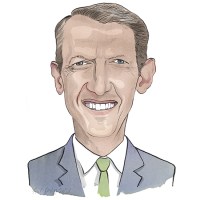
The true cost of cheap money: an interview with Andy Haldane

Britain’s economy is growing at the fastest rate in 200 years. Job adverts are 29 per cent above their pre-pandemic levels and employers say they can’t reopen because they can’t find staff. Wages are rising at the fastest rate in ten years. But here’s the question: how much more support does the economy need from the Bank of England’s printing press? Should the BoE stick to its pledge to bring QE up to £895 billion or stop £50 billion short? Its members met to discuss this last month and decided (as they always do) to press ahead — by eight votes to one.

Is lockdown’s tech bubble about to burst?

Netflix is not signing up subscribers at the rate it once did. Disney+ has stalled. At Boohoo, growth is not as red hot as it was just a few months ago, while Deliveroo’s float on the London stock market was quickly dubbed ‘flopperoo’ by City wags. Zoom’s shares price has stopped, er, zooming, at least in the upward direction. A random collection of snippets of business news? Well, to some degree. But there is also a common theme to all these stories, and one that is significant for investors. We are about to witness a serious bout of what might be termed the post-pandemic blues. The companies that did brilliantly while the world locked down are going to see a significant slowdown as it opens up again.

How China won over the Middle East

In April, Chinese Foreign Minister Wang Yi embarked on a six-nation Middle Eastern tour to Saudi Arabia, Turkey, Iran, the United Arab Emirates, Bahrain and Oman. ‘Belt and Road’ cooperation, economic development and the Covid pandemic were the topics of discussion. The treatment of China’s Muslim Uighur population in detention camps, which some in the West have described as genocidal, didn’t come up. Both China and Saudi Arabia cleave to the belief that internal affairs are nobody else’s business — or at least as long as there are overriding economic interests at stake. Compare the silence of Muslim countries on the Uighur issue with the loud faux anger when the Danish newspaper Jyllands--Posten published caricatures of the Prophet Mohammed in 2005.

The third wave: it’s here – but it shouldn’t delay our reopening

Lockdowns cannot kill off a virus — they just delay the spread. There was always going to be a new wave of infections as Boris Johnson phased out restrictions. The question was how big it would be and how much protection the vaccines would provide. Chris Whitty, the chief medical officer, summed up the case for optimism a few months ago, saying that any ‘new surges will meet a wall of vaccinated people’. His theory is now being tested: the fast-spreading Indian (Delta) variant is making its way through the most vaccinated country in Europe. What to do? And how worried should we be? Since the pandemic began, I have been trying to answer such questions. I’m a professor of risk management at the University of Bristol, not an epidemiologist.

A second home in Cornwall is nothing to be proud of

Last week there was a public toilet for sale on the coast of Cornwall. The Kent-based auctioneer called it ‘an exciting and rare opportunity’, although its video tour of the property did not even undo the padlock on the security door. It was on the market for £20,000, which was a bargain — the last exciting and rare toilet block to be auctioned in Cornwall went for five times its asking price, even though it didn’t have as nice a view. It did, however, have windows. It’s undeniable that the property market in Cornwall is overheating. The backlash to the toilet auction was such that it was withdrawn from sale, but house prices in parts of the county are increasing at double the national average.

It’s getting harder to laugh off the idea of UFOs

When the late-night talk-show host James Corden asked Barack Obama about UFOs last month, there was as usual an air of nervous joviality surrounding the subject. Bandleader Reggie Watts pressed him as well and Obama, as if relenting, admitted two things. Firstly, that he could not divulge all that he knew on air; and secondly, that the slew of footage released by the Pentagon in the past two years showing UAP — ‘unidentified aerial phenomena’ — is in fact real.

Let hymn in: the silencing of indoor singing is senseless

‘And now we sing our final hymn, number 466.’ Remember that? The euphoria of congregational hymn-singing? The well-organised types always had the book open at the correct page, balanced precariously on the pew. The rest of us hurriedly flicked to 466 while singing the first verse, knowing it by heart from a thousand school assemblies. ‘Our shield and defender, the ancient of days…’ I can’t believe I’m writing this in the past tense, but it has been so long — almost 15 months — since anyone not in a choir sang a congregational hymn. How I miss that light-headedness, almost faintness, of standing up after a long service and singing your heart out, filling and emptying your lungs, fortified by the tiny wafer and sip of sweet wine.

Boris, Biden and the orange elephant in the room

Donald who? As Boris Johnson meets Joe Biden in Cornwall this week, the Prime Minister will hope that the President doesn’t dwell on his efforts to woo the last occupant of the Oval Office. Boris’s dalliance with Donald Trump is a bit like his affair with Jennifer Arcuri — an embarrassing fling with a rotund, brash American conspiracy theorist, something he’d rather the world forgot. He’s moved on and so should we.

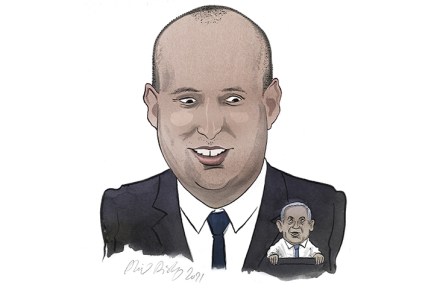
Naftali Bennett, the millionaire poised to be Israel’s next prime minister

Jerusalem In April 2019, Naftali Bennett received an unpleasant surprise. As the votes were counted in Israel’s general election, it became clear that his New Right party had not passed the 3.25 per cent electoral threshold needed to stay in Israel’s parliament, the Knesset. Bennett had lost his seat, his new party had failed and his political career looked like it was over. Two years, three more elections and a global pandemic later, Bennett is on the verge of ending Benjamin Netanyahu’s 12-year rule. Barring a spectacular reversal, he is about to become Israel’s prime minister. He has found himself in the right place at the right time, heading (though not necessarily leading) an eclectic coalition of parties from the left, right and centre.

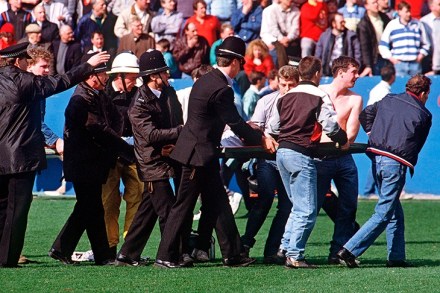
There was no Hillsborough ‘cover-up’

Eight years ago, I was instructed as leading counsel for two South Yorkshire Police officers who had overseen the force’s evidence-gathering in response to the Hillsborough stadium disaster. They were accused of trying to minimise the blame placed on the police by amending witness statements. It has been the longest and most challenging assignment of my 27-year career, with the weight of public and media opinion pitted heavily against us. Finally, last week, the only one of my two clients to be criminally charged, 83-year-old retired chief superintendent Donald Denton, was cleared, alongside a 74-year-old retired detective chief inspector and the former police solicitor. It was a just outcome that demonstrated judicial integrity and independence at its best.