Harald Maass

Harald Maass is a former China correspondent for Der Tagesspiegel and an investigative journalist.

Is anywhere in the world still safe for China’s Uighurs?

From our UK edition

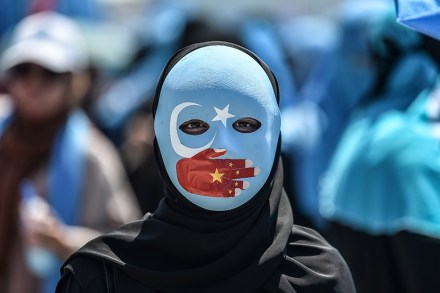
Amannisa Abdullah was in the last weeks of her pregnancy when her husband, Ahmad Talip, was arrested in Dubai. ‘He was on his way to buy a dress for our unborn girl,’ she says. Ahmad, who had lived and worked in Dubai for nearlyten years, never arrived at the shop and his family have not seen him since. He was held at a local police station for several days and then was deported to China in 2018, where he is reportedly in prison. ‘He just disappeared. We don’t know where he is or what he is accused of,’ says Amannisa, who fled to Istanbul. Ahmad is a Uighur Muslim. His story is not exceptional. Hundreds if not thousands of Uighurs, a severely persecuted minority from western China, have been detained in recent years in the Middle East and in Asian countries.
What the West can do about China’s Uyghur labour camps

From our UK edition

Coca-Cola’s most controversial bottling plant is a huge factory located in an industrial zone just outside the city of Urumqi in western China. Logistically, the factory is well situated: the international airport is a short drive away, as is the high-speed train station close to the fashionable Wyndham hotel. But the problem for Coca-Cola — and other western companies such as Volkswagen and BASF, which operate plants in the same region — is the existence of hundreds of facilities not mentioned on any official map. The Cofco Coca-Cola plant, a joint venture with a Chinese state company, is surrounded by prisons and re-education camps in which China suppresses local ethnic minorities, according to human rights experts.

Chilling stories from inside China’s Muslim internment camps

From our UK edition

Vegetable-seller Kairat Samarkhan didn’t know why he had been summoned to the police station. ‘I had to empty my pockets and hand over my belt and laces. Then they started to ask questions,’ he says. After days of interrogation, during which he was hardly allowed to sleep, officers pulled a sack over his head and drove him to a camp near the city of Altai. Samarkhan, a Muslim Kazakh, told me about his experience in the camp: ‘Every day, we had to renounce the Muslim faith and confirm that we respect the laws of China. Before every meal, we chorused: “Long live Xi Jinping!” ’ In the past two years China has — almost unnoticed by others — built the largest network of internment camps in the world.

The chilling stories from inside China’s Muslim internment camps

From our UK edition

Vegetable-seller Kairat Samarkhan didn’t know why he had been summoned to the police station. ‘I had to empty my pockets and hand over my belt and laces. Then they started to ask questions,’ he says. After days of interrogation, during which he was hardly allowed to sleep, officers pulled a sack over his head and drove him to a camp near the city of Altai. Samarkhan, a Muslim Kazakh, told me about his experience in the camp: ‘Every day, we had to renounce the Muslim faith and confirm that we respect the laws of China. Before every meal, we chorused: “Long live Xi Jinping!” ’ In the past two years China has — almost unnoticed by others — built the largest network of internment camps in the world.