Arts feature

Programming the Proms

Critics of this year’s festival have missed the point, Roger Wright tells Kate Chisholm Where’s the meat, the main course, the epic single masterwork? asked some of the music critics after the First Night of the Proms. They’ve missed the point, says Roger Wright, director of the Proms since 2008, in defence of his evening of Stravinsky, Chabrier, Tchaikovsky, Poulenc, Elgar, Brahms and Bruckner. The critics complained that a concert of seven works, with two intervals interrupting the flow, was not what they expected of arguably the world’s greatest classical music festival. They wanted a roof-raising performance of Verdi’s Requiem or Beethoven’s Missa Solemnis.

Converted to the Master

Michael Henderson has been to 100 operas by Wagner. He wasn’t always an admirer of the music When sceptics ask how I ‘found’ the music dramas of Richard Wagner there is an obvious, contrary answer: I didn’t; he found me. As a young music-lover I was certainly no Wagnerian in the making. Although I had always had a love of the orchestra, and slipped easily into the initially perplexing world of opera, I had little knowledge of Wagner, and no desire to find out. If anything I felt hostile. A master at prep school had entertained some of us 12-year-olds one Sunday afternoon, and popped on an LP called, improbably, Wagner’s Greatest Hits. One day, he counselled, as we tittered, we would grow out of pop, and open our ears to other kinds of music.

‘A sticky, sweaty play’

Henrietta Bredin talks to Ruth Wilson about her role as Stella in the Donmar’s Streetcar If Ruth Wilson doesn’t very soon become a major force to be reckoned with, as an actress, director, producer, screenwriter (probably all four), I’ll eat my entire, quite extensive collection of hats. She is bursting with talent and possesses a gleefully voracious appetite for a challenge. This is probably just as well as she is about to take on the role of Stella at the Donmar Warehouse in Tennessee Williams’s A Streetcar Named Desire. ‘I love Stella,’ she says, leaning back in her chair and gulping a mug of tea. ‘I think she’s quite an opportunist, very modern and forward-thinking.

A curate’s cornucopia

Was television in Seventies Britain that good? Is today’s better? James Walton investigates On the weekend of 2–3 December 1978, two ambitious drama projects began on television. One was the BBC Shakespeare — which seven years later had finally carried out its promise to make TV versions of the entire canon. The other took rather less time, but these days is perhaps even harder to imagine. ITV (yes, ITV) gave over the first of six Saturday nights to a series of new and sometimes experimental plays by Alan Bennett. In late 1978, the solid cultural fare didn’t end there. The weekend before, BBC1’s long-running Play of the Month (in the slot recently occupied by such shameless heart-warmers as Lark Rise to Candleford or The No.

Dangerous territory

Henrietta Bredin talks to Janis Kelly about her role in Rufus Wainwright’s first opera, Prima Donna Anyone less like the clichéd idea of a prima donna than Janis Kelly would be hard to find. She is known and loved as a singer and consummate actress with a conspicuous lack of airs and graces who will throw herself into anything, the more challenging and off the wall the better, imbuing performances with her own particular brand of intense musicality and grace. Lucky Rufus Wainwright, then, who has cast her to perform the title role in his first foray into writing opera, Prima Donna, which will be given its world première at the Manchester International Festival on 10 July.

Frenetic attack

Futurism Tate Modern, until 20 September The centenary of Marinetti’s ‘First Manifesto of Futurism’ is a wonderful excuse, if excuse be needed, for a celebration and perhaps re-assessment of a movement that attacked the past in the name of all that was modern. Today, Futurists would be execrating any movement as old and as passé as themselves, but we may look more calmly at their frenetic attempts to capture in paint and sculpture the dynamism of modern life. The large show at the Tate aims to do two things: to gather together as many as possible of the works that were shown in the first Futurist exhibition in London, at the Sackville Gallery in 1912, and to demonstrate how Futurism related to (and influenced) the other radical art movements of the time.

Dispatch from Venice

Roderick Conway Morris on how the city is trying new ways to overcome its economic crisis When the Venice Biennale was founded in 1895 it was in many ways a response to the crisis facing the city. No longer an independent republic and marginalised in the newly re-unified Kingdom of Italy, Venice was seeking ways to re-invent itself, attract new types of visitors and boost the local economy. Most of the great exhibitions during that period were one-offs but the forward-looking poet, playwright and mayor of Venice, Riccardo Selvatico, and his circle could see the benefit of making the exhibition a regular event. This year’s edition, which continues until 22 November, is the largest ever, with 77 countries participating and with scores of associated shows.

The dark side of Tinseltown

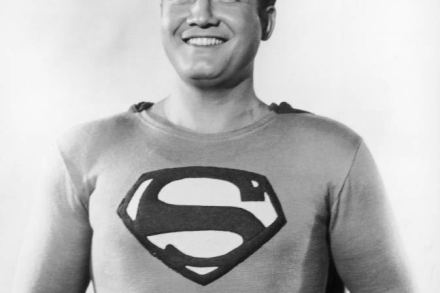
Peter Hoskin marks the 50th anniversary of the death of George Reeves, TV’s original Superman Uncork the champagne, put on your best frock, and grin like the good times are never going to end. After all, it’s 1959, and Hollywood is the place to be. Billy Wilder’s Some Like It Hot has just left movie theaters; that great John Wayne film, Rio Bravo, is still doing the rounds; and the whole town — no, the whole world — is gearing up for the release of some Biblical epic they’re producing over at MGM. What’s it called? Oh, yes: Ben-Hur. So much glamour, money and talent that you can’t help but enjoy it all. Or maybe not.

When poem meets image

Andrew Lambirth talks to Douglas Dunn and Norman Ackroyd about their latest collaboration Illustrated books are one of the glories of a library. Looking over my own shelves I find assorted delights ranging from The Story of My Heart, the unorthodox vision of the naturalist Richard Jefferies fittingly partnered with woodcuts by Ethelbert White, to David Gascoyne’s poems decorated rather sombrely by Graham Sutherland, and ‘The Traveller’ by Walter de la Mare, accompanied by colourful landscapes by John Piper. The pairings of writer and artist are often intriguing: Wyndham Lewis and Naomi Mitchison, William Beckford and Marion Dorn, Samuel Johnson and Edward Bawden.

Capturing a moment

Stephen Pettitt on how Sir Roger Norrington and others started the debate about ‘authenticity’ In the late 1970s, the conductor Sir Roger Norrington, at the time in charge of the late and lamented Kent Opera, created the London Classical Players. With this act Norrington, who has just turned 75, joined a small group of musicians regarded by the wider profession as, to put none too fine a point on it, rather nutty.

All hands on deck at Westminster

Dan Jones on how the Armada tapestries, destroyed by fire, are being recreated Anthony Oakshett points to a palette and shows me a colour called ‘sea-monster grey’. The tall and genial artist is guiding me around his cool, airy temporary studio in an outhouse at Wrest Park, the Bedfordshire country house. Around us stand six vast canvases depicting scenes from the failed attack of the Spanish Armada in 1588. There are indeed a number of sea monsters in various stages of completion, their terrible mouths yawning and their tails thrashing as English and Spanish ships give battle around them. Oakshett is the artist leading a two-year project to recreate the Armada tapestries, a largely forgotten glory of the pre-Victorian House of Lords.

Alone in the wilderness

Henrietta Bredin finds out what it is that draws actors to the gruelling one-man show Judi Dench says she’d never do it, Roy Dotrice didn’t do it for 40 years but started again in 2008, Joanna Lumley says that managing to do it while looking at her own reflection in a mirror made her feel afterwards as if she could handle pretty much anything. Let’s do it, it’s the one-man, or one-woman, show. Stepping on to a stage or in front of the camera to perform requires a particular brand of courage but how much more focused and intense is that experience if you undergo it entirely on your own?

How we laughed

Lloyd Evans charts the death of political satire and looks to where comedy is heading next Live comedy ought to be extinct. For five years the internet has been waving an eviction order in its face, but despite the YouTube menace, and its threat of death-by-a-thousand-clips, live stand-up is blossoming. You’ll have noticed this if you read newspaper adverts. Eighteen months ago they were full of barmy invitations to take out a loan for 10 times the value of your house, or to ‘buy’ (that is rent in advance for 99 years) a room in a boutique hotel in Prague or a glass-box-with-a-view in Abu Dhabi. These schemes have been replaced with full-page ads promoting comedians on nationwide tours. The scale is vast.

Playing Bach to hippopotamuses

Michael Bullivant tells Petroc Trelawny how he became Bulawayo’s chief musical impresario For an extraordinary month in 1953, Bulawayo became the epicentre of culture in the southern hemisphere. In celebration of the centenary of the colonialist and diamond magnate Cecil Rhodes, the Royal Opera House and Sadlers Wells Ballet took up residence. Sir John Gielgud staged and starred in a production of Richard II. The musical programme was left to the Hallé Orchestra, who flew in from Manchester with their music director Sir John Barbirolli and gave 14 concerts.

‘A pleasant academical retreat’

Lloyd Evans wanders round Inner Temple and discovers another world in the tangle of squares Where’s the best place to eat lunch in London? First let’s strike restaurants off the list. At a restaurant your plate of recently throttled livestock will have been executed by a pimply sadist, cooked by a cursing psychopath and delivered to your table by a grudging PhD drop-out angling for a tip. So forget restaurants. Instead, choose outdoor refreshment and a bill of fare invented by the Romans and suitable for any time of day. A hunk of bread, a wedge of cheese and a flagon of Valpolicella. And for a picnicking spot you couldn’t do better than the lush shelving lawn of Inner Temple just off the Strand.

Dido’s life on camera

Katie Mitchell explains to Henrietta Bredin how she is creating a parallel film world with Purcell’s opera It is 350 years since Henry Purcell was born and his music is, gloriously, being played and sung all around the country. And there are a lot of different Didos about: Christopher Marlowe’s Dido, Queen of Carthage at the National Theatre; Purcell’s Dido and Aeneas pretty much all day on BBC Radio Three a couple of weekends ago; at the Royal Opera House in a joint venture by the Royal Opera and the Royal Ballet directed and choreographed by Wayne McGregor (see review page 38); and, in another joint venture, by English National Opera and the Young Vic, as After Dido, directed by Katie Mitchell.

Power of the pencil

Andrew Lambirth talks to Paula Rego about the new museum dedicated to her and the politics behind her work Paula Rego is an artist working at the height of her powers, internationally celebrated and with a museum dedicated to her about to open in her native Portugal. It’s been a long climb to this pinnacle of success, and Rego has worked exceptionally hard to reach it. Born in Lisbon in 1935, she grew up largely in the care of her grandparents while her father, an electrical engineer, took a job in England with Marconi. His anglophilia was responsible for Rego herself going to London to study art.

‘I have no idea what’s going on’

Henrietta Bredin talks to Jonathan Pryce about the difficulties he found with Athol Fugard’s Dimetos It is the end of a long day of rehearsal and Jonathan Pryce is sitting patiently at a scrubbed wooden table strewn with water glasses and roughly carved dishes, behind him a tangle of ropes and pulleys slung from an overhead beam. He’s two-and-a-half weeks into the business of putting together a performance of Dimetos, an infrequently performed play by Athol Fugard, written in 1975. ‘It’s almost like doing a new play really. Sometimes when a play hasn’t had any major revivals you think, well, there must be a reason for that. But I think the only reason for this not being done more often is its apparent difficulty.

‘Keep the spark’

Lloyd Evans visits the NoFit State Circus in Wales and watches an unusual rehearsal T here are lots of things you can’t do any more. Smoke in a pub. Buy a video recorder. Trust the bloke who runs your bank. And you can’t run away to the circus either. These days the wannabe stilt-walker or trapeze artiste needs to study at college for three years and gain a BA (Hons) in Circus Arts. It can’t be long before the gypsyish traditions of the ring are welcomed into the Olympic family and acknowledged by the Nobel committee. As it becomes more middle class, the circus has modified its bill to suit the prejudices of fashionable morality. The cages and whips have gone. The leotards have been recycled.

Chaotic centre of culture

It’s 20 years since the Berlin Wall came down. William Cook on the city’s changing face On the west bank of the River Spree, beside the old route of the Berlin Wall, there is a building which sums up the strange renaissance of this wonderful, awful city. The Hamburger Bahnhof used to be a train station. During the Cold War it was a ruin. Now it’s an art gallery, Berlin’s answer to Tate Modern. It’s a sign of how Berlin has changed, from the cockpit of the Cold War to Europe’s unofficial cultural capital. When the Wall came down in 1989, in an avalanche of cheap Sekt and naff graffiti, a lot of people were worried that Berlin would become the centre of a European superstate. Instead it’s become a chaotic centre of the arts.