Arts feature

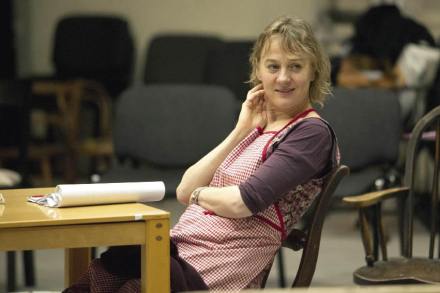
‘The family didn’t approve of acting’

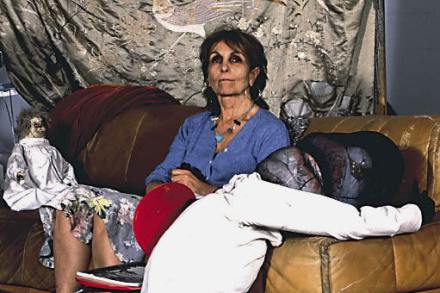
Mary Wakefield meets Niamh Cusack and finds an actress full of contradictions It’s oddly exciting, upstairs at the Old Vic: there are actresses rushing to rehearsal; the burble of PR ladies schmoozing the press; the sense of a curtain about to rise. A bright new play. I smile, look around hopefully for my interviewee-to-be, the actress Niamh Cusack, but instead a handsome bearded chap appears in front of me. ‘Oh, hi there, I’m Finbar Lynch [Niamh’s husband and co-star in Dancing at Lughnasa]. I’ll come back and take proper care of you in a second.’ What’s he talking about? Take care of me, how? I have no idea. I later find out that he thought I was an understudy, but though confused I feel also warm and included — a co-dancer at Lughnasa.

Revealing the physicist’s soul

Henrietta Bredin talks to the baritone Gerald Finley about how he portrays ‘the destroyer of worlds’ At precisely 5.30 a.m. on Monday 16 July 1945 the world entered the nuclear age. The first atomic bomb exploded in a searing flash of light and a vast mushroom cloud unfurled in the skies above New Mexico. ‘Now I am become Death, the destroyer of worlds,’ thought Robert J. Oppenheimer, the physicist who had masterminded its development. It was typical of the man and the deep contradictions within his nature that these lines from the Bhagavad Gita should have come to mind, and that he should have named the project the Trinity Test in response to poetry by John Donne.

‘Basically, I’m a spineless wimp’

Steven Berkoff admits to Lloyd Evans that, despite his reputation, he’s not tough at all On the waterfront. This, literally, is where I meet Steven Berkoff to discuss his stage adaptation of the classic Fifties movie. Berkoff’s east London office is a sumptuous, spotlessly clean apartment with wraparound views of the grey-green Thames. He strolls in, direct from rehearsals, wearing dark loose baggy clothes. I’d expected a brash, superconfident whirlwind but Berkoff is softly spoken, pensive, hesitantly friendly. He even asks if I mind him smoking a roll-up. ‘Of course not.’ But he doesn’t have one. Instead we sip coffee at a vast polished black table.

‘It’s less risky to take risks’

A new arts centre with no public subsidy? Henrietta Bredin talks to its founder Peter Millican Let’s get one thing out of the way immediately — King’s (with an apostrophe) Cross in London is the location for the new and very splendid mixed-use office building and performance space, Kings Place, which has no business letting a misguided graphic designer decide to drop the apostrophe. It should be King’s Place, please. Now, onwards. This project is the brainchild of Peter Millican, a Northumbrian developer whose work has been, until now, mostly in and around Newcastle. He has wanted for some years to combine business and the arts in a single building, with beneficial effects for both, and particularly wanted to find a site close to an international travel hub.

An emotional journey

Director Lindsay Posner finds something primal and truly disturbing in Arthur Miller’s play The day’s rehearsal is about to commence. The actors sit or stand around chatting, telling anecdotes, prevaricating, pouring one last cup of coffee — anything to avoid the moment when they have to begin committing emotionally and psychologically to Arthur Miller’s text. Why, I ask myself, is A View from the Bridge proving so difficult to rehearse? This is not due to laziness on the part of the company, but an awareness that the play’s action unfolds as relentlessly and remorselessly as any Greek tragedy; demanding intensities of emotional and psychological expression which crash through conventional barriers and resonate in the world of myth.

Giving life to characters

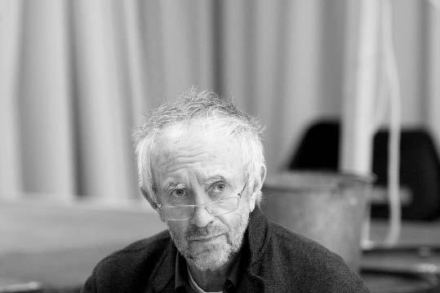
Henrietta Bredin talks to Ian McDiarmid about turning a novel set in Scotland into a play Ian McDiarmid possesses a voice that, if he chose to let it, could curdle milk. Half-strangled and poisonously clotted it emerges in an evil flow in his portrayal of the Emperor Palpatine in the Star Wars films. As Satan in Milton’s Paradise Lost, it is all silken seduction and hidden threat. In his next stage role, his voice will be heard, not just as an actor, but as the author of an adaptation of Be Near Me, the novel by Andrew O’Hagan. He will play Father David Anderton, a Catholic priest in a small Ayrshire parish, in a joint production between the National Theatre of Scotland and the Donmar Warehouse. How had this happened?

Dates for your diary

Andrew Lambirth looks forward to some great exhibitions in the year ahead There’s a very full year’s viewing ahead to cheer the eye and gladden the heart however bleak the financial prospects. For a start, the National Gallery is mounting a major exhibition focusing on the fascinating relationship that Picasso had with the art of the past. His reworkings of Goya, Velázquez, Rembrandt, Chardin and Delacroix, together with responses to more contemporary masters such as van Gogh and Gauguin, provide a riveting dialogue of minds. Picasso: Challenging the Past (25 February to 7 June) will offer new ways to look at the Old Masters as well as a different take on Picasso.

A bucolic paradise

Ronald Blythe examines William Blake’s influence on the work of the 19th-century artist Samuel Palmer Samuel Palmer was in his early twenties when he wrote in his notebook, ‘The Glories of Heaven might be tried — hymns sung among the hills of Paradise at eventide...’ As a subject for a painting he means. Just before this he discovered his paradisal hills at Shoreham on the Kentish coast. And that very same year, 1824, he had also discovered how to paint them, for John Linnell, his future father-in-law, had taken him to visit William Blake. This meeting was profound. Blake was near death and living with his wife in a grubby London back street. Palmer found him ‘lame in bed, of a scalded foot (or leg).

Music and emotion

Damian Thompson says we can learn a lot about Beethoven if we look beyond the symphonies Beethoven Unwrapped is the title of the year-long musical celebration marking the opening of Kings Place, the new ‘creative centre’ at King’s Cross. But does Beethoven, of all composers, need unwrapping? The answer is yes, more than ever, if the process allows us to examine his music without constantly genuflecting in front of the symphonies. The Kings Place festival includes only one live Beethoven symphony: the First, played by the Avison Ensemble next March. That’s fine by me.

Poles apart

Saul Steinberg: Illuminations Dulwich Picture Gallery, until 15 February 2009 Cartoons & Coronets: The Genius of Osbert Lancaster The Wallace Collection, until 11 January 2009 Saul Steinberg (1914–99) was born in Romania and studied architecture in 1930s Milan. His first cartoons appeared in 1936 and he began to build a reputation, despite the threat of war. In 1941 he was interned briefly, then fled Italy to the Dominican Republic, while applying for American citizenship. His first cartoon for the New Yorker appeared in 1941, and by 1942 he was in the States. Registering for the draft, he worked in propaganda for the Office of Strategic Services (OSS) in North Africa and then back in Italy. In 1945 his first book of drawings was published and sold over 20,000 copies.

Out of the ordinary

Carolyn Bartholomew talks to Tilda Swinton, an actor who has made a career out of being unconventional Tilda Swinton is undoubtedly one of the great artists of her generation, although it is only relatively recently that she has become more conspicuous with mainstream films such as The Chronicles of Narnia and Michael Clayton (for which she won an Oscar for best supporting actress). But Swinton has been in the profession for an unbelievable 23 years, embracing all aspects of film-making. She is highly regarded for her arthouse films of the Eighties and Nineties, initially in collaboration with the great Derek Jarman.

Mystery of the missing tapes

Selina Mills on how some newly discovered tapes give us a glimpse into the life of Agatha Christie One hot summer’s afternoon in London, when I was five or six, I was sent to the garden of our house in Chelsea, rather than attending a birthday party, to contemplate a naughty deed. I can’t remember my crime, but I can remember swaying too violently on a vivid orange hammock, and falling on my head with a thump. Before long, a smart old lady with ropes of pearls rushed over from next door and calmed my howling. We had a nice little chat about the merits of hammocks on hot sunny days and being naughty until my mother arrived and the lady left. I did not discover until much later, however, that my rescuer was Agatha Christie; the following winter (1976) she died.

Putting criminals on stage

Danny Kruger explains how his theatre company helps offenders to go straight Felicia ‘Snoop’ Pearson was a drug dealer, with a five-year stretch for murder behind her and no nice future ahead. But then a random meeting in a Baltimore nightclub, with an actor in the hit TV show The Wire, led to a starring part for herself in the story about the lives and fortunes of hustlers and cops and pimps and politicians. She plays to type, a drug-dealer and murderer, and in the role she has found a sort of redemption, and a deeper truth: ‘Ain’t saying I’m the best actor out there — I know I’m not — but I also know that acting, by showing me how to feel, also showed me I hadn’t been feeling at all. You can’t sell dope all day and still feel.

How Boris got under his skin

Henrietta Bredin talks to Edward Gardner, English National Opera’s music director There is a ridiculously tiny, narrow room carved out of the foyer of the London Coliseum, known as the Snuggery. I think it was originally intended as somewhere for King Edward VII to retire to for a touch of silken dalliance or simply to use the lavishly ornate mahogany facilities. At any rate it’s a handy place in which to settle for a conversation with English National Opera’s music director, Edward Gardner, who is fresh — and he does look it — from a rehearsal with the chorus for a new production of Mussorgsky’s Boris Godunov, opening on Monday. This is a challenging opera for any company to perform and the first thing to be settled is the choice of version.

Playing a public enemy

Toby Jones, Karl Rove in the film W, explains his character’s relationship with President Bush Condoleezza Rice’s teeth lie discarded beside her bottle of water. Colin Powell’s wig needs adjustment. Across the table, Scott Glenn removes Donald Rumsfeld’s steel-rimmed spectacles and continues his description of the seven months he spent in the Philippines shooting Apocalypse Now. Behind him a video monitor tees up background footage for the next take: weapons inspectors trudging through the desert, zooming backwards and forwards until they are paused flickering at a trench. We are shooting the longest scene in Oliver Stone’s film, W (released in the UK on 7 November), perhaps the longest scene I have ever read in a script.

Worshipping a golden calf

Martin Gayford considers whether we are in the final, pre-popping stages of an art bubble Journalists arriving for the press view of Renaissance Faces at the National Gallery last week were greeted by placards. Why, the slogans asked — you might think reasonably enough — could that institution not pay its staff a little more, given that it was contemplating paying £50 million each for a couple of Titians? They raised a point that troubles many people, including quite a few in the art world. In the early 21st century, the sums paid for works of art have climbed from the amazing, to the preposterous and finally reached the surreal. $104 million for a medium-quality Picasso was exceeded by a reported $140 million for a reasonably good-quality Jackson Pollock drip painting.

A man apart

The great days of cinema are not over: they live on in Terence Davies, writes Peter Hoskin How to write about the cinema of Terence Davies? Words just don’t stand a chance. I could deploy every superlative going, and reduce every one of the three short films and five feature films he’s directed into their constituent parts — a dash of low-key acting here, some liquid camera movements there — but nothing could convey or explain the unique emotional power they have. Quite simply, his films need to be seen and experienced. And preferably on the silver screen, so the magic can really take hold. It’s fortunate, then, that the fifth of those feature films — Of Time and the City, a documentary about Liverpool — is about to be released into cinemas.

An insidious form of censorship

Dominic Cooke on why we must guard against a self-perpetuating climate of fear and timidity Forty years ago, the Theatres Bill removed from the Lord Chamberlain his centuries-old power to censor the British stage. Under a law unchanged since 1843, every work intended for production in British theatres had first to be submitted to, and approved by, his office. Each work came back with a report from one of the censors, who became renowned for their hypersensitive ability to read sex and subversion into the most innocent of dialogue.

A power to enthral

Henrietta Bredin on how book illustrations can bring the narrative to life The illustrations in children’s books play a crucial role in expanding the imaginative horizons of the reader and fixing the story in the memory. The very best book illustration is so inextricably linked to the text that it is hard to think of one without the other.

Ayckbourn’s unflinching gaze

Veronica Lee profiles the playwright as the Old Vic revives his best-known work Alan Ayckbourn, so theatre lore has it, is the second-most performed British playwright after Shakespeare. So why has he become so unfashionable among theatre cognoscenti? Partly, it’s his own doing. In 2002, disillusioned by the musical-laden, drama-free territory it had become and despite his many successes there throughout his career, he announced a West End hiatus on his work (only recently ended for a revival of Absurd Person Singular with Jane Horrocks). Plus, he insists on premiering all his new work in his beloved home town of Scarborough.