Arts feature

Mahler’s mass following

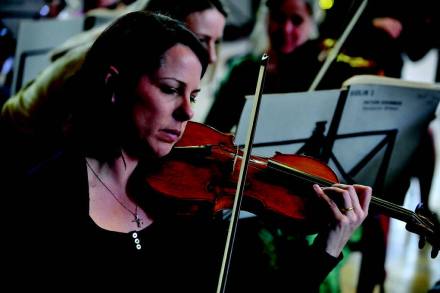
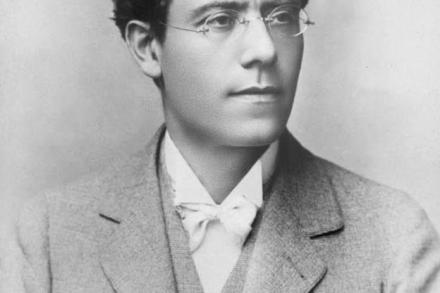
It is 150 years since the composer’s birth. Michael Kennedy on his remarkable popularity Approaching 60 years of writing music criticism, I have been wondering what I would nominate as the most remarkable changes on the British musical scene since I started. I decided there were three: the emergence of Mahler as a popular composer worldwide; the enthusiasm for the music of Janáček, especially his operas; and the establishment of regional opera companies. It is not as if Mahler’s music was completely unknown in Britain, even in his lifetime (1860–1911). But until about 1960 his impact on the general public was roughly the equivalent of, say, Szymanowski today. Now you cannot escape him.

Wry, clever and cool

A driven George Clooney tells Marianne Gray how important it is not to get typecast George Clooney arrived on British screens more or less a fully formed star. He had spent years trapped in American sitcom hell and by the time we got him he was in his mid-thirties playing the debonair Dr Doug Ross in the hit series ER. We never saw him as a young hopeful in embarrassments like The Return of the Killer Tomatoes or Murder, She Wrote, a TV show he describes as a junkyard for actors who become skeletons of themselves. He was delivered to us as Gorgeous George, the actor who could do no wrong. ‘Listen,’ Clooney comments amiably, when I meet him just before Christmas, ‘I was unfamous for a very long time and I’m enjoying being where I am now.

A look ahead | 2 January 2010

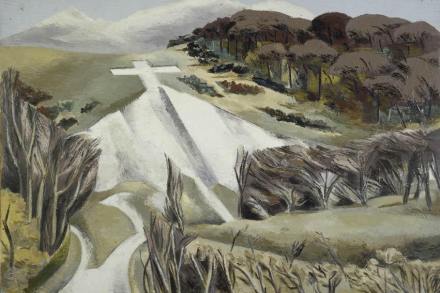
Andrew Lambirth on artistic delights and pleasures we can look forward to in 2010 The juggernaut of blockbusters at last shows signs of slowing down. In recent years, museums have deluged us with loan exhibitions of often very mixed quality in order to generate the increasingly large amounts of revenue necessary to fund their extended bureaucracies. Too many shows really, particularly when concocted by curators of boundless self-esteem with scant regard for the public. I long for fewer exhibitions chosen with greater discernment, and it seems that the crisis in international finance is finally helping to achieve this. World tours are being cancelled, ambitions checked, sponsorship withdrawn. Initially, this means that there are marginally fewer exhibitions running for longer.

Opera

Henrietta Bredin on boats, trains, planes that transport singers around the stage Opera, so they say, has the power to transport the listener on wings of sound to places beyond the imagination — on a good night, at any rate. But just to keep singers, and directors, on their toes, a number of composers have, over the years, been tickled by the notion of writing specific modes of transport into the opera’s storyline. Puccini was car-mad, so you’d think he might have put one of his favourites into an opera. His first purchase was a De Dion-Bouton 5 CV in 1901, and some years later he commissioned a special off-road number from Lancia, for hunting trips.

Communicating through music

Henrietta Bredin on how Music for Life can help overcome the isolation of dementia sufferers I am looking at an elderly woman, tiny in a huge armchair. She has not spoken for months, she has not maintained eye contact with anyone for even longer and she has developed a nervous compulsion to keep one hand always up to her chin, covering her mouth. A woman in a pink overall is sitting next to her, gently stroking her hand, and a young man with a violin is kneeling at her feet. With infinite patience, the violinist starts to play a simple tune, making it even quieter, more exploratory, when she appears to flinch at the sound of the first notes. Very, very slowly, almost indiscernibly, the woman’s tight, clenched muscles relax slightly. The little tune trickles on.

Closely guarded secret

Andrew Lambirth on how the cult of youth can lead to the neglect of distinguished older artists One of the least endearing traits of our age is youth worship. I can understand that advertisers might need to target a large and gullible audience suddenly and unaccountably blessed with disposable income (or should that be credit?), but to attribute wisdom or originality to youth is a rash act indeed. The attention paid to young artists in recent decades has grown increasingly disproportionate, for no good reason apart from the follow-my-leader media circus which keeps their antics before an increasingly bored and bewildered (if not downright cynical) public.

Christmas round-up | 28 November 2009

Andrew Lambirth trawls the galleries and finds a visual feast for the festive season Most people who have heard of James Ward (1769–1859) will know his monumental landscape in Tate Britain, ‘Gordale Scar’, but perhaps little else by him. ‘Gordale Scar’ is immensely impressive (I also love Karl Weschke’s versions of the same subject made in 1987–8), but Ward was far from being a one-work artist. A painter of animals as well as of landscapes, his gifts of observation and curiosity made him a valued recorder of country life. A superb show of his drawings at W.S. Fine Art/Andrew Wyld (27 Dover Street, W1, until 11 December) gives a full account of his skills as a draughtsman in subjects ranging from charcoal burners to cloud studies.

Under the skin

Marianne Gray talks to John Malkovich about his latest film, his vanity and his first love, the stage When I met John Malkovich to talk about Disgrace, the film of J.M. Coetzee’s novel, he hadn’t seen the film yet and was positively tremulous, if a word like ‘tremulous’ can be associated with the forceful Malkovich. ‘I am looking forward to hearing how it does because the film-makers say J.M. Coetzee likes the film,’ he tells me. ‘It is very faithful to the book but the screenplay has expanded from the novel. These are always worrying things. ‘But far more worrying is my South African accent.

Dallas bucks the trend

Henrietta Bredin talks to Spencer de Grey, architect of the new opera house in Texas There can’t be a gesture much more brave and defiant than building a new opera house in the current doom-laden financial climate. Deep in the heart of Texas, in the centre of its freshly revamped arts district, Dallas has done exactly that. The project was awarded to Foster and Partners and has been the brainchild and chief responsibility of Spencer de Grey, whose previous work includes the Great Court at the British Museum and the Sage music centre in Gateshead.

The ultimate jam session

Peter Hoskin celebrates 50 years of American independent cinema As so often, our story begins with Mickey Mouse and a child’s pliant mind. The child in this case was Amos Vogel, growing up in 1930s Vienna. His father had bought him a small hand-cranked film projector, and the kid Vogel used to sit there, winding the handle and watching Mickey, Krazy Kat and other cartoon characters dance across the walls. Only there was frequently something odd, something perverse, about their movements. You see, Vogel used to enjoy running the projector in reverse — making the films, and the characters, go backwards. The experience must have tripped some wires in the young boy’s head.

Museological capriccio

There are not many palazzi in Florence still occupied by their original families. There are not many palazzi in Florence still occupied by their original families. Some, like the Medici, Pitti and Corsi-Horne, have become museums, while others, like the Ciofi-Giacometti — now the five-star Relais Santa Croce — have become hotels. ‘Make do and mend’ is a basic Florentine motto: why build a museum when you can convert an old palazzo, town hall (Palazzo Vecchio), magistrates offices (Uffizi), police station (Bargello) or granary (Orsanmichele)?

Ready for anything

Henrietta Bredin talks to Simon McBurney about his latest challenge: doing Beckett for the first time I am standing in Simon McBurney’s kitchen, discussing pigs (he’s not only kept them but also slaughtered them, butchered them and made over 20 different sorts of salami), memory and language (both capacious and exact in his case), watching him brew coffee (freshly ground, delectably strong), grill toast and spread marmalade (home-made, dark and delicious) and realising that his insatiably curious intellect, his grace and economy of movement are as compelling in a domestic setting as they are on stage.

Does anyone like 3-D?

Roger Ebert believes not, and that its use in films is an annoyance and a distraction Has it really come to this? I read in Variety, the film industry journal, that ‘Mark Thomas of Elsinore Films is producing a 3-D musical Hamlet targeting the Harry Potter and High School Musical market’. I am not concerned for Hamlet, which has been kneaded into so many preposterous shapes and survived. What horrifies me is the prospect of seeing the film in 3-D. Variety helpfully explains: ‘Hamlet lends itself to a 3-D treatment. The producers hope to include a ghost that hovers in front of the audience’s eyes, cannon fire that flies into the auditorium and a sword fight that appears to happen all around viewers.

Getting in on the act

Old operatic conventions will no longer do, says Igor Toronyi-Lalic: no more parking and barking Caricatures are often instructive. Those that acquire legs will offer a crystallised version of the truth. The hoary send-up of opera, for example — the lardy singers, the stilted poses, the outstretched arms — is representative of a historic reality. Opera singers did once park and bark. Character was once illustrated through stock gesture and semaphore. The presumed impossibility of mastering both the singing and the acting meant consigning half the art form to the dustbin. ‘How can you act if you have to hold a sustained note for six measures in the middle of an emotional climax, with your eyes glued on the conductor?

A propensity to meaning

Andrew Lambirth talks to the sculptor Anish Kapoor on the eve of his major new exhibition at the Royal Academy I interviewed the sculptor Anish Kapoor (born 1954) while preparations for his major new exhibition at the Royal Academy were nearing conclusion. The galleries were busy with technicians so we talked in the Members’ Room (Kapoor has been an RA since 1999). I last interviewed Kapoor 11 years ago, on the eve of his last big museum show in London, when he had the whole of the Hayward Gallery. Now he has been given the grand rooms which comprise the entire main floor of the Academy. Our talk was inevitably concerned with his new show. Was it a retrospective?

Working with Veronese

Roderick Conway Morris talks to Peter Greenaway about creating a ‘painting with a soundtrack’ Peter Greenaway is standing against the backdrop of Paolo Veronese’s enormous ‘The Wedding at Cana’ in the Palladian refectory of the Venetian monastery of San Giorgio Maggiore and is in rhetorical mode: ‘When we put art and cinema in the balance, what do we have? At least 8,000 years of painting and a miserable 114 years or so of cinema. Nothing in cinema has not already been essayed in still images in painting at one time or another. So I think it a very good idea to have a dialogue between painting and cinema.

An ‘intelligent spectacle’

Henrietta Bredin talks to David Pountney about running the Bregenz Festival Back in the days when David Pountney was director of productions at English National Opera, his so-called office was a tiny broom cupboard of a space carved out of a backstage cranny of the London Coliseum, with a single grubby window overlooking a narrow passageway known as Piss Alley for obvious and strongly smelling reasons. He now, as artistic director of the Bregenz Festival in Austria, occupies a lavishly appointed sort of control tower, with floor-to-ceiling windows looking out across Lake Constance and giving a direct hawk’s-eye view of the stage built out into the lake, which is the festival’s major attraction.

Credit-crunch festival

Lloyd Evans goes in search of culture on the rain-soaked streets of Edinburgh The crunch. That damn credit crunch. It hurt Scotland hardest of all. A worldwide reputation as a financial powerhouse? Gone. Dreams of independence? Severely truncated. Last year the Edinburgh Festival bore prophetic signs of imminent poverty, of homelessness, of doom. Free shows abounded. Bribes of wine, whisky and sandwiches were being proferred to choosy punters. This year I’m here on an austerity awayday, a recession quickie, a pared-down and stripped-back three-day in-and-outer. My accommodation meets the brief superbly. I’m in a dive, of the deep-sea variety. You have to hold your breath. The showers are communal. So are the loos. There’s no lift, not even one that’s broken.

A close engagement with music

Sean Rafferty tells Henrietta Bredin how an abbot persuaded him to make his first recording Six minutes to go before the daily live broadcast of BBC Radio Three’s In Tune goes on air and the atmosphere is full of a sort of supercharged alertness, of tension expertly controlled by a small team of people who all know exactly what they are doing. The producer asks about a recording of a Handel aria she wants to play later in the programme — it’s not here yet, and may only be available on DVD, but it’s being looked for, and if it fails to materialise, she’s got an alternative as back-up. Two minutes to go and presenter Sean Rafferty ambles into the studio, having been talking to the programme’s first two guests in the Green Room next door.

Melody maker

Lloyd Evans celebrates Tennyson’s miraculous musicality ‘He had the finest ear of any English poet,’ said W.H. Auden. ‘He was also, undoubtedly, the stupidest.’ This famous jibe aimed at Tennyson (whose bicentenary falls on 6 August) is revealing in its shrill and almost triumphant bitchiness. Every age rejects the one before and it’s no surprise that Auden, a gay, left-wing, pacifist democrat, was keen to advertise his contempt for the uxorious, High Church, monarch-loving imperialist. But the severity of his scorn and its blatant falsehood (Tennyson knew half a dozen languages and was famed for the brilliance of his conversation) suggest that Auden’s real feelings may have been more complex than he liked to admit.