Arts feature

Picasso’s ravishing work for the ballet

Visitors to the Victoria and Albert Museum’s new storehouse in Stratford’s Olympic Park are being enthralled by an atmospherically lit chamber devoted to the display of one vast and magnificent work of art: Picasso’s 10 metre-high, 11 metre-wide drop-curtain for Le Train Bleu, a popular hit of Diaghilev’s Ballets Russes, first seen in 1924. The canvas, for many years rolled up in storage, isn’t strictly the work of Picasso himself: Diaghilev’s scene painter Prince Alexander Schervashidze had meticulously expanded it overnight from a small gouache on plywood known as ‘Two Women Running on the Beach’ (1922), but Picasso was so delighted when he saw the result that he decided to endorse it with his signature on the bottom-left-hand corner.

The masterpieces on your doorstep

I do not, if I can help it, catch a train to anywhere on a Sunday. Yet there I was at 9.14 a.m. heading out from Woodbridge in Suffolk towards Cambridge to view a painting by Walter Sickert, a work I had not seen before and whose vital statistics – what even the work was of – I had no way of knowing; its owner had refused to send a photograph or describe it over the telephone. Arriving at the owner’s address, I was met by a neighbour who told me that in the name of letting go and embracing surprise, they had decided to visit a relative in Scotland the night before.

How the railways shaped modern culture

Cue track seven of Frank Sinatra’s 1957 album Only the Lonely and you can hear Ol’ Blue Eyes pretending to be a train. It’s not that he’s a railway enthusiast (though Sinatra, like many musicians, was an enthusiastic collector of model trains). No, it’s written into the words and music of Harold Arlen and Johnny Mercer’s song ‘Blues in the Night’: ‘Now the rain’s a-fallin’, hear the train a-callin’ “whoo-ee”.’ And so Sinatra sings it, just as Ella Fitzgerald, Peggy Lee and Louis Armstrong sang it. It’s an American classic, defined by the sounds that permeate the soul of American popular music: the sounds of the railway.

Rattigan’s films are as important as his plays

A campaign is under way to rename the West End’s Duchess Theatre after the playwright Terence Rattigan. Supported as it is by the likes of Judi Dench and Rattigan Society president David Suchet, there’s evidently a desire to right a historical wrong. Author of classics such as The Browning Version, The Winslow Boy and Separate Tables, Rattigan was known for his poise, melancholy and restraint, all of which put him at odds with the coterie of upstart writers of the 1950s – still amusingly known as the Angry Young Men. It’s an oft-repeated chapter of theatre history that arch-kitchen-sinkers such as John Osborne made the environment virtually impossible for Rattigan to work in. Rattigan joked about it at the 1956 opening of Look Back in Anger.

Edinburgh Fringe’s war on comedy

Every day my inbox fills with stories of panic, madness and despair. The Edinburgh Fringe is upon us and the publicists are firing off emails begging critics to cover their shows. If the festival is a national X-ray, this year’s image is shadowed by emotional frailty and a distinct sense of humour failure. The brochure is full of performers advertising their mental disorders (ADHD, OCD, PTSD, and so on), as if they were badges of achievement. The chair and chief executive of the Fringe say that the festival means ‘giving yourself over to the (safe) hands of our performers allowing yourself to be swept away by their creativity’. The word ‘safe’, in brackets, assures nervous visitors that their mental wellbeing won’t be jeopardised.

Why has the world turned on the Waltz King?

On 17 June 1872, Johann Strauss II conducted the biggest concert of his life. The city was Boston, USA, and the promoters provided Strauss with an orchestra and a chorus numbering more than 20,000. One hundred assistant conductors were placed at his disposal, and a cannon shot cued The Blue Danube – the only way of silencing the expectant crowds. Estimates vary, but the audience was reckoned to number between 50,000 and 100,000; in all, there must have been a minimum of 70,000 people present. This month’s Oasis reunion only played to 80,000. The result, in an age before modern amplification, was much as you might expect. ‘A fearful racket that I shall never forget as long as I live,’ was Strauss’s own description. Still, the point stands.

The joys of mudlarking

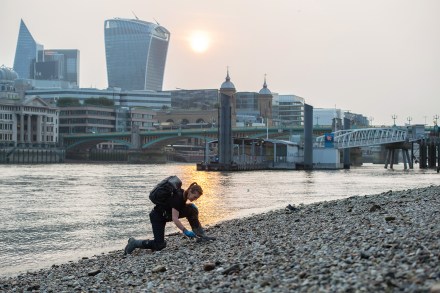
Imagine a London of the distant future. A mudlark combs through the Thames foreshore, looking for relics of the past. What would they find? A rusted Lime bike, a message in a takeaway soy sauce bottle? ‘Vapes,’ says Kate Sumnall, curator of the Secrets of the Thames exhibition at the London Museum Docklands. ‘Lots of vapes.’ Mudlarking – the practice of scavenging at low tide for washed-up historical treasures, oddities or mundane objects – has become a well-gatekept hobby over the past five years. More than 10,000 people are now on the waiting list for mudlarking permits. Of course, anyone can go down to the foreshore to look around and turn pebbles over with their shoe, but even if you flout the rules, mudlarking is no longer the grubby, lawless enterprise it used to be.

The greatest photography exhibition of all time 

I am sitting on a neat little park bench in a tiny medieval town in rural Luxembourg, and I am enjoying a peculiar sensation for which the English language has no precise word. It is the beautiful yet bittersweet silence induced by an encounter with undeniably great art. Something so profound, moving and true, it leaves you speechless, maybe even a little breathless. I’ve experienced this feeling just a few times in my life. When I saw the Stanze of Raphael in the Vatican Museums. When I read the last pages of Joyce’s Ulysses – ‘yes I said yes I will Yes’. When I listened to the second side of Joy Division’s Closer, with its exquisitely mournful electro-chamber music. And now I am experiencing it again.

Landscape designer Tom Stuart-Smith on mistakes, sand and weeds

If you’re looking for an early example of Tom Stuart-Smith’s work, you’d have to go to a car park to find it. The now world-famous landscape designer started his career doing ‘awful supermarket projects’ where ‘landscape was perceived as just something they kind of had to do’. This was in the 1980s: today, if you want to see a Stuart-Smith landscape, you can go to St Paul’s Cathedral, where he has designed a public ‘reflection garden’, the walled garden at the Knepp Estate, or the Hepworth Gallery in Wakefield, where sculptures sit among naturalistic sweeps of grasses and perennials.

The French sculptors building the new Statue of Liberty

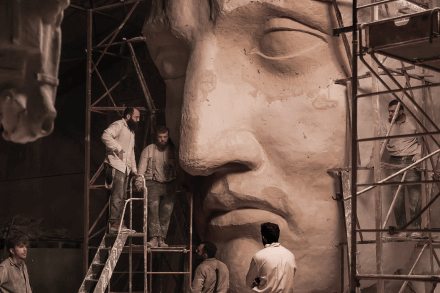
At a miserable-looking rally for the centre-left Place Publique in mid-March, its co-president, MEP Raphaël Glucksmann, made international headlines calling for the Trump administration to return the Statue of Liberty, gifted by the French in 1886 to commemorate the Declaration of Independence: ‘It was our gift to you. But apparently you despise her. So she will be happy here with us.’ The predictably sensationalist headlines dissipated in a flurry of Republican outrage against ‘the low-level French politician’ as quickly as they had arrived. But Glucksmann’s demand – sincere or not – caught the attention of a group of sculptors who, in their words, have ‘taken up the dream of civilisation’ to produce monumental civic sculpture.

The politics of horror

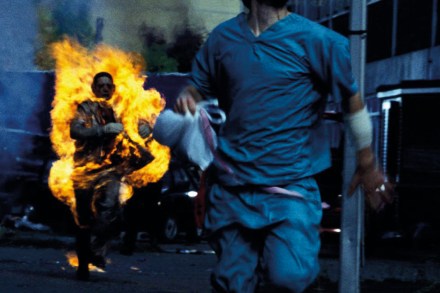
Everyone forgets the actual opening scene of 28 Days Later, even though it’s deeply relatable, in that it features a helpless chimp strapped to a table and forced to watch doomreels of ultraviolence until it loses its little monkey mind and eats David Schneider. But it’s eclipsed by the famous sequence that follows where Cillian Murphy wakes in a hospital bed to find that he has slept through a deadly pandemic and the ensuing collapse of civilisation. As Murphy drags his not-yet-world-famous cheekbones through an eerily abandoned metropolis, we see Piccadilly plastered with the names and faces of the missing and the dead. Audiences in 2002 were reminded of the recent World Trade Centre attacks, which happened in the middle of filming.

The Renaissance master who rescued polyphonic music

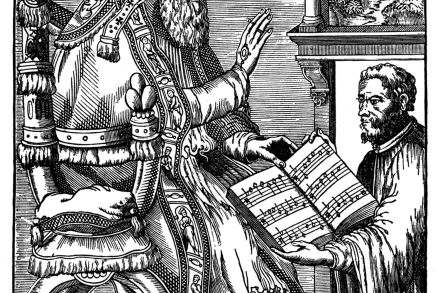
Last month I watched conductor Harry Christophers blow through what sounded like an arthritic harmonica but in fact was a pure-toned pitch pipe, which handed the singers of his vocal group the Sixteen their starting notes. Then the Kyrie from Giovanni Pierluigi da Palestrina’s Missa Regina coeli unfolded inside the resonant splendour of St James’s Church in Mayfair and, 500 years after his birth, I grasped why Palestrina, maestro di cappella of St Peter’s Basilica in Rome from 1551-5, still has the capacity to surprise. Christophers and the Sixteen are celebrating this greatest of the late Renaissance composers in his anniversary year with three concerts promoted by the Wigmore Hall but held at St James’s: this music lives or dies by the acoustic in which it is heard.

The gloriously impure world of Edward Burra

Every few years the shade of Edward Burra is treated to a Major Retrospective. The pattern is long established: Edward who? Forgotten genius, sui generis, well known for being unknown save by beardy centenarians and art tarts with ginny voices. Why have I never heard of this man? LGBT-ish avant la lettre, Polari-ish. After the show inhumation beckons again and he will disappear into an obscurity that cannot be relieved until the curatocracy once more lets loose the dogs of hype. George Melly and Dan Farson are no longer around to peal his name and Jane Stevenson’s impeccable and often funny biography suffers from its subject’s being a forgotten genius, sui generis, unknown save… etc. In later years Burra was the very picture of a different neglect: physical.

Museums: open up your vaults!

At any one time eighty per cent of the art owned by Britain’s many museums and public art galleries will find itself hidden away in storage. And once it is, it can stay there for years. Yet in these vaults are a wealth of treasures. It’s why I recently launched ‘Everyone’s Art’, which has a simple premise: to get these works out of the storeroom and into community centres, libraries, churches, village halls and schools, so their makers, and what they made, can finally be celebrated. Consider Henry Bright, a friend of the critic, writer and painter John Ruskin. Ruskin paid for Bright to accompany Turner on many of his sketching expeditions, where he was encouraged to paint what he saw.

The forgotten story of British opera

British opera was born with Purcell’s Dido and Aeneas, and then vanished for two-and-a-half centuries, apparently. Between the first performance of Dido in 1689 and the première of Britten’s Peter Grimes in 1945, serious British operas effectively didn’t exist – or so we’re told in textbooks and biographies. But what if there was a different story; a forgotten story of a lively, eclectic British operatic tradition that thrived in those missing centuries, and was buried only through a combination of accidents, economics and our enduring national snobbery about theatre that’s sung rather than spoken? And what if there was an organisation devoted to excavating these forgotten works and giving them a chance to live again?

The odd couple: Austen and Turner at 250

History is full of odd couples: famous but unrelated people who happen to have been born in the same year. 1809: Charles Darwin and Abraham Lincoln. 1926: Queen Elizabeth II and Marilyn Monroe. Yet few historical pairings are as unlikely as the novelist Jane Austen and the painter J.M.W. Turner, born within a few months of each other in 1775. Usually the only time these two cultural icons encounter one another is in our purses or wallets: Turner depicted as a dashing young Romantic on the £20 note, Austen looking demure and doe-eyed (a heavily airbrushed version of the portrait originally sketched by her sister Cassandra) on the £10 note. Otherwise they might appear to have little in common.

Art deco gave veneer and frivolity a bad name

The jazz style was the blowsy filling between the noxious crusts of two world wars. More than 30 years passed between its flourishing and its remonikered second coming as art deco, no longer gaudy ephemera, now a legitimate addition to the inventory of fashions. The coinage was initially ascribed to the antique dealer John Jesse. It is, more probably, Bevis Hillier’s. He was a scholar of the style, then organiser of its first retrospective, far ahead of the game, in Minneapolis-St Paul in 1971.

Why is the National Portrait Gallery’s collection so poor?

The recent announcement that the National Portrait Gallery has purchased two works by Sonia Boyce and Hew Locke for its collection came as something of a shock. The surprise? The art was actually good. Boyce’s quarterised collage ‘From Someone Else’s Fear Fantasy (A Case Of Mistaken Identity? Well This Is No Bed Of Roses) To Metamorphosis’ (1987), reminiscent of an enlarged and doodled upon set of passport photographs is a complex work of art made better the more attention you give it; Locke’s maximalist approach with the bust ‘Souvenir 17 (Albert Edward, Prince of Wales)’ (2024) may not be to everyone’s taste, but his sculpture is full of humour and pathos.

‘I’ve seen controllers come and go’: Radio 3’s Michael Berkeley interviewed

A few years ago I had a panic-stricken phone call from a female friend. ‘Help!’ she wailed. ‘Remind me what classical music I like. I think I’m going to be a guest on Private Passions.’ I could understand her anxiety. The programme, which celebrated its 30th birthday this month, is BBC Radio 3’s lofty version of  Desert Island Discs. Eminent writers, scientists, artists and businessmen, plus the occasional book-plugging celeb, explain how music – mostly but not exclusively classical – is, well, one of their private passions. Even if, as in the case of my friend, it isn’t. It’s an honour to be asked on the show, which is presented by Michael Berkeley – the first classical composer since Benjamin Britten to be elevated to the House of Lords.

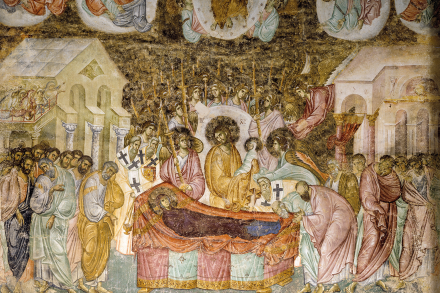
Why is the British Museum hiding its great Orthodox icons?

The long neglected art of Byzantium and early Christianity is returning to the world’s museums. Last November, the Louvre confirmed plans for a 3,000 square metre department dedicated to the Byzantine legacy and more than 20,000 works from Ethiopia to Russia that are currently scattered across the museum’s cabinets. Having been initially shelved a decade ago, this monumental undertaking is scheduled to open in 2027, signifying a pivotal moment for the Christian arts of the Eastern Roman Empire to become a serious curatorial subject in European museums once again. (A precursor to the new department established in 1954 lasted but 15 years.) Byzantine art has been the subject of serious study in universities only since the 1940s.