Arts feature

Three cheers for the new illustration museum

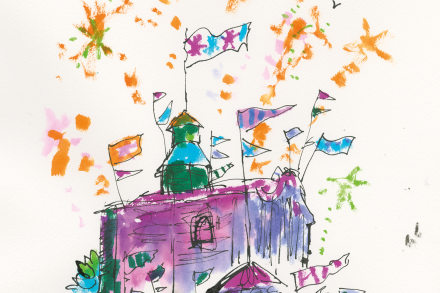
In the artistic pecking order, illustration long languished behind what were seen as the fine arts, even though it was the one art form that most of us would come across every single day. Not unrelated to the status issue, illustration came to be regarded as art for children, young children at that. In the 19th century adult books would be routinely illustrated (Dickens’s illustrators such as Phiz were as much a part of the deal as the novels themselves), but in the 20th the field gradually narrowed. Still, up to the 1970s, even books for teenagers as a rule had pictures. Now, apart from graphic novels, they’re mostly confined to drawings for the tiny tots.

The art of resurrecting forgotten artists

A retired priest in North Wales told me that after the war he had been asked by Billy Butlin to buy 19th-century paintings for the holiday-camp chapels, because they were going cheap. One he bought, for 49 guineas in 1947, was William Dyce’s 1835 ‘Lamentation of the Dead Christ’. In 1983, after the Butlin’s chapels had closed, it made a handy £125,000 at auction, when it was bought by Aberdeen Art Gallery. As late as 1962, Lord Leighton’s great ‘Flaming June’ (1895) was sold for £50. Today? Millions. Talk about ‘the bubble reputation’. The pattern of artistic fame followed by subsequent obscurity has been repeated through the centuries.

How the office has come to haunt us

Should we hop on a call? Let’s touch base. Let’s take this offline. Let’s circle back to your last slide deck. Let’s get those action items actioned by close of play. We need stakeholder buy-in. We need deliverables. We need to make sure you’re aligned with company culture. We’re concerned you’re not leveraging your core competencies. After careful consideration, management has made the difficult decision to terminate your contract. We’re committed to helping you with this transition. Corporate jargon is zombified language. These euphemisms and elisions are the soulless husks of words, meant to blunt the sharp edges of human emotion (sorry – ‘maintain professionalism’). And they often leave you feeling a sneaking sense of dread.

Derek Jacobi on playing Lucian Freud

Lucian Freud almost had a second career in the cinema. He acted as an extra in a couple of films during the early 1940s; the only one in which he made the final cut was a farce starring the ukulele-playing comedian George Formby in which his 19-year-old face can be seen peering out of the background in one scene. Years later, Lucian claimed, John Huston asked him if he’d like to play the part of his grandfather Sigmund in a biographical screen drama from 1962 entitled Freud: The Secret Passion (which had, at one point, a script by Jean-Paul Sartre). Eventually Montgomery Clift was cast instead, which was just as well because Freud was definitely an observer rather than a performer.

Peter Shaffer should be up there with the greats

Commercial success has a way of corroding critical regard. The more popular a playwright becomes, the more the critical establishment becomes suspicious of their intellectual credentials. Consider Peter Shaffer. He collected Tonys, an Oscar, a Golden Globe, a CBE and a knighthood, and yet his reputation has contracted to a single work. Shaffer’s Amadeus premièred at the National Theatre in London in 1979. A West End transfer followed, then Broadway. But it was Milos Forman’s 1984 film that propelled it into the stratosphere, embedding itself so completely in our cultural consciousness that the rest of his work has never quite escaped its shadow. Shaffer’s work resists easy categorisation.

How Winston Churchill painted himself out of the darkness

At Chartwell, Sir Winston Churchill’s home of 42 years, now owned by the National Trust, lies his painting studio. Reached by a path through the green-gold gardens, it is a standalone building with a little doorway and a soaring ceiling, clearly a place of refuge, and recreation, but also of serious commitment. The walls display a hundred or so paintings, lit by a big window that gives on to the garden and the purple horizon of the Weald of Kent; his armchair is set at the easel, near his twisted paint-tubes, housed in a former cigar humidor. His bespoke painting overcoat is flung over the armchair, his drink of ‘mouthwash’ (a splash of whisky and a lot of soda) set ready. It was here that Xavier Bray, director of the Wallace Collection, had his revelation.

The art of flowers

Multi-sensory exhibitions are old hat, but in the case of In Bloom – How Plants Changed Our World at Oxford’s Ashmolean Museum, it feels just right to sit in a space given over to flowers with the sound of gurgling water in the background, mingled with the cries and chirrups of birds. At intervals there are scent stations where you can smell damask rose or green and black tea from flower-shaped chalices. From the ceiling hang swathes of green muslin. I could have stayed here all afternoon. Right in front of me were also two delicious studies of tulips to illustrate the Dutch craze of the 1630s. Frankly, if it came to a choice of two-tone tulips or Bitcoin as a way of squandering money, I know which I’d prefer.

The dirty secrets of the Royal Festival Hall

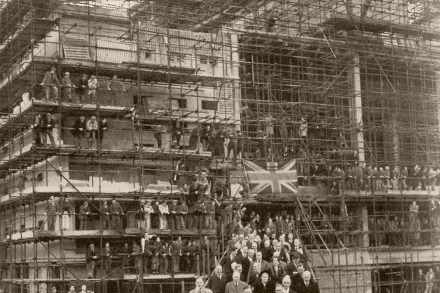
The Festival of Britain – that much mythologised moment of national renewal – is wheeled out every time the country goes through an identity crisis. An echo of the Great Exhibition, the 1951 South Bank extravaganza was spoofed by Tony Blair in his millennium plans and Theresa May in her entirely forgotten ‘Festival of Brexit’. With the country currently in a bit of a state, the Festival’s 75th anniversary this month comes at a fitting moment. Several lessons can be learnt by looking closer at the only part of the Festival to survive: the Royal Festival Hall.

The genius of Zurbaran – and why he vanished

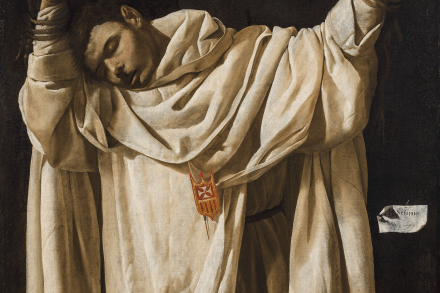
A pious Caravaggio JASPREET SINGH BOPARAI The Spanish painter Francisco de Zurbaran is sometimes thought of as a pious equivalent to Caravaggio – a Caravaggio without the bad temper, brutal vices or criminal record. But it seems difficult to argue that Caravaggio had any direct influence on his work. After all, he died when Zurbaran was 11 and a half years old. Since Zurbaran never left Spain, he could not have seen any of Caravaggio’s paintings with his own eyes. Indeed, he might never have even heard the artist’s name. Still, there are unavoidable similarities between the two men’s work. Zurbaran shared Caravaggio’s sense of drama and his love of shadows broken up by patches of strong light.

In defence of museum charges

It occurs to me only now that I might have spent far too much time in France. Indeed, so familiar with Paris did I claim to be that, in 2023, I was contacted by an agency in need of someone who could conduct specialised ‘art tours’ for small groups of foreigners. Most of these clients were Americans, largely from the Midwest, but there was also a number of well-to-do Chinese and the odd Indian. They wanted much the same thing: they’d seen the Eiffel Tower and been ripped off on the Left Bank; they’d eaten at Lipp and some had even bussed out to grottier banlieues to get a real-life taste of La Haine. What they really wanted, however, was someone to hold their hand around the museums.

The truth about artists’ optical aids

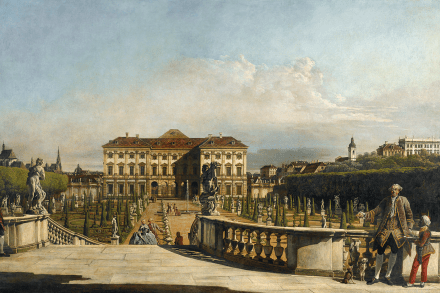
The first thing you see on entering this major new Viennese exhibition is not one of Canaletto and his nephew Bernardo Bellotto’s majestic paintings of London, Venice or Vienna, but a camera obscura. The magical art of both artists depended upon this simple but effective device, which exploits pin-hole projection – an optical phenomenon that had been known since antiquity.  The decision to open the show at the Kunsthistorisches Museum with a deceptively boring little wooden box amounts to a curatorial throwing down of the gauntlet. Because – although I find it hard to fathom – there are still art historians and critics out there who refuse to countenance the fact that great artists used optical aids.

The art of Schiaparelli

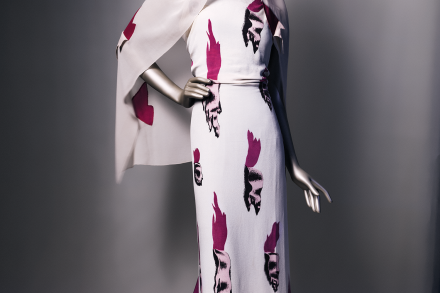
It’s a great shame that Elsa Schiaparelli is less widely known than her rival Chanel. Perhaps that’s down to how difficult her name is to pronounce. Is it ‘shap’, ‘skap’ or ‘skyap’? Tristram Hunt, director of the V&A, answers with a quip from Schiaparelli herself: ‘No one knows how to say it, but everyone knows what it means.’ The V&A’s new exhibition Schiaparelli: Fashion Becomes Art traces the web of influences around one of the great couture houses of the 20th century. Like Coco Chanel (I hate to compare them), Elsa Schiaparelli created clothes for the modern, independent woman – it is now conventional to say so but they ‘pushed boundaries’.

Ovid puts today’s radicals to shame

It’s a crisp afternoon, and in a darkened room in central Amsterdam a woman is being smothered in snakes. Projected on to three walls is a massive video close-up of her face. She is young and beautiful  and remarkably composed: just a nose twitch here, an eyelid flutter there, as a python wriggles across her mouth or languidly caresses her cheekbone with its tail. In the room behind me, another woman stares fiercely back. Her shoulders are bunched with muscle, arms stiff at her sides, like a nightclub brawler about to nut someone. But it’s the bull’s horns sprouting from her forehead, and the mane of matted fur marching down her back, that make it hard to meet her gaze.

Meet the world’s finest string quartet

Once upon a time in communist Hungary – 1975, in fact – four students at the Liszt Academy decided to form a string quartet. That’s always an interesting choice. For a gifted and ambitious young musician, it takes a special kind of self-knowledge to pool your artistic future with three colleagues. But it’s what followed that makes the Takacs Quartet so fascinating. A relocation from the eastern bloc to the free West, the retirement of all but one of the founding members – and yet 51 years later the Takacs Quartet is still, recognisably, the same group. Some would say that it’s currently the finest string quartet in the world.  But throughout the story, there has been one constant: the group’s cellist, Andras Fejer.

The art of ageing

More than 30 contemporary artists have contributed to the Wellcome Collection’s latest exhibition, which asks what it’s like to age at a time of unparalleled longevity. But as so often happens at the Wellcome’s exhibitions, it’s the ephemera that draws the eye first.  ‘These 2 men are the same age,’ says a leaflet advertising Kellogg’s All-Bran breakfast cereal. ‘One has driving power – energy – the will to succeed. The other is listless – tired all the time – it is an effort for him to plod through each day’s work.’  The point being that ageing is, to a not inconsiderable degree, something we do to ourselves, and something we do to each other. It is a process, not an event.

‘I didn’t expect to love Wagner’

By the end of Siegfried, the third opera in Wagner’s Der Ring des Nibelungen, the king of the gods is in freefall. In the first opera, Das Rheingold, Wotan is a confident protagonist; a world-builder. In Die Walküre, we’ve seen him discover the limits of power, and felt his heart break. Now, in Siegfried, he’s a haunted figure; the solitary Wanderer, searching the world for answers that his all-powerful wisdom can no longer supply. He confronts the young hero Siegfried, and his law-giving spear shatters on the sword of a reckless, clueless boy. ‘All he can say is, “Go, then.

The genius of John Vanbrugh

Van’s genius, without Thought or Lecture,Is hugely turn’d to Architecture. Jonathan Swift’s dismissive jest has never been forgotten. It may not be as vituperative as ‘A Beautiful Young Nymph Going to Bed’ but it is there ready for duty whenever the skirmish between the principals’ proxies is resumed in all its petty self-importance. It’s England, so social class looms. While Vanbrugh strode with ease among kings and bitchy duchesses, heavily made-up Foppingtons and grand cru horizontales, the resentful Hawksmoor – his collaborator – lurked in the shadows meekly giving great forelock and not receiving the commissions he deserved.

The art of conspiracy

If you lived anywhere near Kilburn half a decade ago, you might have noticed the messages one of our neighbours kept spray-painting over our walls and bridges. They’d appear overnight across a fairly wide swathe of north-west London, always in an immediately recognisable loopy handwriting, and the content was always recognisably loopy too. This person was trying to communicate something, but it was hard to tell exactly what. The messages said things like ‘STAND UP TO BLACK MASSES’ and ‘MERCY FROM DR HACK’ and ‘TAKE MERCY UNTO ME TAKE IT OUT OF IT’. Every few days for about a year, I would come across another one of these messages, and try to piece together exactly what the author was trying to tell me. There was something going on in the world, something bad.

The problem with the new Shakers biopic

Ann Lee was a sharp-tongued woman from the back streets of 18th–century Manchester, celebrated for put-downs worthy of Coronation Street’s Bet Lynch. But instead of calling time on regulars at the Rovers Return, she announced that it was closing time for the whole of humanity. As a young woman Ann had joined a maverick Protestant sect that became known as the Shakers, or ‘Shaking Quakers’. In fact their shaking was the least of it: they howled, gurned and gibbered while flirting with the notion that God would return to Earth in the form of a woman. All sexual activity, even between man and wife, was forbidden.

The alt-right are clueless about neoclassicism

The adherents of the American alt-right are not known for their delicate aesthetic sensibilities, but there is an exception. They love neoclassical architecture and are calling for it to be deployed in the 250th celebrations this year of what they still call ‘the country of liberty’. Judging from the desecration of the Oval Office and its surroundings, and the plans for the world’s most expensive dance hall, what they have in mind is a style derived not from ancient Greece and Rome but 1950s Technicolor movies. Donald Trump’s White House interior reminds me of Hogarth’s crisp verdict on French 18th-century rococo interiors: ‘All gilt and beshit.’ Expect more of the same.