George Young

The last bullfighters

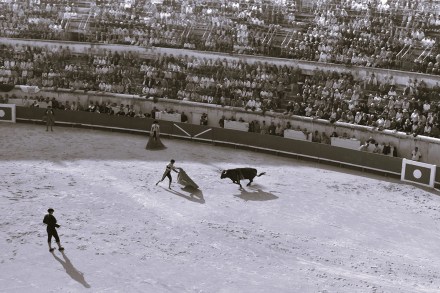
In May of last year, at the Saturday corrida of the Feria de Pentecôte in Nîmes – “no hay billetes” – I had the traveler’s luck to find myself seated next to the son of one of the late, great French toreros of the 1970s. We were seated high in the Arènes de Nîmes, the city’s Roman amphitheater completed around 100 years after the Crucifixion – a structure far superior in function and beauty to Rome’s defunct and messily eviscerated Colosseum. In Nîmes, as in neighboring Arles, the French have triumphed over the Fall of Rome in restoring these structures to something of their original purpose: hosting feats of gladiatorial courage tamed by a strict protocol. But that inheritance has once more been threatened by legislation that contests its place in the Fifth Republic.

bullfighting

Peter Frankopan, Tim Shipman, Francis Pike, Hermione Eyre and George Young

From our UK edition

42 min listen

On this week’s Spectator Out Loud: Peter Frankopan argues that Israel’s attack on Iran has been planned for years (2:00); just how bad are things for Kemi Badenoch, asks Tim Shipman (13:34); Francis Pike says there are plenty of reasons to believe in ghosts (21:49); Hermione Eyre, wife of Alex Burghart MP, reviews Sarah Vine’s book How Not To Be a Political Wife: A Memoir, which deals with Vine’s marriage to ex-husband Michael Gove (28:46); and, George Young reports on the French sculptors building the new Statue of Liberty (34:45). Produced and presented by Patrick Gibbons.

The French sculptors building the new Statue of Liberty

From our UK edition

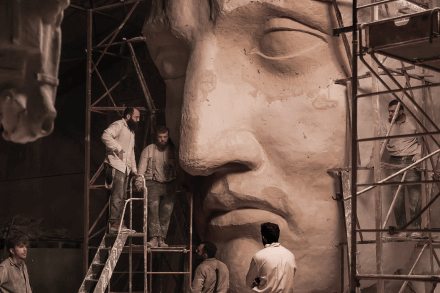
At a miserable-looking rally for the centre-left Place Publique in mid-March, its co-president, MEP Raphaël Glucksmann, made international headlines calling for the Trump administration to return the Statue of Liberty, gifted by the French in 1886 to commemorate the Declaration of Independence: ‘It was our gift to you. But apparently you despise her. So she will be happy here with us.’ The predictably sensationalist headlines dissipated in a flurry of Republican outrage against ‘the low-level French politician’ as quickly as they had arrived. But Glucksmann’s demand – sincere or not – caught the attention of a group of sculptors who, in their words, have ‘taken up the dream of civilisation’ to produce monumental civic sculpture.

Why is the British Museum hiding its great Orthodox icons?

From our UK edition

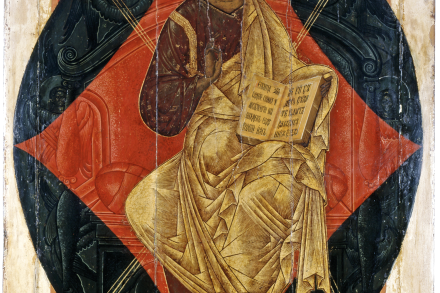
The long neglected art of Byzantium and early Christianity is returning to the world’s museums. Last November, the Louvre confirmed plans for a 3,000 square metre department dedicated to the Byzantine legacy and more than 20,000 works from Ethiopia to Russia that are currently scattered across the museum’s cabinets. Having been initially shelved a decade ago, this monumental undertaking is scheduled to open in 2027, signifying a pivotal moment for the Christian arts of the Eastern Roman Empire to become a serious curatorial subject in European museums once again. (A precursor to the new department established in 1954 lasted but 15 years.) Byzantine art has been the subject of serious study in universities only since the 1940s.