Arts feature

In praise of French brothels

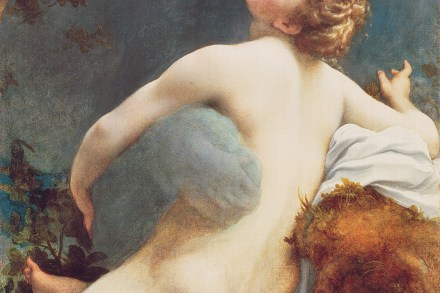
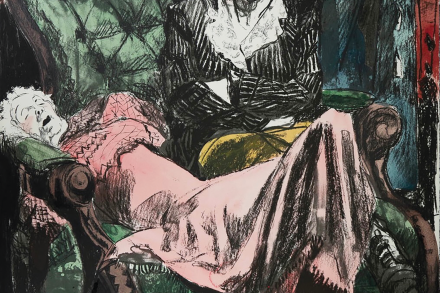
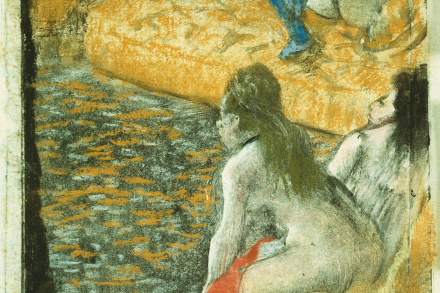
In the days of the Belle Époque and Jazz Age, a trip to Paris would have included, for the discerning tourist, a visit to the Eiffel Tower, Notre-Dame and the Comédie Française, but also to Le Chabanais, the One-Two-Two or Le Sphinx. There would have been no need to give the driver an address: they would have known exactly where to go, for these were Paris’s most luxurious brothels, famous the world over for their beautiful inhabitants, sumptuous interiors, outlandishly themed rooms and specially designed erotic furniture. This year marks the 80th anniversary of the abolition of the French maisons closes system – also known as maisons de tolérance – the network of officially sanctioned whore houses that sprang up in the early 19th century.

What drama gets right and wrong about science

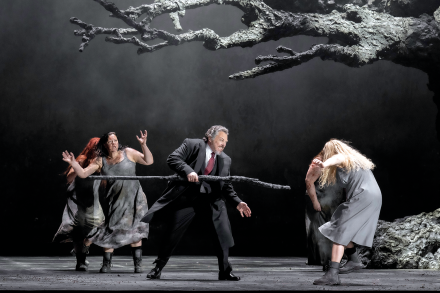
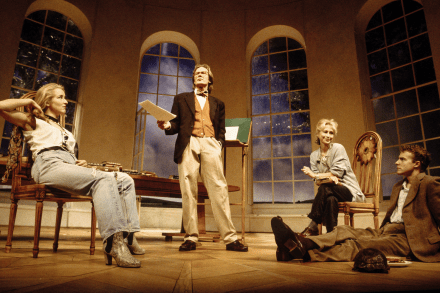
A few days after Tom Stoppard’s death last month, Michael Baum, a distinguished surgeon, wrote a letter to the Times. He explained how Stoppard’s discussion of chaos theory in Arcadia had inspired him to discover a new and far more effective chemotherapy to treat breast cancer. ‘Stoppard never learnt how many lives he saved by writing Arcadia,’ wrote Baum. I’ve long been fascinated by the relationship between science and drama. I knew Tom Stoppard and when I was professor of history and philosophy of science at UCL, we had several illuminating conversations about art, science and theatre, which he recalled in a 1994 article entitled ‘Playing with Science’ for the journal Engineering and Science. ‘Science and art are nowadays beyond being like each other.

The art of the transatlantic liner

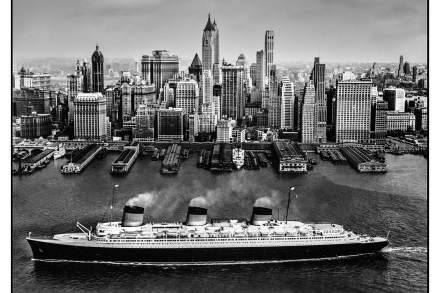
Some time in the next few weeks, a great ocean liner will be lost at sea. One of the greatest, in fact. When the SS United States made its maiden voyage in July 1952, it was the last word in transatlantic liner design. In an age of ocean-going elegance, the ‘Big U’ was the newest, the sleekest and the swiftest. To this day, it holds the Blue Riband – the all-time record for the fastest transatlantic crossing by a passenger ship. Now, after five decades rusting in dock, and a series of unsuccessful preservation attempts, the United States is about to make its final voyage. Stripped of masts, fittings and its massive red, white and blue funnels, it will be towed out and sunk as a diving reef off the Florida coast. It’s heartbreaking to admit that this might be for the best.

The genius of Morton Feldman

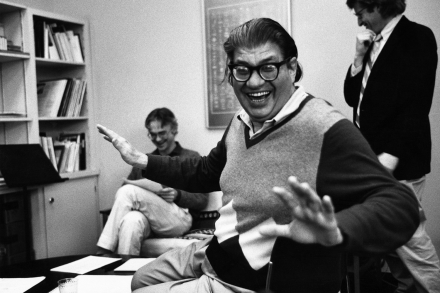
To accompany an exhibition of paintings by Philip Guston at the Royal Academy of Arts in London in 2004, a performance was arranged of Morton Feldman’s composition written in homage to Guston, for which I was persuaded to page-turn. For Philip Guston runs non-stop for four hours and the thick A3 bundle of manuscript paper balanced precariously on a flimsy music-stand was a matter of concern: what could possibly go wrong? Once the performance ended, I snatched the bundle of £20 notes that I’d been promised, sprinted to the bathroom, then fortified myself with the chunkiest slice of cheesecake I could find in Patisserie Valerie on Old Compton Street. Nothing had gone wrong but, boy, did I need a sugar-kick.

Am I a useful idiot visiting Uzbekistan’s first art biennial?

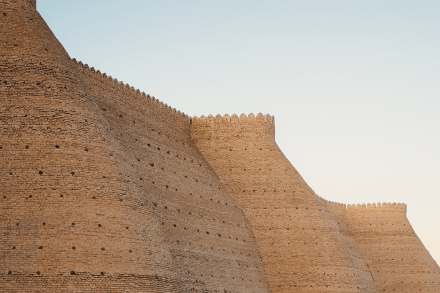
In the ruins of a 16th-century mosque, in the heart of the ancient silk-road city of Bukhara, dozens of abstract figures stand mute and motionless. As the desert sun dips below the horizon, and the shadows thicken, the effect is eerie. Wandering among the statues alone, you feel as though you’ve stumbled upon the aftermath of a forgotten, inscrutable rite. But these aren’t Ozymandian relics. They’re an artwork, ‘Close’, installed last summer by the British sculptor Antony Gormley. His work was one of more than 70 scattered across the Unesco World Heritage city as part of the inaugural Bukhara Biennial, which ran from 5 September to 23 November last year.

Rescuing the Nativity from cliché

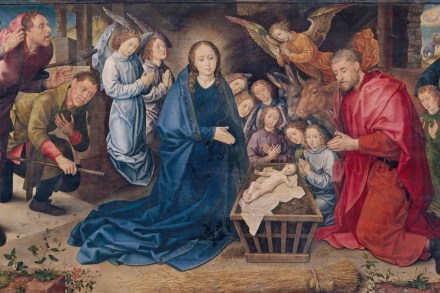
The Nativity. In ‘Over 2,000 Illustrations and a Complete Concordance’, Elizabeth Bishop ends her travelogue-poem – St Peter’s, Mexico, Dingle, Marrakesh – by opening the Bible. ‘(The gilt rubs off the edges/ of the pages and pollinates the fingertips.)’ She gives us the famous stable, ‘lulled within, a family with pets’. Domesticated, nothing out of the ordinary, yet prefaced by strangeness: ‘the dark ajar, the rocks breaking with light,/ an undisturbed, unbreathing flame.’ Undisturbed because it is an illustration and therefore fixed. Undisturbed also because it is the Holy Spirit – steady, unchanging – not spirited, but spiritual. Bruce Chatwin’s On the Black Hill has a school nativity: ‘“I am the Angel Gabriel,” he said in a suffocated voice.

Indian classical music’s rebellion against modernity

When Gurdain Ryatt, Ojas Adhiya, Milind Kulkarni and Murad Ali Khan take to the stage at Milton Court this Sunday they will be united by a common language: the tradition of Hindustani Indian classical music, rooted in the north of India. Ryatt and Adhiya’s job will be to keep beats circulating on their pitched, drum-like tablas, while Kulkarni’s harmonium will sustain drones, apparently towards infinity. Khan plays the sarangi, a string instrument famed for its uncanny invocation of the wavering of the human voice. Shankar’s tireless advocacy spawned a crossover culture that he felt too often sullied the very music he loved British audiences have a head start when it comes to appreciating this tradition.

‘Ballet is antiquated, and it works’: Royal Ballet principal Matthew Ball interviewed

The history of the male ballet dancer is a chequered one. In the early 19th century, he was the star of the show, albeit more as an acrobat and tumbler than fairy-tale prince. The vogue for sylph-like damsels floating in white tulle put paid to that, reducing him to the auxiliary role of porter and attendant. Then came the comet of Nijinsky, introducing a note of mysterious Slavic androgyny that left the male dancer suspiciously homosexual and prone to the ‘pink tights’ cliché. Nureyev and Baryshnikov cemented the exotic Russian connection, until the late 1990s when the allure of the musical Billy Elliot and Matthew Bourne’s version of Swan Lake opened ballet up to a generation of British boys who would otherwise have preferred kicking a football around.

Labour’s war on heritage

Britain’s heritage is slowly going up in smoke. Medlock Mill was Manchester’s oldest standing textile mill until it burnt down in June. It joins Grade I-listed Woolton Hall – destroyed by a catastrophic fire in August. But it’s not just the buildings that are under threat, but the entire system designed to protect them. Prior to the disaster, the architect Stephen Hodder had proposed gutting the mill and converting it into a 37-storey block of student flats. A coalition of concerned citizens and conservation charities fought for a stay of execution by applying for the mill to be listed. After reviewing new archaeological evidence, Historic England concurred and recommended it for Grade II.

The melancholy genius of Joseph Wright of Derby

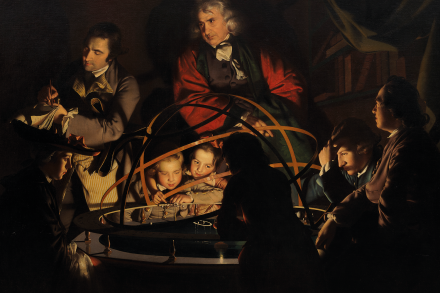
If you lived in the 1760s and were affluent enough – and curious enough – science could be a family affair. The instrument maker Benjamin Martin actually marketed scientific equipment for amateurs, complete with an instruction manual listing simple, edifying experiments for home enjoyment. And so in 1768, in ‘An Experiment on a Bird in the Air Pump’, Joseph Wright (1734-97) painted a group of family and friends attempting Experiment 42 in Martin’s manual. You’re sure to have seen it: a darkened room with a white bird wilting in a glass bulb while the faces of the participants – a magus-like scientist, a fashionable couple, a frightened little girl burying her face in her dad’s coat – are half-illumined in a pure, almost supernatural light.

There is little sadder than the death of a language

The last Yana-speaker in the world died in 1916. When Ishi was born, the Yana were still a small but healthy collection of tribes ranging the Sierra Nevada mountains of California, where they lived off what they could hunt and the salmon they caught in the rivers. But gold had been discovered in California and every year tens of thousands of settlers were arriving to stake out a claim. When Ishi was four years old, there was a massacre of Yana people near what’s now Mill Creek; Ishi’s father was one of the people killed. The last few survivors disappeared into the hills. The white settlers never encountered them again; as far as they knew the Yana had been wiped out.

The triumph of classical architecture

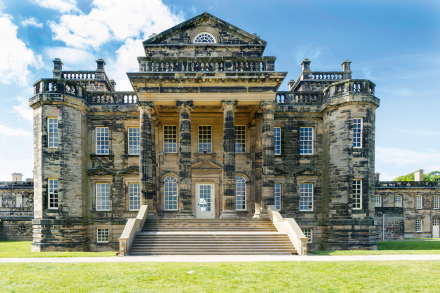
It is very hard to imagine the University of Oxford ever constructing a modernist building again. This is the significance of the new Schwarzman Centre for the Humanities. In its sheer scale, in its prominence both within the city centre and within the university – the first multi-department, purpose-built structure to open in its history – it is the most important building to be erected in Oxford in half a century and an endstop to an architectural era. One can imagine that its use of a restrained classicism won’t just influence the architectural aesthetics of Oxford but also of other universities within historical cities, both in the UK and internationally. Its impact is all the more profound given its radical – in Oxford terms – proposition.

The dying art of costume design

At the receptionist’s desk in Cosprop’s studio and costume warehouse, a former Kwik Fit garage, the sloping bleakness of Holloway Road is held at bay by a small chandelier, brassy lighting and a bound guest book. It’s a bit stagey, like a filmset for a cheap foreign hotel or an expensive shrink’s office, quite out of place in the real north London high street. But as the entrance to a costume house that builds worlds and people out of bits of fabric, feathers and jewels, it’s appropriate. Suspend all disbelief, ye who enter here. Cosprop was founded by the costume designer John Bright in 1965.

Save art history!

A few weeks ago I went along to a lecture on the Welsh artist, poet and soldier David Jones. Kenneth Clark considered him ‘the most gifted of all the young British painters’. The talk, by a recent art-history graduate with a first-class degree from a reputable university, began at a cracking pace. It was only when he started to show slides to illustrate his talk that I began to feel very hot and sweaty. The paintings were not by Jones but his near-contemporary Stanley Spencer. Jones did share with Spencer the experience of serving with the British Army during the first world war. And both were stimulated by this immersion into an unexpected, unwanted world. But there is no chance that their work could be mistaken for that of each other.

The art of dining

Ivan Day pulls out an old Habsburg cookbook from his library. The 300-year-old volume is so thick it’s almost a perfect cube, and by some miracle the spine remains intact as he opens it. ‘It’s like a big Harry Potter spellbook,’ he jokes while flicking through drawings of pastry baked in the shapes of dolphins, tortoises, pelicans and griffins. I recognise one design from the half-eaten pie in his kitchen: a cross between a soup tureen and an embroidered throw pillow. Ivan is a curator, self-trained cook and Britain’s premier historian of food.

Was Serbia the real birthplace of the Renaissance?

Where did the Renaissance begin? There has been an official answer to that question since 1550, the date that Giorgio Vasari’s Lives of the Artists was first published. According to this version, it all began in Florence and the first painter in the long line that ended with Leonardo, Raphael and Michelangelo was named Cimabue. But here’s another suggestion: you could just as well try looking in the rolling hills of Serbia. My wife and I went travelling there earlier this year. For a couple of nights we stayed in the town of Novi Pazar in the south-east of the country. From the religious point of view this town is a remnant of the Ottoman Empire; according to the census of 2022, nearly 80 per cent of the population is Muslim (with just 71 atheists).

Is Grey Gardens the greatest documentary ever made?

A middle-aged woman wearing what looks like Princess Diana’s infamous ‘revenge dress’ and a balaclava from an IRA funeral approaches the hole in the floor. The raccoon that lives there, clearly used to her presence, looks up expectantly. Sure enough, the woman empties a bag of dry food into the hole. The scene is framed by the intricate fluted wainscotting of the room’s door frame. I am not exaggerating when I say I believe it to be one of the great scenes of modern cinema. The vignette comes from Grey Gardens, the Maysles brothers’ cult documentary, which turns 50 this autumn. Like many great documentaries – from Tiger King to  The Imposter to The Queen of Versailles – the film’s purpose changed over the course of filming.

‘Modern pop makes me want to kill myself’: Neil Hannon interviewed

Search for a successor to Tom Lehrer, and you’ll be hard pressed to find any decent candidates. One of the  few, however, who can match the wit and sophistication of the late musical satirist is the Northern Irish musician Neil Hannon. The 54-year-old is the sole permanent member of his band the Divine Comedy, and his elegant records mix Lehrer-esque wordplay with swooning orchestral pop that is in equal measure Dusty Springfield, Scott Walker and Michael Nyman. But matters have darkened somewhat on his newest LP, Rainy Sunday Afternoon. Here, we are far from the cheeriness that many will remember on his 1990s records Casanova and Fin de ​Siècle.

The man who can save classical music

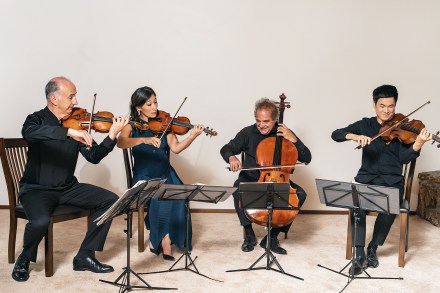
John Gilhooly is sick of talking about the Arts Council of England. ‘Please tell me you’re not going to ask about that,’ he groans. ‘I walked into an interview last week where it was only about that, and if I’d known I would’ve declined. There have got to be broader things now.’ That’s awkward; because in the (admittedly grey) world of UK arts funding, Gilhooly’s announcement in March that he was taking the concert hall he manages – the Wigmore Hall – out of the Arts Council’s funding portfolio has been the story of the year. He’s dead right, though. We’re sitting in one of the world’s great music venues: an art-nouveau jewel just off Oxford Street, consecrated to Schubert, Beethoven and Bach.