Spectator Life

Spectator Life

An intelligent mix of culture, style, travel, food and property, as well as where to go and what to see.

Cooking lessons from the wild

These days, it’s fashionable to get deliveries of vegetable boxes. Some do it through devotion to the dour idol of seasonality; the true worshipper knows they are buying a challenge. Many great recipes are created to deal with gluts and shortages. Digby Anderson, in his wonderful Spectator food column, pointed out that every good kitchen runs on the solera system. Cooking with what one has, rather than going out and getting what one wants, provides some useful lessons. Foraging for mushrooms is the best lesson of all. The result is both a challenge and, if you’re lucky, a glut too. Beneath every fallen leaf or umbral shadow lies possibility; one walks in hope and arrives, occasionally, in a state of grace.

A teashop like no other: Sally Lunn’s Historic Eating House reviewed

Sally Lunn’s is a teashop in Bath. It sits in a lane by the abbey, and the Roman baths. Paganism and Christianity jostle here: Minerva battles Christ, who wins, for now. Sally Lunn’s calls itself ‘the oldest house in Bath’ (c. 1482). It is rough-hewn, with a vast teal window and pumpkins on display. The pumpkins might be plastic. I don’t know. Tourists queue in the hallway behind a large wooden cutout of a woman who might be Sally Lunn. She is a semi-mythical woman: the Huguenot refugee Solange Luyon, who came to Bath in the 1680s with brioche in her hands. No one knows if she really existed.

The secret to making great oysters Rockefeller

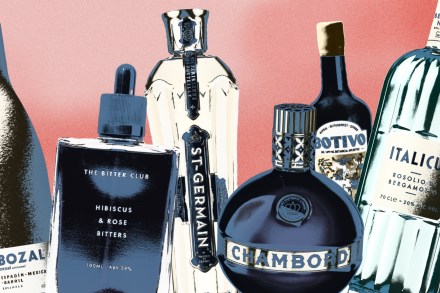
There’s nothing more intriguing than a closely guarded secret recipe. Coca-Cola and KFC are two famous examples, with the precise ingredients for the soda syrup and special coating kept in guarded vaults: the story is that those who hold the information aren’t allowed to travel on the same plane in case of disaster. Lea & Perrins, Angostura Bitters and Chartreuse all keep their products’ make-up secret. Making sure the butter is the brightest of greens is as important as any of the individual components Nobody knows the recipe for oysters Rockefeller – or at least nobody knows the original recipe. It was created in 1889 at Antoine’s restaurant in New Orleans, which still stands today, serving the same classically French food it did back in the 19th century.

Admit it, roast dinners are bad

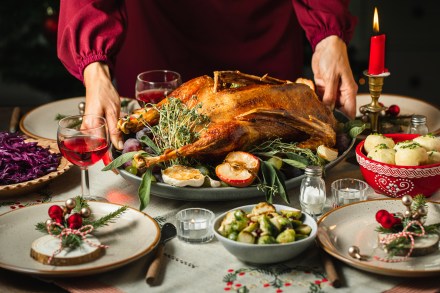
Sunday lunch is a bit like the Edinburgh festival. People make a big thing of it, it’s considered a British treasure, and I am meant to book it, go to it, and like it. But I don’t. If Edinburgh is forever associated in my mind with glowering edifices of grim dark stone, hostile chilly sun between spells of overcast cold skies, the worst comedy and theatre I have ever seen, and paying a king’s ransom for a nasty little room a 20-minute taxi ride out of town, then Sunday lunch is, for me, forever intertwined with desperately wishing to be somewhere, anywhere else. Maybe even the Edinburgh festival. Sunday lunch is what people traditionally do when they don’t much like each other, or at least don’t know how to talk to each other.

Alan Clark’s wines were as remarkable as he was

Où sont les bouteilles d’antan? For that matter, où sont les amis with whom one consumed them? These autumnally melancholic musings arose because a young friend asked me about Alan Clark. He had been reading the Diaries. Were they truthful? Was Alan really such a remarkable character? The answer was simple. An emphatic yes, on both counts. I suspect that I speak for most of his muckers when I declare that I have never met anyone who was more fun. The 1967 Yquem tasted like a Greek temple melted down in honey. Alan served it as a house wine If Alan was of the company, the conversation might well have a whiff of sulphur. But one could rely on spice and scintillation. Alan’s very walk presaged mischief.

Gutweed and bladderwrack? Yum!

Foraging has become a sign of status rather than a lack of it and seaweed is perhaps the most abundant wild food of all. The alternative is mushrooms, but I’ve always thought fungus-hunting a bit too wild; the possibility of a first-class risotto being offset by the risk of death or, worse, expanded consciousness. Rotting seaweed is disgusting. My local newspaper in Cornwall regularly publishes complaints from tourists Caroline Davey, who trained as a botanist before becoming a forager, assures me that only three species of seaweed are poisonous and they are found only in deep water. They might conceivably wash up on the shore, but the basic rule of seaweed foraging is to avoid the stuff at the high-water mark – that’s all dead and decomposing.

The joy of tarte Tatin

When it comes to traditional recipes, there are few things we love more than an unlikely origin story, ideally one born out of clumsiness or forgetfulness. The bigger the kitchen pratfall, the more delicious the product. Setting pancakes on fire? Accidental crêpe Suzette! Nothing in the restaurant apart from lettuce and some pantry ingredients? The Caesar salad is born! Muck up a cake you’ve made hundreds of times and end up with a squidgy mess? The St Louis gooey butter cake is even more popular than the original recipe! There are few bungling origin stories neater than that of the tarte Tatin But there are few bungling origin stories neater than that of tarte Tatin, the upside-down caramelised apple tart.

An inedible catastrophe: Julie’s Restaurant reviewed

At Julie’s at the fag end of Saturday lunchtime, Notting Hill beauties are defiantly not eating, and the table is covered with crumbs. Restaurant Ozymandias, I think to myself. This is no longer a district for the perennially wracked, or unrich. The Black Cross – Martin Amis’s ideal pub in London Fields – is now a sushi joint. Of course it is. The omelette is bright yellow and tough, like a hi-viz croissant Julie’s, which is named for its first owner, the interior designer Julie Hodgess, mattered in the 1980s.

25 years on, no one compares to the Two Fat Ladies

They were loud, vivacious and gloriously un-PC.  Sometimes they seemed to be learning how to cook as they went, barely one step ahead of the viewer. It didn’t matter. If anything, it only made the BBC's Two Fat Ladies more watchable. And 25 years on – the last of the two dozen episodes pairing Jennifer Paterson and Clarissa Dickson Wright aired on 28 September 1999 – I miss terribly their jaunty style of cooking, glass in hand. I don’t think I’m alone. Spectacularly and unexpectedly successful in their lifetimes – 70 million worldwide watched their programme over its four-year run, including many in the US – the internet has allowed them to find fresh admirers since their death.

Nick Elliott and a life worth drinking to

The English language has immense resources, but the odd weakness. What, for instance, is the translation for ‘Auld lang syne’? We were discussing that profound topic while telling stories about absent friends, recalling the occasional bottle and thinking about Britain. Nick Elliott’s response to grim news was to open a bottle of Mouton Rothschild ’82 A fascinating fellow called Tim Spicer, who commanded a battalion of the Scots Guards, has written a book about an even more remarkable chap called Biffy Dunderdale. Biffy was the sort of man who helped to win our nation’s wars, including the (first) Cold War. In these pages a couple of weeks ago, Charles Moore brought a colleague of Biffy’s to memory.

With Charlie Bigham

31 min listen

Charlie Bigham founded his eponymous ready to cook meals over 25 years ago. Having left a career as a management consultant, his company has gone on to report annual sales in the tens of millions, with a focus on ‘creating delicious dishes for people who love proper food’. His first cookbook ‘Supper with Charlie Bigham’ is out now.    On the podcast, Charlie tells hosts Lara Prendergast and Olivia Potts about recovering from ‘revolting’ school food, the difference between packaged meals and ready meals, and how he views cooking as alchemy. Produced by Oscar Edmondson and Patrick Gibbons.

Hello, waiter? Yes, I’d like to complain

As I leant over to speak to one of my dining companions in a busy restaurant, I felt something shuffle on my knee. I briefly wondered if it was a rat. But it was just a busybody waiter, who had taken my napkin from the table and folded it upon my lap. It was a bit strange that he did so without asking – but then, this same waiter had, when taking our order, crouched down (so that he was sitting on a chair) and asked, ‘Are you guys ready to order, and do you want me to explain the concept?’ So much to dislike. My most serious complaint is reserved for restaurants that are incapable of serving up everyone’s food at the same time My biggest gripe used to be waiters who poured your wine too frequently, and too full, in their mission to total the bottle so that you order another.

Paul Wood, Ross Clark, Andrew Lycett, Laura Gascoigne and Henry Jeffreys

33 min listen

On this week’s Spectator Out Loud: as Lebanon reels from the exploding pagers, Paul Wood wonders what’s next for Israel and Hezbollah (1:24); Ross Clark examines Ireland’s low-tax project, following the news that they’re set to receive €13 billion… that they didn’t want (8:40); Reviewing Ben Macintyre’s new book, Andrew Lycett looks at the 1980 Iranian London embassy siege (15:29); Laura Gascoigne argues that Vincent Van Gogh would approve of the new exhibition of his works at the National Gallery (22:35); and Henry Jeffreys provides his notes on corkscrews (28:01).  Produced and presented by Patrick Gibbons.

Cheers to corkscrews!

For the first 50 years of the corked bottle, there was no easy way to get into it. The combination of cork and a strong glass bottle came together around 1630 but the first mention of a device to open the bloody thing wasn’t until 1681. Cavalier get-togethers must have resembled the teenage parties I attended with everyone desperately trying to open the bottle using keys, pens, knives etc. Or using that technique where you bang the bottle against a wall with the heel of a shoe. Halcyon days. More likely they’d just take the top off cleanly with a swift blow from a sabre and a loud ‘Huzzah!’. Early devices for extracting corks were called ‘bottle screws’. According to Hugh Johnson, the word ‘corkscrew’ was first used in 1720.

As good as Noble Rot: Cloth reviewed

Cloth is opposite St Bartholomew the Great on Cloth Fair. People call this place Farringdon, but it isn’t really: it belongs to the teaching hospital and the meat market and William Wallace who died a famous death here and has only a little plaque in turn. Smithfield embraces the dead. Sherlock Holmes met Dr Watson here and, for BBC1, jumped off the roof of the hospital. If Cloth calls itself a ‘neighbourhood wine bar’, which sounds less threatening than ‘restaurant’, its true customers are the dead, and that is no criticism. The chips are marvellous, and this matters. I always judge a restaurant on the chips I am early, so I sit in St Bartholomew the Less – this is how buildings fight!

Give vitello tonnato a chance

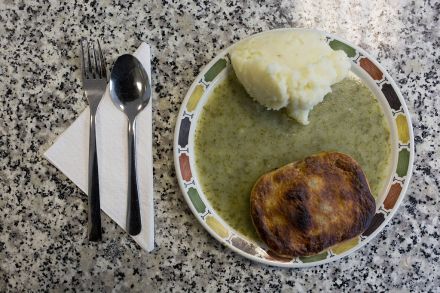
I am sure there are beloved British dishes that inspire horror in those from different cultures, that are truly unappealing to the uninitiated. I can quite imagine that the bright green eel-gravy that traditionally accompanies the East End pie and mash could be figuratively and literally hard to swallow for a visitor. Or that our predilection for Yorkshire puddings – glorified pancakes – on our very savoury roast dinners and a desire for strong cheese served with fruitcake make us seem as mad as a box of frogs. Vitello tonnato might be called the original surf and turf.

The wonder of wine from the Mosel

Conservatives used to be good at inspiring a mass membership, underpinned by organisations. Before the first world war, the Primrose League had a million members. Shortly after the second war, the party’s membership, including the Young Conservatives, reached three million. This is partly explained by the social mores of the day. The range of available leisure activities was much smaller, there was no television, and parents were happy for their daughters to join the YCs, the assumption being that the girl would meet a nice type of young man. It is easy to understand why German oenophiles insist Riesling is the greatest grape of all All that is redolent of a vanished age. But this has consequences. Traditionally, local associations, including YCs, were the party’s foot soldiers.

With Simon Raymonde

28 min listen

Musician Simon Raymonde is perhaps best known as part of the Scottish band the Cocteau Twins, but he has found further success as the co-founder of Bella Union Records. Bella Union produce music by Father John Misty, the Fleet Foxes, and Beach House, amongst others. His memoir In One Ear: Cocteau Twins, Ivor Raymonde and Me is released on the 12 September 2024. On this episode of Table Talk, Simon tells Olivia Potts and Lara Prendergast about the influence of Jewish food as he was growing up, life on tour, how he spends his time in his new home of Brighton, and his love of the restaurant chain Dishoom.  Produced by Patrick Gibbons.

The no-bake bliss of icebox cake

Standing in the biscuit aisle of my local supermarket, I’m overwhelmed by possibilities. This isn’t unusual for me, but normally it’s fuelled by greed, and resolved by buying them all. Today I have to make a choice. I am making an American icebox cake, which requires a lot of one type of biscuits, and the structure and flavour of the whole cake depends on them. As befits a no-bake dessert, the process of making it is a cinch The problem is that the three most popular biscuits for the pudding are not easily available here: graham crackers, Oreo thins and Nabisco chocolate wafers. I almost feel relief when I discover that the classic icebox biscuit, the Nabisco chocolate wafer, was discontinued last year.

Curiously understated: Porthminster Kitchen reviewed

Porthminster Kitchen sits above Warren’s Bakery on St Ives Harbour, like a paradigm of the British class system in food. This happens everywhere, but it is particularly pronounced in St Ives, which is unlucky enough to be a site of pilgrimage for Virginia Woolf addicts – her childhood holiday home sits above the town, her lighthouse is on the bay – and other feckless Londoners. But the balance is long lost. Since the Tate Gallery arrived in 1993, Cornish natives, who used to live alongside artists – Barbara Hepworth, Patrick Heron – have left the old town (‘downalong’).

Joan Collins, Owen Matthews, Sara Wheeler, Igor Toronyi-Lalic and Tanya Gold

30 min listen

On this week’s Spectator Out Loud: Joan Collins reads an extract from her diary (1:15); Owen Matthews argues that Russia and China’s relationship is just a marriage of convenience (3:19); reviewing The White Ladder: Triumph and Tragedy at the Dawn of Mountaineering by Daniel Light, Sara Wheeler examines the epic history of the sport (13:52); Igor Toronyi-Lalic looks at the life, cinema, and many drinks, of Marguerite Duras (21:35); and Tanya Gold provides her notes on tasting menus (26:07).  Presented and produced by Patrick Gibbons.

Beware the celebrity booze merchants

There are quite a few ‘theories’ (what the middle classes call gossip nowadays) about why Jennifer Lopez and Ben Affleck have sundered their union for a second time. Personally, I’m of the entirely uninformed opinion that one of the contributing factors may have been that Jennifer Lopez – like many a celeb – has her own alcohol line, launched last year with a suitably up-itself press release. ‘Delola world-class spirit-based ready-to-enjoy cocktails designed for a thoughtful lifestyle coming to the finest establishments.’  When the touter is teetotal, regular celebrity greed starts to look like something more malign Perhaps Lopez might have been a bit more ‘thoughtful’ about the fact that her erstwhile husband is an alcoholic – three times re-habbed.

The treasures of sherry

We were talking Spain and drinking Spanish. The UK and Spain are very different societies, but we did find points of comparison. As a very broad generalisation, Spaniards can be divided into three political groupings. There is a Europhile elite who take their political identity from a projected European future, and almost none from their nation’s past. To them, Spanish history is largely a record of backwardness, poverty, oppression and conflict. The EU is a means of ensuring that this past can be left in the past. British wine-lovers should not talk too loudly about the treasures of sherry The two much larger groups cannot forget the past, and especially the civil war.

With Will Beckett

30 min listen

Will Beckett, CEO of Hawksmoor, founded the steakhouse chain with his childhood best friend Huw Gott in 2006. It has since expanded to 13 locations, including three outside the UK, and consistently been ranked one of the best steak restaurants in the world. On the podcast, Will tells Olivia Potts and Lara Prendergast about his journey from working in a bar to breaking America, how farming is the key to a good steak, and why pasta is actually his favourite food.

The tyranny of the restaurant booking system

Last week, the London restaurant St John opened reservations for a celebration of its 30th birthday. For much of September, the Smithfield restaurant will bring back its 1994 menu at 1994 prices. Tables were snatched up within minutes, possibly seconds. I sat at my computer refreshing the OpenTable booking site like a monkey at a slot machine and got nothing but a manic adrenaline rush that ruined my morning. I’ve seen the algorithm create Soviet breadlines overnight Please, reader, don’t pity me – it was, of course, just a minor inconvenience. What does wind me up is the principle: fun now has to be meticulously planned and booked weeks in advance.

William Cash, Marcus Nevitt, Nina Power, Christopher Howse and Olivia Potts

31 min listen

On this week’s Spectator Out Loud: William Cash reveals the dark side of Hollywood assistants (1:12); Marcus Nevitt reviews Ronald Hutton’s new book on Oliver Cromwell (7:57); Nina Power visits the Museum of Neoliberalism (13:51); Christopher Howse proves his notes on matchboxes (21:35); and, Olivia Potts finds positives in Americans’ maximalist attitudes towards salad (26:15).  Presented and produced by Patrick Gibbons.

American salads are weird – but an egg salad is perfect

The Americans are weird about salad. I’m sorry, but somebody had to say it. Really, their use of the word ‘salad’ needs scare quotes around it. Where we generally mean ‘green leaves, and possibly a tomato if we’re feeling adventurous’, an American ‘salad’ can mean anything from pistachio cream with glacé cherries to tuna in sweet jelly. It is a hangover from the middle of the last century, when – in a perfect confluence – canned goods, especially otherwise unavailable fruit, and mass-produced gelatine simultaneously became easily available. The American housewife ran with it, and inexplicably called it a salad. Salad can be maximalist, with everything thrown at it. Bacon! Anchovies! Grapes! Marshmallows!

A slice of Paris in Crouch End: Bistro Aix reviewed

There is a wonderful cognitive dissonance to Bistro Aix. It thinks it is in Paris but it is really in Crouch End, the flatter twin to Muswell Hill, a district so charismatic it had its own serial killer in Dennis Nilsen. (He killed more people in Willesden, but Willesden doesn’t receive its due: here or anywhere.) We pick our way through the Versailles of north London, past Little Waitrose and the clock tower I have never thrived in Paris. My sister says I always go with the wrong men, which is unfair, because it was a school trip and I had no choice about the (very small) men. I prefer the Paris of my imagination, which is quite a lot like Bistro Aix in Crouch End.

The healing power of wine

What goes best with a broken rib? The answer, I think, is any drink you enjoy that will not make you laugh. I was strolling along to Richmond station after spending the night with old friends. (Very Jorrocksian: ‘Where I dines, I sleeps.’) I was carrying a scruffy overnight bag containing one shirt, one pair of socks, ditto underpants and sundry toiletries. Phone rings: put down bag – and suddenly a toerag appears from nowhere, grabs the luggage and scoots off. I yell ‘Stop thief’, run a few paces and trip. Passers-by prop me up and ask if I want an ambulance: would have saved a lot of trouble if I’d said yes. Instead, I went home hurting, then managed to fall over and could not get up. Unable to raise anyone on the phone, I contacted 111, and was told to ring 999.