Spectator Life

Spectator Life

An intelligent mix of culture, style, travel, food and property, as well as where to go and what to see.

You shouldn’t be afraid of steak tartare

Whenever I think of steak tartare, I can’t help but remember a heartbreaking passage in Nigel Slater’s memoir Toast. Slater, working at a French restaurant in a Midlands hotel as a young man, is desperate to try the steak Diane. He books a table there for himself and a date. In a moment of madness, he accidentally orders the steak tartare instead. Expecting a rich, cream-spiked, butter-fried, brandy-flambéed steak, he is first surprised, and then horrified when a waiter begins chopping up raw meat alongside him. ‘I felt cold, then hot, then cold again. The little egg yolks seemed to be looking up at me, laughing. Then everyone was laughing.’ He goes outside and faints.

A lunch good enough to lift Tory spirits 

Things could have been worse. My host was determined to lunch al fresco, and after all it was late June. Yet this is England and as everyone knows, even D-Day had to be postponed for 24 hours. In the event, we were fine. The elements were kindly. The temperature did not fall below 60, the rain held off, we more or less managed to forget about politics and it would have been hard to improve on the setting. Saint Jacques, a restaurant which I have often praised, always deservedly, has a courtyard and is next to Berry Bros: so this is a sophisticatedly bacchanalian quartier. The rain held off, we forgot about politics and it would have been hard to improve on the setting The sophistication may be recent.

Who picks up the tab?

I tend to steer clear of large group meals but the last time I went there was a very awkward moment. When the bill arrived, I saw two individuals tapping away on a calculator app before announcing the exact amount of money they were prepared to put on the table. ‘I didn’t have a starter,’ chimed one. ‘I only had one cocktail,’ said the other tightwad. When the bill came it was divided equally – except that the couple counted themselves as one person We were at an inexpensive Mexican restaurant, with two cocktails for the price of one, yet this pair insisted on working out to the last penny what they had each consumed.

‘An exceptional roast lunch’: Quality Chop House reviewed

The oldest and best chophouse in London was Simpson’s Tavern in Ball Court Alley off Cornhill (since 1757 on that site): Charles Dickens’s favourite chophouse, and mine. Simpson’s was locked out by landlords who impersonate cartoon villains at the end of 2022 for failing to pay pandemic arrears promptly. Simpson’s said they survived world wars, the plague and the Industrial Revolution, but not a landlord who doesn’t understand chops. (This part I paraphrase.) We settle into a spindly table for what is, by any measure, an exceptional roast lunch Court proceedings are ongoing: meanwhile it’s a ruin. It was vandalised in May, as these things tend to be. Now it is empty, and ornamental books tumble out of smashed windows.

How to make elderflower cordial

I have a complicated relationship with elderflower cordial. I love taking ingredients that have short seasons, preserving and squirrelling them away for future enjoyment. And I’m cheap, so the fact that the main component comes from the hedgerow is appealing. And it’s fun! It is a little like making a potion, dunking whole heads of flowers into an enormous pan and then leaving it to steep for days, before bottling it. Magical. But the truth is, I really don’t like drinking the cordial. It is too floral, too perfumed, too green. It’s just not for me.

In defence of energy drinks

With Britain so sluggish, Keir Starmer and the Labour party should want to reenergise the country. Indeed, they are preoccupied with energy, and not just the dire state of the British electrical grid but energy drinks. Labour is set to propose a ban on the sale of energy drinks to under-16s. Most British supermarkets have already introduced voluntary bans but this would make them comprehensive and legally binding. Our governing class doubtless sees energy drinks as being rather coarse compared to coffee There’s an irony here. Labour wants to extend the right to vote to 16-year-olds.

The diary of an English pizza chef in Naples

At 5 a.m. one morning in December, I found myself cycling as fast as I could to the bakery I worked at in Clapham, trying to get keep the blood pumping. My fingers felt like frozen gherkins, which made using the brakes difficult. Shivering and exhausted, I asked myself: what am I doing? At work, my hands thawed over a cup of tea, and I set about mixing dough, laminating croissants, and doing all the other things bakers do. After a year in the bakery, my mornings passed on autopilot. But that day, I couldn’t stop thinking about Naples. My girlfriend is from the city and we’ve been back to visit her family. That chilly English morning, all I could think about was the sweet tomatoes, coffee granita, and having a tan.

The joy of Portuguese wines

There was a wonderful old boy called John – Sir John – Wordie, who was a quintessential member of the establishment. A barrister, he spent much of his time defusing controversies before they had boiled over. In that enterprise, he never sought publicity, finding it much easier to dispense wise advice if no one knew who he was. An accomplished sailor from his RNVR days during the war, he was always a stalwart of nautical good and goodery – and he knew a very great deal about wine, especially port. A Texan can extract five syllables from Goddam: Go-o-o-day-um. John could do as well with port. Po-o-o-o-rt. It was a deeply reassuring sound. Whatever was going wrong with the world, as long as John was in his place, saluting the port, nothing could be as bad as it seemed.

Inside Portugal’s new theme park for wine lovers

I’ve always loved Porto and need little excuse to visit. Not uncoincidentally, I’ve always loved port and need little excuse to drink it and so, invited to stay in this fine city and road-test its latest attraction, the ambitiously-monikered World of Wine, who was I to resist? There’s been a mixed reception to Wow locally. One person told me that it was garish and vulgar Porto is really two cities, Porto itself and Vila Nova de Gaia, separated by the mighty Douro River, along the banks of which lie the precipitous vineyards responsible for the finest of all fortified wines and some increasingly tasty red and white wines too. I was billeted in the swanky Yeatman Hotel.

The not-so-French roots of chicken cordon bleu

We all have our quirks when it comes to cooking. I have clear mental blocks over what is and is not a complicated supper, many of which do not follow any kind of logic. I wouldn’t think twice about setting a sauce or ragu going early in the day, blipping gently, returning to it every so often for a stir and a taste, knowing that it will take hours and not inconsiderable attention before it is ready. I don’t mind at all making dough which will need proving and shaping as the afternoon wanes. I even find the act of slicing or chopping various different components meditative. The result is neat little parcels of golden-brown crunchy breadcrumbs encasing chicken, cheese and ham But there are processes that set off klaxons in my head: warning, warning, avoid.

The best bottle to come from the Gigondas

One needs wine more than ever, yet when imbibing, it can be hard to concentrate. So much is going on. We were at table and the news came through about Slovakia. Was this an obscure incident, regrettable but below the level of geopolitics? Or would it become a second Sarajevo? Fortunately, that seems unlikely. In Mitteleuropa, there are always ancestral voices prophesying war and there is usually plenty of dry timber. But it does not seem that this assassination attempt will be the spark. The Barruols have a reputation for delightful eccentricity but they are committed to their bottles When we had come to that conclusion, there was an obvious next step. Gavrilo Princip nearly missed his chance to murder the Archduke. If he had failed to do so, would there still have been a war?

With Tim Hayward

44 min listen

Tim Hayward is an award-winning food writer, a broadcaster, and proprietor of the bakery Fitzbillies in Cambridge. He writes regularly for the FT Magazine and often appears on BBC Radio 4. Following the bestsellers Food DIY, Knife, and Loaf Story, his eighth book, Steak: The Whole Story, is out on the 23rd May.  On the podcast, Tim tells Liv and Lara about his childhood concoction 'dead man's finger', the secret to great beef and the joys of a 6pm martini.

‘Great restaurants can’t thrive in Hampstead’: Ottolenghi reviewed

Ottolenghi is an Israeli deli co-owned by Yotam Ottolenghi, an Israeli Jew, and Sami Tamimi, a Palestinian Muslim. They met in Baker & Spice in London, where they bonded over the dream of persuading more British people to eat salad. This is an ideal story of co-existence (I have met a group of Israeli Jews and Arabs dieting for peace) and I thought the new Ottolenghi in Hampstead might be picketed by idiots shouting for peace but meaning war. (Martha Gellhorn was right about slogans. Never shout them: even ones you agree with.) It is fine in that I wish I were in the Middle East to eat the original But this is Hampstead, not Bloomsbury, and there aren’t any pickets.

‘Terribly chic’: how to make chouquettes

I have become obsessed with the French idea of goûter, the time in the afternoon when French schoolchildren have a sweet treat to tide them over from the end of the school day until dinner. It’s just teatime, really, a pause for an afternoon snack – my kid has the same, but we don’t have such an elegant word for it (and his tends to be a gobbled Babybel, and rejected cucumber sticks, which is far less fun) – but giving it its own distinct name and place in the day is charming.

The food trends that need to die

Jacques – a tiny French restaurant in Finsbury Park – was the very first posh joint I ever ate at, back in 1987, and I have fond memories of it. The proprietor, Jacques, was a flamboyant 40-something: very gay, extremely rude to his customers (did I mention he was from Paris?) and partial to drinking his own profits. Nouvelle Cuisine, with far less fat and much smaller portions, was on trend, and Jacques’s glorious menu of rabbit in mustard sauce with mashed potatoes, and rich crème brûlée, was slowly replaced by carrot salad, followed by minuscule portions of blowtorched fruit. The cheaper ingredients and smaller portions allowed Jacque to consume more champagne sur la maison.

The paradox of a novelty doughnut

There are moments when you realise the world is a more complicated place than you had previously thought. I had such moment earlier this week when I saw a new doughnut at a concession stand in Hammersmith station: a Krispy Kreme x Pretty Little Thing doughnut. Sure, you could probably get one in a town the size of Padstow. But invent it? The only possible connection between the two companies I can think of is that their lines of business often invite the same prefix: fast food and fast fashion. Beyond that, I’m at a loss. And yet there the doughnut sat, a pink ring with swirly purple bumps and a unicorn horn. It looked like Kandinsky had tried his hand at illustrating a gynaecology textbook.

How to become an old soak

Drink and longevity: there seems to have been a successful counter-attack against the puritans, prohibitionists and other health faddists. Indeed, there is virtually a consensus that red wine has almost medicinal properties. That said, a confusion about so-called units remains. When the measurement was explained to me, I said that it sounded adequate. ‘Really?’ ‘Yes, that ought to be more or less enough.’ Then the cross-purposes were unscrambled. The 98 units or whatever – a figure clearly designed to give a bogus authority to the calculation – was a weekly total, not a daily one.

With Michael Zee

28 min listen

Michael Zee is an author, cook and the creator of SymmetryBreakfast, which started as an Instagram account, before amassing over 670,000 followers and becoming one of the ‘most popular food books of 2016’. He is now based in Italy and known for his particular brand of British-Chinese fusion food. His third book, Zao Fan: Breakfast of China, is out now.  On the podcast he tells Lara about working in his father's restaurant, the joy of char siu bao and where to find the best Chinese food in Italy.

The great posh food con

I had taken a friend out for a significant birthday, to a high-end French joint in London. We ordered the tasting menu, an eight course extravaganza with wine pairings. It was not a cheap date, but a special occasion. The third course was a tiny bowl of herb risotto, and as it was served, a waiter appeared holding a large white truffle and a tiny grater, asking if we would like some shavings from the magnificent looking beast. I politely declined, but my friend answered, ‘Of course, why not?’ Please do not confuse me with the likes of Jack Monroe Why had I turned down this luxurious offering?

In praise of the 1/3 pint

The worst thing that happened to me over the pandemic was I got ‘really into beer’. I was already into it in the most straightforward way: I liked drinking it and I liked getting drunk. I liked the ceremony of it: walking into the pub, ideally at noon on a balmy Saturday, inhaling that rich carpeted smell, ordering a simple fizzing lager and taking that first perfect big sip. Ah! But then I got into buying expensive boxes of IPAs and NEIPAs, things that self-describe as ‘hazy’, and huge heavy stouts with double-digit ABVs. I’d prowl the length of the taps, head low like a predator, asking: ‘Sorry could I just – yeah sorry could I just get a little taste of that?’ Then I’d just order the first one I tried. This started to affect my friendships.

The real reason I don’t drink

It’s been 30 years this month since I last touched alcohol and I still can’t face the prospect of a social event without drinking. Other people drinking, that is. I’m terrified by the thought of going back on the sauce again, but that doesn’t mean I want to hang around with teetotallers who’ve never had to apologise after a party or suffered an apocalyptic hangover. That’s what keeps me away from the drink: the biological penalty One of the leitmotifs of Anthony Powell’s Dance to the Music of Time is that you can’t trust teetotallers. They’re control freaks who love seeing other people make fools of themselves. They spend the whole evening gathering ammunition. The slimy Kenneth Widmerpool barely drinks, of course. Or they’re sex-obsessed.

‘Vital but fraying’: Five Guys reviewed

Five Guys is a burger house from Arlington, Virginia, based on the premise that if you can serve a drink, cut a fringe, or make a hamburger, you will always make money in America. Thirty years and 1,700 restaurants later, it sits on Coventry Street off Piccadilly, soaking up the alcohol of a thousand British stomachs. If central London is a strip-lit bin alley between palaces, this is its restaurant: vital but fraying. I am here because I will not eat at McDonald’s, even when I am sad. I do not think my McDonald’s burger is all from the same cow, and this disturbs me: I can eat one cow happily, but a multitude frightens me. McDonald’s doesn’t fill you either, no matter what you eat: is it just an idea?

How to make ham and parsley sauce

Poor old parsley sauce. As someone who writes regularly about old-fashioned food, it often feels that we are living through a golden revival of vintage dishes. You can’t move for cookbook concepts pinned on comfort and nostalgia, or restaurants attempting to take the diner on some kind of Proustian journey. Whether it’s nursery food, school dinners, classical bistro French cooking, hyper-regional food, or the polarising ‘reinvention’ of any of the above, old-fashioned ingredients are in vogue again. In trendy restaurants menus are littered with rabbit, offal, marmalade, boozy prunes; with steamed suet puddings (sweet and savoury), duck à l’orange, prawn cocktails, rice pudding, hand-raised pies… Ten years ago, devilled eggs were naff. Not now.

Why we love hideous food

I’m sitting on a stone terrace in the winsome south Breton port of Sainte Marine, which oversees France’s prettiest river (the Odet), and I’m excitedly tucking into a dozen gleaming Morbihan oysters. I am doing this partly because I am writing about travel in Brittany and oysters are very much part of the package here – you come to Brittany, you must consume oysters (also cake, cider, biscuits, tinned sardines and chunky buckwheat crepes). But I’m also eating oysters because I really love oysters. The idea is bad, the texture is worse – slimy, crunchy feathers and bones At this point I imagine a reasonable percentage of Spectator readers will be wincing. Because oysters are a divisive issue.

The case for Churchillian drinking

Churchill. No disrespect to Andrew Roberts’s more recent work, but I set out to look up a point about drink in Roy Jenkins’s biography and ended up rereading it. I think that it is Roy’s best book and extremely well written. There are also passages where he slips in points from his own experience of high office: never excessive, always illuminating. Although Churchill was rarely drunk, he was equally rarely sober I did not need to be reminded what an extraordinary figure Churchill was: the drama was so vivid. After the ‘fight on the beaches’ oration, Josiah Wedgwood, a Labour MP, said that it was the speech of a thousand years. Britain was menaced as never before; France was about to surrender.

With Joel Golby

39 min listen

Joel Golby is a journalist who has written for – among others – Vice and the Guardian, where he has a regular column, the watcher, reviewing television. He has since translated his skill for wry observations and self-reflection into the new book Four Stars: A life reviewed which hilariously grapples with our fascination with opinions On the podcast Joel tells Lara about his appreciation for square sponge and pink custard, why Mum's roast is always the best roast and where a pint is best enjoyed.

The young are missing out on a proper breakfast

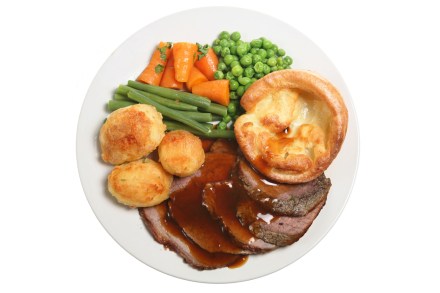
More proof, if it were needed, of the gastronomic generation gap. It seems one in ten young persons has never had a full English/Irish/whatever cooked breakfast and one in five only has it once a year. They are, of course, missing out on one of the pleasures of life. The cooked breakfast and afternoon tea are, with pudding, the great contribution of these islands to food. As to what constitutes a good breakfast, I refer you to what I consider the perfect cookery book: The Cookery Year, published by the Reader’s Digest in the 1970s. There, Theodora Fitzgibbon, a wonderful Irish food writer, briskly summarises it thus: Porridge or cornflakes may be followed by fried bacon and eggs, with sausage, tomatoes and mushrooms.

How Linzer torte stood the test of time

Linzer torte has quite the claim to fame: some assert that it’s the oldest cake in the world; others that it’s the oldest to be named after a place. It feels churlish to split hairs, but those two assertions are quite different, aren’t they? In any event, it’s certainly very old. For a long time it was thought it dated back to 1696, when it was mentioned in a recipe held in the Vienna City Library. But 20 years ago, an earlier reference was found by Waltraud Faißner, a Linzer torte historian, dating it to 1653 in the snappily titled Book of All Kinds of Home-Made Things, Such as Sweet Dishes, Spices, Cakes and also Every Kind of Fruit and Other Good and Useful Things etc.

‘Five stars, no notes’: Arlington reviewed

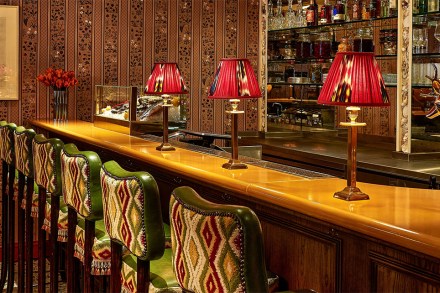
Arlington is named for the 1st Earl of Arlington and his street behind the Ritz Hotel. It used to be Le Caprice, which was opened in 1947 by the Italian Mario Gellati, who would not, by the new rules, get into Britain now, but this is not a column about pain. In 1981 Le Caprice was taken over by Chris Corbin and Jeremy King, and it became the most fashionable restaurant in London. Princess Diana dined here and when Jeffrey Archer was released from prison, he ate here. None ofthese dishes could be improved. Five stars, no notes After an interregnum from Richard Caring, under which Le Caprice closed in 2020 – it could not compete with Caring’s mad themed restaurants across Piccadilly – Jeremy King, who is more emotional and skilful than most restaurateurs, returned here.