Spectator Life

Spectator Life

An intelligent mix of culture, style, travel, food and property, as well as where to go and what to see.

Salad bars are a crime against humanity

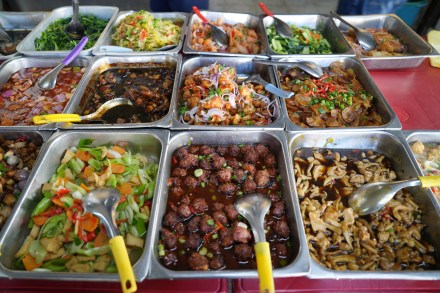
I love salad but there need to be rules. Salad should never be squashed in with hot food (e.g., in burgers); must never be dressed with anything from a bottle; and salad must never be served buffet style. Oh, and if it’s warm it’s quite simply not salad. For this reason, today I am speaking out against the horror story that is the salad bar. Landing after a very long flight from London to Melbourne, I was looking forward to dinner with my hosts who promised me ‘a real treat at a gorgeous restaurant you will love’. But their email also informed me that we would be going to a vegan, raw food place, heavy on the avocados, and with a no onion or garlic section for those adhering to the plant-based Jain diet that excludes roots and underground vegetables.

With Romy Gill

32 min listen

Romy Gill is a British-Indian chef, food-writer and broadcaster who was awarded an MBE in 2016 for her services to hospitality. She is the author of three cookbooks including Romy Gill's India, which will be published on 12th September.  On the podcast, she tells Liv and Lara about the joys of long train journeys across India, the state of Indian cuisine in the UK and how you can make magic with just cumin and turmeric.

How to shop at Waitrose

Over the years, I have spent a pretty penny on therapy. I have also spent a lot of money in Waitrose, of which there is a big branch that I like to call a ‘flagship’, very close to my flat. Of the two, therapy and Waitrose, it is probably Waitrose that has provided the most mental relief and has certainly been better value overall. Items may cost a bit more than they do at other supermarkets, but it’s free to enter the shop and there is no time limit on browsing, peering closely, or fondling the goods. Waitrose is not a shop that rewards a quick in and out, which is why I struggle to see the point of its Little Waitrose offshoots Waitrose has soothed me over the years in several ways.

The tyranny of the self-service check out

The other week I popped into my big Morrisons after the school drop-off. It was a biggish shop, including things like socks, olive oil and washing powder, hence going to a proper supermarket rather than just whizzing into my local Tesco Express. Not being able to find the correct type of fruit or vegetable on the touch screen scores highly in the irritation stakes But lo and behold, when I came to check out my shopping, not a single manned till was open. ‘There’s nobody on them until 10 a.m. love,’ explained the apologetic cashier who inevitably had to help me with an unexpected item in the bagging area (a packet of toothbrush heads that were too light to register on the pathetic shelf they give you at a self-service till).

The problem with pintxo

Visiting San Sebastián last month, I was reminded of the joys and hazards of grazing. The speciality in this chic city, and throughout Spain’s northern Basque region, are pintxos – miniature open sandwiches topped with everything from chorizo and padrón peppers to anchovies and baby eels. Pintxoing, as I’ll call it, becomes almost like a game in San Sebastián’s labyrinthine Old Town, in which the regional delicacies are colourfully displayed in bar-top glass cabinets. The goal is to eat enough pintxos to keep hunger at bay, but not so many that you don’t have room for one more. You’re never starving, but the flipside is that you’re never entirely satisfied, either.

Yorkshire curd tart: a well-kept, delicious secret

There are many old dishes in the UK that are hyper-regional, whose reach has never extended beyond geographical boundaries but remain much loved where they originated. Yorkshire curd tart is a good example: it is barely known beyond God’s own county (or God’s own four counties, which now technically make up what we think of as Yorkshire). There is no good reason for this – Yorkshire curd tart is just a delicious well-kept secret. The tart enjoyed its heyday in the 17th century, when most families would have kept their own cow It was traditionally baked for Whitsun, or Pentecost, the day the Holy Spirit descended on Jesus’s disciples. Curd tart is literally a moveable feast, as its date depends on that of Easter itself.

Chefs are nice people, really

I used to think that chefs were egotistical maniacs. Some of them are. But the vast majority of chefs are hardworking individuals coping with enough stress to send a beta-blocker into cardiac arrest. I spent more years than I care to admit moonlighting as a bartender and waiter. I worked with dozens of chefs. Some were brilliant, some had trouble frying an egg. Others spent more time with cocaine than flour. One tried to drunkenly glass me in the face with a bottle of Moretti, another became a very good friend.  I learnt a lot from chefs: how to shuck an oyster, how to tastefully plate a dish, how to chain-smoke a pack of Marlboro Reds without throwing up. I also learned that a chef is the pacemaker of any good establishment.

Vive le Supermarché!

It’s 7.54 a.m. and we are waiting for the doors of the Intermarché St Remy de Provence to open. A vast sense of excitement is building within our group that spans the ages of nine months to 68 years. My mother wants espadrilles, my husband wants wine, my brother-in-law wants cheese, the children want toys, et moi? Just the experience, the delicious joy of the French supermarché. And possibly some soap.

When in doubt, have a drink

Most Tory MPs enjoy leadership elections. There may be an element of what the trick-cyclists call ‘displacement activity’. Equally, it is tempting to employ the cliché about rearranging the furniture on the Titanic. The Brane-Cantenac 2000 was everything that a claret lover could wish for Until 1990, the process was brief. It took only four days to elect John Major, whose team used an underground ‘bunker’ in Alan Duncan’s house as their HQ. By 1997, when the party had been grievously wounded and the election procedure extended, there were lots of gatherings which required more spacious premises – including Jonathan Aitken’s garden.

With Fred Smith

31 min listen

Fred Smith is Head of Beef at Flat Iron. Having trained at several of London's top restaurants, he later became Head of Food at Byron. He then joined the Flat Iron series of restaurants in 2017.  On the podcast, he tells Lara and Liv about how his love of steak developed, how he got into cooking, and what his comfort food is. His passion for the world-famous Angus breed is evident, but why is British steak so good?  Also, on the podcast Lara let's slip her son's first sentence - safe to say, it's food related...  Produced by Oscar Edmondson and Patrick Gibbons.

Why Tories are like chickens

You might remember that short period during the pandemic when eggs were unavailable. I was very annoyed that the one period when I had time to cook breakfast in the mornings there was no breakfast to cook. However, I was finally able to persuade my wife that we needed to keep chickens. Purely for logistical purposes, you understand: we had to guarantee our supply chain. During the pandemic, otherwise sensible people bought into that kind of logic. My wife had never been keen on the idea previously. Like most Jewish women, she thinks of the natural world as that greenish blur between the taxi and the front door; and, while I’d managed to persuade her to move to a cottage in the country with roses round the door, keeping livestock was a Step Too Far.

Ottolenghi has colonised British food

As far as chefs and food writers go, Yotam Ottolenghi has been pretty influential on my life – a life that revolves quite heavily around food. Choosing it, thinking about it, pathologising it, eating it and sometimes even cooking it. I was one of those who was delighted when supermarkets started stocking pomegranate molasses, rose harissa and Middle Eastern spices like sumac and za’atar, all courtesy of the seismic influence of the Jerusalem-born Ottolenghi and his Palestinian partner in crime, Sami Tamimi. The Ottolenghi deli is a cliché of noughties London food trends I had, like everyone else in 2010s centrist middle-class Britain, got my hands on his recipe books Jerusalem (2012) and Plenty (2011).

My shameful shortcut to perfect pesto

Forgive me Father, for I have sinned. It has been… too long since my last confession. Picture the scene. I am in the kitchen, almost literally spinning plates. I should have been focusing, prioritising the bits that needed to get done, keeping an eye on the clock. Instead I’ve been mucking about, making an unnecessary batch of cookies, re-testing some buns that almost certainly didn’t need it, but I fancied baking. And I’ve lost track of time. Emerald, gleaming with oil, slightly textured and bursting – bursting – with flavour I’d volunteered to do lunch earlier in the day when my husband had mentioned that he was in back-to-back meetings with a breakneck turn-around lunch break. Now here he is: ‘OK, here we go, I have 20 minutes for lunch!

Jeremy King has done it again: The Park, reviewed

The Park is the new restaurant from Jeremy King, and it sits in a golden building to the north of Hyde Park, just off Queensway. This is an interesting district compared with Knightsbridge – it is still capable of reality – but isn’t every-where interesting compared with Knightsbridge? The Park is Art Deco of course: the presiding aesthetic of familiarity, snatched joy and inevitable doom. It looks like an exquisitely appointed cruise ship of the mid-20th century King is a specialist in grand cafés. He opened the Wolseley in Piccadilly and the Delaunay on the Aldwych, though he lost them to his feckless backers in 2022, and has begun again with Arlington by the Ritz, Simpson’s on the Strand, pending, and this. Queensway has a grand café now, and I am pleased for it.

I miss the food of Eastern Europe

When you live abroad for long periods of time, you get accustomed to certain foods which, returning home, you can’t find anywhere, and the sense of a habit unwillingly broken is acute. If the foreign country is Thailand or Italy, you stand a good chance of finding dishes approximate to those you’ve left behind in a local restaurant. But if your working life has been spent in the countries of Central and Eastern Europe, and you live well outside London, you must learn to make them for yourself or do without. In the warm hotel restaurant, after freshly brewed black coffee, I was given a glass of heated honey vodka The first foreign country I lived in was Estonia.

How to save Pret

Can you imagine how great it must have felt to be a Pret a Manger executive in late 2019? There was a Pret restaurant. They’d just bought Eat and its 94 stores. Veggie Pret was taking over the south east. London mayoral candidate Rory Stewart said Pret was his favourite pub. There was a Twitter account called Pret L’Etranger where visits to Pret were written in the style of Albert Camus. They started selling lobster rolls. That starts with getting rid of 90 per cent of the rubbish sandwiches Pret bigwigs were Masters of the Universe. But then Covid, then lockdown, and disaster. Revenue in 2020 dropped by £299 million. Their survival plan was to beg: for £20 a month, you could get five drinks a day (it later went up to £30).

Keep Michelin men out of our hotels!

It’s probably escaped most people’s attention, what with the football, the election, the Ukraine war, the horrors of Gaza, the assassination attempt and the revelation that the most powerful human on the planet has the intellectual sharpness of a daffodil. But in the past few weeks, the world of travel has been roiled by a surprising innovation: Michelin stars for hotels. Though the stars are stylised as ‘keys’. This may not seem like big pommes de terre, but it is quite important. Because, if the concept takes off and hotels start striving for Michelin accolades, then we can expect the best and most ambitious to go the same way as Michelin-mad restaurants. And that will be bad. You could argue it shouldn’t be a problem, as hotels already have star ratings.

Are you a Gail’s or a Wimpy voter?

Liberal Democrat activists were reportedly told to ‘get out the Gail’s vote’, targeting people who visit the over-priced artisanal cafés. There are 131 Gail’s in the UK and around half are in Lib Dem marginals. If you’ve never come across one, think spinach, feta and filo pastry for £6, sold by a stressed Spanish girl in Twickenham. As I squirted more special sauce on to my plate, I witnessed the true meaning of Wimpy (est. 1954) I mentioned the Lib Dems’ Gail’s strategy to a Reform adviser. He laughed. ‘Oh, we tended to go after places with a Wimpy Bar at the election.’ I can confirm that Nigel Farage’s seat of Clacton-on-Sea has a Wimpy on the same road as his campaign HQ and there is another in Thurrock.

How to drown your sorrows

Age. At the Spectator party last week, the editor asked me how long I had been attending the festivity. I could not remember whether it had been since the late 1970s or not until the early 1980s. But change is not always for the worse. During the 1980s, dearly beloved Bron Waugh was in charge of the wine. Talk about plonk. I do not know whether cats or horses were responsible, but there should have been no question of calling in a vet. The beasts ought to have been sent straight to a laboratory, to hunt down the toxicity. The Blairites had no shame about drinking champagne in public These days, we are graced by supplies from Pol Roger. They not only make splendid champagne, they are also devoted Anglophiles.

With Jess Shadbolt

30 min listen

Jess Shadbolt is part of the celebrated trio behind King and Jupiter restaurants in New York City. Originally from Suffolk, she worked at the River Cafe and trained at Ballymaloe cookery school before heading to new York, where she is now one of the most venerated chefs in America.  On the podcast, she tells Lara and Liv that some of the best food is school food, how adventure led her to set up in New York and why her desert island meal must involve dancing.

The importance of the Great British curry house

Back in 1979, I took my grandmother and her friend Frances to Monty’s in Ealing. Monty’s was one of the early Indian restaurants in London. My nan was in her 90s, and it was her first curry. We ordered the usual array of dishes – the sizzling tandoori, the Bombay aloo, the dal. My nan and her friend, both Eastenders, tucked in. They wondered why it had taken so long to go for an Indian. In the curry house, we are somewhere different, somewhere with a bit of glamour even Midway through the meal, a door at the side of the restaurant opened and in came Old Mr Monty, the patriarch of this establishment, about the same age as the people at our table. One of the waiters had told him that this was my grandmother’s first curry and that she was very old.

How to make perfect scones

I am evangelical about scones as a gateway bake – they are the perfect entry point for the nervous baker. They don’t require any nonsense. Rubbing the butter and flour together by hand and stamping the dough out is straightforward; and as long as a scone is risen and golden-topped after baking, then you’re fine. But more than that, if you can bring a scone dough together – and you can, I promise – then you can bring any pastry dough together. I’m not suggesting you open a pâtisserie while your first batch is still in the oven, but rather that scones can be a confidence-builder for the novice baker, in a way that biscuits, cakes and brownies can be quite the opposite.

48 hours of food in Andalusia

In Spain, you can eat all day – and we did. Earlier in the summer, I spent two days in Andalusia, and most of the 48 hours were taken up by mealtimes. A breakfast of the sweet porridge poleá started the day, then ham-tasting for a mid-morning snack, followed by a two-hour lunch. Spanish law requires that each Iberian pig gets 10,000 square metres to roam – a Cinco Jotas pig gets twice that Spanish chef José Pizarro led the way, taking us to his favourite restaurants and showing us where he sources his ham and caviar. I ate some of the best fish I’ve ever tasted – seafood croquettes on the beachfront at Chiringuito Tropicana in Málaga; creamy black squid ink rolls with flaky crust dipped in aioli at Eslava. Locals are mad for these restaurants.

Spanish food is deliciously obsessed with death

The moral absolutist in me believes that in every city, with its finite number of restaurants, there is such a thing as the best of all possible lunches. I don’t have to find it, but I have to get close. Mediocre doesn’t cut it. In fact, on holiday, the idea of wasting a meal on mere ‘mediocre’ fills me with crippling guilt over wasting not just money but time. What if I die before I see Paris again? I would be ashamed that I had wasted my precious mortality eating that Pret tuna niçoise salad. Laurie Lee described Spain as a place of ‘distinct appetites...

Vegans are addicted to junk food

Recent research has revealed what many of us suspected: that fake meat is highly processed and contains junk such as exotic emulsifiers, stabilisers, flavour enhancers and artificial colourings, all of which are designed to make them feel, taste and look like the real thing. Often, they are loaded with salt, sugar and fat. Many Britons become vegan (or vegetarian) precisely because they want to cut down on this stuff, but end up with even higher blood pressure and blood sugar levels. Lots of my friends’ offspring are vegan for ‘save the planet’ reasons – but they subsist on chips, cola, and fake burgers, not even realising that avocado farming is killing off the rainforest. Facon (‘This isn’t Bacon!’ – no kidding!), chickin and cheeze substitutes are hellish.

The key to dealing with this election? Wine

An old friend phoned. Normally cheerful, he was fed up. One of his business partners was being more than usually incompetent. ‘I told him that I’d describe him as a halfwit, if I could find the half.’ We went on to discuss another couple of friends, both good men and true, who seem doomed to imminent parliamentary defenestration. By the end of lunch, we were thoroughly benign. I was persuaded I could endure a Labour government Then there was hunting: a passion. It survived for several years under the Blair government and it seemed clear Tony had no stomach for the ban, which was half-hearted. That witty and cynical fellow Charlie Falconer said he could not understand why anyone was complaining. The antis wanted a ban and got one. The hunters wanted to go on hunting and did.

Gins in tins – the Yummy Mummy’s ruin

I’m writing this in my car, laptop on knees and a delicious can of Tanqueray Flor de Sevilla gin and tonic in the drinks holder, while my sons are at cricket practice. It’s an inclement evening, but were it a sunny summer’s day, the Yummy Mummies would be sprawled around the boundary in their Veja trainers and prairie dresses, pastel-coloured tins in hand, cackling and catching up like some Gen X version of Hogarth’s ‘Gin Lane’. Gins in tins are the acceptable form of ‘mother’s ruin’. First came Gordon’s G&T in a tin, followed by its pink gin, and now the chiller aisle contains more temptation than the Haribo shelves do for my children. Bombay Sapphire, Tanqueray, Sipsmith and multiple artisan brands have got in on the act.

With Sir David Hempleman-Adams

26 min listen

Where to begin with Sir David! An English industrialist and explorer, he was the first person to complete the ‘Explorer’s Grand Slam’. This means he has completed both North and South Poles as well as traversing the seven highest peaks across the seven continents. He has received the Polar Medal twice, from Queen Elizabeth II and now King Charles, the first person to do so under two monarchs. This June, David is attempting to cross the Atlantic by hydrogen balloon and break several more records in the meantime.  On the podcast he takes Lara and Liv through what he packs for an expedition, discusses the art of hydrogen ballooning, and explains why the best meal he has ever experienced is simple egg and chips.

Why Japanese women are hitting the bottle

Older Japanese women are boozing more than ever, according to a new survey conducted by Tokyo Metropolitan Government. The study found that while binge drinking by men decreased over the last ten years in all age groups, the percentage of women in their 40s, and especially those in their 50s, drinking dangerous amounts of alcohol, has shot up. For the latter cohort the figures were particularly alarming: 9 per cent a decade ago and 17 per cent now. Public displays of drunkenness are not especially frowned upon Why would this be? The most popular theory is that life for many middle-aged women has simply become much more stressful in recent years as a result of heavy-handed and perhaps ill thought through government efforts to get a more gender balanced workforce.