Spectator Life

Spectator Life

An intelligent mix of culture, style, travel, food and property, as well as where to go and what to see.

Babycham is back!

Babycham, the drink you perhaps last sipped while tapping the ash from a black Sobranie as Sade played on the jukebox, is coming back. Launched in 1953 by Francis Showering of the Somerset cider family, it was aimed at giving women something to drink in the pub other than a port and lemon. Demand for the ‘genuine champagne perry’ soared after it became the first alcoholic drink advertised on the new ITV in 1955 – to the extent that Babycham was once said to be stocked by all but two pubs in the country. It’s a ‘champagne’ rather than a ‘sparkling’ perry to this day – an attempt by Bollinger to sue for abuse of their trade name in the 1970s was dismissed by Lord Denning.

Chilean wine is hard to beat

We were assembled to taste Chilean wines assisted by magnificent Scottish food, courtesy of the Scottish embassy in London, otherwise known as Boisdale. But there was a problem of etiquette. As we were dealing with Chilean matters, I thought that we should propose a toast to a great Chilean and a staunch ally of this country, General Pinochet, who saved his own nation from becoming another Cuba or a mess like the current Venezuela. The left will never forgive Pinochet or Kissinger for frustrating Marxist ruin My neighbour expressed doubt. Surely the general committed atrocities? I conceded that the overthrow of Allende was not bloodless.

Why am I banned from buying a tuna knife?

My brother went to Japan recently, and I asked him to buy me a knife. As anyone who has entered the bowels of a restaurant knows, Japanese blades are highly sought after. I had to decide between an 18cm utility knife or a metre-long Maguro bōchō. The carbon steel of the latter can fillet a 500-pound tuna in a single cut. In Japan, it is wielded by two highly skilled fish butchers, and it usually comes with a wooden scabbard as protection for the blade – and anyone standing near it. The Maguro bōchō was created purely in a culinary capacity, not as a weapon of war Boringly, I opted for the utility knife. I reasoned that I could always buy a razor-sharp, 24-inch blade online at a later date. However, my hopes have been dashed.

With Julian Metcalfe, founder of Itsu

28 min listen

Julian Metcalfe is a British entrepreneur and one of the most influential individuals on the London high street. He revolutionised the grab-and-go lunchtime food industry in 1986 by co-founding Pret and did the same again in 1997 when he commercialised Japanese cuisine with the first Itsu. On the podcast, he tells Liv and Lara about the influence of his Ukrainian mother; why he decided to start Itsu, in many ways a competitor to Pret; what he thinks is the future of the grab-and-go industry; and why uni is the ultimate comfort food.

Why would anyone choose an induction hob?

In a letter to Katie Morley, consumer champion for the Telegraph, CK from London explained that her £4,000 Smeg hob doesn’t work with her Le Creuset pans. She said she was ‘furious’ because she had renovated her kitchen and had a marble worktop cut to fit it. ‘Given the price tag, I expected it to work like a dream, but instead I am having some significant performance issues with it... I feel very badly let down, and I may have to report this to trading standards’. Induction is a bit like using an Aga but worse, because at least Agas can look attractive Why would anyone choose an induction hob over a gas stove top? It is the worst kitchen invention since electric carving knives and soda streams.

Britain gave up on farmers centuries ago

Farmers are threatening a national strike over the inheritance tax increases, the first in history. Given how quickly the Labour government yielded to public sector unions, it is little wonder that the farmers have sensed that strikes are the best way to achieve their goals. By 1851, the proportion of Britain’s male workforce employed on the land had fallen to 22 per cent – lower than China in 2022 But it is not surprising that the government thought it would get away with stinging family farms for more inheritance tax. The voice of farmers (as opposed to landowning nobility) has long been weak in Britain for simple demographic reasons: few people are employed in agriculture, and this has been the case for centuries.

Can Beaujolais take on Burgundy?

You could say the British were to blame. The dramatic rise and subsequent fall of Beaujolais has its roots in the early 1970s, when Sunday Times wine correspondent Allan Hall laid down a challenge for his readers. The first to go to Beaujolais, in eastern France, and bring him back a bottle of that year’s just-pressed wine (known as Beaujolais nouveau) would win a bottle of champagne.  Readers rose to the challenge, enlisting cars, trucks, private jets and even parachutes and an elephant as they rushed to be first. The Beaujolais Run became an annual institution, and local vignerons frantically planted new vines to meet demand.

The Swedish model: Ikea’s restaurant puts others to shame

Ikea has opened its first high-street restaurant in the UK. There's not a flat-pack in sight – but a hotdog is 85p and a children’s pasta dish with tomato sauce (plus soft drink and piece of fruit) is 95p. A nine-piece full English will set you back £3.75, while a serving of their famous meatballs (with mash, peas, cream sauce and lingonberry jam) is £5.50. Vegetarians are amply catered for. It’s open 12 hours a day (and that may be extended further to enable dinner). There’s free wifi and somewhere to charge your phone. Even better, there is no music. It’s not pretending to be anything it isn’t.

The thrill of the Beaujolais Run

‘Le Beaujolais nouveau est arrivé!’ If that phrase means anything to you, you’re likely of a vintage that remembers pre-Clarkson Top Gear. Growing up in the 1980s, you couldn’t miss adverts for the Beaujolais Run – an annual race to be the first to bring the new wine back to England. People would rush over to Burgundy in their Aston Martins and Jaguars, fill up with Beaujolais and roar back home. The idea for a race across France was cooked up by Clement Freud and wine merchant Joseph Berkmann in 1970. It really took off in 1974 when the Sunday Times offered a prize to the first person to bring a case of wine back to the newspaper’s offices following its release at midnight on the third Thursday in November.

A light in the darkness: Home Kitchen reviewed

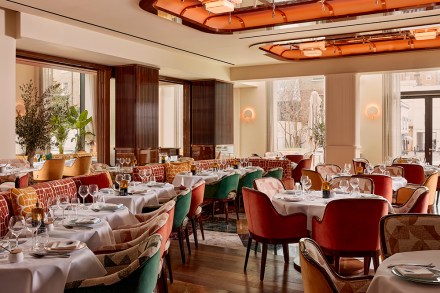
Home Kitchen is in Primrose Hill, another piece of fantasy London, home to the late Martin Amis and Paddington Bear. It is a measure of the times that Elizabeth II had no literary chronicler – no Amis, no Proust for her – but was, almost against her will, given Paddington Bear instead. When I saw the small bear at her memorials, I thought: is that her genre? Infants’ fiction? Couldn’t she do better? The question that follows is, of course: would they have eaten together at Home Kitchen? The barley is doughty, fragrant and from the earth.

Mince, glorious mince

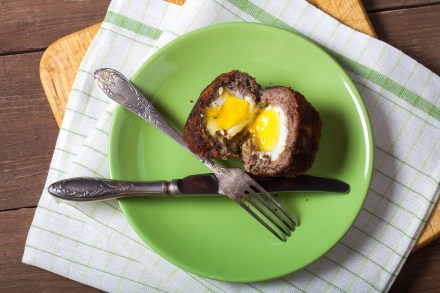
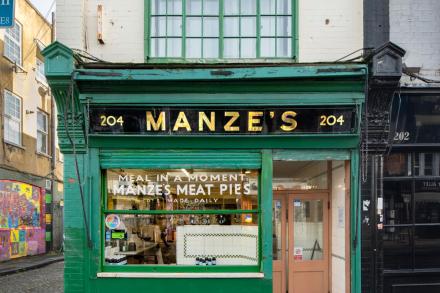
Sometimes, when it comes to culinary history, Britain is its own worst enemy. For a long time, British food has been seen as a joke among other nations, but also nearer to home. Even when the dishes are near indistinguishable, we’re still happy to poke fun at our own fare: we love panna cotta but laugh at blancmange; we cringe at stew but revere boeuf Bourguignon. They’re the same, but that doesn’t stop us. Where better to showcase the unsung hero braised beef mince than in a beautiful short-crust pie? Mince gets the worst of our inward-turned opprobrium, a leitmotif in our national food anthem. A pot of stewed mince speaks to all that is wrong with British food: staid, bland, brown, probably overcooked and definitely stuck in the 1950s.

Let’s face it, Le Creuset is overrated

I remember being given a Le Creuset casserole dish for my 40th birthday. I’m 62 and it’s still going strong, though I dropped it on the stone floor in the kitchen and the handle broke in two. It’s also gone a little black inside, and no longer scrubs up as nicely as it did. Twenty-two years’ service from a pan isn’t bad. But I have never really understood why so many are prepared to pay so much for a Dutch oven they could get at a quarter of the price – if only they were prepared to overlook the fact that it’s not the top named brand. Fifty per cent off is a good deal, but it’s still astronomically expensive This weekend, there were huge crowds and a four-hour queue to buy half-price items at an industrial estate in Hampshire that is home to the Le Creuset warehouse.

All hail the microwave!

Marco Pierre White may have earned a reputation as the tousle-haired kitchen bad boy who once made Gordon Ramsay cry, but these days he spends his mornings rather more quietly, enjoying his kippers. Yet in his retirement, he can still cause controversy. He recently told a podcast how he cooks his kippers. ‘On a plate, paint it with butter, wrap in cling film, in the microwave, two to two and a half minutes.’ A microwave? Really, Marco?! Yes. As far as kippers go, his reasoning is spot on. ‘Most people put them under the grill, which intensifies the salt’. Meanwhile, boiling them – jugged kippers – washes away the flavour. In fact, there’s nothing wrong with a microwave. As Marco put it, the haters need to ‘take off the blinkers’.

A beginner’s guide to Hungarian food and drink

The first time I tried the well-known Hungarian wine Tokaj, which I bought from an eastern European delicatessen in London, I was so taken with it that it quickly became a verb – and the expression ‘I was a bit Tokaj’d last night’ stuck. But I soon realised that there are so many wonderful versions of this wine that you will find one to suit every occasion, and a match for pretty much anything you eat. Options include bone dry, light as a feather, sweet, robust, and tannin-rich red. And I’m lucky enough to be drinking the dry variety here in Budapest. It has just a hint of honey, making it perfect with the dishes made with cheese and paprika sauces that are so popular across this landlocked nation.

Welcome to the buffet of broken dreams

We can thank Herbert ‘Herb’ Cobb McDonald for the modern-day all-you-can-eat buffet. Herb first introduced Las Vegas – and later the world – to this gastronomical abomination in 1946. The Buckaroo Buffet cost one dollar and promised ‘every possible variety of hot and cold entrees to appease the howling coyote in your innards’. The coyote of my innards has never been appeased by an all-you-can-eat buffet. On my last visit it was starved. Back at the table, the food smelt grey. I thought about all of the nice places I could have visited with £23 If John Hick can find God on a double-decker bus in Hull, I can find the answers to life’s biggest questions at the back of an all-you-can-eat global buffet.

How Maggie took her whisky

The whirligig of time brings in his… astonishments. Who would have thought it? Even a couple of decades ago, the notion that the Tory party could be led by a black woman would have seemed incredible. I remember 1975, and the doubts that were expressed about Margaret Thatcher: much louder than any adverse comment about Kemi Badenoch now. There seemed to be a widespread belief that the country was simply not ready for a female PM. When she was PM, she had to be dissuaded from serving English wine in No. 10 I recall a lunch with Barbara Castle not long after the 1979 election. A former street-fighting termagant, she seemed to have eased into post-partisan serenity. When I confessed that I was a Tory, she merely responded with a tut-tutting smile, as if I was an errant grandson.

Turkish delights: the best of the year’s cookbooks

‘Recipes are like magic potions. They promise transformations,’ says Bee Wilson in her introduction to Sylvia Plath’s Tomato Soup Cake (Faber, £12.99), a collection of classic authors’ recipes. You have to pray that tinned tomato soup will indeed be transformed into something nice-tasting, or that Noel Streatfeild’s filets de boeuf aux bananas will not be as revolting as it sounds. Not much hope of that, I’m afraid – but this is more of a book to enjoy reading without tasting. Some of the writers confess to failing miserably in the food department. ‘I am a very bad cooker, as the children put it,’ warns Beryl Bainbridge, as she launches into a heartless recipe for violently boiled mince.

With Terry Wiggins, Parliament Chef

18 min listen

Terry Wiggins is a chef who led the catering team at Westminster’s Portcullis House. During his time, he served 13 prime ministers and received an MBE for services to Parliament. He has recently retired. On the podcast, Terry reminisces about 50 years of service in Parliament, reveals some of the weirdest requests he has received and gives the inside scoop on the eating habits of some of the House of Commons’ most recognisable names.

Spare me the truffle takeover

I remember, vividly, when working at Raymond Blanc’s Michelin-starred Le Manoir, the moment the truffles were delivered. A frisson went round the kitchen staff as the napkin covering the precious morsels was dramatically whipped off. Physically inspecting the gnarled, knobbly nuggets was a right reserved for head chef alone. As a lowly pot-washer, I was confined to the back, neck craned for a glimpse. So I am not blind to the excitement and sheer theatre of the treasured truffle. I even like them. But why on earth have they taken over every restaurant menu, as plentiful as lashings of ‘EV’ olive oil and flaky sea salt? 2018-19 was when the truffle takeover first got going on the London restaurant scene. Then the rot quickly set in.

From public bar to cocktail bar: books for the discerning drinker

One of the joys of getting older is the appreciation of the solitary pint. But what to do as you sip your hard-earned beer? Usually after a suitable period of contemplation I’ll start fiddling with my phone. Not Adrian Tierney-Jones; he writes books, and his latest, A Pub for All Seasons (Headline, £20), is a poetic meditation on the public house, its history and place in our culture with some memoir deftly thrown in. Most of all it’s an appreciation of what makes a pub great: the layers accumulated by decades – centuries, sometimes – of human interaction. ‘The perfect pub,’ he writes, ‘is a kind of metaphysical palimpsest which we should try to imagine as a constantly evolving space.

Toffee apples: a dangerous food for frightening nights

Bonfire night is more about burning Catholics than haute cuisine and it shows. I’ve always felt for Catholic friends at this time of year, but I am a Jew, and I am told I am oversensitive. It’s also three decades since I made £150 doing ‘Penny for the Guy’ on Hampstead High Street. The last time I went to a bonfire night party it was hosted by a Catholic, and this confused me, until I remembered: she is an English Catholic. If Christmas is for the goose, and Easter for the hot cross bun, bonfire night has the toffee apple. Because this is a desolate festival, it has neither toffee on the apple – we will get to that – nor, too often, a bonfire. I’m not for burning Guido in effigy like those pyromaniac loons in Lewes, about whom I always think: who will they burn next?

You’re spoiling us: The Ambassadors Clubhouse reviewed

The Ambassadors Clubhouse is on Heddon Street, close to Savile Row and the fictional HQ of Kingsman, which was a kind of privatised MI6. I wonder if the Kingsmen eat here, being clubmen. Heddon Street needs fiction because its reality is one-dimensional. It is an alleyway behind Regent Street, and it used to be interesting. There was an avant-garde café under the Heddon Street Kitchen called The Cave of the Golden Calf. Ziggy Stardust was photographed for his album cover outside No. 23; from Heddon Street you could hear the Beatles play their final concert on the roof of 3 Savile Row in 1969. This is dense, fierce, very sophisticated food and it is all superb But that is over.

Brown bread ice cream: a delicious use for stale bread

I often think of the first time I ate brown bread ice cream. I know how that sounds: it’s the exact sort of pretentious nonsense a food writer would say if they were about to press a recipe for brown bread ice cream on you. But it was long before I became a food bore, and it’s true. I really do think about that first time a lot. Using leftover bread or stale breadcrumbs is the basis for some of our finest puddings I had just moved to London to study law after university, and was about to train as a barrister. I was living in a small flat and surviving on pesto pasta, bowls of cereal and crisps. At that point, going out for dinner probably meant a McDonald’s at the end of a night out. I knew next to nothing about food.

Sober October is awful. That’s why I do it

As Sober October comes to an end and we turn our attention to two months of forced festivities, it might be time to ask ourselves if these month-long periods of sobriety actually do anything. In short, I’ve found the answer is that they do. This year, I attempted Dry January. Why? For one simple reason: shame. There are few emotions in life more powerful and more potent than shame. And what is a hangover if not chemically-induced shame? The first time I got really drunk was at a house party. I was 15. My friend and I were new to alcohol and so we thought it clever to buy a litre of Disaronno Originale and eight pints of Kronenbourg. ‘Is that going to be enough?’ I asked. ‘Probably not,’ my friend said, ‘but we can always steal some more at the party.

The finest Rhône I have ever tasted

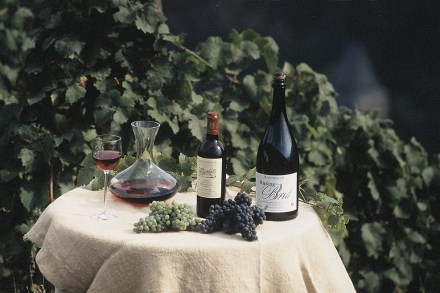
The medics would have one believe that alcohol is a depressant. That may be their conclusion drawn from test tubes in laboratories. Fortunately, however, it bears little relation to real life, which is just as well. The world has rarely been in greater need of antidepressants, in every form. One tries to tease American friends out of their gloom, reproaching them for taking their independence too early. Last time I attempted that, it did not work. ‘If Washington and Jefferson had foreseen Trump vs Harris, they would have asked George III for forgiveness.’ The 2014 Hommage à Jacques Perrin was just about the finest Rhône I have ever tasted In the rest of the world, there is a charming paradox.

I’m a Nisbets addict

It’s a bright autumn morning and I’m first through the doors. There are only two shops that can inspire such a disregard for my finances, and the other is Swedish. Today I find myself in Nisbets, and the first rule of Nisbets is not to bring a shopping list. If you’ve not heard of it, Nisbets is a catering supply shop, with outlets all across country. Every professional chef that has ever cooked for you will have spent a small fortune in Nisbets, some of it on their restaurant’s business card and likely even more from their own dwindling debit account. What is a hobby if not a means of spending all of your disposable income in ways that only make sense to a handful of other weirdos? Unlike online stores, buyers can go and fondle the utensils in one of their 26 shops.

With Tim Spector

27 min listen

Tim Spector is a leading professor of genetic epidemiology at King’s College London and a renowned expert in nutrition, gut health, and the microbiome. He is the founder of the Zoe Project, which focuses on personalised nutrition and how individual responses to food impact health. His new book, The Food for Life Cookbook, is out now. On the podcast, he tells Lara about his time growing up in Australia, how a skiing accident changed his view on nutrition, and why ham-flavoured crisps are his guilty pleasure. Produced by Oscar Edmondson and Joe Bedell-Brill. Click here for tickets to our Americano live event, with Nigel Farage.

Ozempic and the sugar coating of reality

Old or young, fat or thin, body-positive or body-embarrassed, man or woman, everyone with money seems to be on a weight-loss drug: Wegovy, Mounjaro or Ozempic (which although a diabetes drug, is so often used off label for weight loss that there have been supply shortages). In the past couple of weeks alone, two freewheeling 60+ titans of journalism – my Spectator colleague Julie Burchill and my Telegraph colleague Allison Pearson – have written about how Mounjaro has curbed their hedonism (the former) and unhealthy, ancient patterns around cake (the latter). If these life-loving ladies have taken the plunge, I thought, maybe similarly life-loving 42-year-old me should be considering it?

British vineyards are suffering

Across vineyards in England and Wales, secateurs are being sharpened and buckets are at the ready as owners prepare for harvest. October is usually the month commercial vines give up their fruit before being whisked away to the winemaker–cum–alchemist who turns the juice into wine. As a former vineyard owner (I sold up in January) harvest was always a nervy time of year, enough to drive you to drink. It represents nine months of pruning, de-leafing, weeding, replacing vines, and chemical spraying (yes, pesticides), all assisted by the right amount of rain and sun at the right times. By October, the grapes have, hopefully, the optimum balance of acid and sugar to allow the winemaker to make a balanced, palatable wine with good body.