Spectator Life

Spectator Life

An intelligent mix of culture, style, travel, food and property, as well as where to go and what to see.

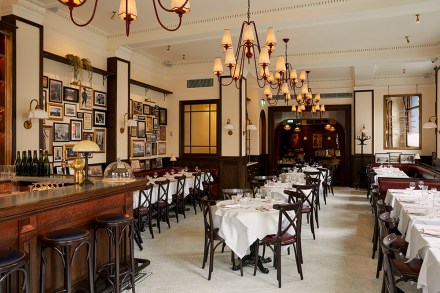
The victory of Instagram over food: Gallery at the Savoy reviewed

The Savoy Hotel is a theatre playing Mean Girls with a hotel attached to it, so you can expect it to both dream and fail. That is a polite way of saying that its new restaurant, Gallery, is not a success, but the Savoy will survive it. Though it didn’t survive the Peasants’ Revolt. It burned down, courtesy of medieval far-leftists who I would suspect were less annoying than modern far--leftists. They could hardly be more so, and I’m sure Geoffrey Chaucer, who wrote some of the Canterbury Tales on this site, would agree.

With Julian Baggini, on the ‘philosophy of food’

31 min listen

Julian Baggini is a philosopher, journalist and author. He has served as the academic director of the Royal Institute of Philosophy and is a member of the Food Ethics Council. His new book, How the World Eats: A Global Food Philosophy, is out now. On the podcast, Julian tells Liv about why he used to insist that shepherd’s pie was served at his birthday parties, the philosophical view of veganism and why it’s worth getting the expensive hazelnuts.

The unpalatable truth about British food

Last year a friend who lives in Lyon came to visit me in London. It was only her second trip to the UK and she was determined to venture deep into our indigenous food culture. ‘So, where can I get good fish and chips?’ she asked me. Now, if I was a citizen of Vienna and she was asking me where to find really good sachertorte, I suspect I wouldn’t struggle to reel off myriad cafes. If I lived in Athens and was questioned about where to get decent souvlaki, I would probably have a list as long as Hercules’s personal meat skewer. But fish and chips? In London? I could, in all good conscience, recommend only two places in which, during my quarter of a century in the capital, I’ve had a half decent chippie tea.

Life is not a piece of cake

On a recent trip with my daughter to Trieste, the north Italian seaside city on the border with  Slovenia, I thought it would be nice to take her to Café Sacher for some sachertorte, which has been in culinary fashion since its creation in 1832. Trieste, once a thriving Austro-Hungarian port, is as reminiscent of Vienna as it is of Italy, and to eat this famous Austrian cake in the establishment of the same name would, I thought, be an experience my chocolate-loving daughter would remember. Sachertorte is nothing fancy compared to other Viennese cakes – merely a dark sponge with some apricot jam filling and coated in a layer of smooth chocolate, but that plainness is part of its charm.

Kemi should prepare for a political pounding

It is extraordinary to remember. When I was a small boy in Scotland, Christmas Day was not a holiday. My father almost closed his office, but someone was on duty. The main festivity was Hogmanay: not a holiday in England. Now the whole country closes down for a fortnight. A friend who is a serious industrialist says that far from afflicting productivity, this is a good thing. After two weeks, apart from those who have gone in search of sun or skiing, most people are fed up with family life. Even the brats cannot wait to get back to school. So his employees return to work with renewed vigour. We started with oysters, followed by sashimi, then turbot, and for pud a chocolate mousse Despite that, I have never known a year more overshadowed with apprehension and gloom.

January deserves lemon pudding

January kitchens are my favourite. This isn’t anything against Christmas – I love the spice, the frenzy, the ritual of festive cooking, but I also love the aftermath. There’s something calming about the kitchen once it’s all over – nothing is made through obligation, or with a deadline. I embrace the cosiness of autumn and the sparkle of Christmas, but I find the bright, cool light of January reviving and renewing. At this time of year my kitchen is a place to take stock and make stock. To steady and sustain. Proper puddings, hot and sweet and served with cream, are a non-negotiable part of late winter It’s also full of puddings, among other things. Proper puddings, hot and sweet and served with cream, are a non-negotiable part of late winter for me.

In defence of Gail’s

A few months ago in Primrose Hill, I overheard a woman from the Camden New Journal, the local paper, asking in a café about rumours of a Gail’s opening in the famously anti-chain neighbourhood. Just a few weeks previously, there had been uproar in Walthamstow about a new branch – an unpleasant alliance of the anti-gentrification brigade, anti-business and anti-Brexit types who protested at investor Luke Johnson’s politics, and anti-Israel fanatics who objected to the fact that the bakery chain was founded by two Israelis. The latter element was what caught my attention, given the extent of anti-Zionist nastiness since 7 October. If Primrose Hill were to join in the anti-Gail’s protest, the sense of sinister anti-Israel sentiment would grow stronger.

Not worth its salt: Wingmans reviewed

I see this column as an essay on cultural polarisation: artisanal butter can only take you so far into wisdom. I cower in Covent Garden, mourning Tory romanticism, and stare, cold-eyed in St James’s, at oligarchic mezze. Sometimes I eat by mistake. I couldn’t get into the fashionable noodle place in Soho, whose Instagram-made queue stretched to Cambridge Circus on Saturday night. It reminded me of the crowds at royal weddings: both camp for dreams. So, I went to Wingmans instead.  Wingmans – it lost the apostrophe, it’s a decadent age – calls itself ‘London’s best wings’. They are chicken wings, not angel wings, and this is Pottersville, not Bedford Falls. (Some people think Pottersville is more fun and that may be, but not here. This is not a wonderful life.

With ‘Caviar Queen’, Laura King

32 min listen

Laura King is affectionately known as the 'Caviar Queen' and is widely regarded as the UK's foremost caviar expert. In this special episode of the podcast Laura takes Liv and Lara through a caviar tasting: from Beluga to Oscietra. Join the Spectator's caviar masterclass and tasting – hosted by drinks editor Jonathan Ray – in collaboration with King's Fine Food: https://shop.spectator. Click here for tickets.

The art of the bar cart

Whether we’ve got Mad Men or lockdown-inspired home boozing to thank, one thing is clear: the drinks trolley, or bar cart, is back. Interior design websites and social media are awash with them. And that means suddenly the bottle is becoming as important as the drink. Design agency Stranger and Stranger (motto: ‘Don’t fit in. Stand out’) has legions of clients, celebrities first in line, all vying to make their bottle the most beautiful. Brad Pitt (‘A dreamer, a visionary’, according to his drink’s packaging) had them encase his Gardener gin in pastel hues evocative of the French Riviera. (Not to be outdone, Brooklyn Beckham came knocking, deciding he needed a fitting phial for his elixir. Only his creation wasn’t booze but hot sauce.

Save our Stilton!

On 2 October 1814, a grand feast was held at the Hofburg imperial palace during the Congress of Vienna. Famed French chef Marie-Antoine Carême was charged with cooking and didn’t disappoint. But when it came to the cheese course, a lively argument broke out among the assembled statesmen, each advocating for the superiority of their national cheese: the Italian for Stracchino, the Swiss for Gruyère, the Dutchman for Limburger, and so on and so forth. The UK foreign secretary, Lord Castlereagh, championed Stilton. French foreign minister Talleyrand snapped an order (‘Send the despatches to the chancellerie’) and a large piece of Brie de Meaux was duly brought out: ‘The Brie rendered its cream to the knife. It was a feast and no one further argued the point.

There’s a reason we only eat Christmas food at Christmas

The 1990s comedy series the Royle Family includes a perfect scene in which Barbara says she won’t bother getting a turkey the following year, as nobody actually likes it. Everyone looks horrified. But she’s right. Advocaat, mince pies, Christmas pudding, Christmas cake (especially the marzipan) cranberry sauce, and balls of sausage meat made into stuffing – there is a very good reason why we tend only to eat and drink certain things at Christmas. Never buy a cheese selection, because among the mediocre bits and pieces, there is bound to be some abomination That said, I am aware that certain ingredients are staples in some households. Boiled carrots and sprouts, for example, which – for some unknown reason – appear on Sunday lunch menus week in, week out.

The many faces of Oxo cubes

It is now not unusual to find ‘bone broth’ in the refrigerated sections of supermarkets or delis, on sale for more than £7. Who can afford this stuff? If you have the time to make your own stock then all credit to you. But if not, the concentrated stock in little cubes or tubs is perfectly acceptable. Knorr and fancy upstarts such as Kallo pose as the superior products. But Oxo has stood the test of time. In a flooded stock market, their cubes remain my choice. Beef is the classic (the name ‘Oxo’ is thought to come from the word ‘ox’). Retailers seem to have taken the lamb version off the shelves, though the brand says they’re working on getting it back. The company has moved with the times, a few years ago launching the first vegan cube.

With Elif Shafak

29 min listen

Elif Shafak is a novelist, political scientist and essayist. She has published 21 books – 13 of which are novels – and her books have been translated into 58 languages. Her most recent novel There Are Rivers in the Sky, is out now.  On the podcast, Elif tells Liv about the significance of food and drink in her writing, the many places she takes culinary inspiration from and reveals her love of heavy metal music.

How Gen Z ruined Guinness

James Joyce called Guinness ‘the wine of Ireland’. Now it feels a bit more like the Coca-Cola of alcohol – as much brash branding as beer. Once, it merely had an ugly logo and the rowdy promise of Emerald Isle hedonism which – I confess I have often thought – is crafted to appeal to simple people. For who, other than simple people, chooses Guinness in this day and age when faced with the proliferation of ales, IPAs, helles, sessions, Belgian beers and porters? The sorts of people who find the Irish pub in a Mediterranean town and hit it hard. Guinness is taking on a strange new life But now, Guinness is taking on a strange new life.

Stuff the turkey: try capon or partridge for Christmas

‘It was a Turkey! He never could have stood upon his legs, that bird. He would have snapped ’em short off in a minute, like sticks of sealing-wax.’ (A Christmas Carol.) And there is exactly the problem with festive fowl. In most cases, we get turkey. And usually we get it far too big, which leads to all the problems of using the thing up over the course of a week. It may have been fine for Bob Cratchit’s large family but for most people, the mammoth turkey isn’t the way to go. A turkey is a fine bird (one of the trinity of actually useful things, with potatoes and tomatoes, to come out of the European discovery of America) – but it’s not the only option.

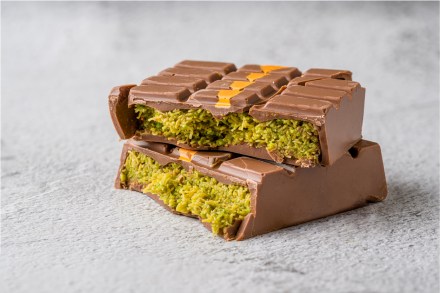
How to make chocolate salami

For as long as we’ve been serving food, we’ve been unable to resist a bit of culinary deception. Making one thing look like another thing – especially if it makes a sweet thing look savoury or vice versa – seems to have universal comedic value. There’s something Willy Wonka-ish about the visual wrong-footing, the surprise – we find it delightful. I’m not even going to stop you slinging some mini marshmallows in there – it is Christmas, after all There’s a long history here. At medieval and Tudor banquets, the food was entertainment as much as it was sustenance: huge pastries made to look like life-size stags and swans stood alongside carefully carved marzipan fruits, both imitating the real thing as closely as possible.

My bottles of the year

This has been the most fascinating political year I can remember. I have even found myself dreaming about politics – and neither the excitements nor the perils are likely to end any time soon. So it might seem self-indulgent to tear one’s attention away from grog. But we all need distraction, even in the spirit of gaudeamus igitur. Looking back over the year’s drinking, I also decided to summon interesting bottles for a meander through pleasant memories. My friend keeps his politics in the closet for he is a Californian who voted for Trump. He should be put in charge of the White House cellar As he has before, a Californian friend came up not just trumps but with the ace of trumps.

Something out of a Spectator reader’s dreams: The Guinea Grill reviewed

Back to the past: it’s safer there. There is a themed restaurant dedicated to George VI of all people, near Berkeley Square – a sort of Rainforest Café for monarchists who won’t sink to the Tiltyard Café at Hampton Court. I was looking for a restaurant my husband might like – Brexit, meat, maps of the Empire at its height in colour – and I found the Guinea Grill in Bruton Place. George VI isn’t a vivid monarch. He lived in the shadow of queens – one Mary, two Elizabeths – and on film he is always crying, or dying. In The Crown (Jared Harris, marvellous) he lost his lung. In The King’s Speech (Colin Firth, good, but handsome) he lost his happiness. I like to think George was tougher and less pitiable than the chronicles suggest.

How to turn eggnog into a superfood

Recently, scientists were baffled by the discovery that ice cream is a superfood. Yes, that’s right, people who eat ice cream tend to be healthier than those who don’t. A lot healthier. It’s ‘nutrition science’s most preposterous result’, according to the Atlantic. In fact, there’s nothing preposterous about it, if you actually know anything about the ingredients that go into ice cream. You’ve got high-quality milk protein and fat, sugars and a whole lot of vitamins and minerals. The fats make the protein and the vitamins and minerals more bioavailable – meaning you can absorb more – and they slow the digestion of the sugars, so you don’t get a massive sugar spike, just a gentle release of energy. The same could be said of eggnog.

The mystery of Baileys

December is when about 90 per cent of Baileys consumption takes place, and yet nobody really knows why. I used to work at an ad agency called Young & Rubicam, and we had the Baileys account. We’d spend all year writing ads to persuade people to drink it at some point – any point – between January and November, but to no avail. Baileys was never intended as a Christmas tipple Baileys introduced more summery variants: strawberries and cream flavour, apple strudel, even ‘Baileys colada’. For these, we wrote ads featuring happy drinkers in straw boaters, German lederhosen and loud Hawaiian shirts, but the British public gave a big thumbs-down to all of it. Come 1 December, however, they’d again start caning Baileys, overwhelmingly favouring its original flavour.

Stop messing with my Negroni

My first Negroni was in a bar called Turandot, in a piazza in Lucca, Tuscany. It was the summer of 1996, and I noticed the waiter bringing out an intriguing-looking red liquid, served in a rocks glass over a large ice cube, and garnished with an orange slice. I had agreed to split a bottle of prosecco with my three holiday companions, despite hating the stuff. But it was a warm, lazy evening, the fizz was nice and cold, and a drink is a drink, after all. I asked the waiter to bring me whatever it was he was serving the other customers, and soon I was taking my first sip of what has since been my favourite pre-dinner cocktail. I can’t understand why there are so many bastardised variations. Why mess with perfection?

The many faces of pigs in blankets

There are not many phrases that offend me more than ‘pigs in blankets’. The correct name for this dish is, of course, kilted sausages. In fact, the bacon-wrapped cocktail sausage has many incorrect names: the Irish go with kilted soldiers while the Germans call them Bernese sausages. The Americans for some reason wrap hotdogs in croissant pastry and call them saucisson en croûte, as though they’re some kind of European delicacy, à la Escoffier. Careful though, sometimes these deviations in name mask a greater sin. One Christmas, my posh nan promised ‘devils riding horseback’. I was thrilled for what I assumed must be the Nigella-fied version. Instead, she served baked prunes stuffed with almonds and wrapped in a sliver of bacon.

Advent is the season for revelling in fine wine

Crime. Fear not: none of us was planning to break the law, with the possible exception of hate speech. Where that is concerned, how would one start? But we were more concerned with crime and literature, and a fascinating perennial question. What is the distinction between crime fiction and novels? In the 1990s, I introduced one of the loveliest girls of the age to the delights of proper wine Crime and Punishment: no problem. So what about The Moonstone? There are very many supposed novels which I would rather read. Moving nearer our own day, we have Dorothy Sayers or P.D. James. More recently, Reginald Hill, Susan Hill and Ian Rankin. Victorian ladies were not supposed to read novels before lunchtime.

With Richard Madeley

28 min listen

Richard Madeley is a presenter, author and journalist who has been on our screens since the 1980s, most notably presenting This Morning with his wife Judy and more recently on Good Morning Britain. On the podcast, he discusses his early memories of Heinz tomato soup, implores Lara and Liv to try 'tuna casserole' – his mother’s speciality made from tinned tuna, canned soup and crisps – and makes the case for fish paste as the 'food of the gods'.

Bring back suet!

Stir-up Sunday may be behind us, but it’s not too late to make your Christmas pudding – and do you know what that means? Yep, sourcing decent beef suet. Suet is the king of fats. It adds to the pudding’s keeping quality, texture and flavour. My recipe calls for half a pound of suet (see below for the recipe in full – it was my great-aunt’s) but the good stuff is hard to find. You can get pellets of suet in a packet from supermarkets, but the real thing, grated into light flakes, is another story: much nicer and lighter. Some inferior recipes suggest butter instead, but good as butter is, it just doesn’t cut it for a Christmas pudding. Suet is the hard creamy fat around the beef kidney.

The glamour of the scallop

There is a gentle irony to the dish coquilles St Jacques: a decadent, rich preparation of one of our most luxurious seafoods takes its name from a saint who has inspired centuries of pilgrimage, and whose emblem came to symbolise modesty. The eponymous St Jacques is St James the apostle, or James the Great. The scallop shell has long been associated with him, one legend being that St James once rescued a knight covered in scallops; another that when the remains of the saint were retrieved from a shipwreck, the ship – or perhaps even the body itself – was covered in the shells.

Ideal for winter: The Dover reviewed

For British people, America is an idea brought by cinema, and The Dover, the New York Italian bar and restaurant in Mayfair, meets a version of it. It’s not quite the ballroom in Some Like It Hot, not quite Rick’s Café in Casablanca, but it’s as close as you will find near Green Park Underground, and that has a charm to it, because Americans can speak. It’s from Martin Kuczmarski, formerly of the once preening, now ragged Soho House. He has named his company Difficult Name. There’s a message there, and a story, and it made a glorious restaurant with the tagline ‘A good place to be since 2023’.

Would we even notice a farmers’ strike?

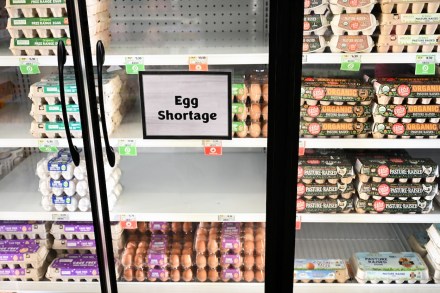
You might think that, as a country, we have had our fair share of food security wobbles over the last few years: first with pre-Brexit panic, and the hoarding that went along with it, and then the empty supermarket shelves that few of us will forget during the height of the pandemic. But this time, the call is coming from inside the house: British farmers are threatening to stop supplying supermarkets in protest against the government’s plans to apply inheritance tax to family farms. What we might be able to cook in a few weeks is as expansive as ‘almost anything’ or as limited as ‘almost nothing’ What does that mean for the average person doing the weekly shop? Are we returning to the days of rationed eggs and powdered milk? Not quite.